









Taking a Taxi in Italy -10 Top Tips for Smooth Travel!
November 1, 2026
No matter how dedicated you are to walking and public transport, there are times when taking a taxi in Italy simply makes sense. Maybe you’re carrying luggage, travelling late at night or heading somewhere that’s poorly served by public transport. Keep reading to discover how to take a taxi in Italy, what to expect when you get in and how to avoid common problems.
Taking a taxi is usually straightforward, but knowing a few basic rules can help you avoid unnecessary costs or confusion. From finding an official taxi rank to understanding the meter, supplements and fixed fares, here’s what you need to know before you get in.

Follow our tips on taking a taxi from one attraction to the next to make sure you don´t waste time or money!
Tips for taking a taxi in Italy
If you can, get a taxi from an official taxi rank
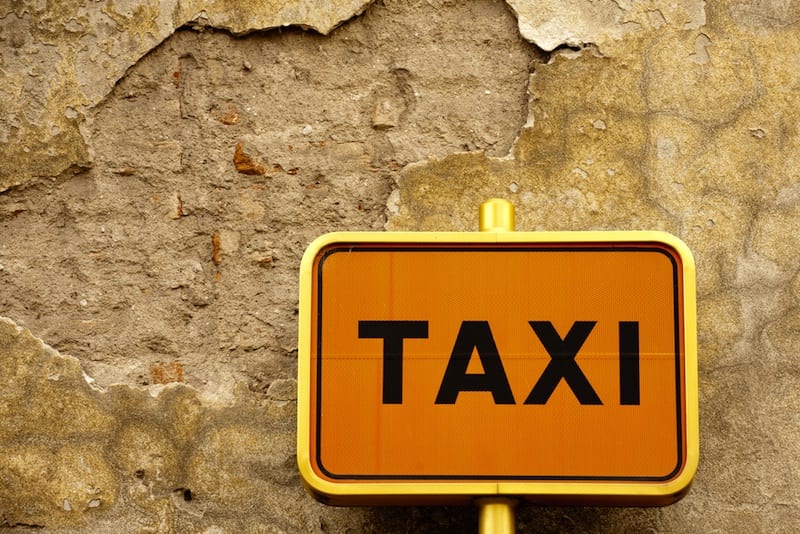
One of the easiest ways to find a legitimate taxi is to use an official taxi rank. You’ll find them at airports, train stations and other major transport hubs, as well as in central areas of Italian cities. Taxi ranks are generally marked with signs and designated spaces.
Licensed taxis in Italy are white and have a taxi sign on the roof. Avoid accepting rides from people who approach you inside or outside airports and stations offering taxi services. If you need a taxi, go to the official rank or use a licensed taxi company’s booking service.
Calling a cab for a pickup? Know what to expect
If you book a taxi by phone or through a local taxi service, the amount shown on the meter when the taxi arrives may already include a call-out charge or the cost of travelling to your pickup point. This isn’t necessarily a sign that something is wrong.
Charges vary between cities, so check the local tariff if you want to know what to expect. In Rome, for example, the current tariff includes a fixed charge for radio-taxi bookings.
Try to have a mix of payment options
It’s useful to have some cash available, particularly for short journeys, but you don’t necessarily need a wallet full of coins. Many Italian taxis accept cards and other electronic payments, although the exact arrangements can vary between cities and operators. Always ask for a receipt if you want a record of the fare.
- If you do not have any cash make sure you check that you can pay by card before you get in.
- If you’re paying in cash, having smaller notes and some coins can make things easier, as not all drivers will have a lot of change available.
Don’t take a ride from a driver who approaches you
If someone approaches you at an airport, train station or other transport hub offering a taxi, it’s better to decline and find the official taxi rank instead. Unauthorised operators may not be subject to the same regulations as licensed taxis. This is particularly important at airports, where official taxi ranks are clearly designated.
Don’t assume that every taxi journey is negotiable
Most ordinary taxi journeys are calculated using a taximeter, according to the local tariff. However, some journeys have predetermined fixed fares. Airport transfers are a common example.
A legitimate fixed fare isn’t something you need to negotiate with the driver. Check the official tariff for your destination before you travel so you know whether you’re dealing with a fixed price or a metered journey.
Know roughly how much your fare (and any extras) should cost
Taxi fares vary from city to city in Italy, so don’t rely on a single nationwide price. Licensed taxis use local tariffs, with the final fare generally depending on factors such as distance, time, the time of day and any applicable supplements.
Some cities also have minimum fares or predetermined prices for particular journeys. Rome, for example, currently has different starting fares depending on the day and time, while certain airport journeys have fixed fares.
If you’re unsure what a taxi should cost, ask at your hotel or accommodation. Staff will usually be able to give you a rough idea of the price to major attractions and can often call a reputable, licensed taxi service for you. This can be particularly useful if you’re unfamiliar with the city or don’t speak much Italian.
Legitimate extras can include things such as luggage, additional passengers, night-time travel or a radio-taxi booking, depending on the city’s regulations. If a fare seems unexpectedly high, check the local tariff and ask the driver to explain any additional charges. You can also request a receipt at the end of the journey.
Make sure the meter’s running
For a metered journey, the taximeter should be operating. If a driver tells you that the meter isn’t working or suggests an unexplained price instead, ask for clarification before setting off, and if in doubt, get out and find another ride.
The amount on the meter can increase because of both distance and time, and legitimate supplements may also be added depending on the journey and local rules.

The view from St. Peters Basilica shows how being dropped at the wrong place could mean a bit of a walk!
Know your destination address… and be specific
Rome is a confusing city, and not every driver knows every hotel or restaurant and several attractions may have similar names. Don´t just give the name of the place, have the full address, too. And to be on the safe side, write it down. In Italian.
This is particularly useful in Rome. Saying “Vatican,” for example, isn’t necessarily specific enough. If you’re visiting the Vatican Museums, make sure that’s the destination you give the driver. The same applies to destinations such as Villa Borghese park and the Galleria Borghese.
Having the address or location saved on your phone using a maps app is often the simplest solution. If there’s a particular entrance you need, mention it before the journey begins.
Feel like you’re getting the “scenic route”? Don’t panic!
Italian city centres can have one-way streets, restricted traffic zones and winding roads, so the most direct route on a map isn’t always possible by car. If you’re concerned, you can follow the journey on your phone and ask the driver about the route if they are deviating from the route suggested on your own GPS.
A small tip’s okay, but not necessary
Tipping taxi drivers isn’t generally expected in Italy. If the journey has been particularly helpful or the driver has assisted with your luggage, you can leave a small tip or simply round up the fare. There is no need to add a large percentage to the bill as you might in countries where tipping taxi drivers is customary.
If you prefer to be behind the wheel yourself, our blog about how to drive in Italy is compulsory reading.
FAQs – Taking a Taxi in Italy
Can I book a taxi in Italy in advance?
Yes. In most Italian cities, you can arrange a taxi ahead of time by phone, through a local taxi app or via your hotel or accommodation. This can be particularly useful for an early-morning airport departure, a train you need to catch or a journey at a busy time when finding a taxi on the street may be difficult.
Do taxis in Italy have a minimum fare?
Some Italian cities have minimum charges, while others use different tariff structures depending on the time, day or type of journey. There isn’t one nationwide minimum fare, so the rules can vary considerably between destinations. If you’re planning several taxi journeys, check the local tariff or ask your accommodation about typical fares.
Can I take a taxi between Italian cities?
You can arrange longer-distance taxi journeys, although they can be considerably more expensive than taking a train or bus. For travel between cities, public transport is usually worth considering first. A taxi can make more sense for a group, when travelling with lots of luggage, or when your final destination is somewhere that’s difficult to reach by public transport.
Can I take a pet or wheelchair in an Italian taxi?
This depends on the taxi and local regulations. If you’re travelling with a pet, particularly a larger animal, it’s best to mention it when booking so the operator can arrange a suitable vehicle. If you use a wheelchair or have other mobility requirements, tell the taxi service when you book and ask for an accessible vehicle if necessary. Don’t assume that every taxi will have enough space for a wheelchair or mobility equipment, particularly if you need to remain in the wheelchair during the journey.
What are the alternatives to taking a taxi in Italy?
Taxis aren’t always the best option, particularly for longer journeys. Italy has an extensive network of trains and local public transport, including buses, trams and metros in larger cities. Before getting into a taxi, check your alternatives. You may find that a train, bus or pre-booked transfer is more convenient for your particular journey.
For airport transfers or journeys where public transport isn’t convenient, you can also consider a private transfer or, in some destinations, a rental car. In rural areas, where buses and trains may be less frequent, a taxi or organised tour can sometimes be the most practical way to reach smaller towns and countryside attractions.

A walking tour is a good way to find your bearings when you arrive so you feel more confident for solo sightseeing
Get to know the city before exploring on your own
A guided walking tour is a great way to get your bearings when you first arrive in Italy. Walk the streets with an English-speaking local guide, discover the key sights and ask questions about everything from typical prices to where to eat, shop and explore during the rest of your stay. Once the tour is over, you’ll have a better feel for the city and some local tips to help you make the most of the days ahead.
Explore the host of Walks of Italy walking tours available in Rome, Venice, Florence, Pompeii, Milan and Naples…


Book a Tour

Pristine Sistine - The Chapel at its Best
€89

1794 reviews

Premium Colosseum Tour with Roman Forum Palatine Hill
€56
850 reviews

Pasta-Making Class: Cook, Dine Drink Wine with a Local Chef
€64
121 reviews

Crypts, Bones Catacombs: Underground Tour of Rome
€69
401 reviews

VIP Doge's Palace Secret Passages Tour
€79
18 reviews

Legendary Venice: St. Mark's Basilica, Terrace Doge's Palace
€69
286 reviews
You May Also Like







Follow us
Stay up to date with travel tips, local insights and all things Italy on our social channels!


Subscribe to our Newsletter
Get curated Italy travel tips delivered to your inbox!
