




Trevi Fountain Facts: 9 Surprising Things You Didn’t Know
April 10, 2026
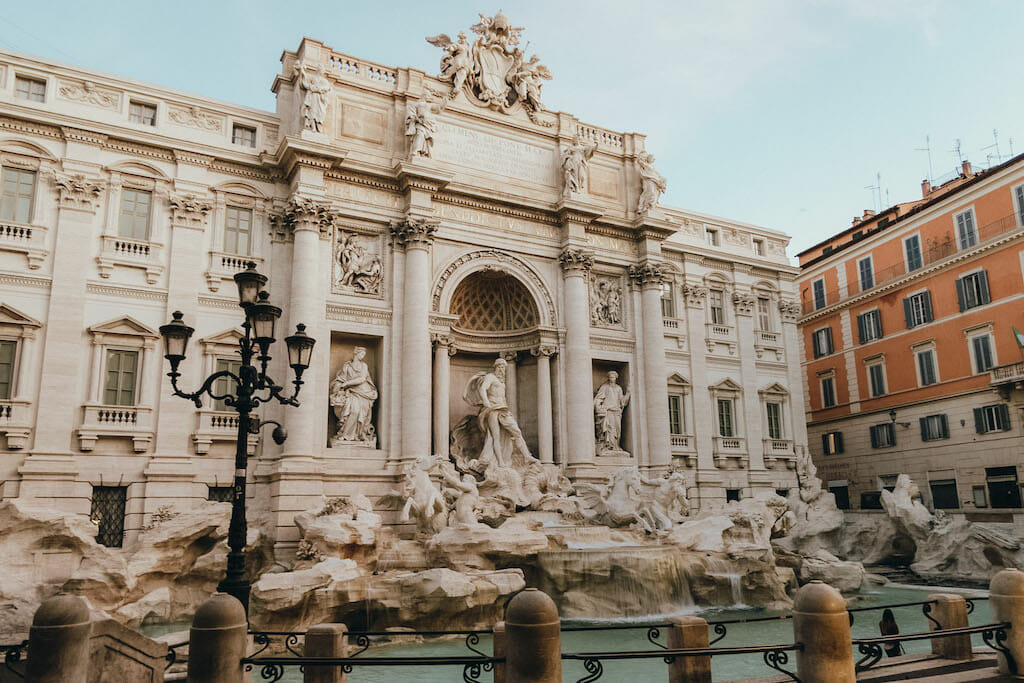
No trip to Rome is complete without a visit to the Fontana di Trevi, or Trevi Fountain. Located in the Quirinale district of Rome, the Trevi Fountain is known as one of the most stunning fountains in the world. But there’s a lot more than just beauty behind this famous fountain. Keep reading to learn nine fascinating Trevi Fountain facts!
The fountain features Neptune, god of the sea on a shell-shaped chariot pulled by 2 horses, each guided by a Triton.
Though it was one of 1,352 fountains in 4th century Rome, the Trevi Fountain has always stood out from the rest. After a prolonged closure while it was being refurbished by the fashion house, Fendi (who reportedly spent a cool $2.2 million), the fountain was unveiled again – and better than ever.
Whether you’re still dreaming about visiting this landmark – or have tossed coins in the fountain numerous times – here are 9 facts you might not have known about Rome’s Trevi Fountain.
Trevi Fountain Facts
The Trevi Fountain is one of the oldest water sources in Rome
The fountain dates back to ancient Roman times, since the construction of the Aqua Virgo Aqueduct in 19 B.C. that provided water to the Roman baths and the fountains of central Rome. It’s said that the Aqua Virgo, or Virgin Waters, is named in honor of a young Roman girl who led thirsty soldiers to the source of the spring to drink.
The fountain was built at the end point of the aqueduct, at the junction of three roads. These three streets (tre vie) give the Trevi Fountain its name, the Three Street Fountain.
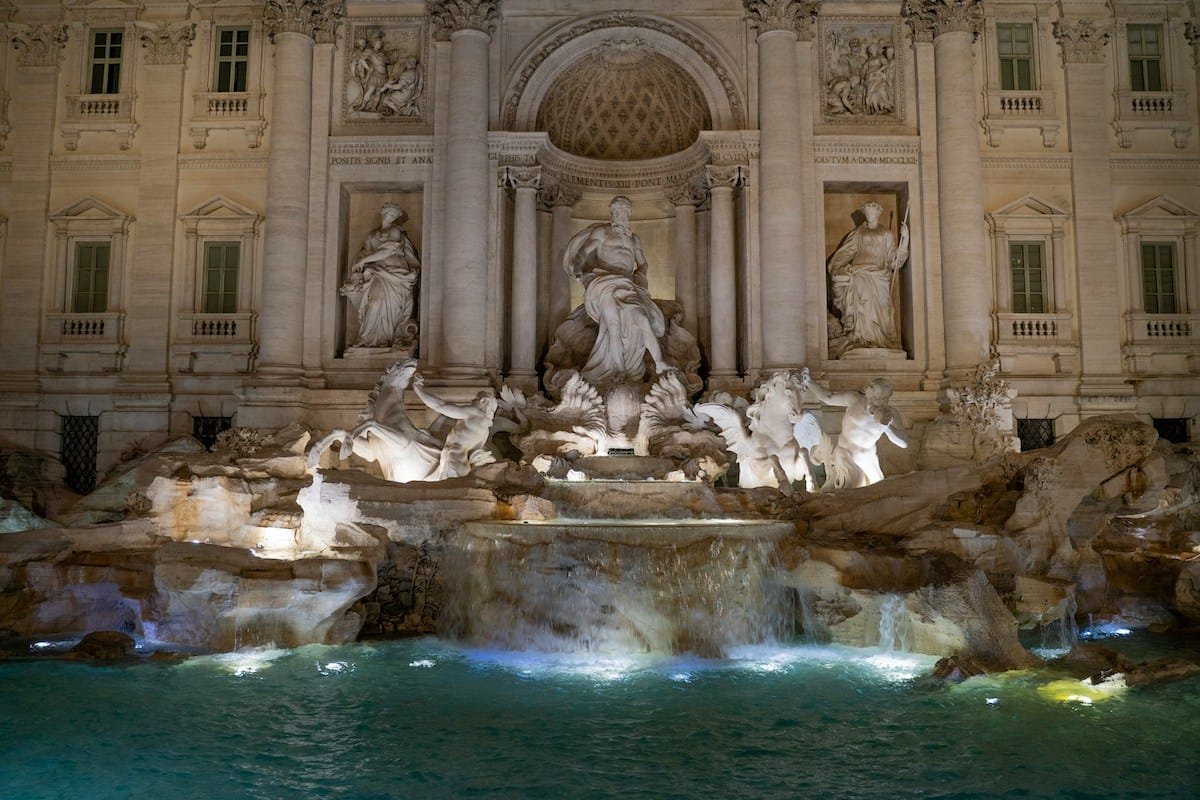
Visiting the Fontana di Trevi at night can be just as magical, and even more! Photo credit: Mike Hsieh
Salvi was not the original architect
In 1730 Pope Clemens XII held a contest to design a new fountain. Many important architects participated, but in the end Nicola Salvi won the rights to design the fountain, though some theories say he may not have been the first choice.
Alessandro Galilei, a architect from the same family as the famous astronomer Galileo, originally won the commission for the project but the commission was ultimately given to Salvi after a public outcry. The reason for the public’s objections? Galilei was a Florentine, while Salvi was a native Roman.
However Salvi never saw his fountain completed. The first water came out of the fountain in 1743 but it wasn’t until 1762 that a different Pope, Clemens XIII, officially completed and inaugurated the new Trevi Fountain, 11 years after Salvi’s death. Still, the final product is largely his.
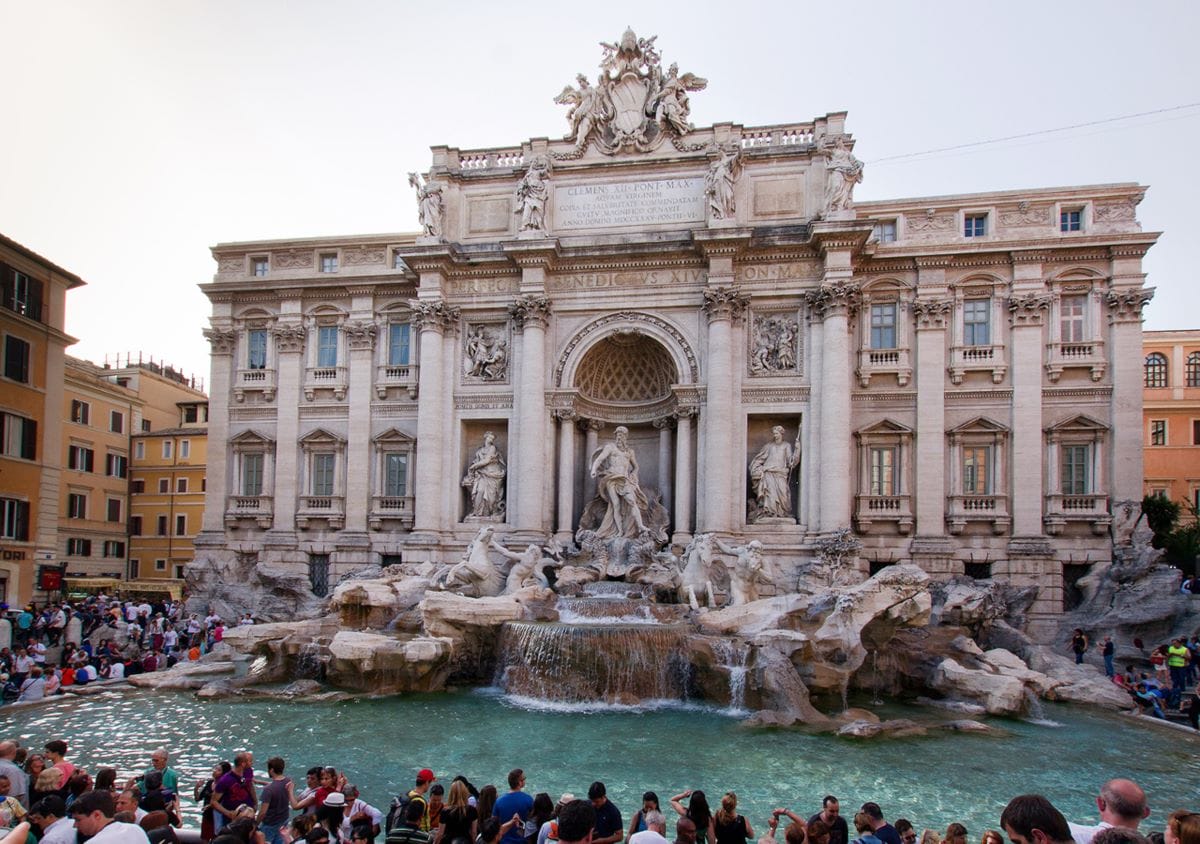
The wonderful history if Trevi fountain will enrich your visit to this magical place.
Insider Tip: If you want to truly appreciate the artistry behind the Trevi Fountain, take some time to learn about Bernini, one of the most influential artists of the Baroque period. Although Gian Lorenzo Bernini did not design the final version of the fountain, his earlier concepts and dramatic style heavily inspired its theatrical design. From the dynamic figures to the sense of movement and emotion. Understanding Bernini’s work will give you a deeper insight into why the Trevi Fountain feels less like a simple monument and more like a living, breathing work of art.
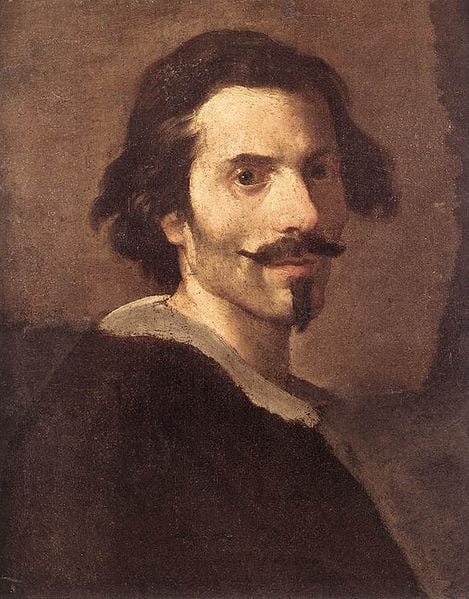
Gian Lorenzo Bernini’s self-portrait, painted between 1630 and 1635. Photo from the Galleria Borghese
You can thank gambling for the fountain’s existence
Salvi’s project for the fountain is also noted as being the least expensive, which is another possible deciding factor for Pope Clement. In any case, the pope approved the financing of the works and used the third extraction of the lotto game to pay for it.
That’s right! The money earned from the reintroduction of the lotto in Rome in 1730 financed the Trevi Fountain! The numbers of the first extraction were 56, 11, 54, 18 and 6, in case you were interested.
It’s made from the same material as the Colosseum
The fountain is mostly built from travertine stone, a name that means “from the Tiber” in Latin. A mineral made of calcium carbonate formed from spring waters, especially hot springs. The likely source was the city of Tivoli, about 22 miles from Rome.
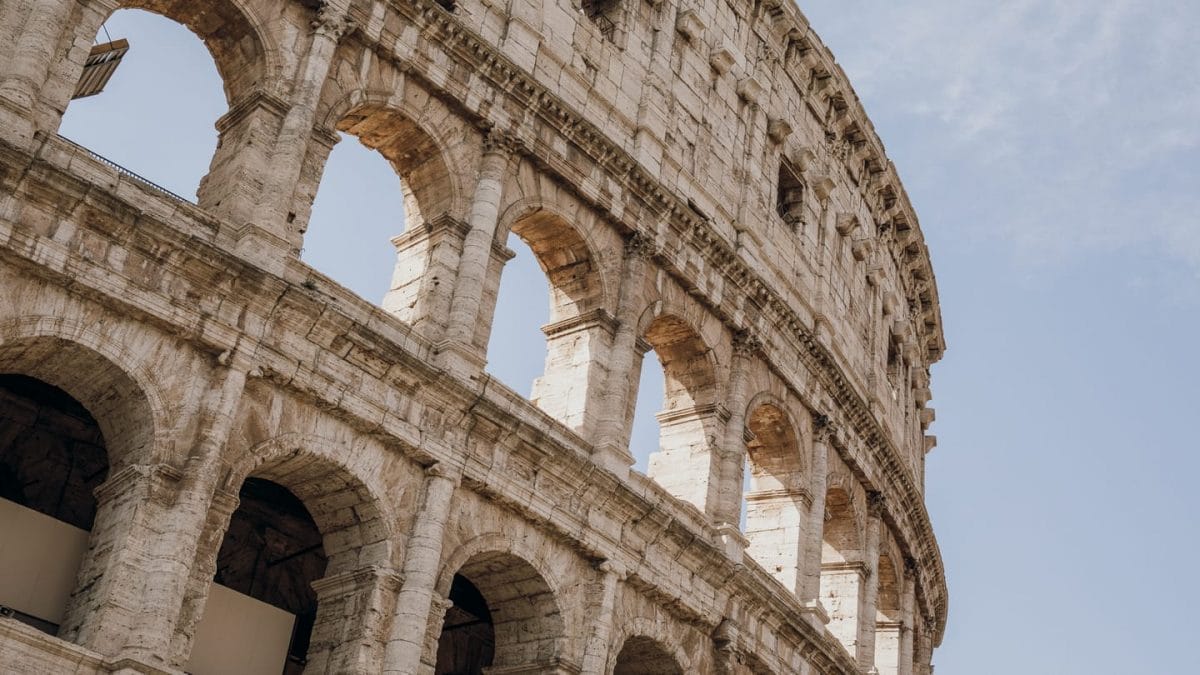
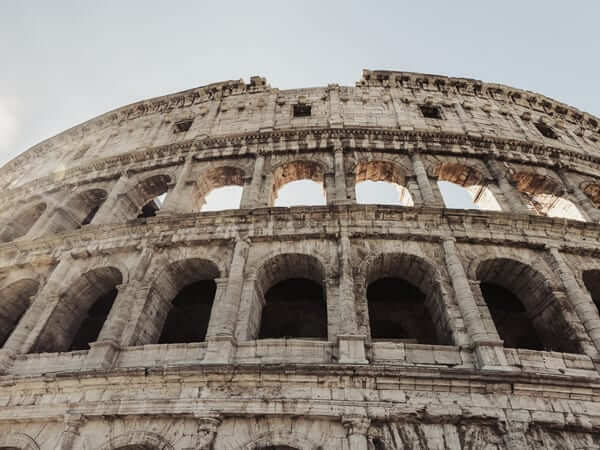
The stone used for the Trevi Fountain – travertine – is the same stone used to build the Colosseum
Working with enormous pieces of this heavy stone was dangerous. During construction of the Trevi fountain, many men were injured and a few died, including a stonecutter who was crushed by a large block of travertine in 1734.
The Trevi Fountain uses a lot of water
- The Trevi Fountain stands a massive 85 feet tall and is almost 65 feet wide.
It´s sheer size and scale means that it requires a lot of water to pump out of multiple sources and to fill the large pool in front.
- Indeed, the fountain spills about 2,824,800 cubic feet of water every day!
No need to fret though, today the water is recycled. This means that, unlike the ancient Romans, you’ll have to drink from the nearby drinking fountains instead!
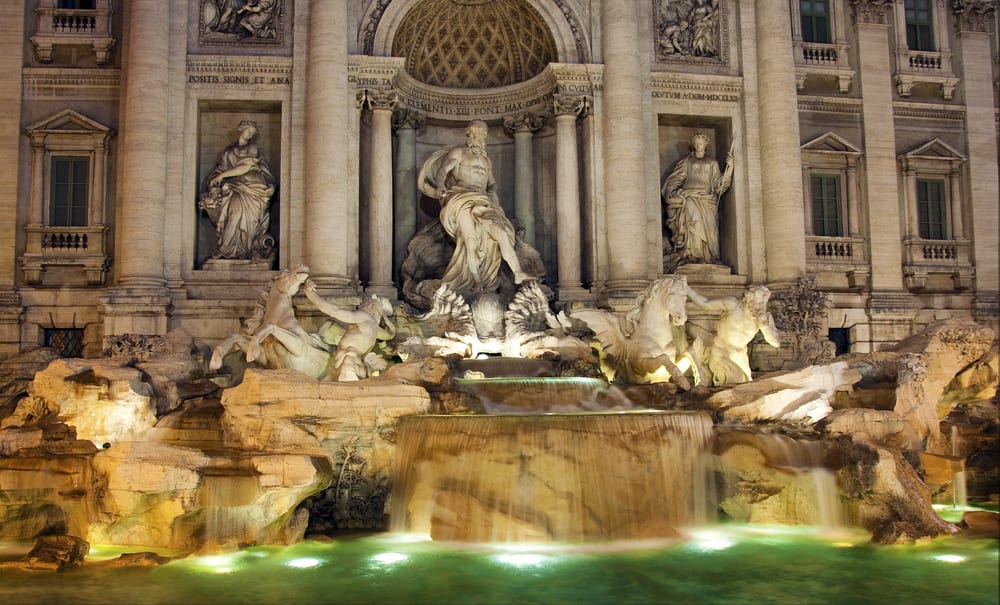
We recommend swinging by the Trevi Fountain at dusk or after dark for a different kind of look at the fountain.
It’s a crime to steal the coins from the Trevi pool
Perhaps for just that reason, it’s illegal to fish out coins from the fountain. In the past it was common for gangs of thieves to sweep the coins out of the fountain at night. In fact, three were caught by a T.V. show using a hidden camera in 2011. The most famous raider, Roberto Cercelletta, was known by his nickname, d’Artagnan. He stole the coins from the fountain for 34 years before he was caught in the summer of 2002.
The coins are given to charity
When the fountain is open, roughly €3,000 is thrown into it every day as people follow the tradition of throwing coins over their shoulders.
The legend holds that a coin thrown into the fountain will ensure a return to Rome. This tradition also dates back to the ancient Romans who often threw coins in water to make the gods of water favor their journey or help them get back home safely. Throw in a second coin if you’re seeking love – or even a third for wedding bells!
What many don’t know is that the coins are collected every night and given to an Italian charity called Caritas. Caritas, in turn, use the money for a supermarket program giving rechargeable cards to Rome’s needy to help them get groceries.

It’s hard to resist taking a photo of the impressive fountain.
The fountain has featured in many famous films
A famed sight for tourists from throughout the world, the Trevi Fountain is quite the stage prop as well! Probably most famously, it stole the show in La Dolce Vita, when Anita Ekberg jumped into the Trevi Fountain with her clothes on. The massive monument has also been featured in other films including Roman Holiday, Three Coins in the Fountain and The Lizzie McGuire Movie.
The fountain has been replicated at Epcot in Walt Disney World and was also made into a Lego set in 2025 for fans who want to build a model of this famous landmark at home!
The white stone fountain has been black…and red
One of the lesser known of the Trevi Fountain Facts is that, in 1996, the fountain was turned off and draped in black crepe to honor actor Marcello Mastroianni after his death. Mastroianni starred in La Dolce Vita, a movie whose most famous scene was filmed in the Trevi Fountain. It is said this scene made the fountain more famous than ever.
In 2007, the fountain wore a different color after a vandal dumped a liquid substance into the fountain turning the water red. While there was a fear that the liquid would permanently damage the monument, the water was drained fast enough that there was no damage, only a crowd of very surprised tourists.
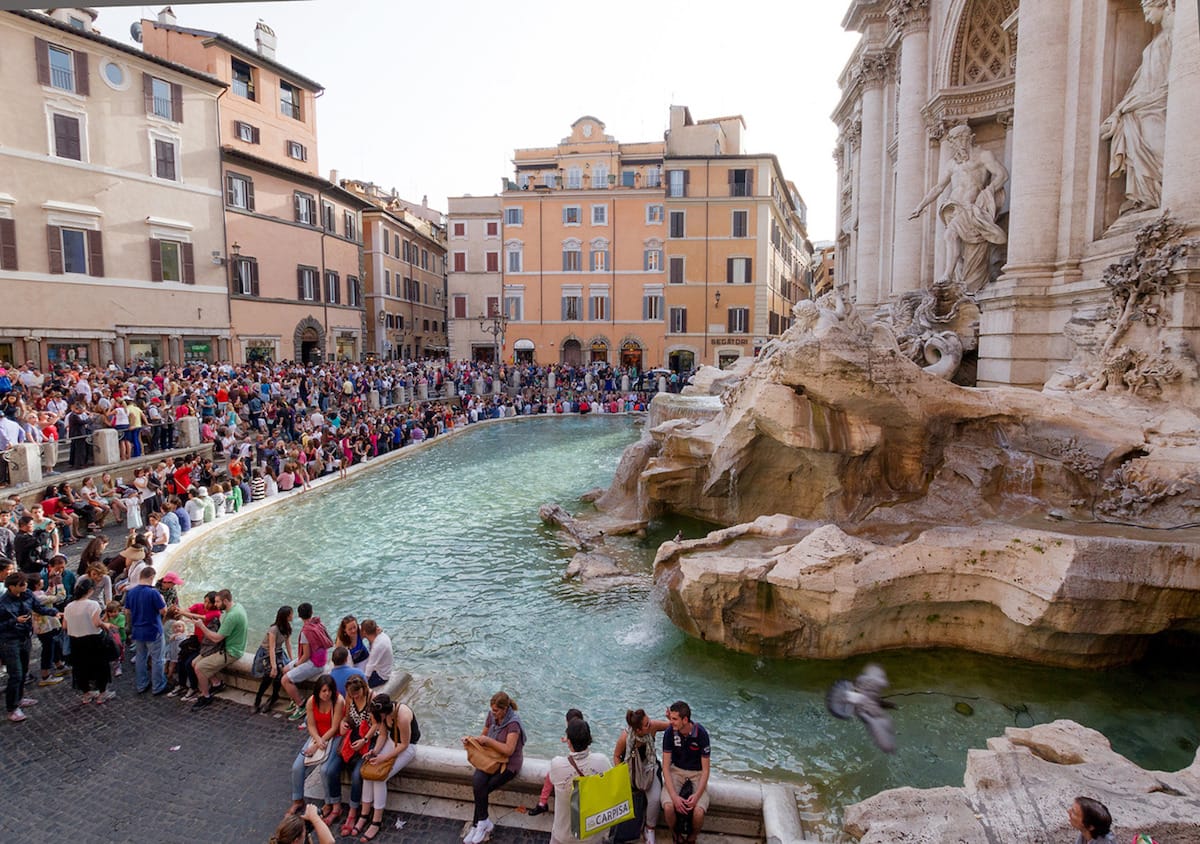
A visit to Rome wouldn’t be complete without making time for a trip to the Trevi Fountain. Whether you go early in the morning before the crowds arrive or return in the evening when it’s beautifully lit, this is one of those places that truly lives up to the hype.
FAQs – Trevi Fountain Facts
Do I need a ticket to see the Trevi Fountain?
Starting February 2, 2026, a €2 ticket is required to enter the inner basin of the Trevi Fountain, where people usually stand to throw the coins. However, access to view it from the main piazza remains free.
You will need a ticket to access this area from 9am-10pm. Tickets can be purchased online, at Civic Museums, Tourist Information points, or at the entrance. The entrance fee is intended to help protect and maintain the fountain, which attracts tens of thousands of visitors daily. For more details, visit the official website.
What other sites should I go to see when in Rome?
Exploring Underground Rome is one of the most fascinating ways to experience the city. Beneath the modern streets lies a hidden world of ancient catacombs, buried temples, and multi-layered archaeological sites like the Domus Aurea and the underground levels of the Colosseum. You can also discover lesser-known gems such as the Vicus Caprarius, often called the “City of Water,” which reveals how ancient aqueducts still run beneath the city today.
Is it possible to go sightseeing and avoid the crowds?
For travellers looking for alternative things to do, Rome also offers incredible experiences above ground but away from the crowds. Think quiet neighbourhoods, hidden churches, food markets, and scenic walks along the Appian Way. Many of these sites are easy to combine into guided experiences, helping you see a side of Rome most visitors miss entirely. Whether you’re drawn underground or off the beaten path, these alternative activities give you a deeper, more authentic connection to this incredible city.
Have these Trevi Fountain Facts inspired you to learn more about this amazing city?
Why not join our Rome in a Day Tour to experience the Trevi Fountain, Spanish Steps, and other Roman gems, with more fascinating facts and anecdotes from our expert guides! Take a moment to pause, admire the intricate sculptures, and join the tradition of tossing a coin into the water to ensure your return to the Eternal City.
Or if you want to go more off the beaten track, have a look at our wide range of Rome Tours, to choose one that suits your interests and itinerary!


Book a Tour

Pristine Sistine - The Chapel at its Best
€89

1794 reviews

Premium Colosseum Tour with Roman Forum Palatine Hill
€56
850 reviews

Pasta-Making Class: Cook, Dine Drink Wine with a Local Chef
€64
121 reviews

Crypts, Bones Catacombs: Underground Tour of Rome
€69
401 reviews

VIP Doge's Palace Secret Passages Tour
€79
18 reviews

Legendary Venice: St. Mark's Basilica, Terrace Doge's Palace
€69
286 reviews
You May Also Like

Follow us
Stay up to date with travel tips, local insights and all things Italy on our social channels!


Subscribe to our Newsletter
Get curated Italy travel tips delivered to your inbox!

