

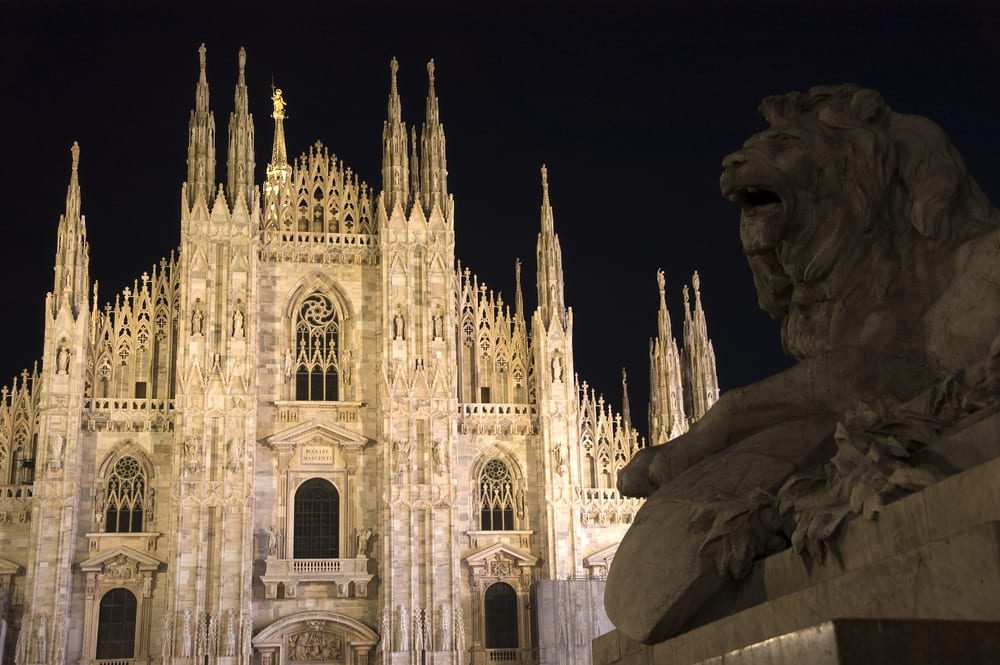
6 Amazing Facts About Milan Duomo
September 9, 2026
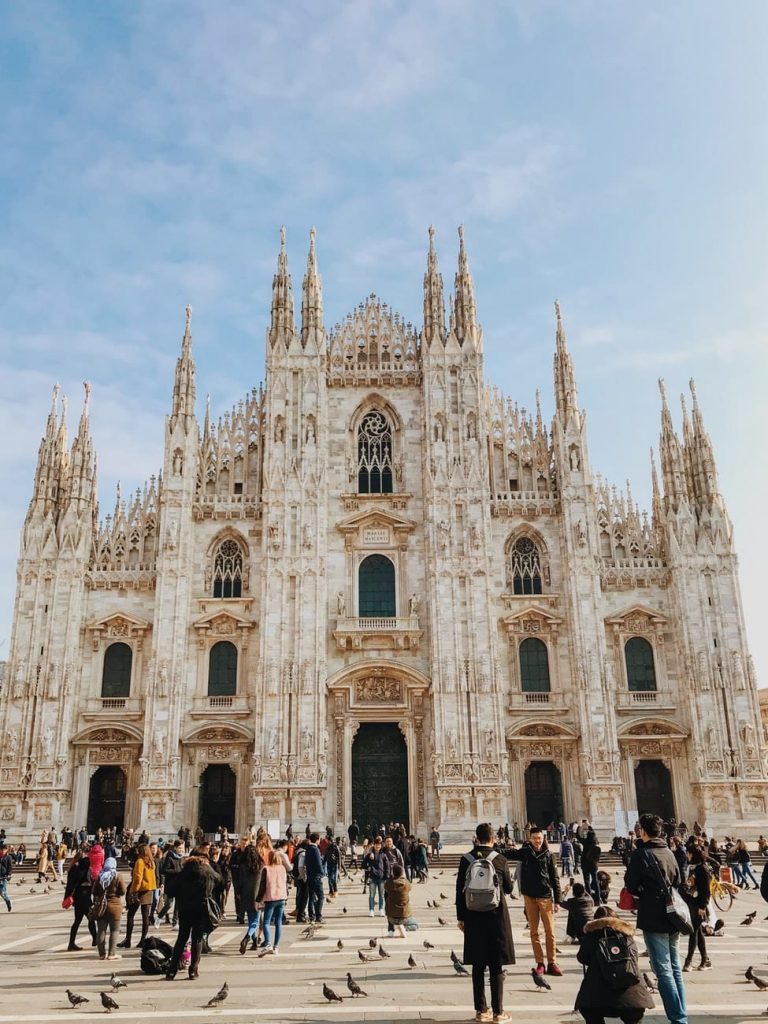
The Milan Duomo is decidedly the most impressive structure in the city. Standing proud in Piazza del Duomo, this extraordinary Gothic cathedral has been watching over Milan for more than 600 years, and its long history is every bit as fascinating as its elaborate façade.
Construction began in 1386, when Milan was ruled by Gian Galeazzo Visconti. He championed the ambitious project and helped establish the Veneranda Fabbrica del Duomo to oversee its construction. Since then, architects, engineers, sculptors, and craftsmen from across Europe have come to work on the cathedral. The result was a building that evolved over centuries, with generations of artists contributing to the extraordinary monument you see today.
Learn more about the stories behind that elaborate façade with these six amazing facts about the Cathedral of Milan.
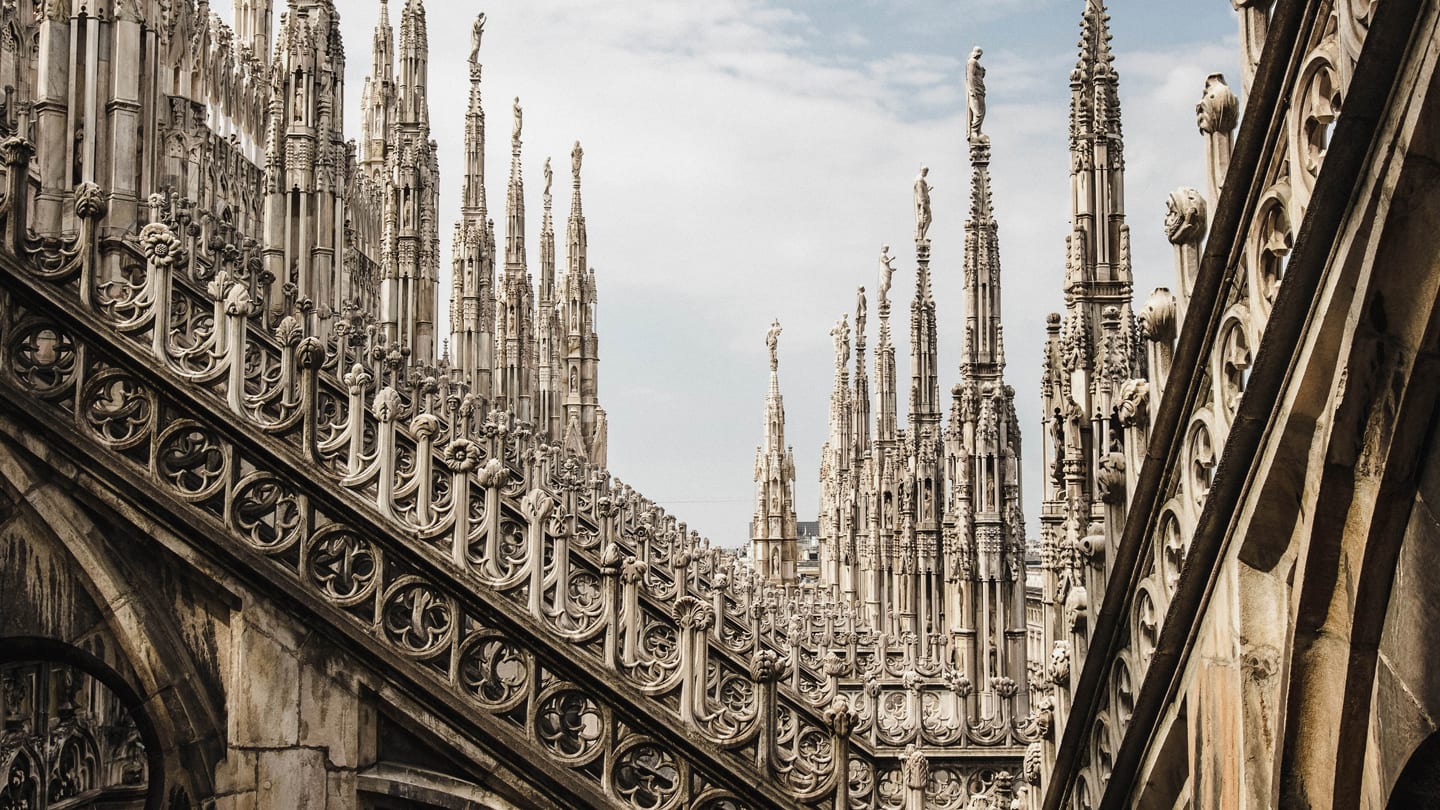
The elaborate turrets of Milan Duomo are as fascinating as they beautiful
6 Amazing Facts About Milan Duomo
Known in Italian as the Duomo di Milano, Milan Cathedral is the principal church of Milan and one of the city’s most iconic landmarks. Dedicated to the Nativity of the Blessed Virgin Mary, the cathedral is the seat of the Archbishop of Milan and serves as the spiritual heart of the city’s Catholic community. Its extraordinary Gothic architecture, vast scale, and centuries-long construction have made it one of Italy’s most remarkable religious buildings.
But, here are some lesser known facts about it that make it even more impressive
1. Milan Duomo is one of the largest churches in the world
Milan Cathedral is seriously big. Depending on how you measure the world’s largest churches, the Duomo ranks among the top handful, with an interior area of roughly 10,000–11,700 square meters (about 108,000-126,000 square feet). That’s enough space to accommodate around 40,000 people, and the cathedral occupies much of an entire city block.
Its scale is even more remarkable when you consider its age. Construction began in 1386, centuries before many of the other enormous churches that rank alongside it today.
2. It has the most statues of any building in the world
They say there are more statues on this gothic-style cathedral than any other building in the world. in fact, Milan Duomo is world famous for its extraordinary collection of statues, and it’s not hard to see why. The cathedral is adorned with more than 3,400 statues, 150 gargoyles, 135 ornate spires, and 96 giant figures, creating the spectacular “marble forest” that makes the Duomo so distinctive.
Climb the stairs or take the lift to the rooftop terraces to see these incredible details up close. From the terrazza, you’ll also enjoy sweeping views across Milan and, on clear days, the mountains surrounding the Po Valley.
Insider tip: Look up to spot the famous Madonnina, the gilded statue of the Virgin Mary that has stood atop the cathedral’s main spire since 1774.
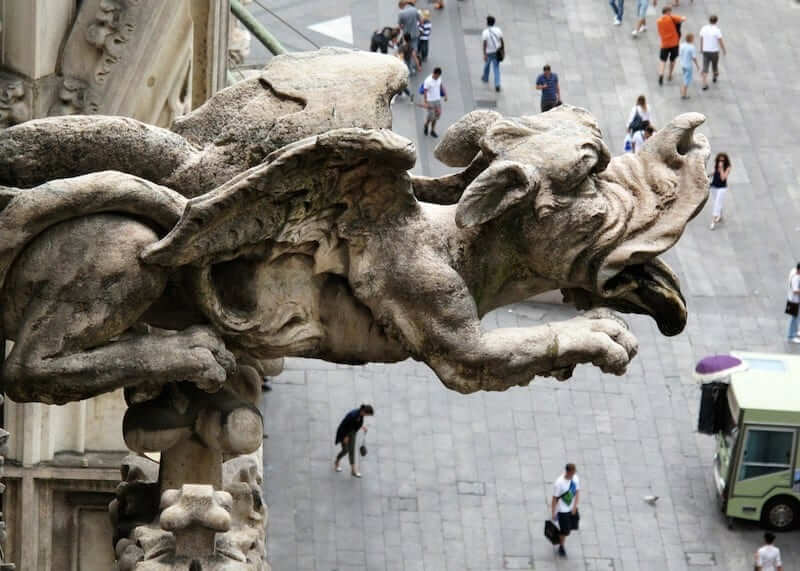
With 135 gargoyles, each one is a reminder of the many hands that helped create Milan Duomo. Photo by schizoform (flickr)
3. You can set your watch by its sundial
Near the main entrance, look down and you’ll find a brass line running across the floor of the Duomo. This is a meridian line, built in 1786 by astronomers from Milan’s Brera Observatory to determine true solar noon. A small hole in the cathedral’s roof, about 24 meters above the floor, allows a beam of sunlight to fall onto the line, marking the exact moment when the sun reaches its highest point in the sky.
The meridian was once part of Milan’s official timekeeping system. Astronomers could use it to establish the precise time, which was then communicated throughout the city. Today, of course, we have atomic clocks and smartphones, but the meridian remains a fascinating reminder of how people once measured and distributed time.
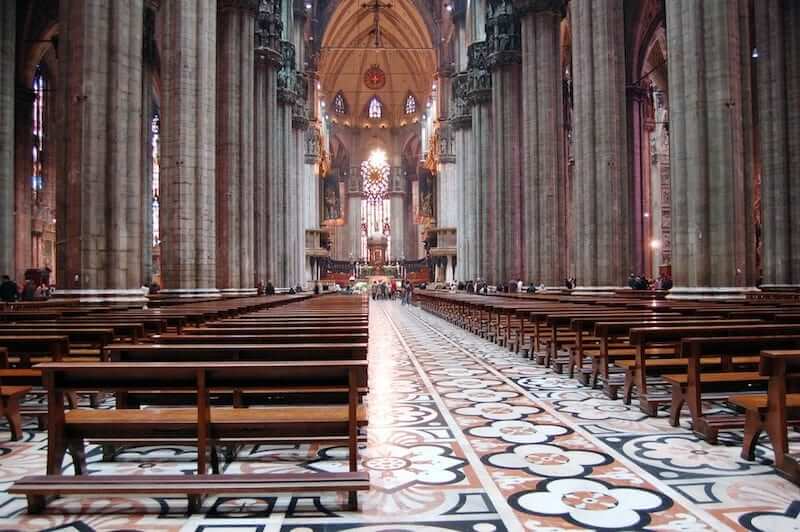
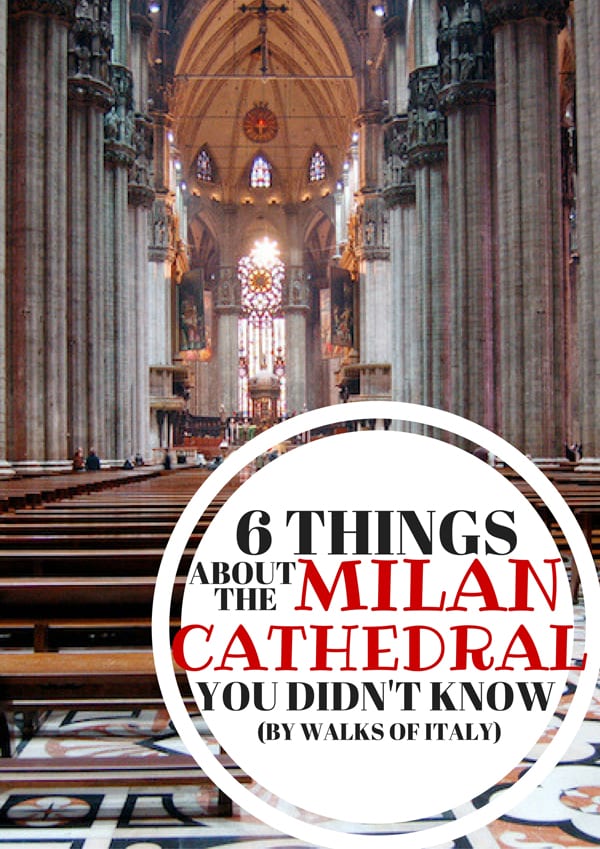
There are 52 pillars inside Milan Cathedral, one for every week of the year. | Photo by Jakob Montrasio
4. It is home to an unusual relic – the Holy Nail
Look up above the main altar and you’ll spot a small red light marking the tabernacle where the Duomo’s most unusual relic is kept: the Santo Chiodo, or Holy Nail. According to tradition, it is one of the nails used in the Crucifixion of Christ. The relic has been documented in Milan Cathedral since 1461 and is kept about 40 meters above the altar, safely out of reach.
Once a year, on the closest Sunday to September 14, the Archbishop of Milan ascends to the tabernacle aboard the Nivola – a remarkable lift decorated with painted canvas and angels. He retrieves the Holy Nail and brings it down to the main altar, where it is displayed for around 40 hours before being returned to its lofty resting place. The tradition, known as the Rite of the Nivola, dates back to the time of St. Charles Borromeo and is one of Milan’s most unusual religious ceremonies.
Insider info: the Nivola itself is a bizarre and visually memorable contraption. The name comes from the Milanese word for “cloud,” referring to its shape.
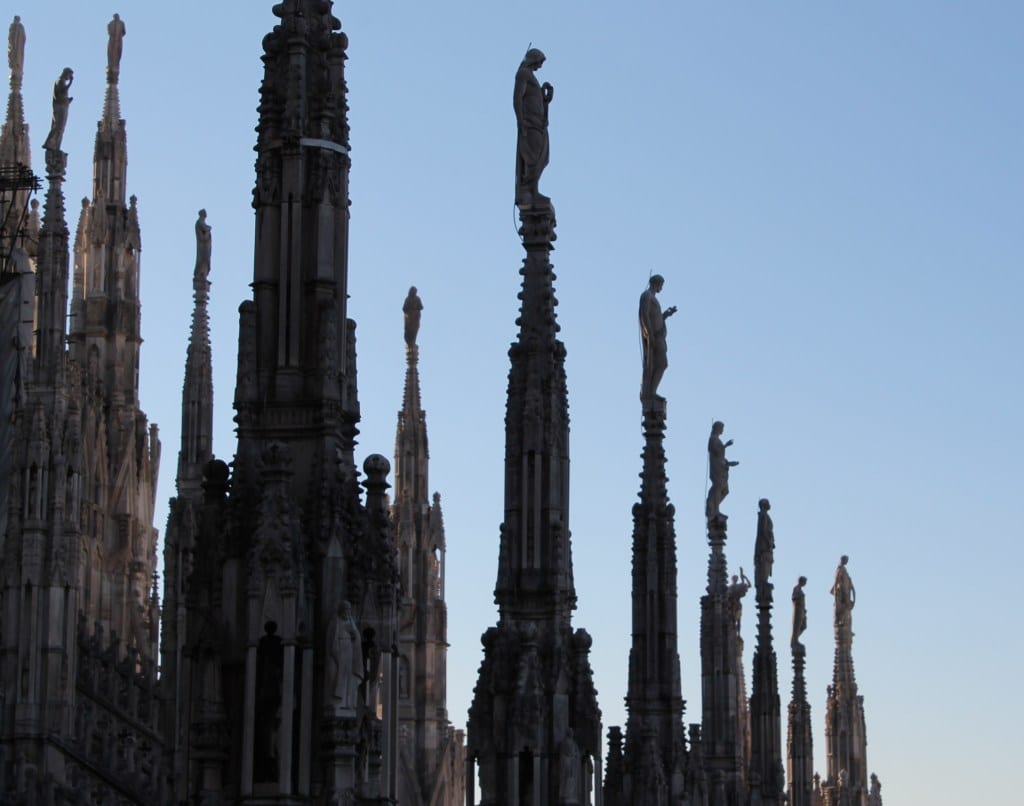
Each statue stands guard over the city, watching it’s history take place. Take a trip to the terrace to see what they see | Photo by Gina Mussio
5. It took 600 years, and a canal, to build
The construction of the Duomo officially started in 1386 by Bishop Antonio da Saluzzo and was supported by the ruler of Milan Gian Galeazzo Visconti who had grand visions of the cathedral. Though originally planned in Lombard brick, once the grandeur of the project was realized, Condoglian marble from Lake Maggiore was chosen as the core material. Indeed, extensive parts of the exterior and many architectural and decorative elements are made from this gleaming white marble with a pink hue.
Transporting the enormous marble blocks to Milan was an engineering feat. To bring it from the quarries of Candoglia, canals were dug leading to the construction site, evidence of which is still visible along the famous navigli, the canals left over from the network built in southern Milan!
The project brought together hundreds of architects, sculptors, engineers, stonecutters and other specialists from across Europe. This international workforce helped give the Duomo its distinctive Gothic character and made the cathedral one of the most European building projects of medieval Italy.
The high altar was consecrated by Pope Martin V in 1418, but the cathedral was still far from finished. Work continued for centuries, with successive generations adding architectural details, sculptures, spires, stained glass and other decorative elements.
6. The Duomo has never really been finished
After the high altar was consecrated by Pope Martin V in 1418, Milan Cathedral remained a work in progress for centuries. Political upheaval, changing architectural tastes, funding challenges, and the sheer scale of the project meant that generation after generation of architects, sculptors, and craftsmen continued to add to the cathedral. The façade, for example, wasn’t completed until the early 19th century.
Napoleon played an important role in finally pushing the façade toward completion. Ahead of his coronation as King of Italy in Milan in 1805, he ordered work to resume, and the façade was completed between 1807 and 1813. Even then, work on the Duomo didn’t simply stop: additional spires, statues, stained glass, doors, and other elements were added during the 19th and 20th centuries.
Today, the cathedral is still very much a living construction and conservation site. The Veneranda Fabbrica del Duomo continues to restore, clean, and maintain the cathedral, while new work and repairs ensure that this centuries-old masterpiece can continue to change and endure. In that sense, the Duomo has never really been finished.
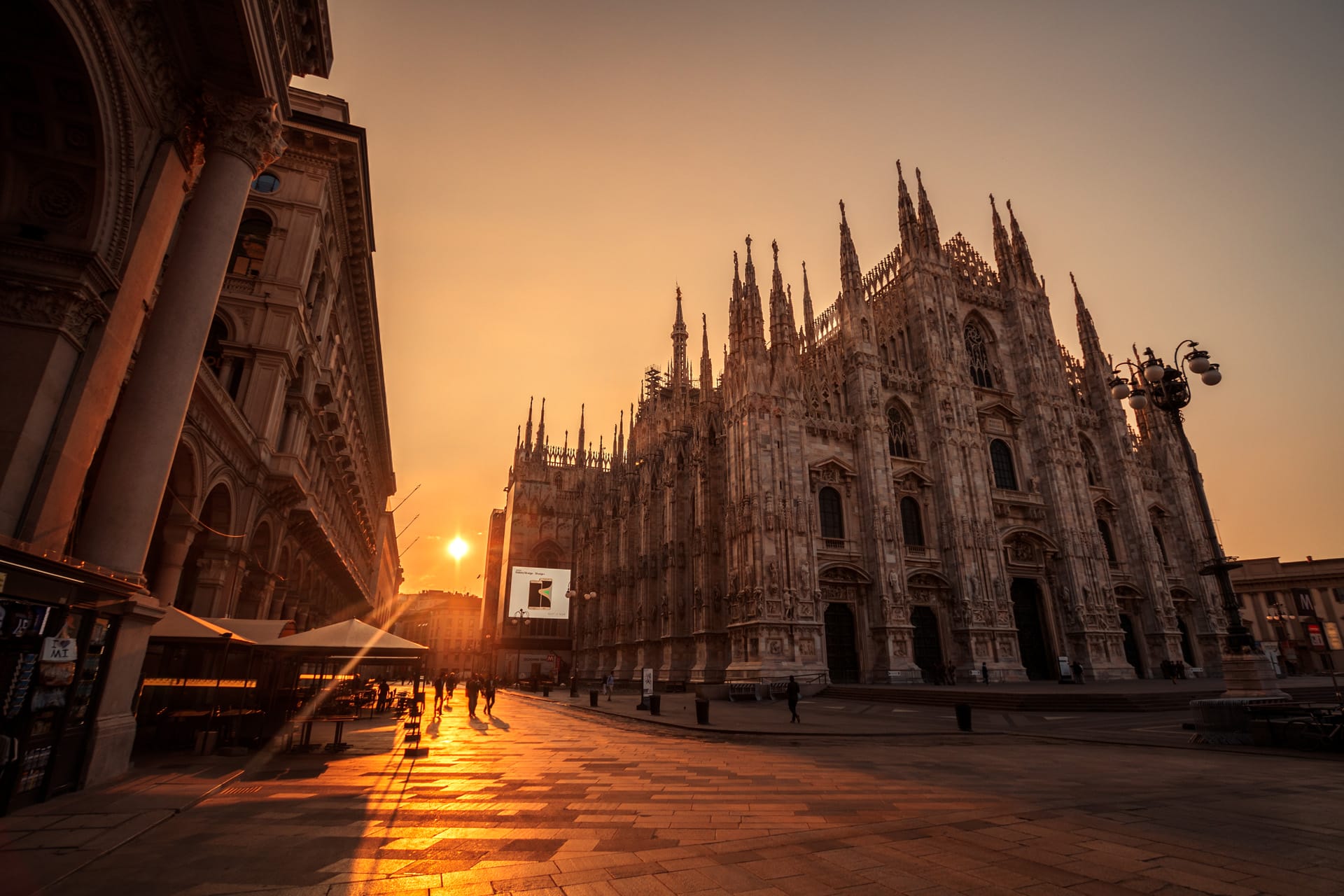
Milan Duomo, one of the largest cathedrals in the world, silhouetted against the sunset
FAQs – Visiting Milan Duomo
Do I need to buy tickets to visit Milan Duomo?
Yes. You need a ticket to enter the cathedral and access the rooftop terraces. Several ticket options are available, including entry to the cathedral alone, access to the terraces by stairs, and tickets that include the lift. If you want to visit the terraces, it’s worth booking ahead, particularly during the busy summer months, as popular time slots can sell out.
What’s the best way to visit the Milan Duomo?
Give yourself at least two hours to properly explore the cathedral and its rooftop terraces. The interior is impressive, but don’t miss the rooftop, where you can get remarkably close to the forest of statues, spires, and gargoyles. If you’re interested in the history and symbolism behind what you’re seeing, a guided tour makes the experience much more rewarding.
What should I wear when visiting Milan Duomo?
Remember that the Duomo is an active place of worship, so visitors need to dress appropriately. Shoulders and knees should be covered, and very revealing clothing isn’t permitted. You’ll also pass through security, so avoid bringing large bags or items that could slow you down at the entrance. Wear comfortable shoes if you’re planning to climb to the rooftop, the stairs can be tiring, but the views are well worth the effort.
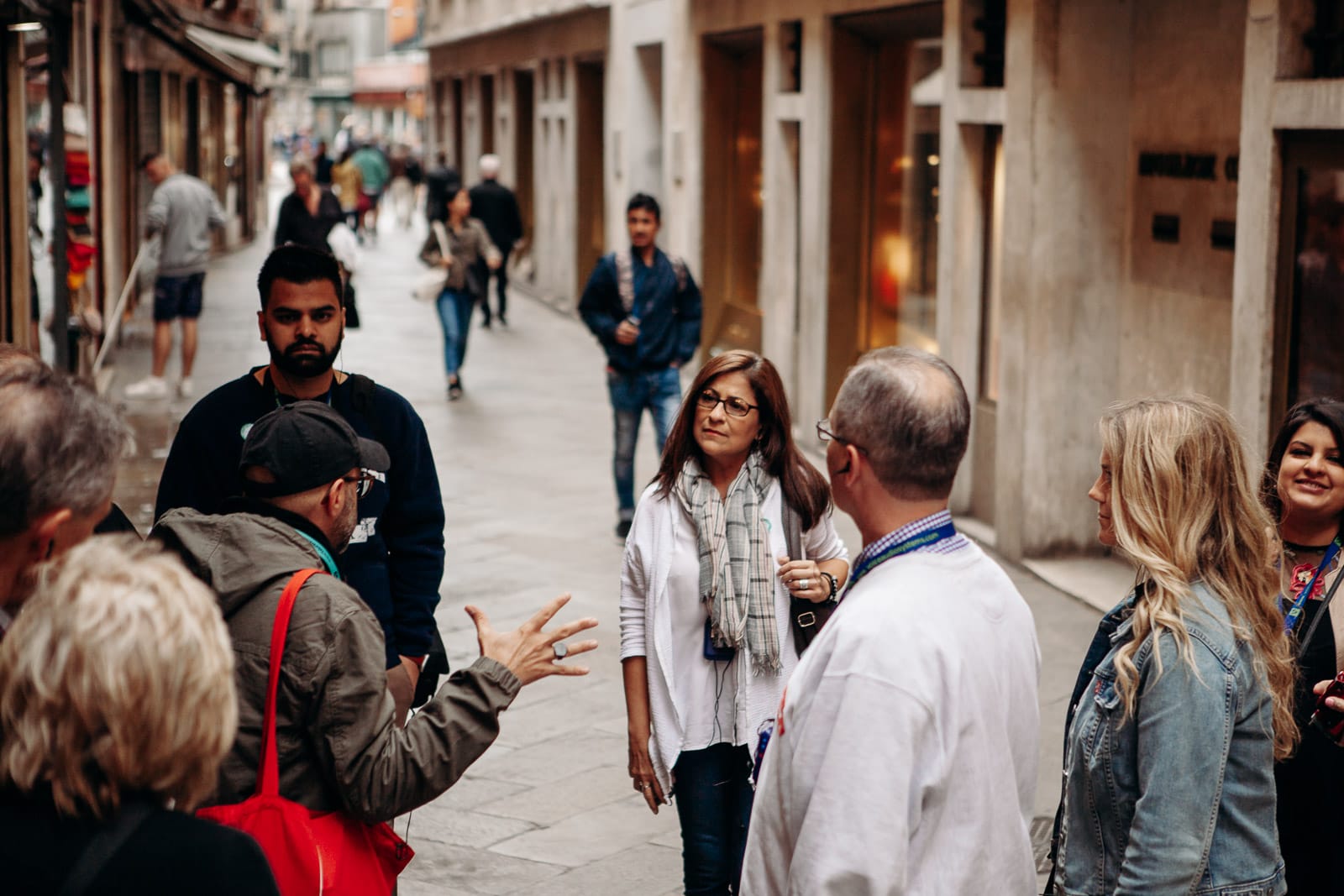
Taking a guided tour to see the Best of Milan is a great idea if you want to learn more about this incredible city
If you want to experience the Duomo with a passionate, expert guide who can bring its history and architecture to life, check out our Best of Milan Tour.
Along with guaranteed, skip-the-line access to Leonardo da Vinci’s Last Supper and the Duomo, you’ll explore Milan’s historic center on a guided stroll, discovering how the city evolved from a Roman settlement and medieval trading hub into Italy’s modern fashion capital.
With a small group of 15 or fewer, there’s plenty of time to ask questions and get the most from your guide.

Book a Tour

Pristine Sistine - The Chapel at its Best
€89

1794 reviews

Premium Colosseum Tour with Roman Forum Palatine Hill
€56
850 reviews

Pasta-Making Class: Cook, Dine Drink Wine with a Local Chef
€64
121 reviews

Crypts, Bones Catacombs: Underground Tour of Rome
€69
401 reviews

VIP Doge's Palace Secret Passages Tour
€79
18 reviews

Legendary Venice: St. Mark's Basilica, Terrace Doge's Palace
€69
286 reviews
You May Also Like

Follow us
Stay up to date with travel tips, local insights and all things Italy on our social channels!


Subscribe to our Newsletter
Get curated Italy travel tips delivered to your inbox!

