



Origins of Michelangelo’s David – the World´s Most Famous Statue
December 23, 2025
It is probably the most famous sculpture in the world, but what do you actually know about the origins of Michelangelo´s David?
They say there’s nothing new under the sun, that all ideas have been formulated – and reformulated – countless times. In an age when we are bombarded by content, it’s telling that we are insatiably drawn to the ‘classics’ as a purer form of engagement with art.
We seek out recognizable paintings, sculptures and buildings of times gone by. But we have a tendency to think of masterpieces sprung fully formed out of their creators’ minds. Little do we realize their ideas were subject to the same cycle of change, development, and refinement. Read on to discover why and how David became such an icon.
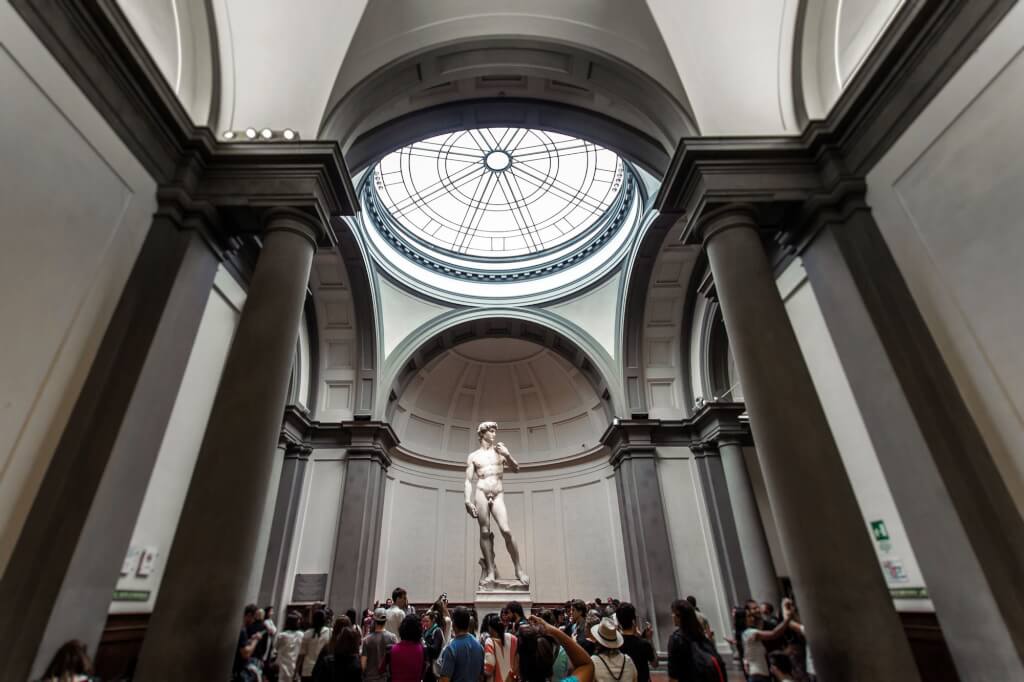 David, towers above the visitors that flock to see him, in all his glory!
Origins of Michelangelo’s David
From Damaged Marble to Flawless Masterpiece
The history of Michelangelo’s David is not as well-known as you might think. Indeed, when Michelangelo began work on what would become one of the most iconic statues in the world, the odds were already against him.
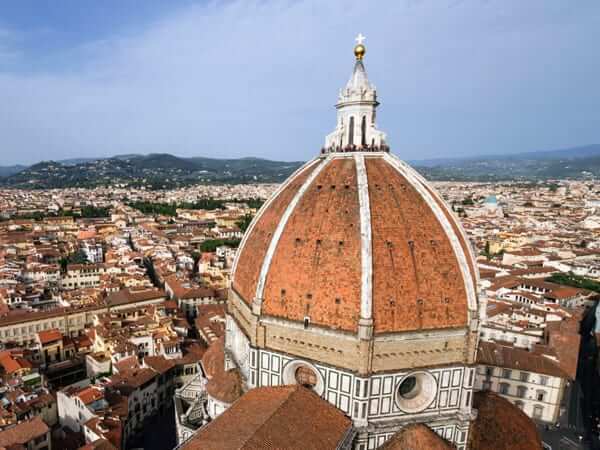
As far back as 1464 – the idea for a monumental sculpture to guard the Florence Cathedral was formulated and its creation in the works. The Opera del Duomo, made up of members from The Wool Guild of Florence (who were a big deal during the time), selected sculptor Agostino di Duccio to undertake this mammoth task.
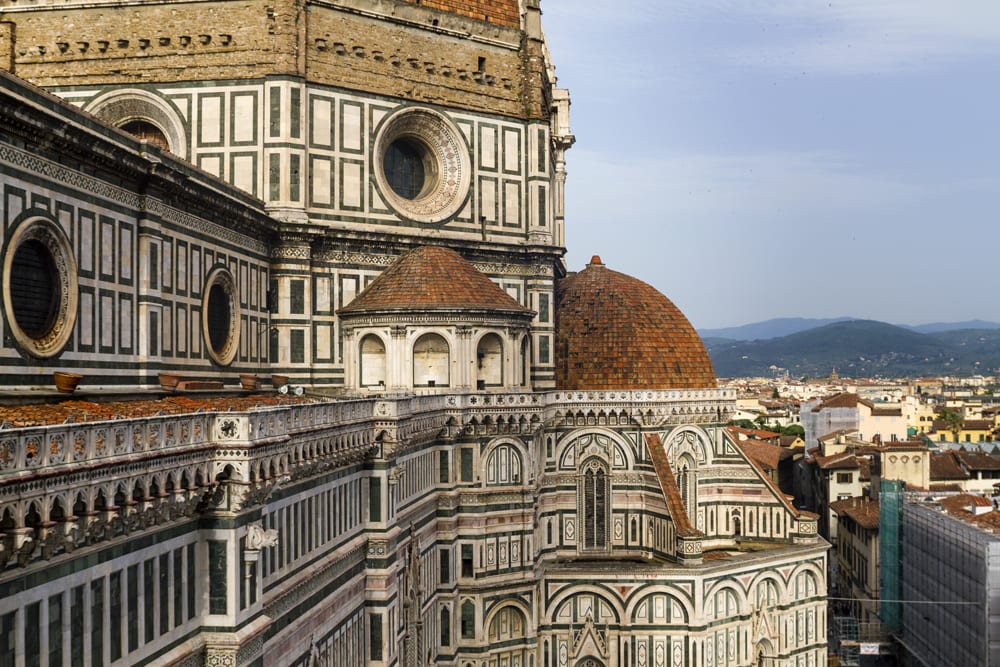
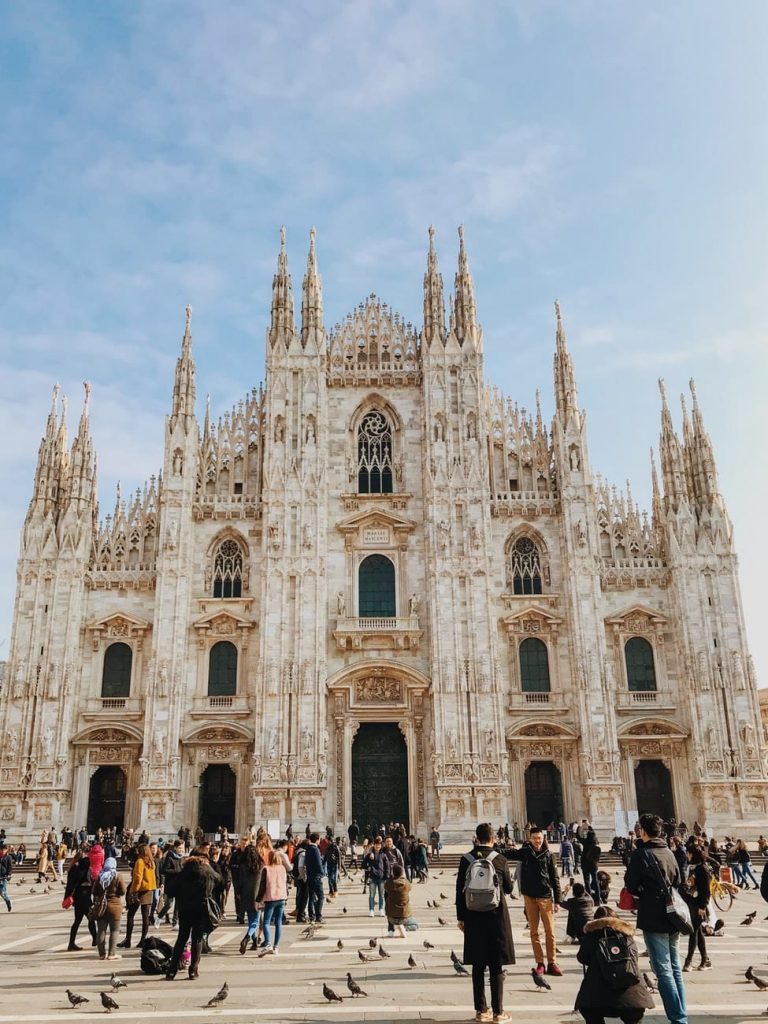
Florence Cathedral
Choosing the Right Man for the Job
But the project was fraught with trouble from the get-go. Though he was gifted with a chisel, Agostino wasn’t as skilled when it came to selecting materials. The block of marble he chose from a mountainside in Carrara was already damaged before the project began. Not only that but the stone was so large that it took a total of two years for a crew of men, oxen and animals to transport it to the city of Florence.
Though the people marvelled at the marble once it got there, the problems plaguing it followed it to the city. Its sculptor, Agostino, was unused to working on such a large scale and eventually abandoned the project. But not before making some unrepairable alterations to the block of marble by starting to carve the feet and legs.
Antonio Rossellino was the next sculptor to take up the challenge but he too was forced to admit defeat, citing that the marble’s imperfections made it too fragile to work with.
For 25 years the marble lay unused – impressive yet imperfect. It would take a mix of skill, impetuousness and daring to take on a project of this size.
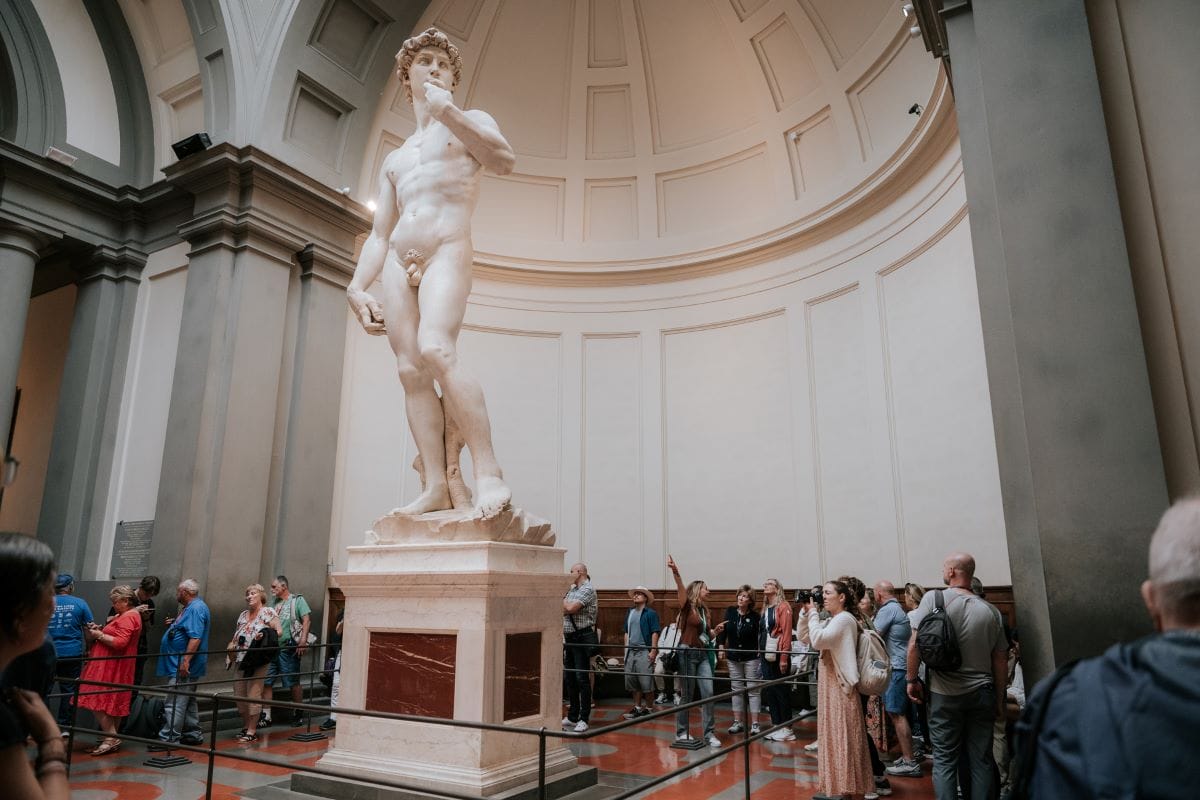
David in his current home in the Accademia Gallery in Florence
Making the Final Cut
In 1501 when he was just 26 years old, Michelangelo di Lodovico Buonarroti Simoni was already a highly regarded and well-paid sculptor. Two years previously he had finished the Pietà for French Cardinal Jean de Bilhères and earned instant recognition from Florence’s elite.
This made him an attractive prospect for the David commission and soon, the Wool Guild offered him the task, with the caveat that he must use the original block of marble which even they admitted had been ‘roughly hewn’.
Undeterred by the fact that he was dealing with a) marble that was unfit for purpose, and b) a commission two previous artists had abandoned, Michelangelo enthusiastically accepted. Despite damage to the marble thanks to his predecessors, Michelangelo worked continuously for two years and unveiled a work that was immediately recognised as a masterpiece of the time.
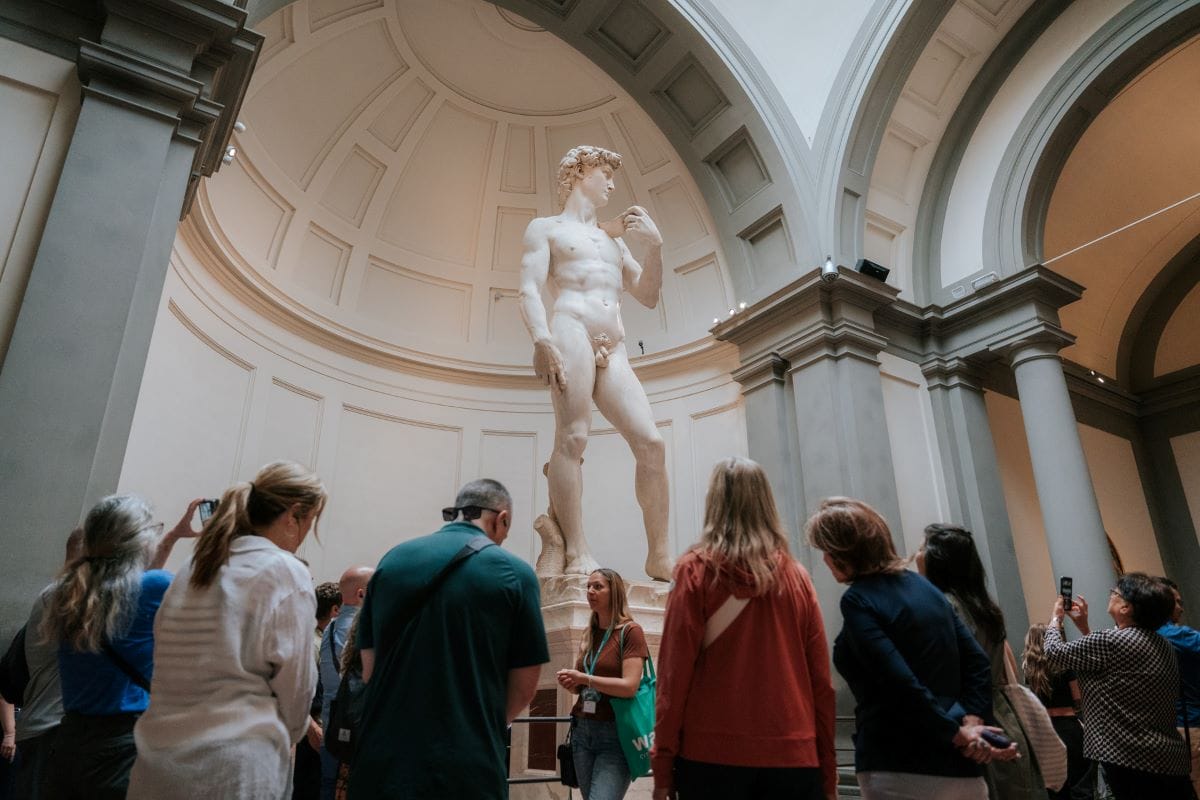
David is one of the most visited and talked about statues in the world.
What’s in a name?
The Story of David and Goliath

Of course, David’s beginnings also correspond with the statue’s inspiration – the biblical story of David and Goliath. As story goes, the Israelite and Philistine armies had agreed to a trial by single combat to settle their long-standing war.
While the Philistines were ready with their warrior in place, someone had yet to come forward for the Israelites side. And it was little wonder, given the champion who the Philistines had fighting for them. The Philistine’s giant Goliath paraded over the battlefield for a good forty days mocking the Israelites and their King Saul, who was too petrified to face the warrior himself.
It was only when David, the younger brother of one of the soldiers, came to visit the front line that the Israelites found their champion. Undaunted by the giant’s size, David bravely volunteered to face Goliath in single combat with his weapon of choice: a slingshot.
Instead of viewing the giant’s size as an obstacle, he saw it as his opportunity. Goliath may have been enormous but he was slow-moving, and though he was well-armored it weighed him down. So the unarmored David confidently met him on the battlefield. Much like Michelangelo’s adamance to take up the task other sculptors had abandoned, with one well-aimed shot, David took on a task a whole army feared and defeated Goliath.
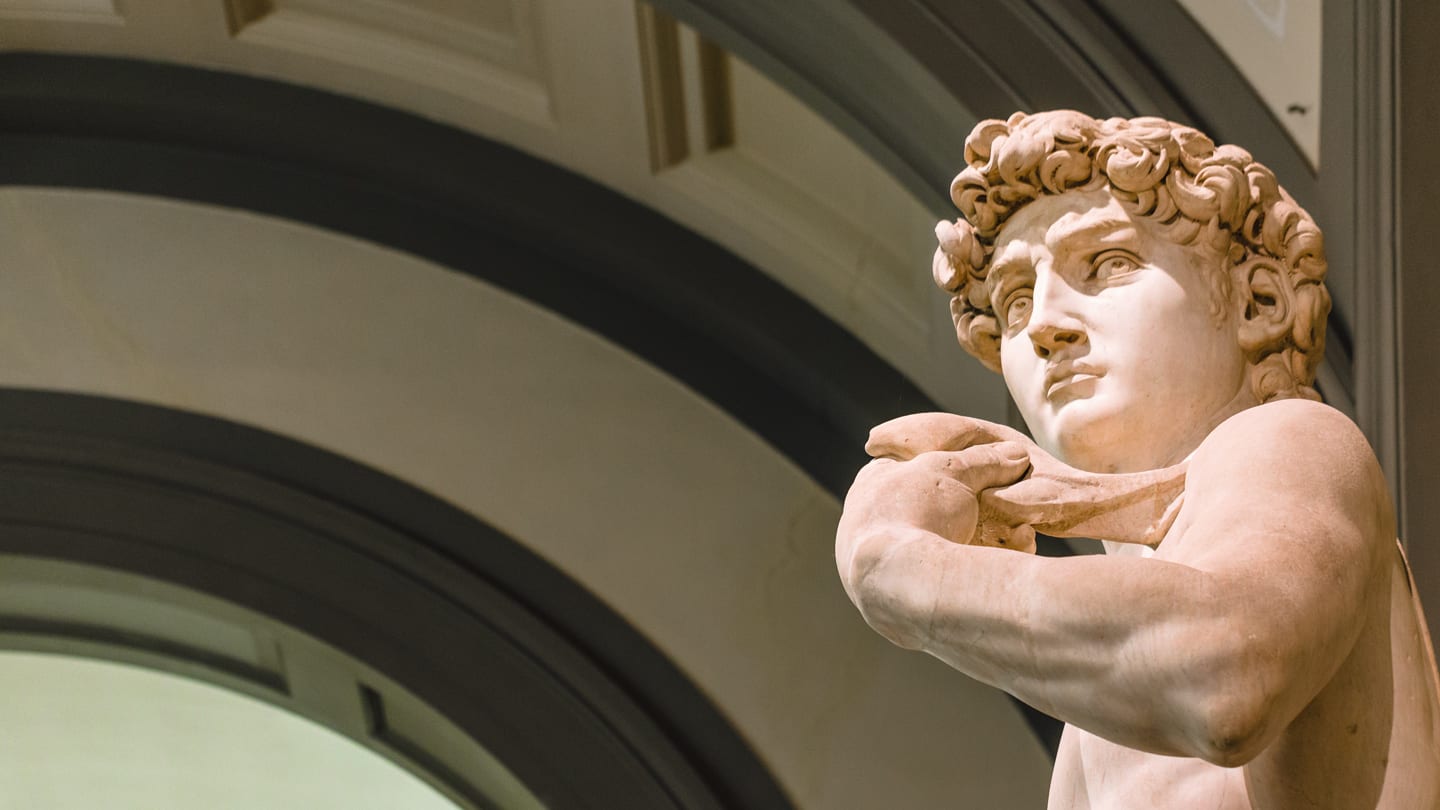
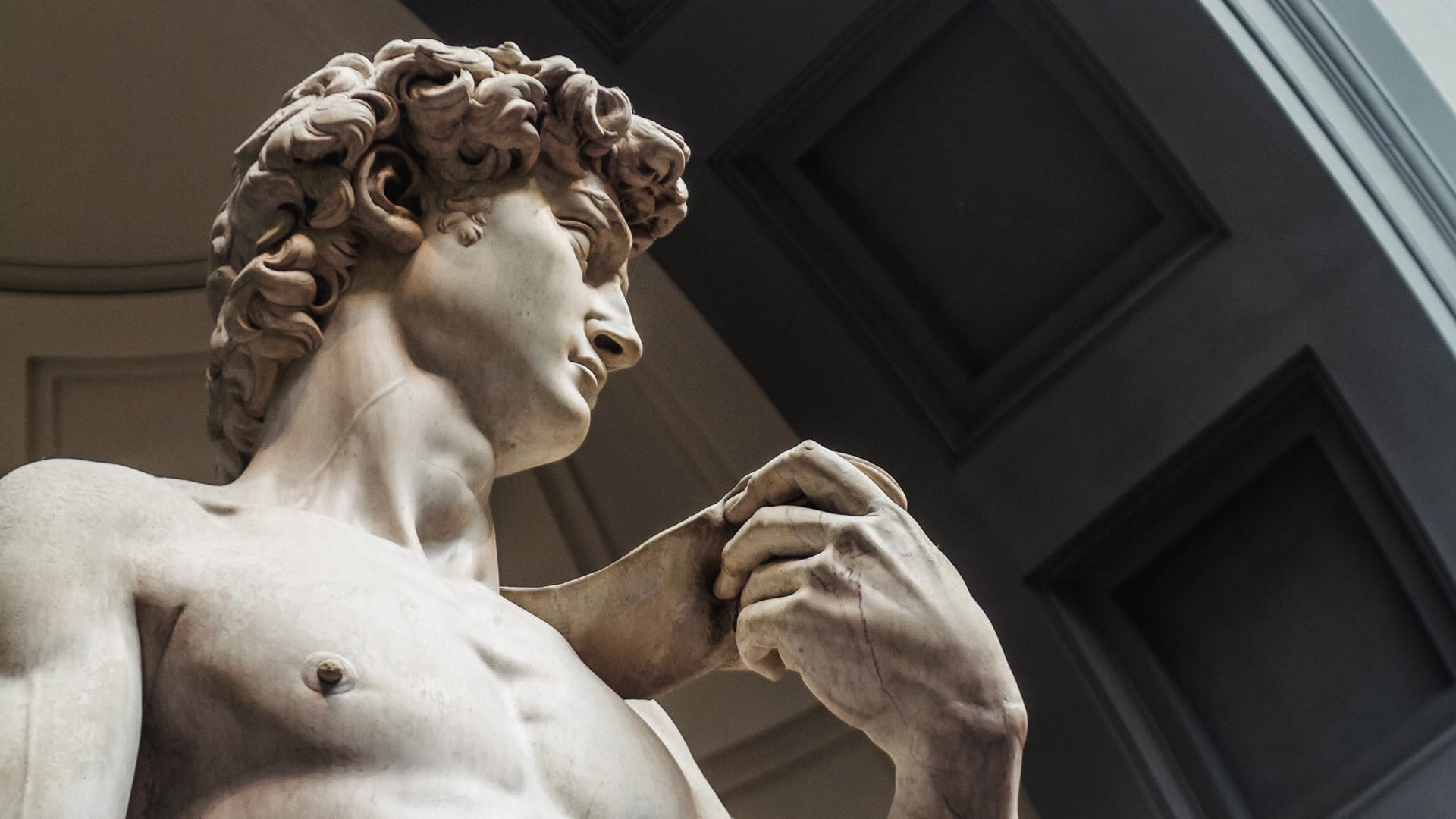
The face of David, the young soldier who took on the giant Goliath
Why Were Statues of David So Popular?
The story of David became a very popular theme during the Renaissance, representing all of the most prized qualities, such as youth, daring, energy and victory against insurmountable odds.
As a result, a number of statues were created during the time to represent the story. Of course, the sheer scale of Michelangelo’s project would have been enough to set his apart. But Michelangelo went against the grain in another crucial aspect of his design.
David was usually depicted in glory after his victory, resting his foot on top of Goliath’s severed head. Instead of depicting David after the battle with Goliath, Michelangelo chose to depict his David moments before, as the young man stood ready to face his opponent.
He stands alert yet relaxed, with his slingshot almost hidden in his hand – all of which represents the qualities of rational thought, deliberation and a move away from brawn and excess, which were highly prized in the Renaissance school of thought.
Read more: From Art History to Modern art: & Podcasts to Download ASAP
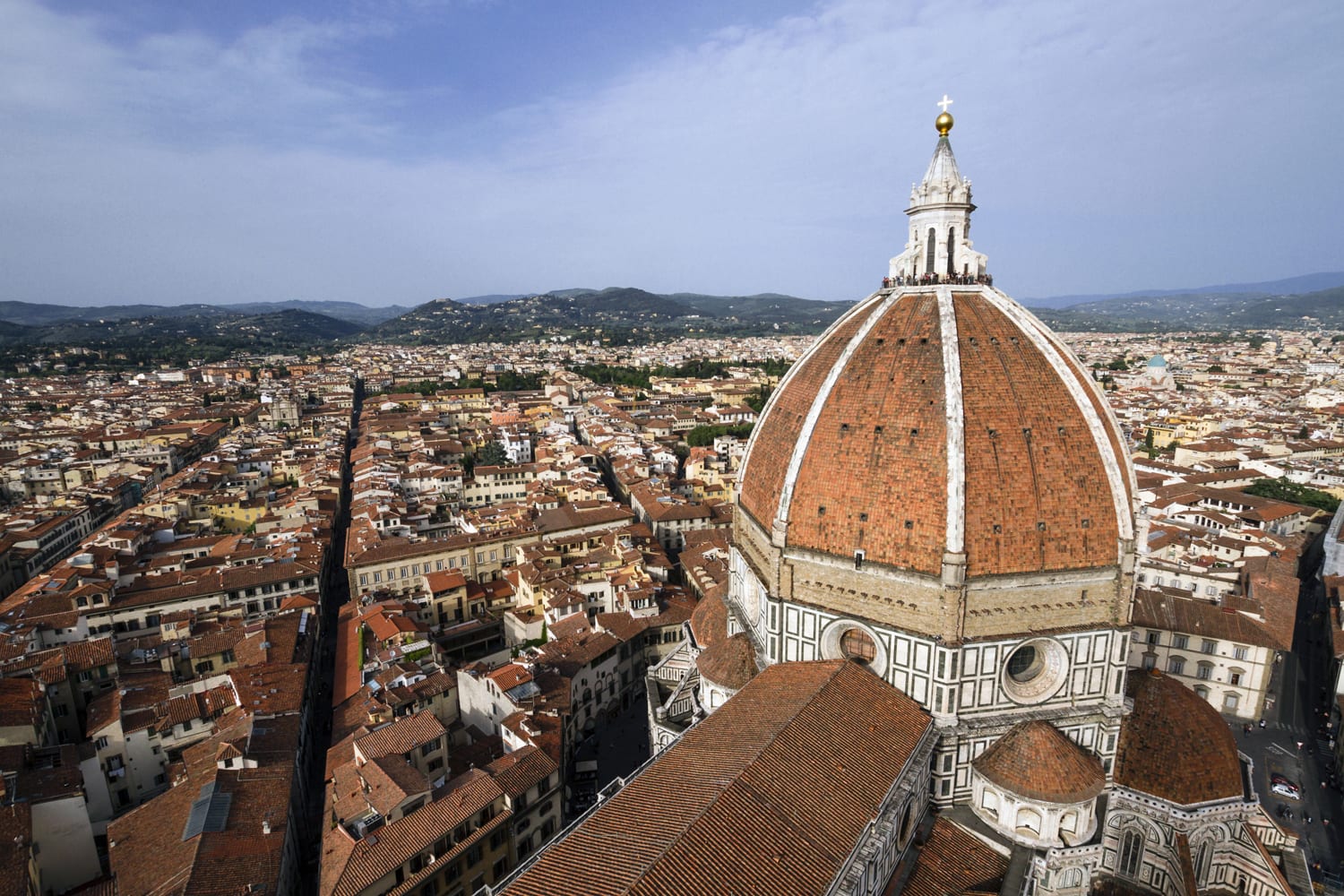
The Florence Duomo – the intended site for David
Interpreting David
If the story of David and Goliath bears relevance to Michelangelo’s task of sculpting a block of marble other artists could not; it could equally be applied to the city of Florence during the 16th century.
Indeed, the independent Republic of Florence saw itself as the ‘David of Italy’, holding out against the all-consuming influence of the Pope in Rome and at times, prominent families who tried to establish their hold on the city. One such family were the Medicis, who ruled Florence during the height of the Renaissance with some brief, but notable, exceptions. One of these exceptions occurred in 1504, when the Medici were exiled from the city.
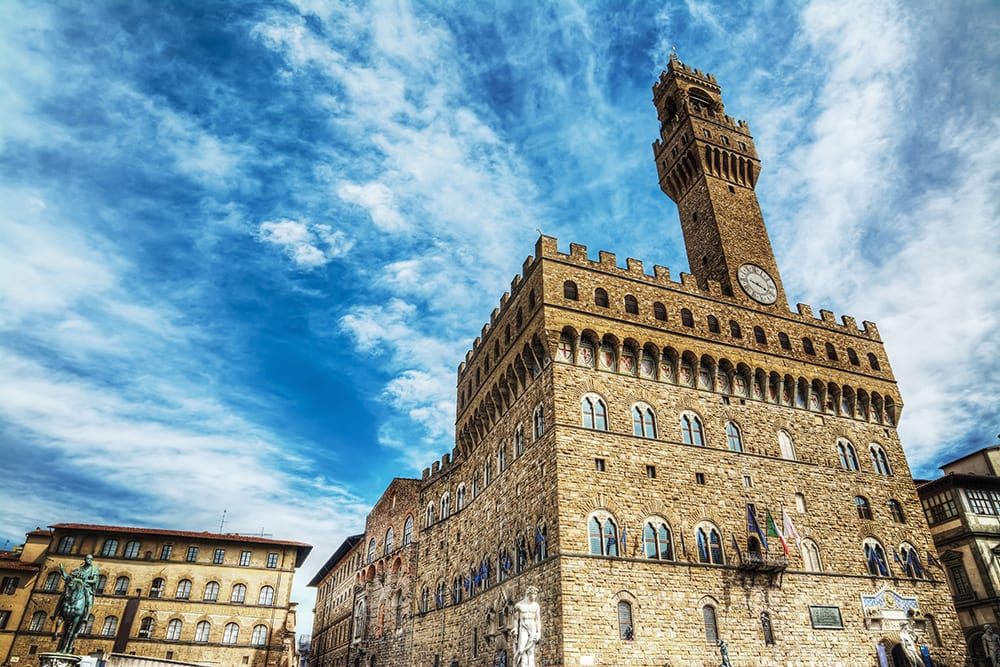
Though the original intention for the statue of David was for it to sit proudly atop the Florence Cathedral, due to its sheer size and remarkable artistry, the government officials decided that it should be in a position more befitting such a colossal work. So instead, they decided to install it outside of Florence’s town hall, (the Palazzo Vecchio).
Despite the fact that Michelangelo had received patronage from the Medici family in his earlier career, even so far as being apprenticed at the Medici’s school for artists, the position of David looking out defiantly towards Rome was immediately seen as a symbol against the exiled Medici family. Though this wasn’t Michelangelo’s intention – and a clear case of art taking on a life of its own – it wasn’t long before a backlash began against the statue.
The result? Soon after the statue was unveiled it was attacked with stones resulting in minor damage while rioting against the ousted Medici in 1527 clan left David’s left arm damaged.
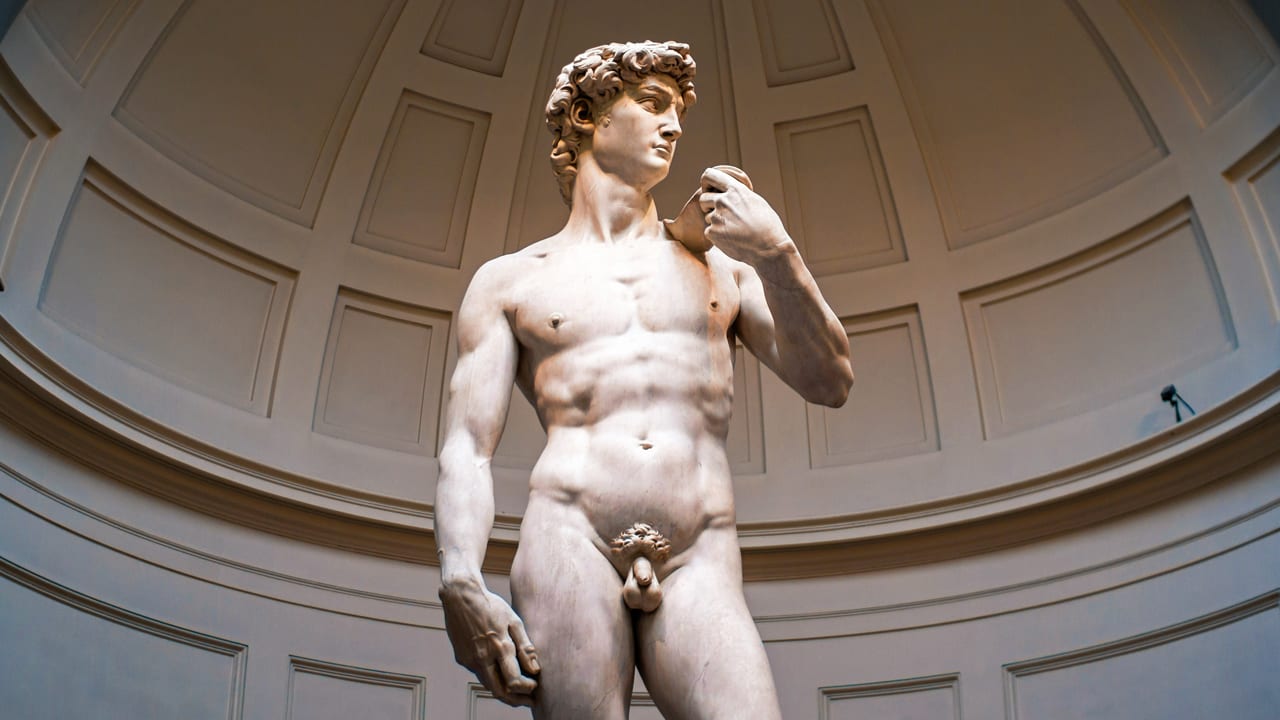
This iconic statue has withstood the test of time and politics to stand tall throughout history.
A Legacy Written in Stone
Nevertheless, the statue of David long outlived its political associations. Today it is visited by over one million people per year and has inspired thirty full-scale replicas worldwide. What’s more, though Michelangelo’s work on the Pietà may have earned him initial celebrity status with the elite of Florence, it was his work on David that would guarantee his legacy. Not bad for a statue with such a rocky start!
Fun Facts:
- Michelangelo’s David is currently on display in Florence’s Accademia Gallery
- It is visited by over a million people per year.
- David stands at a staggering 17 feet tall (5.16 meters) – three times the size of the average man.
- The statue was commissioned by the Overseers of the Office of Works of the Florence Cathedral (or Opera del Duomo) who served Michelangelo the official contract on the 16 August 1501.
- Michelangelo’s David had many predecessors including Donatello and Bernini’s, but there are key differences between the three renditions.
- Bernini’s David is lifesize, in the middle of action, and a part of the Italian Baroque period
- Donatello’s statue is a bronze, depicting the moment after David’s battle with Goliath
Looking for more fun facts about Italian art & culture? Take a look at: Why they Moved the Mona Lisa
FAQ´s – Michelangelo’s David
Where can you see Michelangelo’s David today?
Michelangelo’s David is housed in the Galleria dell’Accademia in Florence, where it has been displayed since 1873 to protect it from weather and damage. The statue is the clear centerpiece of the museum, positioned at the end of a long gallery so visitors experience its full impact as they approach.
How much do tickets cost and do you need to book in advance?
Standard tickets to the Accademia cost around €12 to 15, plus a small reservation fee if you book ahead. Because David is one of Florence’s most visited artworks, advance booking is strongly recommended, especially from April through October. Without a reservation, waits can easily exceed one to two hours during peak season.
What are the best times and tours to see David without the crowds?
The Accademia is generally open Tuesday–Sunday, from around 8:15am to 6:50pm (last entry mid-afternoon), with extended hours on select days. To avoid crowds, aim for early morning entry right after opening or late afternoon slots, especially midweek
A guided tour is the best way to see David, as it includes skip-the-line access and expert insight into the sculpture’s history, symbolism, and Michelangelo’s techniques—details that are easy to miss when viewing the statue on your own.
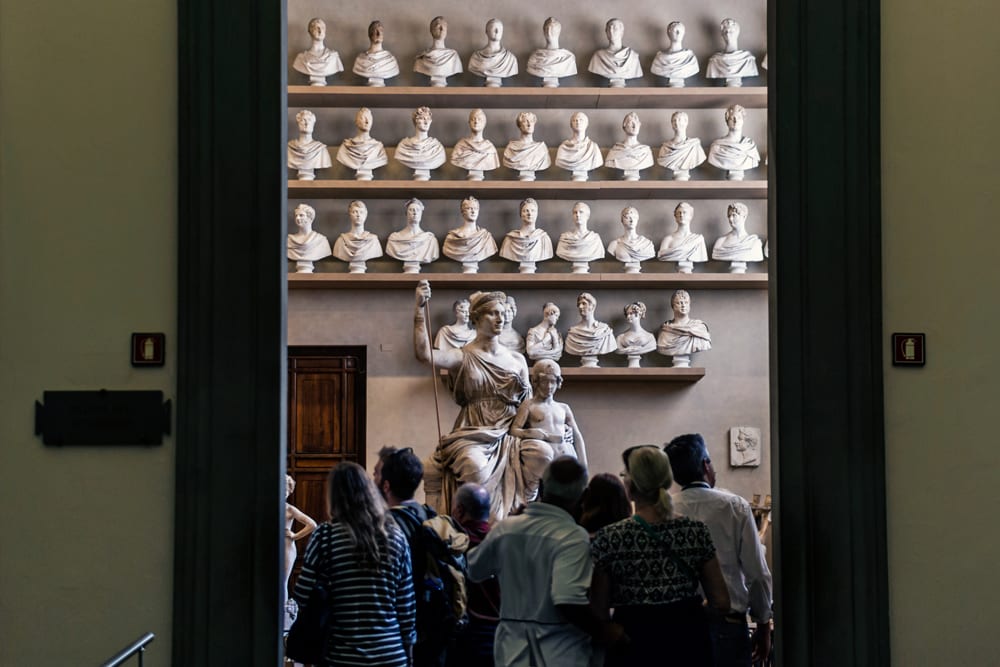
Some of the other statues in the Accademia, Florence.
See Michelangelo’s iconic David for yourself on our Florence Tours.
For a truly unforgettable experience, join our VIP after Hours at the Florence Accademia tour which offers rare access once the daytime crowds have gone home. Enjoy the chance to admire David in near silence, with space to take in every detail of this Renaissance masterpiece, while an expert local guide brings the origins of Michelangelo’s David, and his story, techniques, and the statue’s powerful symbolism to life.
It’s an intimate, unhurried way to experience one of the world’s most celebrated works of art—without the queues or the crowds.

Book a Tour

Pristine Sistine - The Chapel at its Best
€89

1794 reviews

Premium Colosseum Tour with Roman Forum Palatine Hill
€56
850 reviews

Pasta-Making Class: Cook, Dine Drink Wine with a Local Chef
€64
121 reviews

Crypts, Bones Catacombs: Underground Tour of Rome
€69
401 reviews

VIP Doge's Palace Secret Passages Tour
€79
18 reviews

Legendary Venice: St. Mark's Basilica, Terrace Doge's Palace
€69
286 reviews
You May Also Like
Follow us
Stay up to date with travel tips, local insights and all things Italy on our social channels!


Subscribe to our Newsletter
Get curated Italy travel tips delivered to your inbox!

