

Jewish Quarter Rome: A Visitor’s Guide to the Historic Roman Ghetto
April 14, 2026
Hidden in the heart of the city, Rome’s Jewish Quarter is one of the best attractions in Rome and also one of its least-known. As the oldest Jewish community in all of Europe, this beautiful, thriving neighborhood is as central to the history of the city as it is to the Jewish faith. Follow us into the Jewish Quarter Rome to see how Jews have shaped the Eternal City.
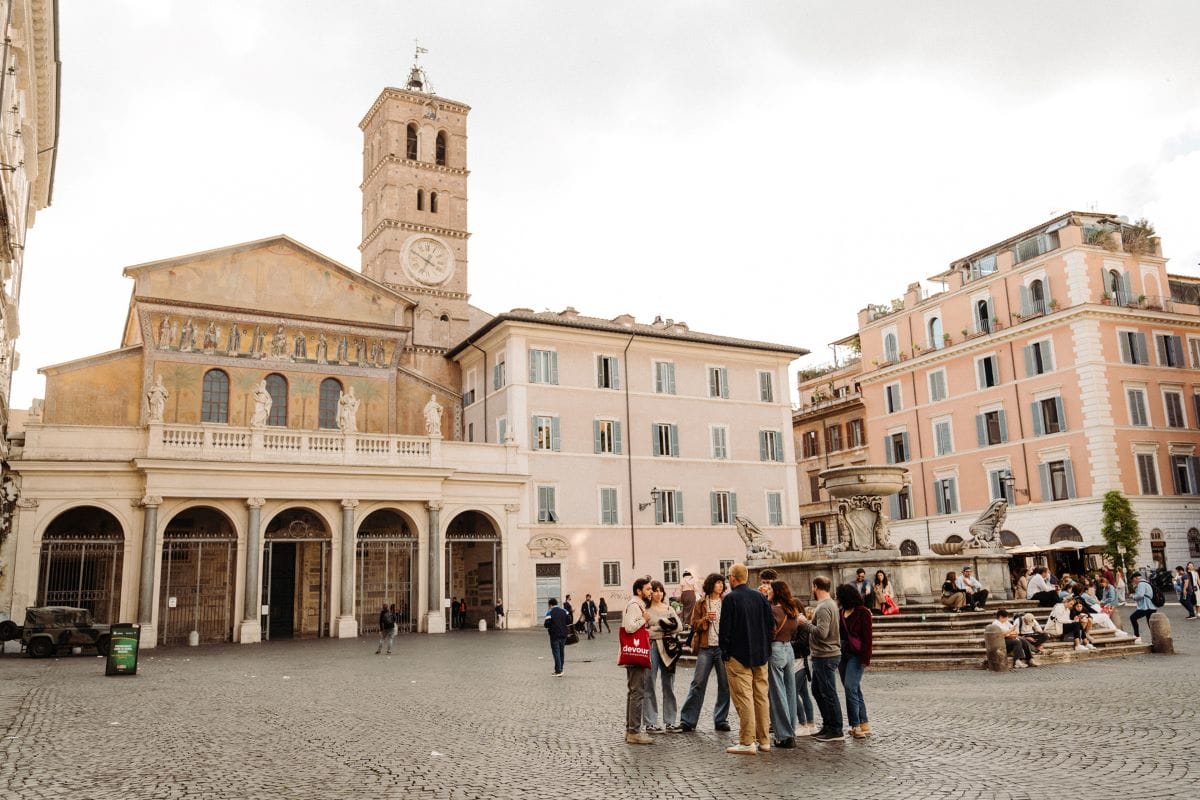
The Jewish Quarter is tucked inside Trastevere, one of the most visited areas of Rome.
What is the history of Rome’s Jewish Quarter?
Rome’s Jewish Quarter, established in 1555 in the Rione Sant’Angelo near the Tiber River, was outlined by a Papal Bull enforcing discriminatory laws, including restrictions on professions. Selling fish, one of the few permitted jobs, still lends its name to streets near the old fish market.
Originally a walled, overcrowded ghetto on malarial, flood-prone land, life was harsh until the walls were removed in 1888. Despite challenges, Jewish culture thrived. However, the Quarter endured tragedy during WWII when, after raising a gold ransom to avoid deportation, Nazi forces raided the neighborhood on October 16, 1943, deporting 1,000–2,000 people, of whom only 16 survived.
Today, the area is a dynamic mix of Jewish heritage and Roman architecture, featuring landmarks like the Portico d’Ottavia, historic synagogues, churches and celebrated restaurants. Once a place of hardship, it now stands as a testament to perseverance and cultural vibrancy.
An important note about this neighborhood’s history: This area in Rome where the Jewish community has lived for a long time is traditionally referred to as the “Jewish Ghetto” because of its history. But now, many prefer to call it the “Jewish Quarter” to be more respectful.
What to see in the Jewish Quarter
Portico d’Ottavia & the Ancient Library
One of the most striking landmarks in the Jewish Quarter is the Portico d’Ottavia, an ancient complex originally built by Augustus and dedicated to his sister Octavia. Dating back to the 1st century BC, it once served as a grand entrance to temples and public spaces, including an important library known as the Library of Marcellus.
This library housed Greek and Latin texts, making it a key cultural hub in ancient Rome. Today, the remains of the portico, standing below modern street level, offer a powerful glimpse into the layered history of the area, where ancient Roman life, Jewish heritage, and everyday modern Rome all intersect.
Teatro Marcello
Named after Marcus Marcellus, Emperor Augustus’s nephew, who died five years before its completion, the Teatro was begun by Julius Caesar and completed by Augustus in 13 BC. It’s also known as the Jewish Coliseum for its resemblance to the original Colosseum. This ancient, open-air theater once held approximately 11,000 to 20,000 spectators, and the seats filled for acting, dancing or singing performances. Located in the Rione of Sant’Angelo, today it still holds different shows throughout the summer. Look up to the top floors to see swanky apartments that command beautiful views of the city center and are occupied by some of the city’s oldest Jewish families.
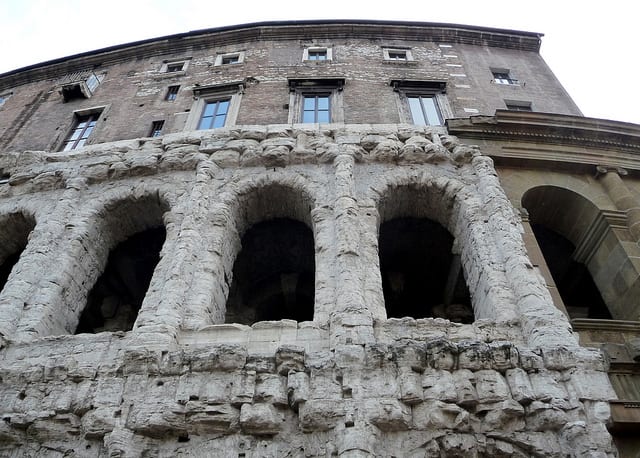
The top portion of the old amphitheater has been divided into apartments. Photo: Herb Neufeld
The Great Synagogue
The Great Synagogue of Rome, or the Tempio Maggiore di Roma in Italian, is the largest synagogue in all of Rome and possibly all of Italy. This impressive building is pretty new by Roman standards. After people of Jewish faith were granted citizenship during Italian unification in 1870, the original ghetto synagogue was torn down and plans for the Great Synagogue began. The cornerstone was laid in 1901 and the Synagogue was officially completed in 1904, a veritable baby in the Roman skyline.
Jewish Museum of Rome
The Jewish Museum is located in the Great Synagogue. Opened underneath the Great Synagogue in 1960, it displays silverware and textiles, parchments and marble carvings from the collections of the Jewish Community of Rome. It tells the history of the Jews and the Jewish Quarter in Rome. Begin your explorations of the neighborhood here to get some context under your belt. A museum visit also includes entrance to the Great Synagogue.
La Bocca della Verità
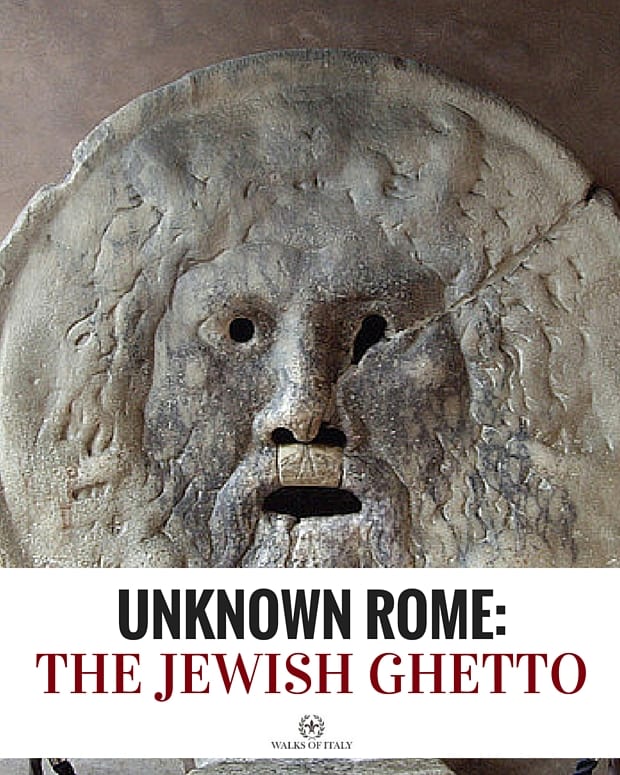
The Mouth of Truth, or Bocca della Verita, is the image of a man’s face carved in marble. Located in the entrance of the Santa Maria in Cosmedin Church since the 17th century, the sculpture is thought to be from the first century.
Though we know that it’s not connected to Judaism or Rome’s Jewish Quarter, legends of its origins range from being a part of an ancient fountain, to a church, to a manhole cover, but the strangest part of all is its powers as a lie detector. As far back as the Middle Ages, Romans believed that if you told a lie with your hand in the sculpture’s mouth, your hand would be bitten off!
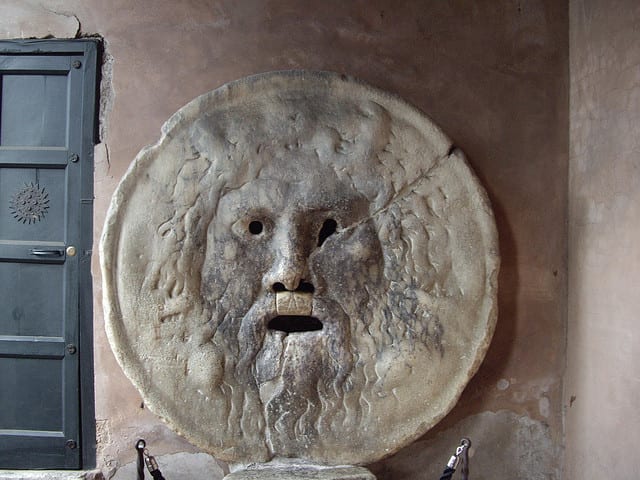
Liars better be careful posing for a photo! Photo by Javier de la Rosa
The Fontane delle Tartarughe
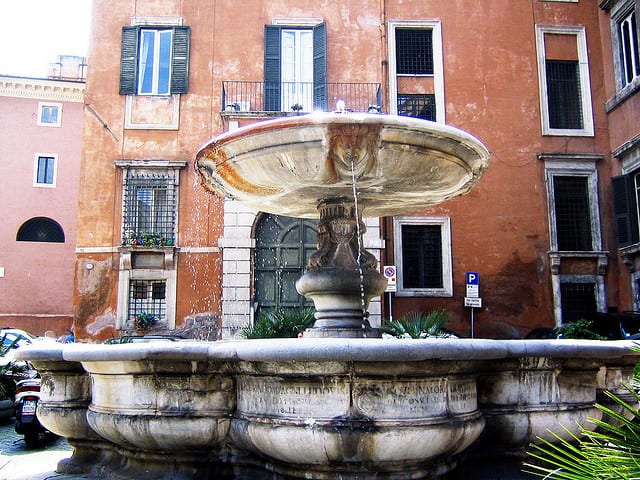
The Turtle Fountain is a late Renaissance fountain in the Rione Sant’Angelo. Though it might have been called the Dolphin Fountain, as it once had dolphins where the turtles now sit, they were removed because of low water pressure, and the turtles were added to make the fountain seem complete. Originally built as a drinking fountain, the water was sourced from the Acqua Vergine, one of Rome’s first aqueducts – a big deal for sixth-century Romans!
…. And maybe even a church
Somewhat surprisingly all things considered, there are more than 15 churches in the small area that comprises Rome’s Jewish Quarter. Some of the most famous are Chiesa di Santa Maria del Pianto, Chiesa di San Tommaso ai Cenci, Chiesa di Santa Caterina dei Funari, and Chiesa di San Stanislao dei Polacchi.
Want to see even more churches around the city? Here’s our list of can’t-miss churches in Rome.
The old Jewish Quarter is a mosaic of ancient gems with nuances of the modern day. Photo by Anthony Majanlahti
The best food in the Jewish Quarter
The Jewish Quarter Rome is renowned for its Roman-Jewish cuisine, offering must-try specialties like:
-
Carciofi alla Giudia (Jewish-style fried artichokes)
-
Fiori di Zucca (fried zucchini flowers stuffed with cheese and anchovies)
-
Baccalà (fried cod fillet)
If mention of these famous dishes has made your mouth water, then check out the details of some more of the delicious Jewish Food in Rome that you must try when you come to visit.
Popular restaurants to enjoy these iconic dishes include Nonna Betta, Ba’ Ghetto, and Renato al Ghetto, which you can find as you wander. Or for a top way to explore the area’s culinary heritage, why not join the Trastevere & Historic Center VIP Food Tour.
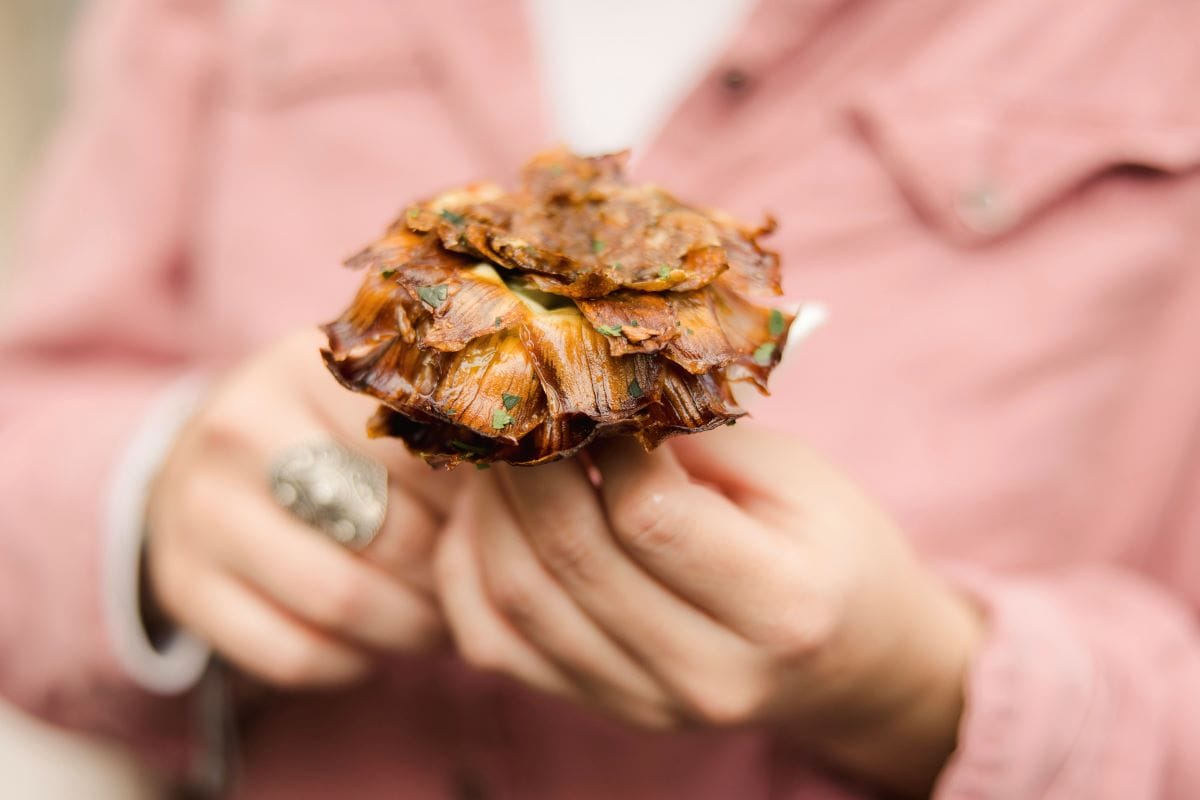
The mouth-watering carciofi alla giudìa will definitely make a great dinner.
Trastevere & Historic Center Food Tour
If you are curious to learn more about the area, this 3.5-hour food tour takes you through the Jewish Quarter and historic center, offering 8 tastings and 3 drinks across 6 local businesses, enough for a full dinner. Highlights include:
-
Crispy fried artichokes from a local takeaway.
-
Rustic sweet bites from a 200-year-old kosher bakery.
-
Freshly fried cod paired with wine.
-
Craft beer and regional cold cuts at a top bar.
-
A savory trapizzino* in Trastevere.
The tour ends with a private rooftop experience in Trastevere, where you’ll mix your own spritz while enjoying breathtaking views of the Roman skyline and St. Peter’s Basilica.
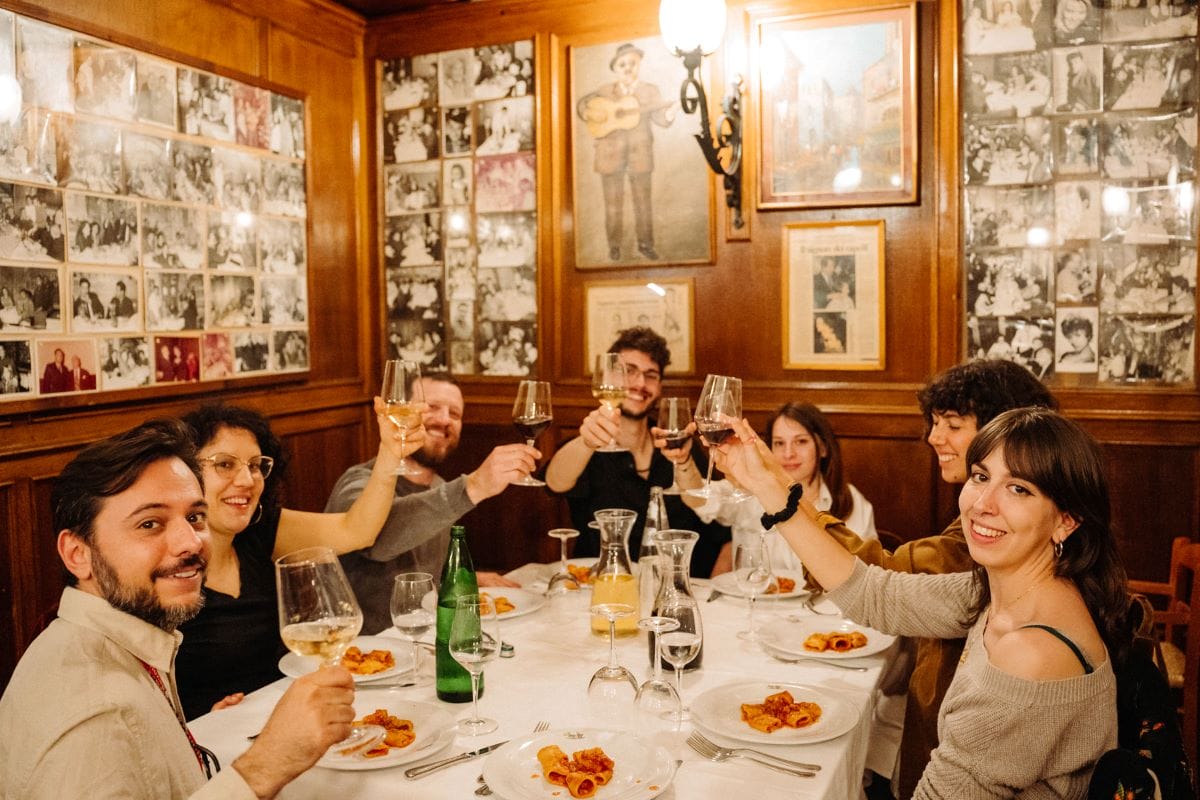
Raising our glasses to incredible moments in Rome.
FAQs – Jewish Quarter Rome
What is the Jewish Quarter Rome?
The Jewish Quarter Rome, also known as the Jewish Ghetto, is one of the oldest Jewish communities in the world, dating back to 1555. It is a historic neighborhood filled with cultural landmarks, synagogues, and authentic kosher restaurants.
Where in Rome is the Jewish Quarter?
The Jewish Quarter is centrally located, just a short walk from Piazza Venezia or Campo de’ Fiori. Public transport options include:
- Bus: Routes 40, 46, 62, or 64 stop nearby.
- Tram: Line 8 stops at Piazza Cairoli, a short walk away.
Why is it sometimes called the “Jewish ghetto”?
The term “ghetto” originates from the 16th century when Pope Paul IV confined the Jewish population to this small area, restricting their rights. Today, it is a vibrant and celebrated part of Rome, often referred to as the Jewish Quarter rather than “ghetto.”
Is the Jewish ghetto in Rome safe?
Yes, the Jewish Ghetto in Rome is considered a very safe area to visit, both during the day and in the evening. Located near the historic center, close to landmarks like Tiber River and Piazza Venezia, it’s a lively neighborhood known for its welcoming atmosphere, excellent restaurants, and rich cultural heritage. Like anywhere in a major city, it’s always wise to keep an eye on your belongings and stay aware of your surroundings, especially in busier areas. But overall, visitors can explore the Jewish Quarter with confidence, wandering its charming streets, visiting the Great Synagogue of Rome, and enjoying its unique history without concern.
*What is a trapizzino?
A trapizzino is a popular Roman street food that is a portmanteu or blend of tramezzino (a triangular sandwich) and pizza. Invented by Stefano Callegari in 2008, it’s made from soft, airy pizza dough shaped into a triangular pocket and filled with classic Roman dishes like meatballs in tomato sauce, or eggplant parmigiana. Easy to eat on the go, it’s a favorite among locals and a must-try for visitors wanting to sample traditional flavors in a modern way.
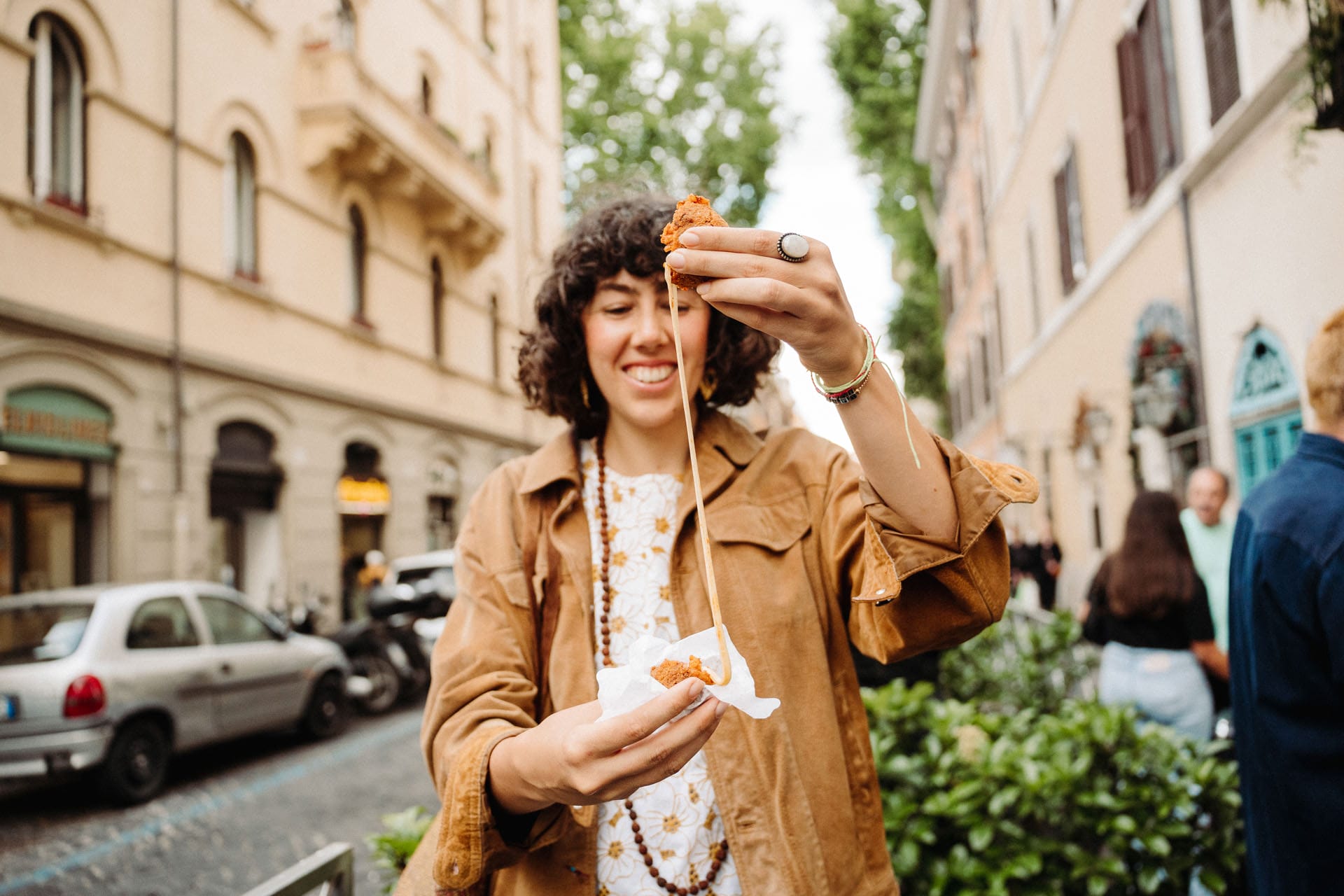
Curious to experience this neighborhood beyond the guidebooks?
Join our Trastevere & Historic Center Food Tour and dive into the flavors and stories that define Rome’s Jewish Quarter. Taste iconic dishes with Roman-Jewish roots, like crispy fried artichokes and perfectly battered cod, while exploring the streets where this rich culinary tradition was born. It’s the perfect way to connect history, culture, and cuisine in one unforgettable evening.
We hope to see you in Rome!


Book a Tour

Pristine Sistine - The Chapel at its Best
€89

1794 reviews

Premium Colosseum Tour with Roman Forum Palatine Hill
€56
850 reviews
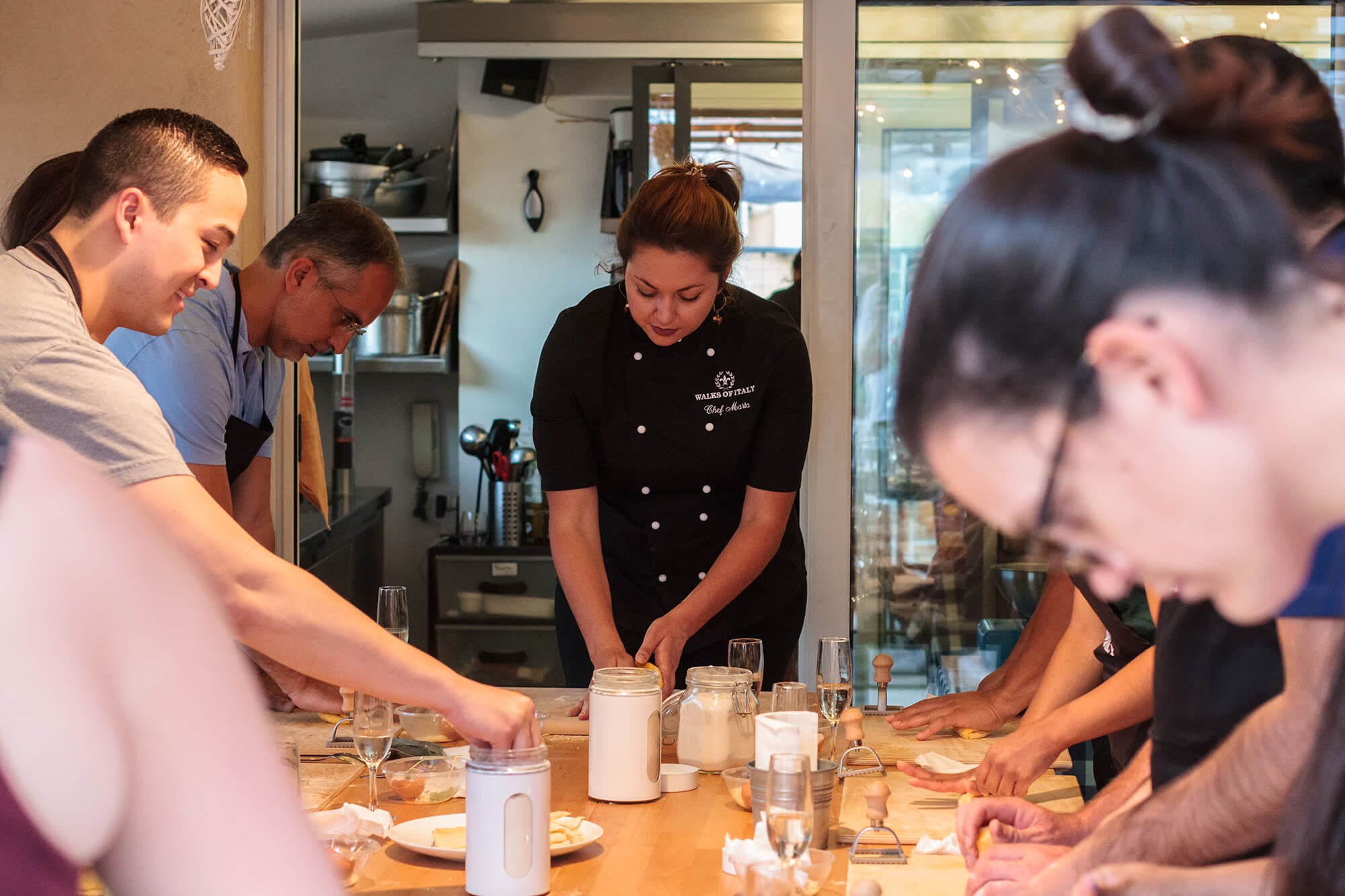
Pasta-Making Class: Cook, Dine Drink Wine with a Local Chef
€64
121 reviews

Crypts, Bones Catacombs: Underground Tour of Rome
€69
401 reviews

VIP Doge's Palace Secret Passages Tour
€79
18 reviews

Legendary Venice: St. Mark's Basilica, Terrace Doge's Palace
€69
286 reviews
You May Also Like
Follow us
Stay up to date with travel tips, local insights and all things Italy on our social channels!


Subscribe to our Newsletter
Get curated Italy travel tips delivered to your inbox!

