

Where Does The Pope Live? And Can I Visit?
May 7, 2026
Have you ever wondered: Where does the pope live? The answer is a bit more complicated than it might seem. In nearly 2,000 years of the papacy, there have been 267 popes, and not all of them have lived in the same place. Not all of them have lived in Vatican City or in Rome or even in Italy.
Vatican City is just over 100 acres, making it the smallest nation on the planet. But it also happens to be utterly packed with history. Before you set foot on Vatican soil, perhaps on your quest to answer the questions: where does the pope live? Consider booking a small-group guided Vatican tour, so that a local expert can give you the inside information on all that is to know about this diminutive nation, steeped in history and mystery.
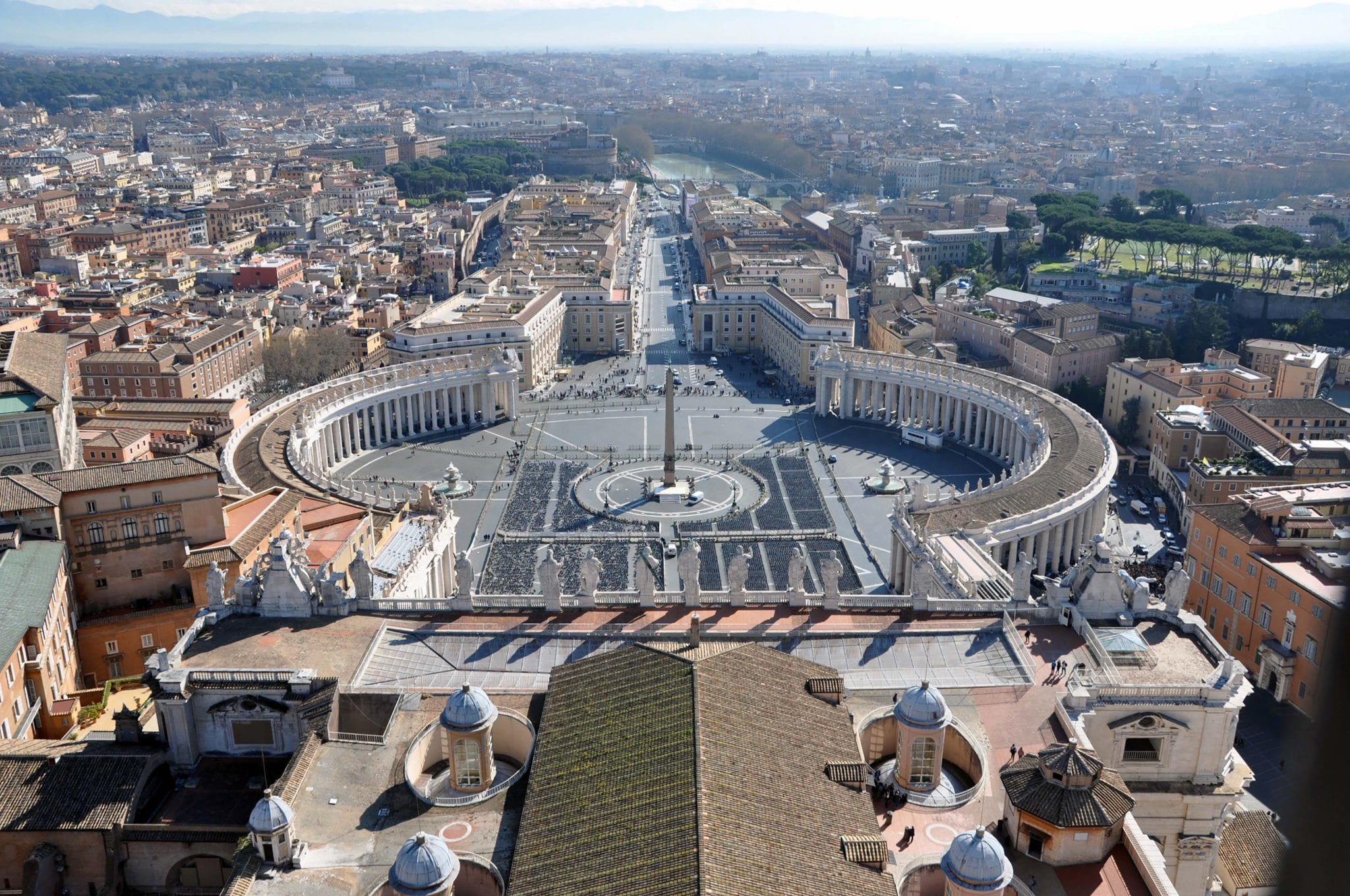
The City Scape view of the Saint Peter’s square in Vatican city.
Where does the pope live now?
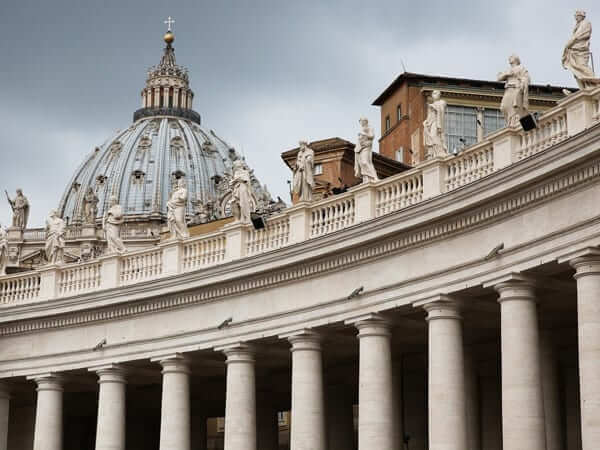
Pope Leo XIV conventionally lives the way many popes in the last 150 or so years have lived: in the Apostolic Palace. If you’re standing in the middle of St. Peter’s Square, embraced by the curving colonnades that surround the square, look to your right. That boxy, multi-floor building just behind the colonnade is the Apostolic Palace, a structure that not only contains papal living quarters but parts of the Vatican Museums and the Vatican Library.
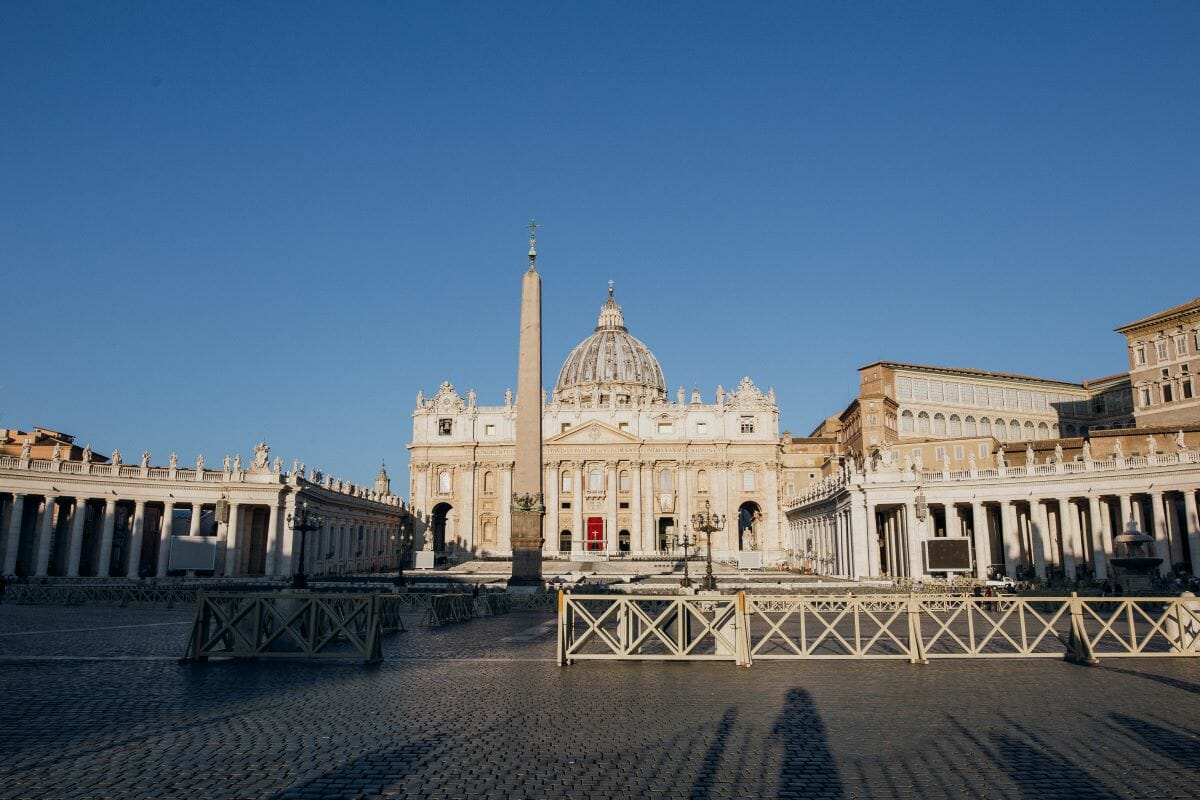
A view of St. Peter’s Basilica and Bernini’s Colonnade, with the Apostolic Palace to the right
Unlike past popes, however, Pope Leo XIV has chosen not to live alone in the Papal Apartments on the third floor of the palace. Instead, he lives with four other people. Leo is an Augustinian, an order that emphasizes communal living. So, keeping with that spirit, the pope lives communally in the traditional living quarters of the papacy.
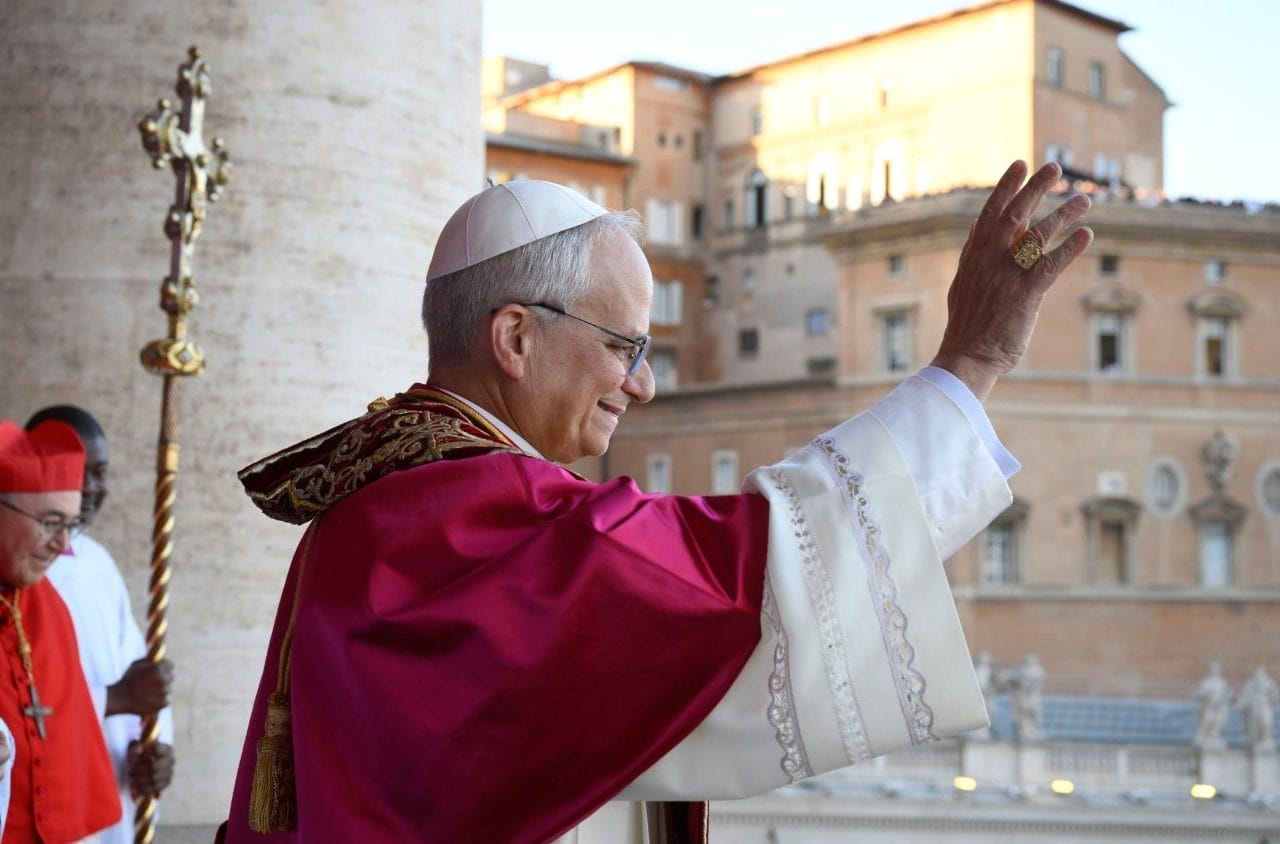
Pope Leo XIV appears on the balcony of St. Peter’s Basilica (@Vatican Media)
While the private papal apartments are not open to the public, several extraordinary parts of the Apostolic Palace can be visited as part of the Vatican Museums. This includes the breathtaking Sistine Chapel, the Michelangelo-decorated shrine where popes get elected, and the richly decorated Raphael Rooms, the former apartment of Pope Julius II that was decorated by the famed Renaissance painter, Raphael Stanzio.
Insider Tip: If you want to experience these spaces for yourself, joining a guided Vatican tour, which is one of the easiest ways to do it. With skip-the-line access and an expert guide, you’ll not only enter the Apostolic Palace but also understand the history of the popes who lived there.
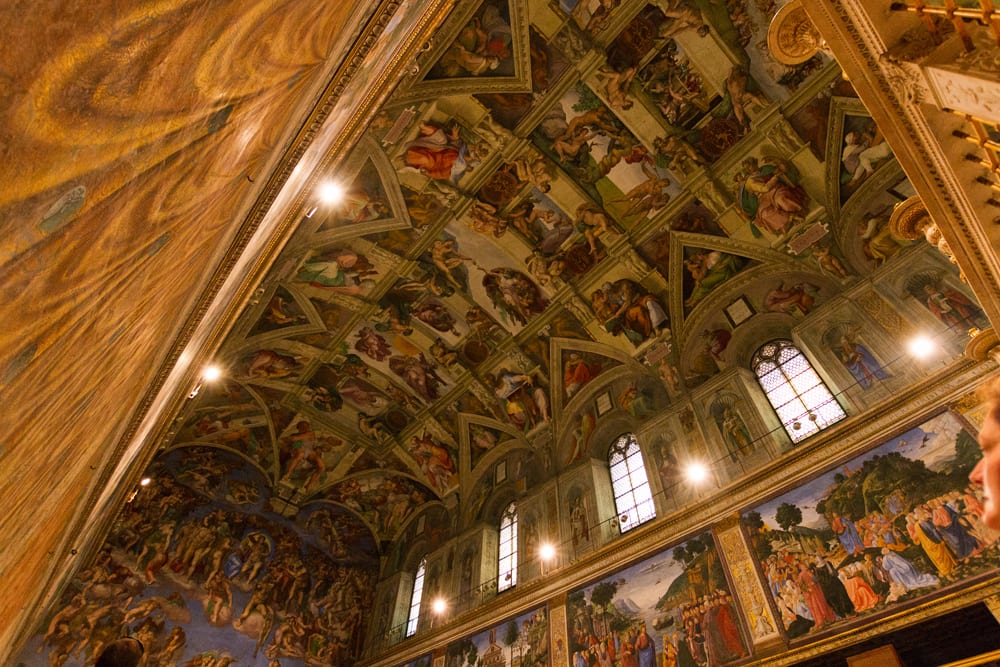
Vatican Museums: The ceiling of the Sistine Chapel
Where did Pope Francis live?
Pope Francis, who passed away on April 21, 2025, broke from papal tradition by choosing not to live in the Apostolic Palace at all. Instead, he resided in the nearby Domus Sanctae Marthae. The House of St. Martha was built in 1996 to house visiting clergy. It’s also the “hotel” where the College of Cardinals stay when they gravitate to the Vatican to elect a new pope.
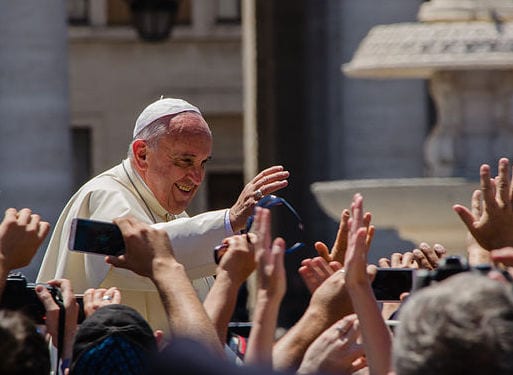
A smiling Pope Francis greeting adoring fans while riding in the pope mobile in Rome.
Pope Francis’s impact was a real disruptor of papal tradition. Francis lived in a modestly furnished bedroom with a statue of Our Lady of Lujan, the Marian patroness of Argentina, Paraguay, and Uruguay, as well as a wooden standing crucifix.
Where does the pope live in the summer?
For the months of July and August, popes traditionally escape the heat of Rome by fleeing to Castel Gandolfo, a town of about 9,000 people on the shores of Lake Albano, in the Castelli Romani hills about 16 miles south of Rome. When the pope summers here, he stays in the Apostolic Palace, also known as the pope’s summer palace. It was here that Pope Benedict XVI stayed immediately after announcing his retirement from the papacy.
Visitors can take tours of the pope’s summer palace and the adjacent Barberini Gardens. Castel Gandolfo is about a 40-minute train ride from Rome’s Termini railway station. If you are curious, you can learn more about the Castel Gandolfo here.
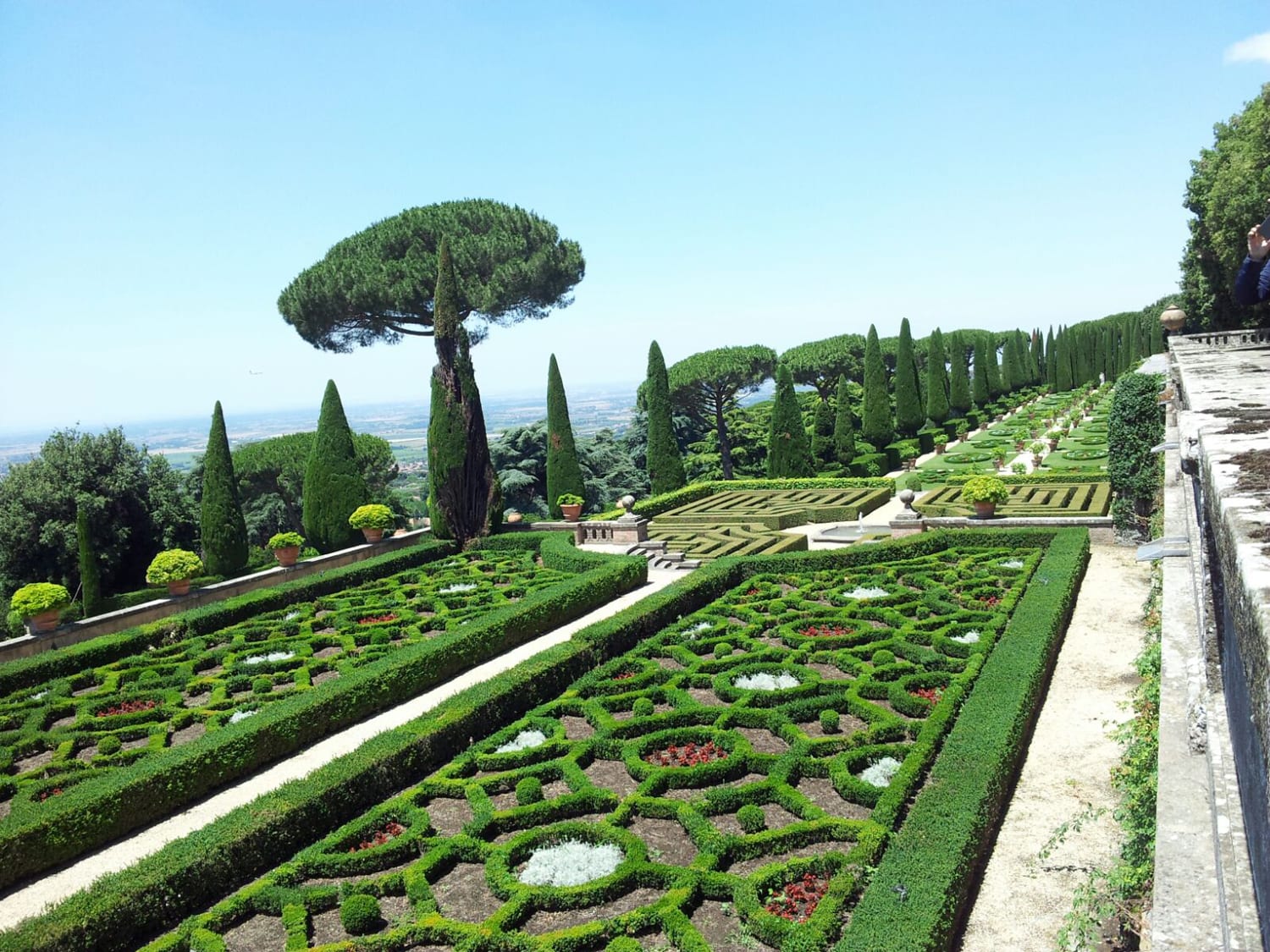
The gardens of the Villa Barberini in the Papal Palace of Castel Gandolfo
Where else have the popes lived?
In the 13th century, the papacy fled Rome for safer conditions. Specifically, they went 50 miles north to the town of Viterbo. From Pope Alexander IV in 1257 to Pope Martin IV in 1281, popes lived in the Papal Palace in this town in northern Lazio.
About 30 years after returning to Rome, the papacy would leave Rome once again, this time taking up residence in the Papal Palace, or Palais de Papes, in Avignon, in the south of France. From Clement V in 1309 until Gregory XI in 1377, popes would call Avignon home during what was eventually called the Great Schism in church history.
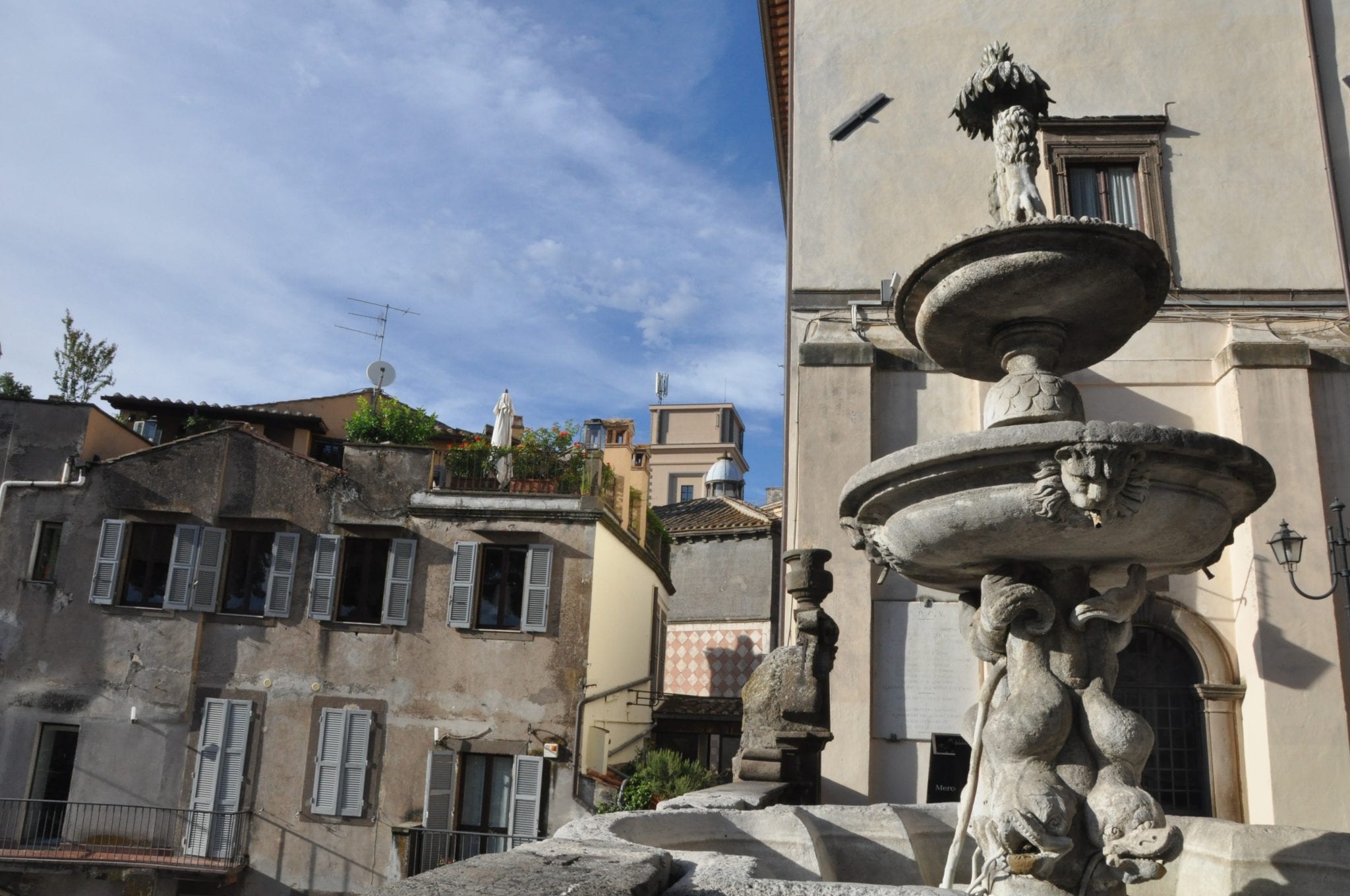
Viterbo, a town in Lazio outside of Rome
Tips for visiting the Vatican
When visiting the Vatican, don’t forget you’re going to be walking on holy ground. For that matter, it’s good to be mindful of a few things:
- Shoulders and knees should be covered when inside St. Peter’s Basilica and the Vatican Museums.
- If you want to avoid the lines to get into the Vatican Museums, sometimes going after lunch is the best way. You can also sign up for a guided Vatican tour that will grant you early morning access to the Vatican and the Sistine Chapel.
- It’s strongly recommended that you book tickets for the Vatican Museums well in advance. You can do that on the official Vatican website. Or you can also join a Vatican tour that will shuttle you right into the museums, no hassle, no waiting.
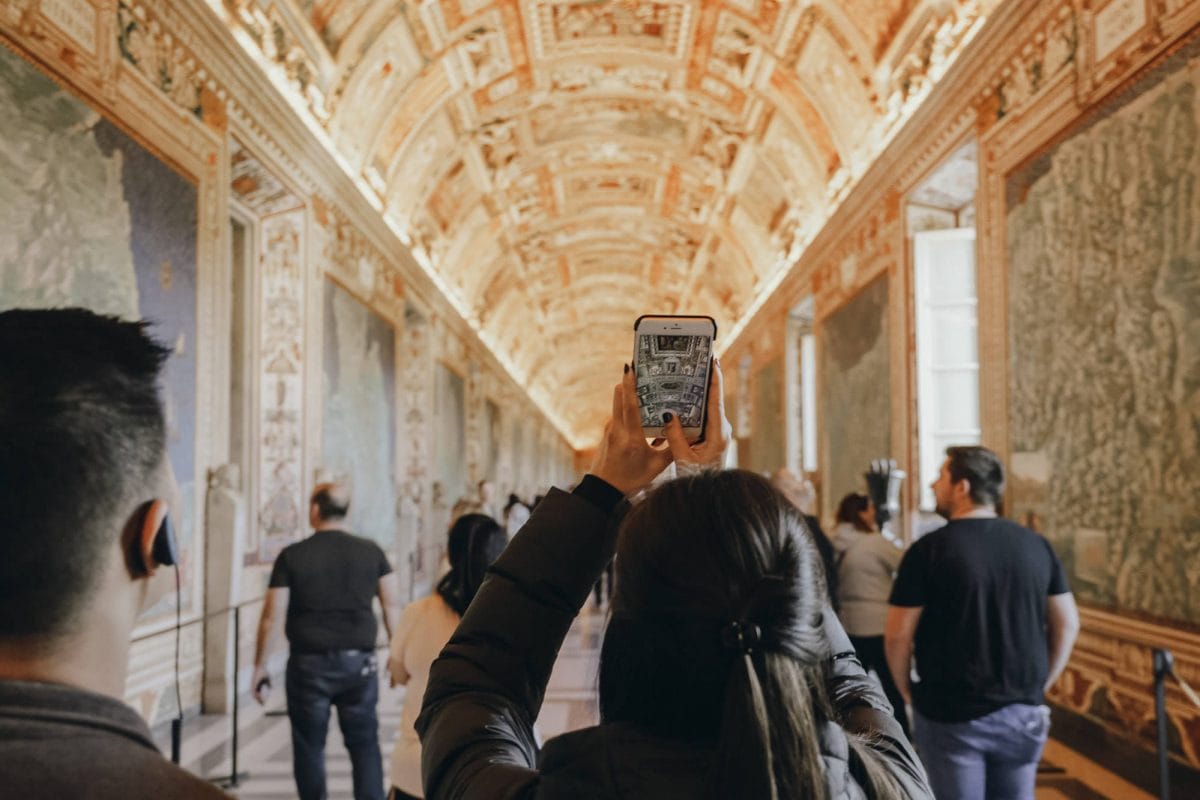
Visiting the Vatican Museums is a unique and memorable experience
FAQs – Where Does The Pope Live?
Why should I take a tour of the Vatican and/or Apostolic Palace?
If you’re asking yourself the question—Where does the pope live?—and if you want to get access to the palace where the papacy has largely resided for the last 150 years, you can take a guided tour that will walk you through the Sistine Chapel and recently restored Rafael Rooms, located in the Apostolic Palace. Plus, you’ll get skip-the-line-access, so no waiting in those annoyingly long lines.
What is the best time to visit Rome?
Similar to the popes, it’s best to avoid Rome in the summer months, particularly July and August, if you can help it. The shoulder seasons (April and May, September and October) are the ideal times because the weather is cooler, there are few tourists, and hotel prices are more affordable than in peak season.
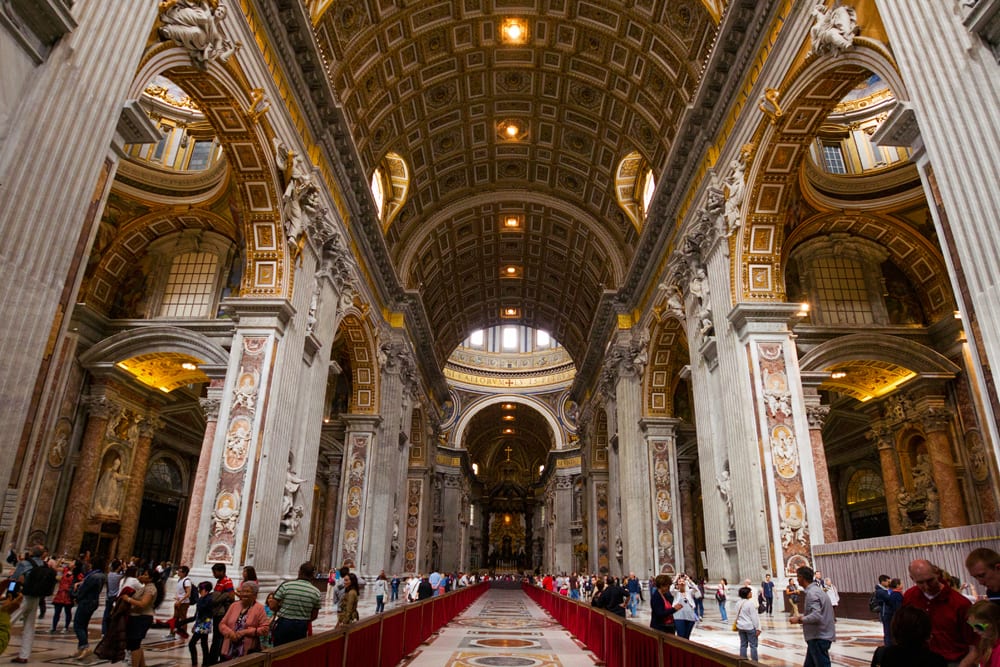
St. Peter’s Basilica in the Vatican City
Whether you’re going there during off-season, shoulder season, or peak season, the best way to see the Vatican is with one of our guided Vatican tours; that way, you’ll have at your side a local expert who will point things out that you may never have noticed, giving you the ultimate souvenir of Vatican City: a great memory.

Book a Tour

Pristine Sistine - The Chapel at its Best
€89

1794 reviews

Premium Colosseum Tour with Roman Forum Palatine Hill
€56
850 reviews

Pasta-Making Class: Cook, Dine Drink Wine with a Local Chef
€64
121 reviews

Crypts, Bones Catacombs: Underground Tour of Rome
€69
401 reviews

VIP Doge's Palace Secret Passages Tour
€79
18 reviews

Legendary Venice: St. Mark's Basilica, Terrace Doge's Palace
€69
286 reviews
Follow us
Stay up to date with travel tips, local insights and all things Italy on our social channels!


Subscribe to our Newsletter
Get curated Italy travel tips delivered to your inbox!

