
7 Must-See Frescoes in Italy: Piccolomini Library, Basilica of San Francesco, & More
November 13, 2024
There’s nothing like Michelangelo’s world-famous frescoes in the Sistine Chapel. But as special as the Sistine Chapel is, it isn’t the only architectural space in Italy where you can find jaw-droppingly vibrant, detailed, and beautiful, not to mention art-history-changing, frescoes.
Here are some of our favorite spaces in Italy to add to your list (some even influenced Michelangelo himself!). Bonus: Each of them is in a town that’s well worth a visit in its own right.
Note: When visiting these incredible spaces, just remember that what damages fresco more than anything else is moisture and humidity! So don’t stand too close to the art (your breath really does make a difference!), and please, never, ever touch the artwork. That way, your children and their children will be able to enjoy these beautiful masterpieces, too.
Scrovegni Chapel, Padua
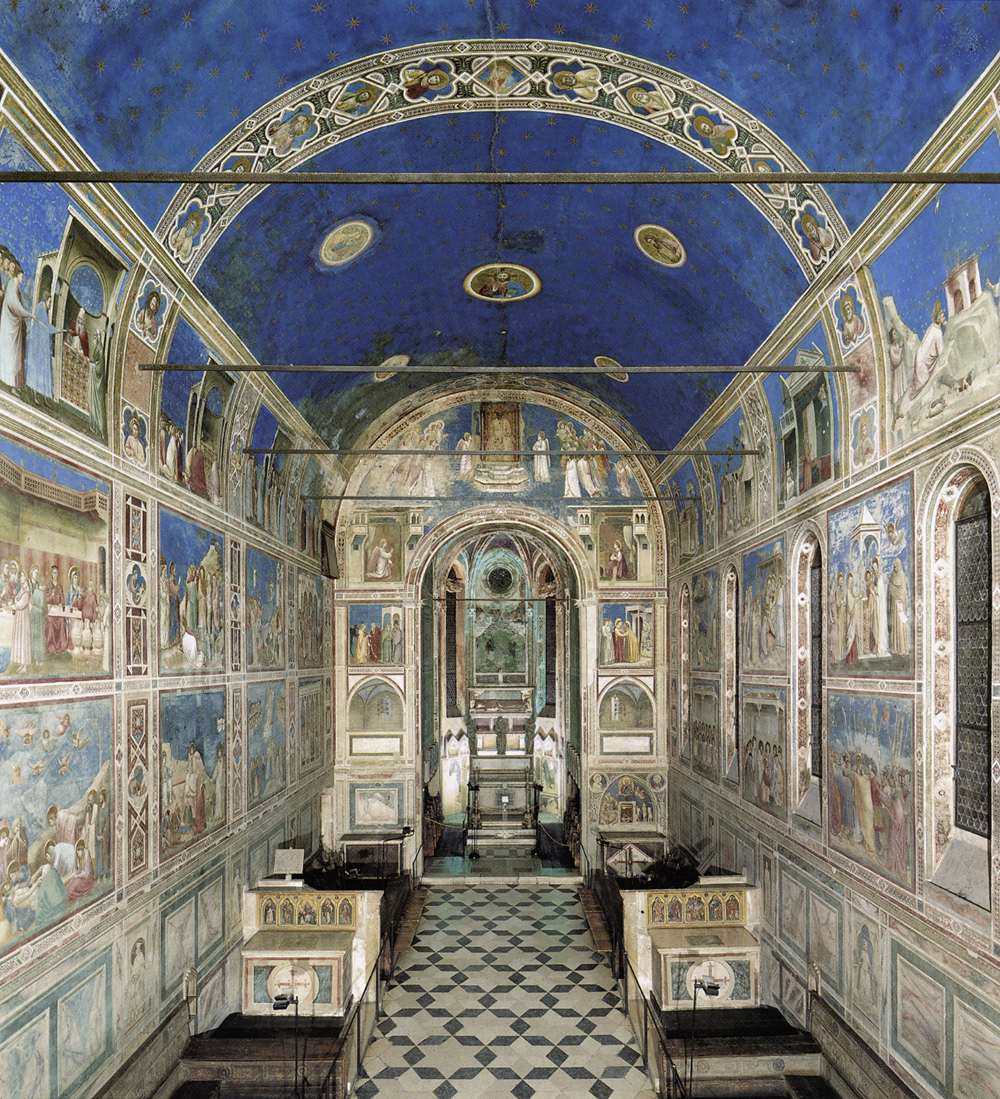
Giotto had to be creative to overcome the obstacles caused by the chapel’s architecture — you can even see how he extended the wall paintings up into the ceiling to try to balance it all!
Located an easy 25- or 45-minute train ride from Venice, Padua has a lot to boast about: mythical ties to the city of Troy, the second-oldest university in Italy (and one where Galileo taught)… and an incredible 14th-century chapel that’s one of Italy’s top sites for pilgrims. Art history pilgrims, that is.
The Scrovengi Chapel was built by Enrico Scrovegni in 1302, after his father’s practice of lending out money at super-high interest rates — something seen as so sinful, it landed the man in Dante’s Inferno — filled him with such guilt he built a chapel with the family’s earnings. (He dedicated it to to the “Virgin of Charity”).
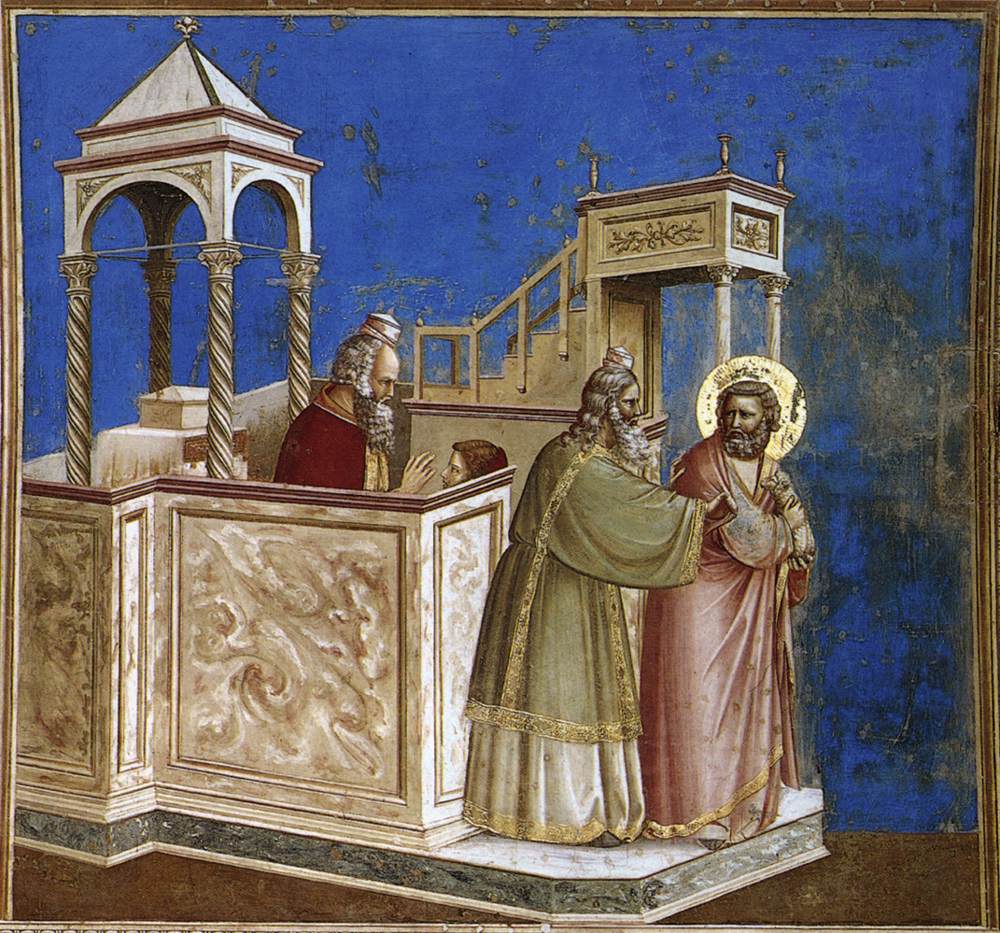
The space on the right, planned that way by Giotto, makes it look like poor Joachim is being thrust into an empty, lonely abyss
Scrovegni commissioned the Florentine painter Giotto for the frescoes. The result is the earliest work that’s accepted as being by Giotto’s own hand. For art historians, that means it’s the keystone for deciding if later pieces (like those in the Basilica of San Francesco, below) were by Giotto, too. Like Michelangelo more than two centuries later, Giotto had to grapple with how to lay his fresco cycle out on a barrel-vaulted building. And, like Michelangelo, it’s fair to say he did, well, a pretty good job!
The whole story of the New Testament is laid out here, starting with the heartbreaking Expulsion of Joachim from the Temple. The panel shows Joachim, the Virgin’s father, being literally pushed out of the temple by a priest, Joachim’s offering rejected because he remains childless; the anguish on Joachim’s face is palpable.
The narrative continues through to Christ’s life, with the famous frescoes of the Lamentation and Kiss of Judas.
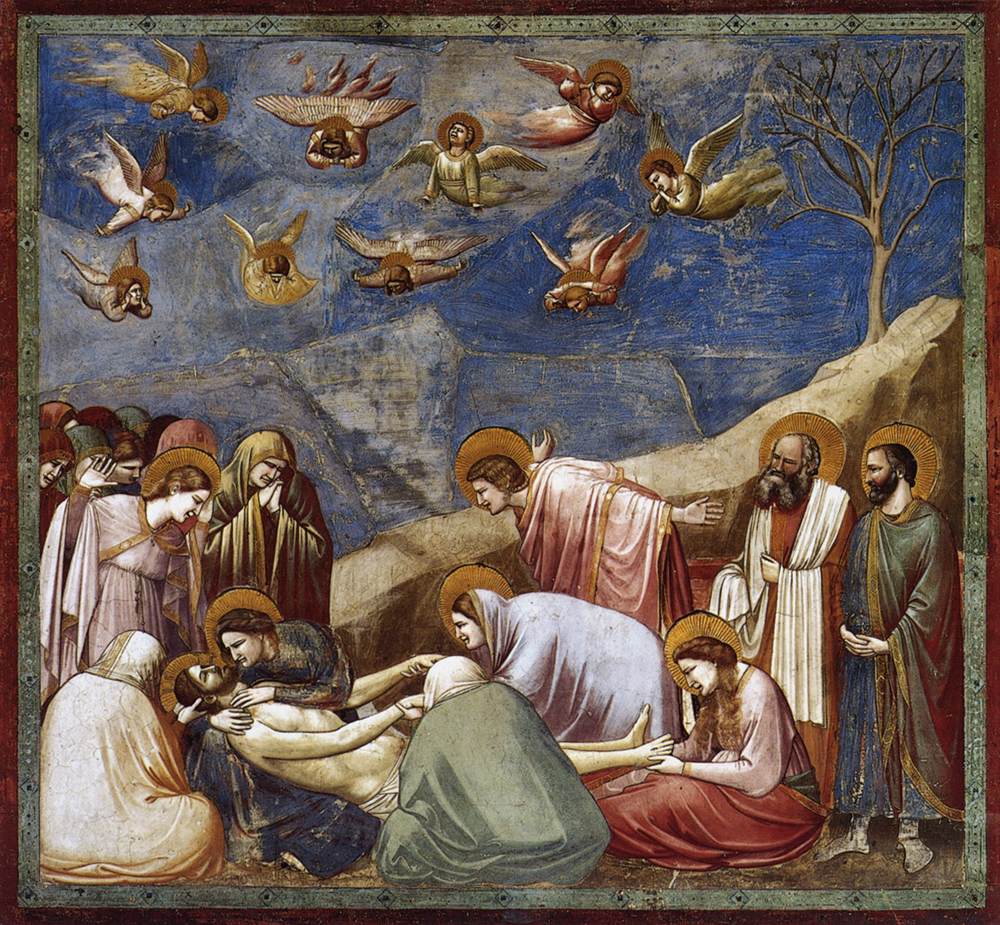
Giotto was a master of emotion — just look at the anguish on Mary’s face
Don’t miss the Last Judgment, either, a fantasy of all the horrific tortures that await the damned. Few paintings in art history could be more frightening! This was one piece that influenced Michelangelo for his own version of the Last Judgment.

A detail of Giotto’s Last Judgment, complete with a monster eating the damned. Eek!
In all of the frescoes, you can see just why Giotto was so groundbreaking, he’s known as one of the fathers of the Renaissance. Giotto’s use of space and volume, and his two-point perspective scheme (which unites both painting and architecture in the tricky-to-paint chapel), show an understanding of perspective that heralded the beginning of the Renaissance.
It’s the emotion of the figures, though, that really set Giotto apart, making him one of the only artists of his day who knew how to paint saints to look and interact like real people. And, almost 800 years later, Giotto’s ability to invoke emotion still takes your breath away.
Piccolomini Library, Siena
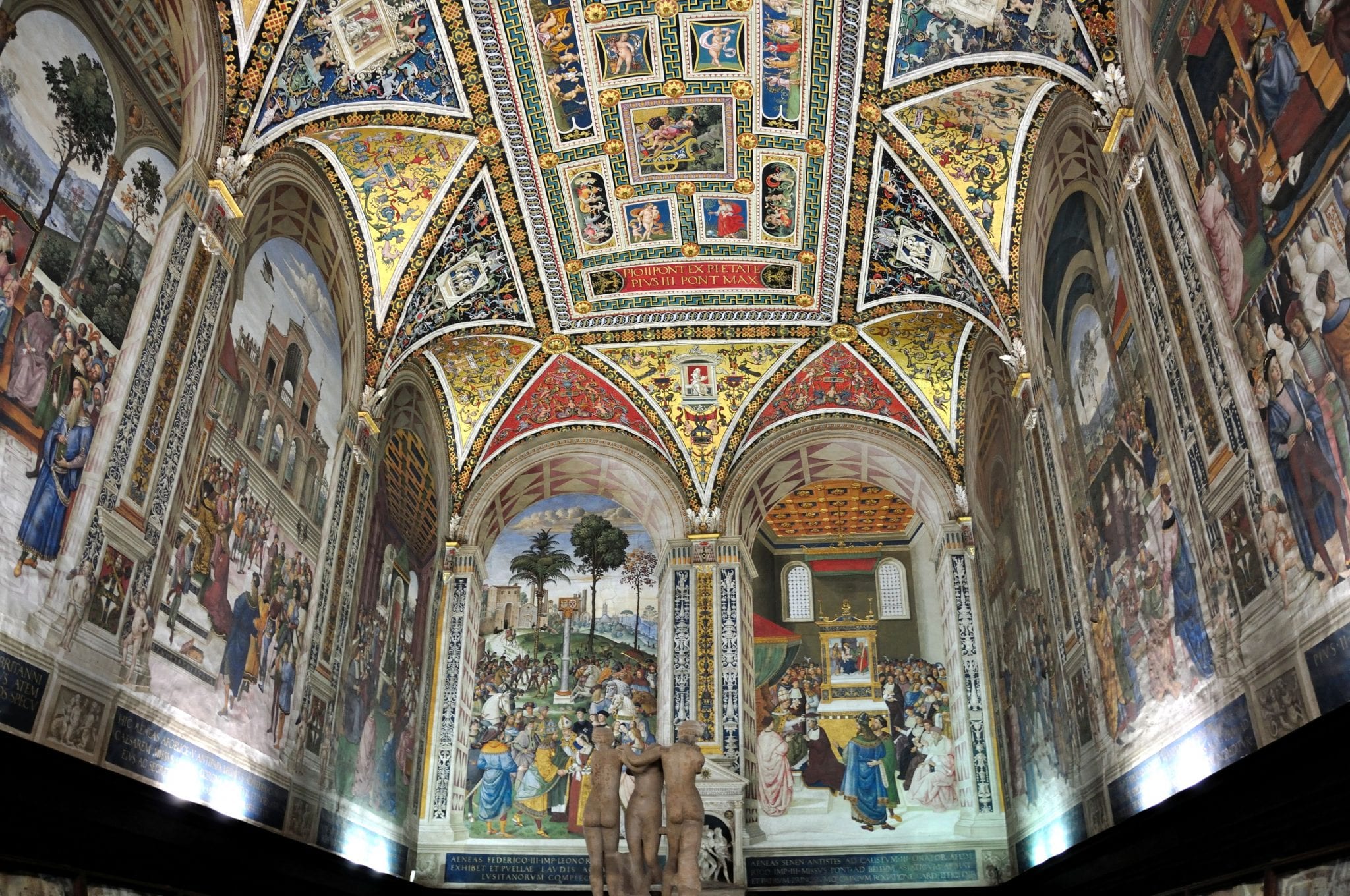
Piccolomini Library in Duomo of Siena
The Duomo of Siena is one of our favorite churches in Italy. But hidden within the gorgeous, elaborate space is another gem: the Piccolomini Library.
Like the Sistine Chapel, the library’s frescoes are, more or less, a family’s celebration of… itself. After all, Pope Julius II commissioned Michelangelo to glorify the chapel built by his uncle, Pope Sixtus IV. Similarly, in 1502, the famous painter Pinturicchio was commissioned by Francesco Todeschini to paint panels of the life of Pope Pius II.
After all, Pope Pius II was Todeschini’s uncle — and he’d raised Todeschini to the rank of cardinal in 1460. Todeschini himself became pope in 1503, taking the name Pius III… but he died just 26 days later. (The next pope? Julius II!).

Scene of the coronation of Pope Pius III himself, in Pinturrichio’s Piccolomini Library
The 10 episodes from Pius’ life are done with extraordinary realism, clarity, detail, and color, and thanks to a recent restoration, they’re particularly vibrant. As if those frescoes weren’t incredible enough, even the ceiling is covered in paintings with gold leaf accents.
Although it’s easy to get caught up in all the gorgeous painting, don’t miss the books that give the Piccolomini Library its official purpose. These precious, illuminated manuscripts belonged to Pope Pius II, who was known for his humanism and his learnedness.
Siena is a 1.5 hour train ride from Florence. A jewel of a medieval city, and once Florence’s main rival, it’s also the home of the famous Palio races.
Camera degli Sposi, Mantua
The Camera degli Sposi is a room entirely covered with frescoes painted by Mantua’s artist-in-residence Andrea Mantegna, who spent 46 years of his life in the town serving Ludovico Gonzaga and his successors. Located in the Palazzo Ducale, the 500-room behemoth that served as the Gonzaga Family Palace, the 15th-century frescoes depict members of the powerful Gonzaga Family. In particular, the “meeting scene” and the “court scene,” each celebrating the power and prestige of the Gonzaga’s and Mantua itself.
A relatively small room in the north tower of the palace, Mantegna’s fresco paintings completely transformed the space with color and perspective. Using the trompe l’oeil painting technique, the most striking feature seems to be the room’s ceiling and the sky painted on the center of it, creating the illusion that the room extends on forever. Originally called the Camera Picta, or painted room, the romantic name of Camera degli Sposi (wedding chamber or bridal chamber in English) is likely an allusion to the repeated presence of Ludovico and his bride on the walls, and not a suggestion that the room was actually used as a wedding chamber.
With internal courtyards, frescoes, world-class art and incredible mosaics, there’s plenty to see inside Palazzo Ducale, but the biggest draw is by far the intricate frescoes in the Camera degli Sposi.
Chapel of San Brizio, Orvieto
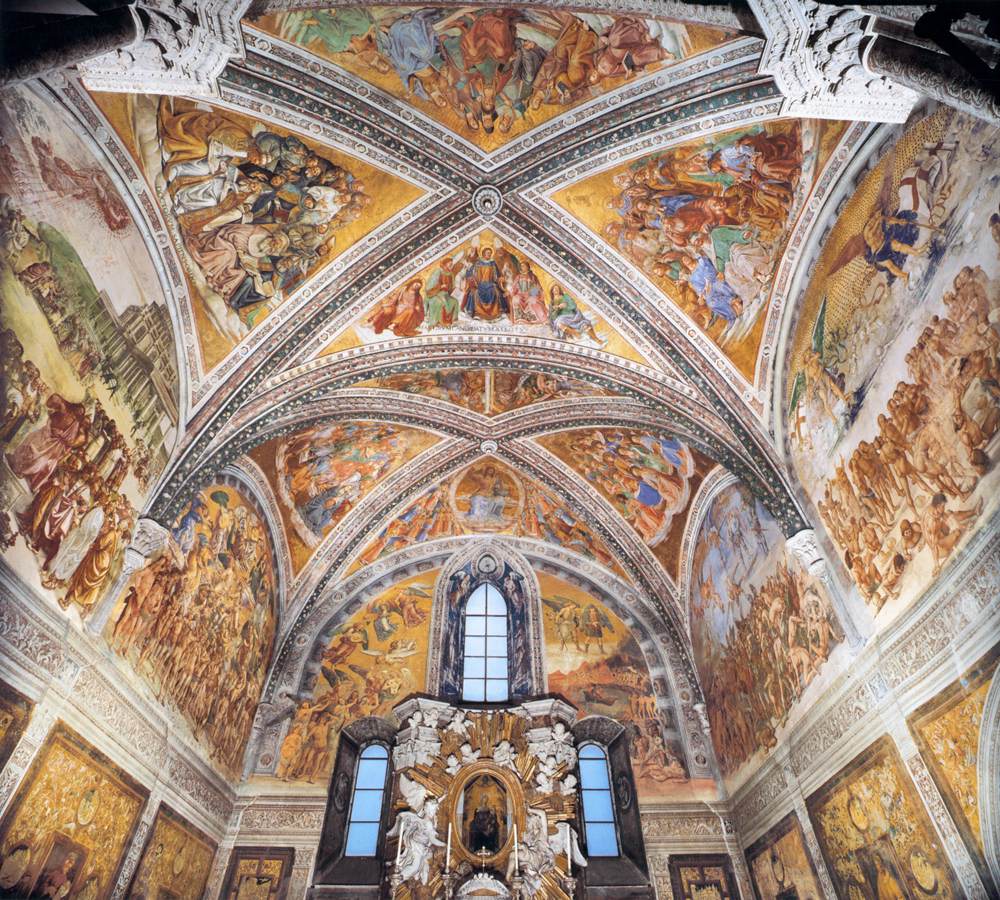
Signorelli’s frescoes here laid the groundwork for Michelangelo’s Last Judgment
Before Michelangelo’s Last Judgment in the Sistine Chapel, there was Luca Signorelli’s masterpiece: the Chapel of San Brizio frescoes in the Duomo of Orvieto.
Signorelli started his work in the Duomo of Orvieto in 1499. Tuscan in origin, like Michelangelo, he’d already painted in the Sistine Chapel himself, being responsible for the Testament and Death of Moses on the side wall. What Signorelli did with the Chapel of San Brizio, though, made the fresco cycle one of the most influential works of art in Italy.
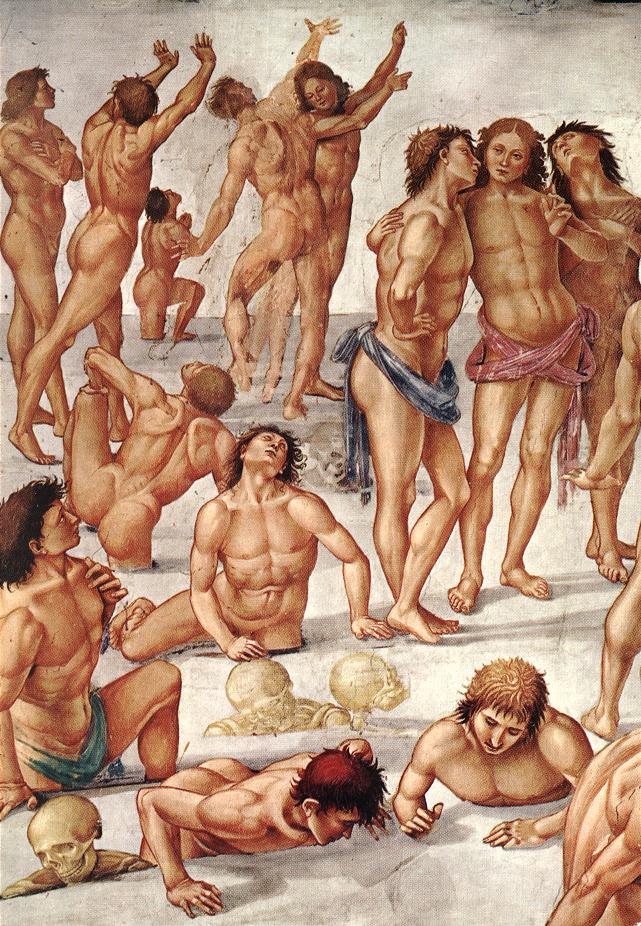
Those muscled bodies, hauling themselves out of the earth, showed up again 35 years later… in Michelangelo’s Last Judgment
It was also one of the most influential works of art on Michelangelo, who studied Signorelli’s work before he started his own Last Judgment in 1535. And it’s safe to say that without Signorelli’s incredible compositions of muscled men hauling themselves out of the earth for the Resurrection, or gruesome tortures being administered to the damned, Michelangelo would have wound up with a much different Last Judgment than the one we see today.
One of the most striking things about Signorelli’s frescoes are just how, well, new they seem — and not only because they’re so bright and vibrant. All twisted postures, exaggerated muscles, and crazy color schemes (like the purple, green, and blue-colored demons in the scene of the damned), they look like something out of a comic book or even a video game. To 16th-century viewers, though, the scenes would have seemed much more real, showing them exactly what they could expect on the day of judgment… and how their sins today would have terrifying consequences tomorrow.
Whether you want to see where Michelangelo got his inspiration, or just lose yourself in these crazy, colorful scenes of the afterlife, don’t miss the Chapel of San Brizio. You can get to Orvieto from Rome on the train in 45 minutes, and, given its beauty and sites of interest, we think it’s one of the best day-trip options from Italy’s capital city.
The House of Augustus and Livia
Emperor Caesar Augustus’ palace on the Palatine Hill is considered one of the world’s most significant houses. Considered the perfect example of private art and decoration of the time, overall the house was quite a humble home, by the standards of the day.
Augustus’ own house was quite small and devoid of marble, and the emperor was known for sleeping each night in small, spartan quarters. His second wife, Livia, lived in slightly larger, slightly more opulent apartments, with marble floors and pillars. Both of the houses are nearly perfectly preserved: visiting them it feels as if the inhabitants have simply stepped out for the afternoon and will soon return home to resume life as normal.
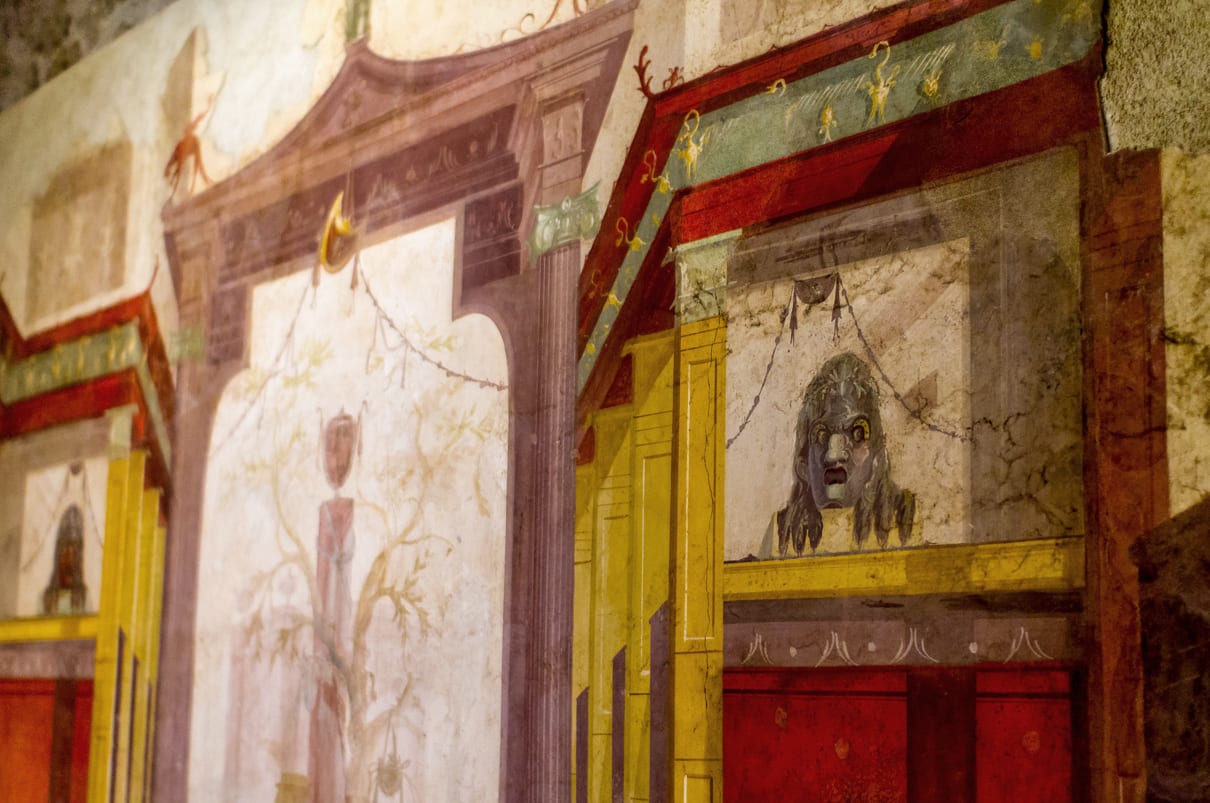
The ‘Room of the Masks’ in The House of Augustus.
One area where Augustus didn’t follow his humble design themes was in the artwork. The best painters of the day frescoed gorgeous scenes of theaters and countrysides along the ceiling and walls, particularly in the Palace’s west wing. One room, the “Room of Masks”, has a theater scene painted on the walls, with masks painted on the frame around it. The other is painted with garlands of pine needles hanging among thin pillars.
Though the frescoes cracked and fell over time, archeologists were able to collect them, clean them off, and put them back together on the walls, piece by piece.
Visiting his house (which you can only do on a guided tour) offers the chance to experience these paintings just as Augustus did over 2,000 years ago, giving visitors an intimate look at the great man’s private life and a unique insight into a mind that was as ruthless and cunning as it was fair and orderly.
The Last Supper, Milan
If there is one other fresco as highly celebrated as the Sistine Chapel, it’s Leonardo da Vinci’s Last Supper in Milan’s Santa Maria delle Grazie Cathedral.
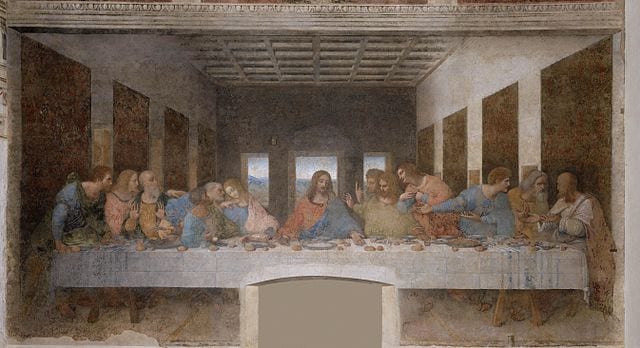
Public Domain version of Leonardo da Vinci’s Last Supper. Photo from Wikicommons
For an extensive guide on how to see da Vinci’s Last Supper check out our blog post.
The enormous painting (it’s 15 feet by 29 feet) depicts the moment right after Jesus declares to his twelve apostles that one of them will betray him – right down to the individual expressions on each apostle’s face! Though a Renaissance masterpiece, we have to be honest, the Last Supper technically isn’t a fresco.
Da Vinci’s notoriously slow painting methods didn’t pair well with the fresco style of painting on wet plaster – he couldn’t finish before the plaster dried! To account for this, Da Vinci painted directly on drywall, effectively inventing a new painting technique called fresco secco, or dry fresco.
Though it allowed him to paint within his own time limits, it also meant that the painting began deteriorating almost as soon as it was painted. Still, there’s no doubt that this “non-fresco” is one of the most admired, celebrated “frescoes” in all of Italy.
No trip to Milan is complete without visiting Leonardo Da Vinci’s Last Supper. This masterpiece draws thousands of visitors each year to see the jaw-dropping detail of this masterpiece in person. Admiring this masterpiece is a unique experience…but it’s not something you can do last-minute! The easiest and more informative way to see it is with our small-group tours led by an expert guide.Thousands of visitors each year come to see in person the jaw-dropping detail of this masterpiece.
Read more: A Fine Line: Restoring Leonardo da Vinci’s The Last Supper
Basilica of San Francesco, Assisi
Built in honor of St. Francis in the 1220s, the Basilica of San Francesco is one of the most beautiful, and important, churches in Italy. The basilica was, like the Sistine Chapel 260 years later, designed to be simple, architecturally-speaking – all the better for covering with frescoes. And that’s exactly what happened.
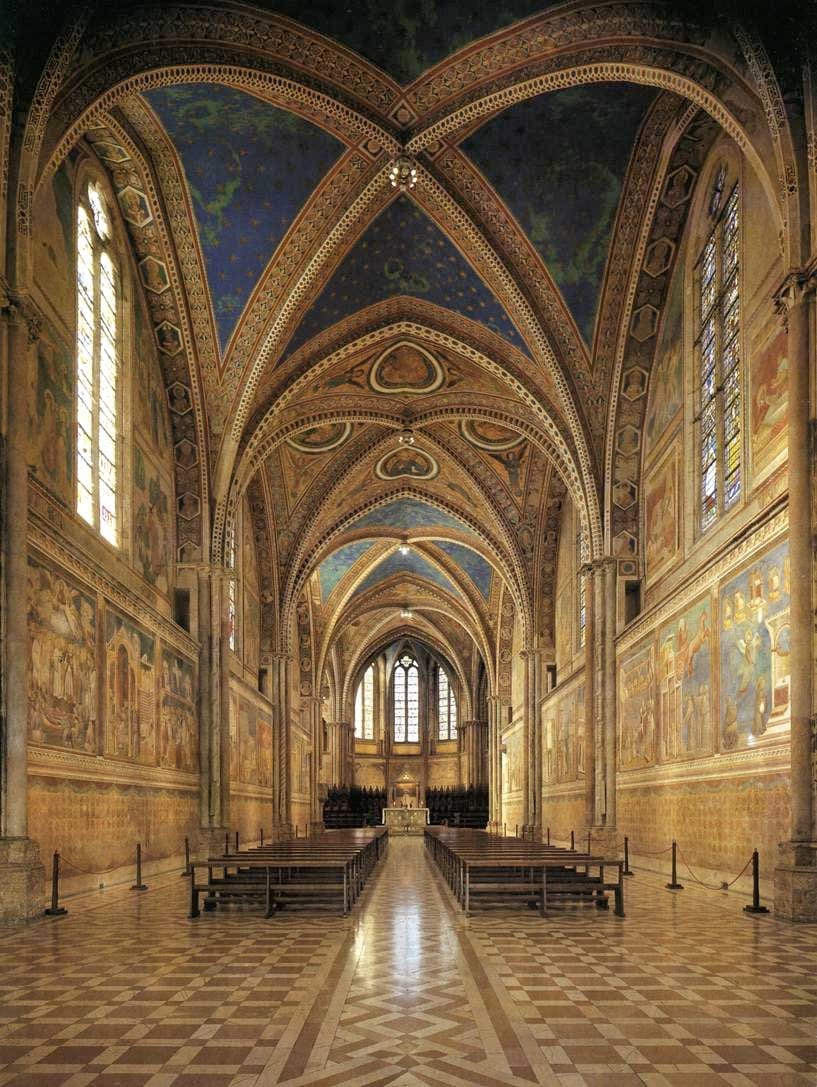
It’s hard to grasp the scale of just how big the Basilica of St. Francis is — until you look at the size of the pews!
In the upper part of the two-level basilica, the walls are covered in vibrant frescoes from floor to soaring ceiling. Everywhere you look, you see color, light, and space — an extraordinary feeling.
Like all the best Renaissance frescoes, though, each of these have a story to tell. The 32 scenes running along the top of each side of the nave depict stories from the Old and New Testaments; it’s thought that the famed Roman master Pietro Cavallini may have been involved. Below, 28 different panels show scenes from St. Francis’ life (don’t miss him speaking with the birds!), often attributed, although controversially, to Giotto.
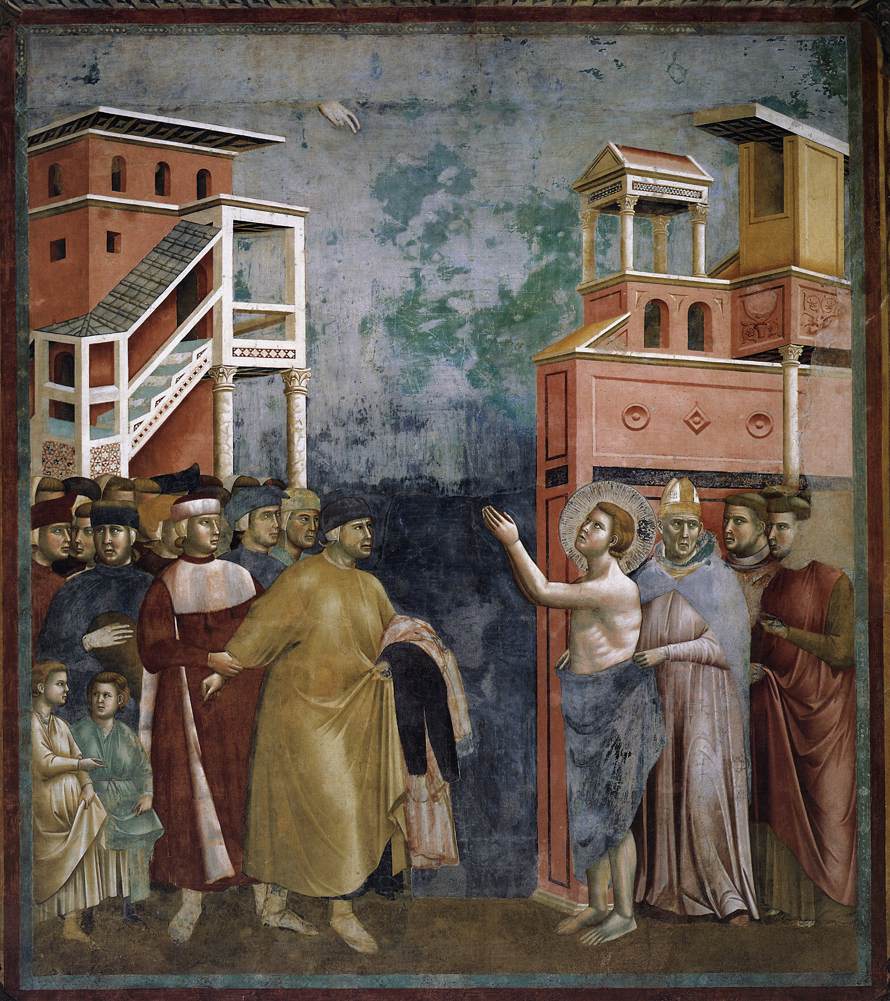
The Upper Church’s fresco of the Renunciation of Worldly Goods, likely by Giotto, shows the space, three-dimensionality, and movement that Giotto was so famous for
The frescoes in the apse and transept are by Cimabue, another of Italy’s most important early Renaissance painters. Perhaps the most striking is also the most mysterious: Cimabue’s Crucifixion panel has, over time, turned into a negative of itself, with the light colors becoming dark and dark becoming light, through chemical processes that remain unexplained.
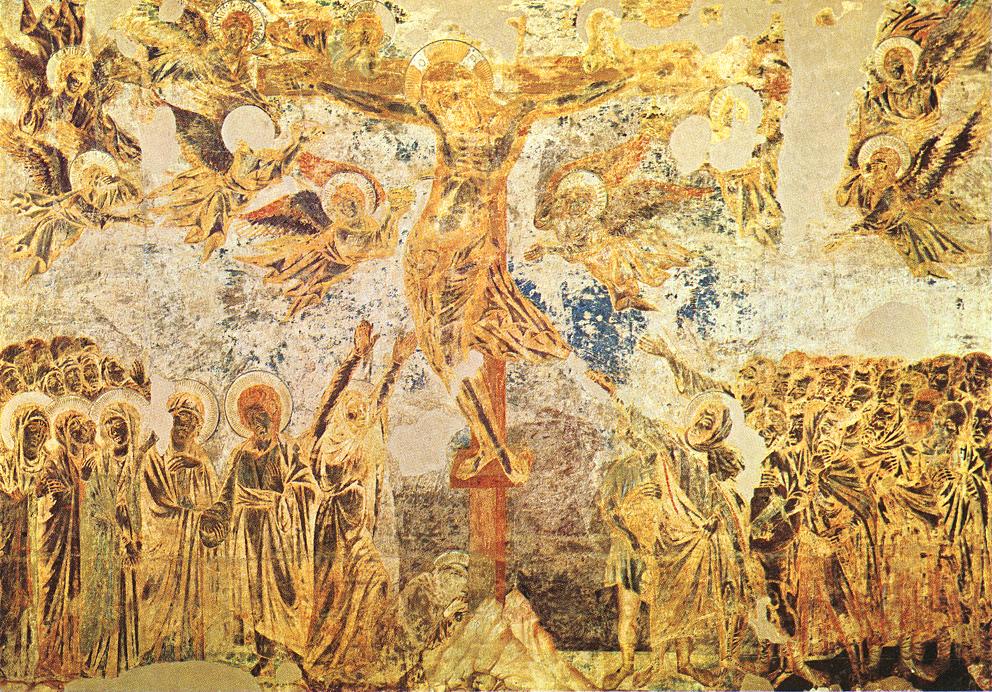
Over time, Cimabue’s Crucifixion, painted in about 1280, became a negative of itself!
The Lower Basilica is just as stunning, although completely different. It’s lined with a series of dimly-lit, ornately-decorated chapels. The ceiling above the high altar is covered in gold-laden frescoes, including allegories of Obedience, Poverty and Chastity by one of Giotto’s pupils. On the transept wall is Cimabue’s most famous masterpiece, Our Lady Enthroned and St. Francis, in 1280; Giotto and his workshop did the frescoes of Christ’s childhood in the right transept.
Then, of course, there’s the tomb of St. Francis himself, another level below in an eerie crypt, usually filled with pilgrims praying as they perambulate around his tomb.
Assisi, a gorgeous town and worth visiting in its own right (believe it or not, it boasts even more than the Basilica!), is a two-hour train ride from either Rome or Florence.

Book a Tour

Pristine Sistine - The Chapel at its Best
€89

1794 reviews

Premium Colosseum Tour with Roman Forum Palatine Hill
€56
850 reviews
Pasta-Making Class: Cook, Dine Drink Wine with a Local Chef
€64
121 reviews

Crypts, Bones Catacombs: Underground Tour of Rome
€69
401 reviews

VIP Doge's Palace Secret Passages Tour
€79
18 reviews

Legendary Venice: St. Mark's Basilica, Terrace Doge's Palace
€69
286 reviews
Follow us
Stay up to date with travel tips, local insights and all things Italy on our social channels!


Subscribe to our Newsletter
Get curated Italy travel tips delivered to your inbox!

