




Navigating trains in Italy: A Complete Guide
May 15, 2026
Pst! We’ve got a secret: the trains in Italy are one of the best ways to get around. The Italian rail network connects most major cities, and high-speed services are fast, comfortable, and efficient. Journeys often come with beautiful countryside views, and although delays can occasionally happen, the services are usually reliable.
If it’s your first time in Italy, the ticket systems can feel a little confusing at first. But once you understand the basics, booking and travelling by train is straightforward. We’ll walk you through how to book and take a train step by step.
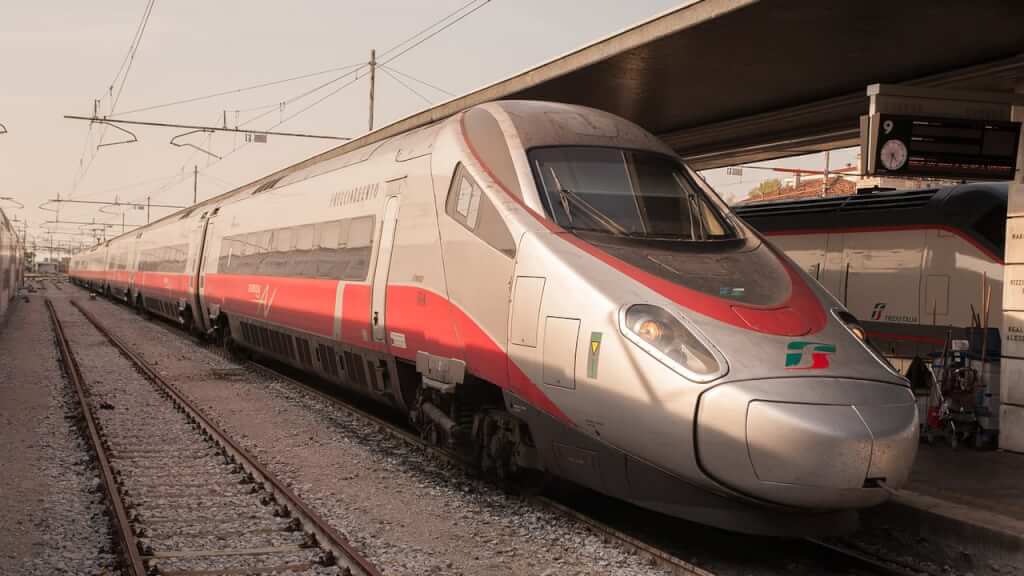
Taking the train means you can sit back and relax and enjoy the journey!
Trains in Italy – Using train booking websites
For official tickets, use:
- Trenitalia (national rail network, including regional and high-speed trains)
- Italo (private high-speed network on major routes)
Both websites allow you to switch the language to English, enter your route, date, and travel type (one-way or return), and compare options easily.
You can also use third-party platforms like ItaliaRail, which offers customer support and simple booking tools. Just be aware it is a private reseller and may charge extra fees compared to booking directly.
- For example, let’s say you want to visit St. Peter’s Basilica in Rome then pop over to Naples for a jaunt through Pompeii. When you enter your options and click “Send,” the next page will show you a list of options around the time, and on the date, you selected.
- You might notice that under “Departure,” though, it doesn’t say Rome. It might say “Roma Te.” That’s because Italians call Rome “Roma,” and the “Te” is short for Rome’s main train station – Termini. Similarly, instead of “Naples,” it’ll often say “Na C.le,” short for “Napoli Centrale.”
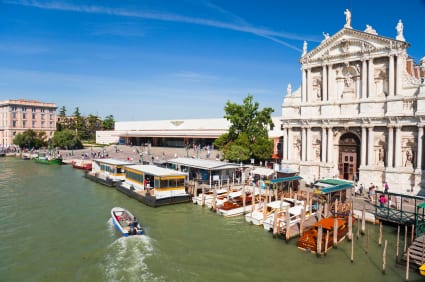
Venice’s Santa Lucia train station
Trains in Italy – Station Names and Abbreviations
We know this can be confusing, so here’s a list of Italy’s major train stations and how they’re abbreviated on the Trenitalia site:
- Rome Termini (central station) –> ROMA TE
- Naples Centrale (central station) –> NA C.LE
- Florence Santa Maria Novella (central station) –> Fl.SMN
- Venice Santa Lucia (on the island) –> VE. S.L.
- Venice Mestre (on the mainland) –> MESTRE
- Milan Centrale (central station) –> MI C.LE
- Genova Piazza Principe (central station) –> GE P.P
- Genova Stazione Brignole –> GE BRIG
- La Spezia Centrale (central station) –> SPEZIA
- Pisa Centrale (central station) –> PISA C.
Sometimes, you might notice that one train station name at the top will be black, followed by a number of others in red. That means that there’s more than one station in the city you’ve picked, and the train stops at all of the stations on the list.
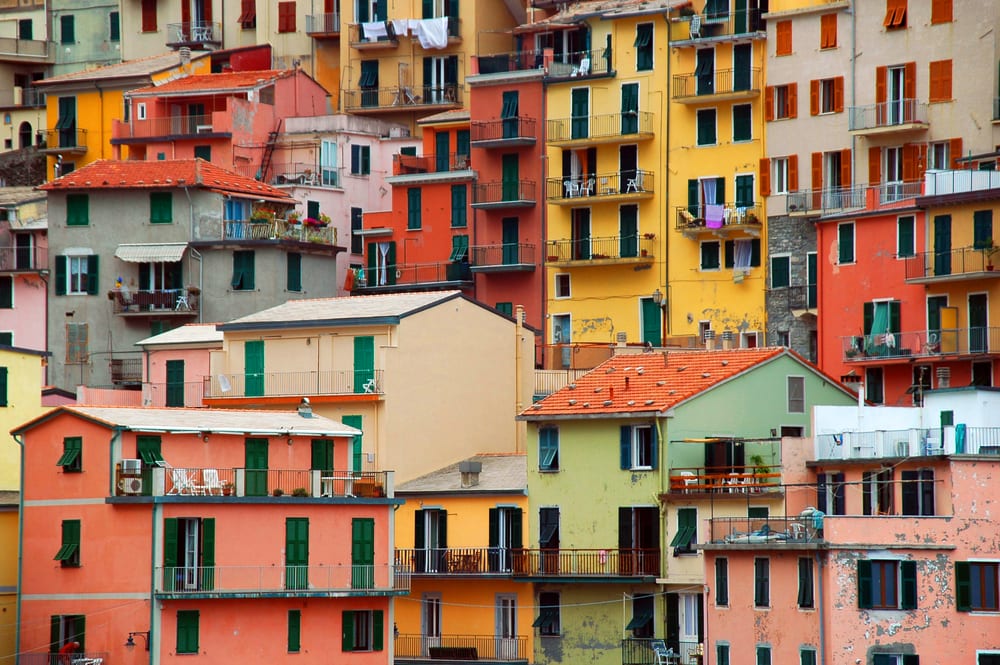
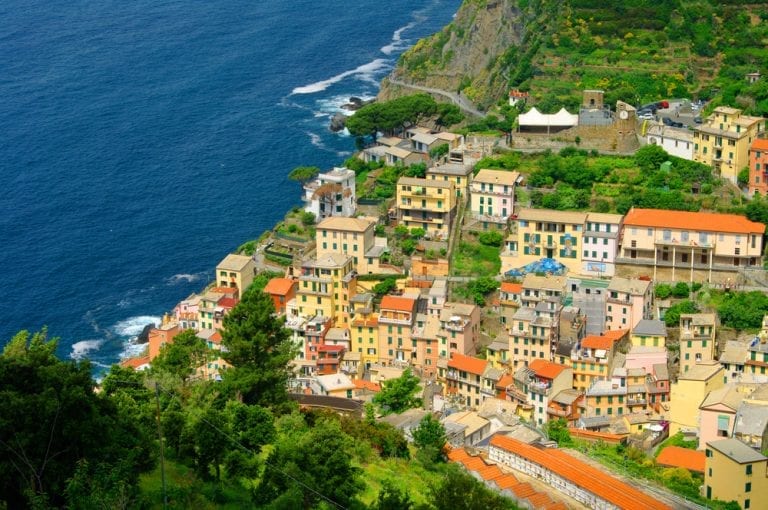
You can get to the town of Manarola, a gem of the Cinque Terre, easily on the train!
Figuring out the differences between Italian trains
Once you select your route, you’ll see different types of trains at different prices and speeds.
High-speed trains (such as Frecciarossa and Frecciargento operated by Trenitalia, and Italo trains) are the fastest and most comfortable, linking major cities like Rome, Florence, Milan, and Naples.
Slower and cheaper options include:
- Intercity trains (medium-distance routes, fewer stops)
- Regional trains (local services, most stops, no seat reservations)
For example, Rome to Naples:
- High-speed train: ~1 hour 10 minutes
- Intercity: ~2 hours
- Regional: ~2.5 hours
High-speed trains cost more but are generally the most comfortable and time-efficient option.
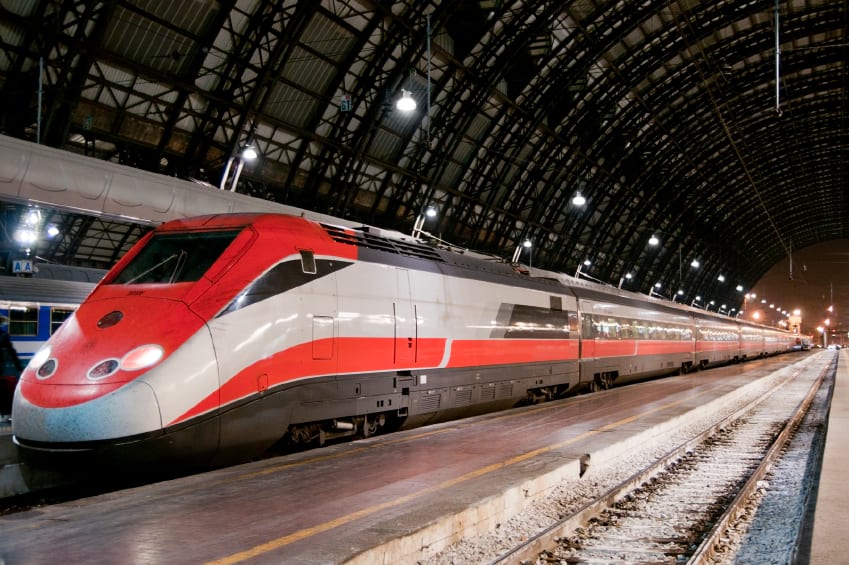
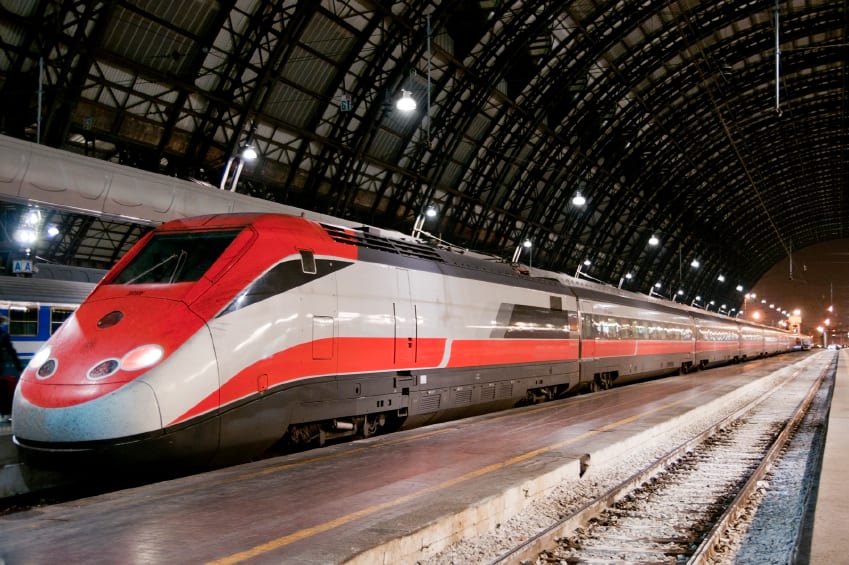
High speed Italian trains like this are an important part of the network
Taking advantage of discounts and fares
When booking online, keep an eye out for promotional fares. These can include discounted tickets or special offers for families and early bookings. For example, children sometimes travel free under specific promotional deals on Trenitalia services.
To access these, simply select your route and look for available fare types (such as “Base,” “Economy,” or promotional offers) before completing your purchase.
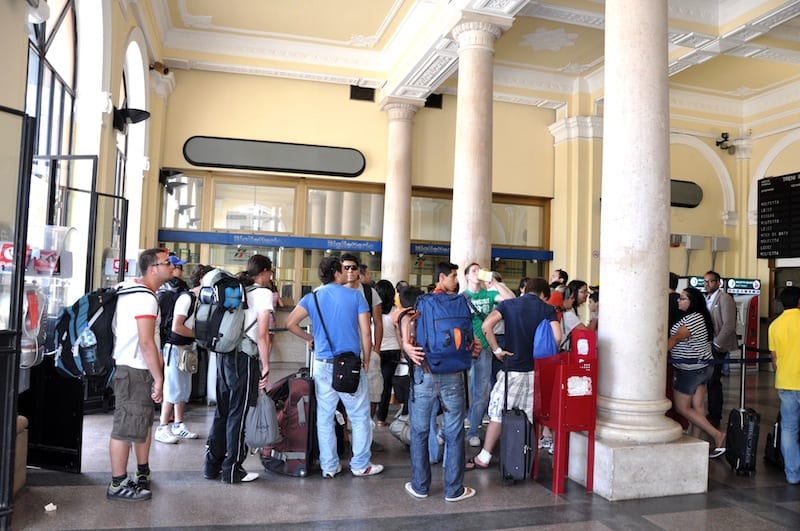
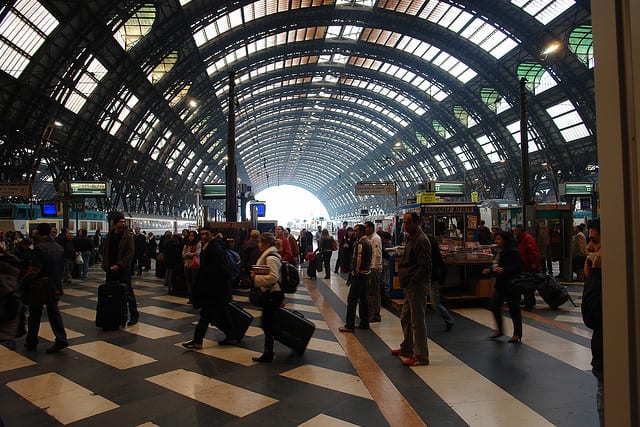
Another benefit to booking your ticket online: train stations can be crowded… and there can be lines, even for the automatic ticket machines!
Booking your train ticket: online or at the station?
Booking online is recommended if you want:
- Lower prices (advance fares are cheaper)
- Guaranteed seats on high-speed trains
- Less risk of sold-out departures
Buying at the station is useful if:
- You want flexibility
- You’re travelling short distances on regional trains
- You are unsure of exact departure times
Note: some discounted tickets are non-changeable or have limited flexibility, so always check conditions before booking.
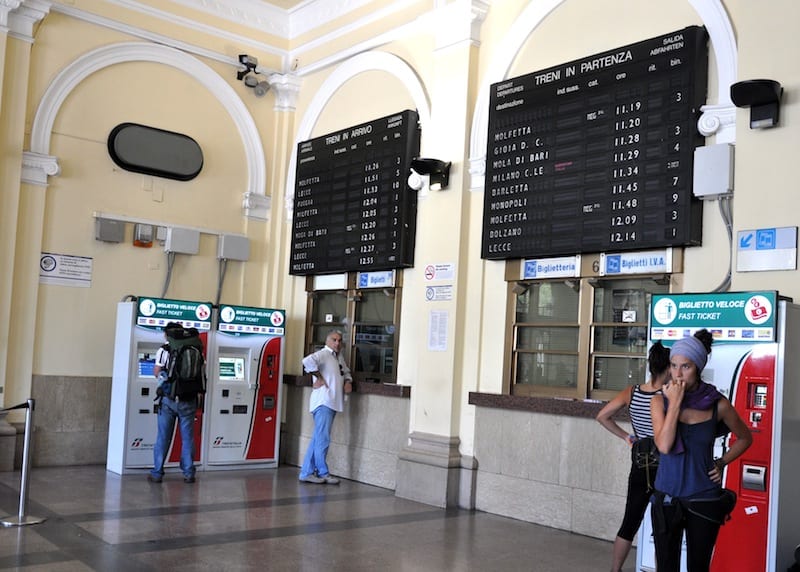
Look for your train on a board like this one!
At the station: what to expect
When you arrive at the station, check the departure board for:
- Train number (TRENO)
- Departure time
- Platform (BIN = binario)
Important tip: trains in Italy are listed by final destination, not intermediate stops. Often your destination isn’t the last one so if you look up at the board and don’t see your destination, don’t panic, just look for your train’s number. Once your platform appears, head there and board your carriage.
Insider Tip: when looking at the board make sure you are looking that the correct one… You might be looking at “Arrivi” (arrivals) rather than “Partenze” (departures).
Do you need to validate your ticket?
Before you board your train, it’s important to know whether your ticket needs to be validated.
In Italy, this small step depends on the type of ticket you’ve purchased, and forgetting it when required can lead to fines. Here’s a quick guide so you know exactly when (and how) to validate before you travel.
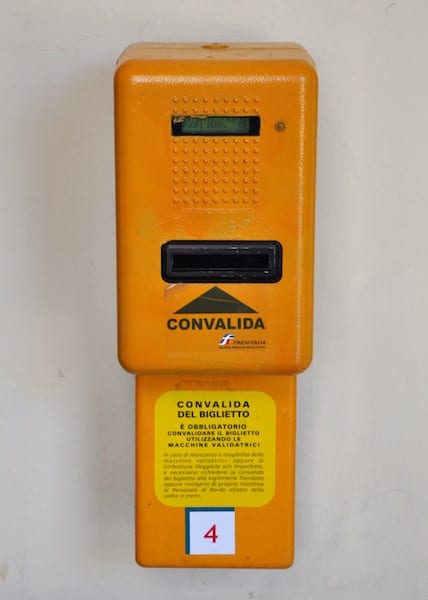
High-speed tickets:
– No validation needed (already time-stamped/reserved)
Regional paper tickets:
– Must be validated before boarding unless time-stamped
Validation machines are usually yellow and located around stationes and platforms.
To stamp, put your ticket in the slot, arrows facing in, and push until you hear the stamp.
If you don’t do this and you were supposed to, you can get a fine when (or if) your ticket is checked.
Seating and tickets
On high-speed and Intercity trains, seats are usually assigned. Your ticket will show:
- Carrozza = carriage number
- Posti = seat number
On regional trains, seating is generally unreserved, just sit anywhere available.
If someone is in your seat, simply show your ticket and they will usually move.
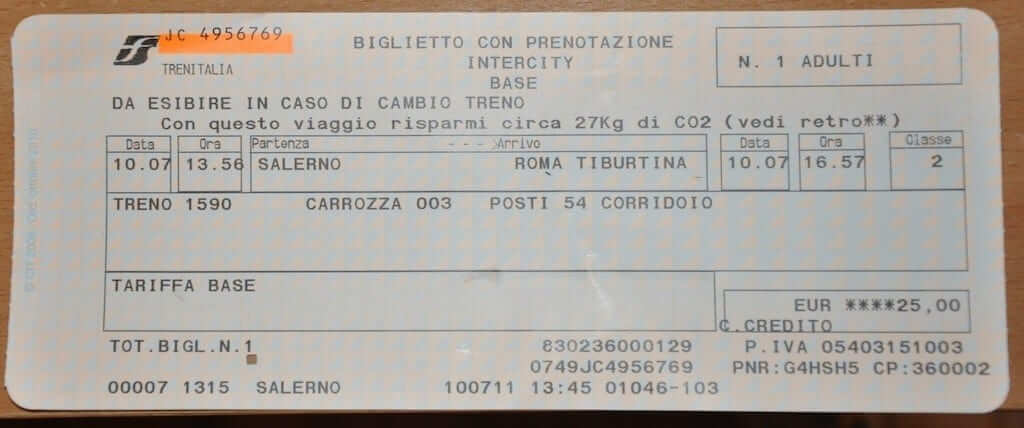
Typical train ticket – this one’s for an Intercity train, base fare, from Salerno to Rome’s Tiburtina station
So you made your train. Now what?
Relax and enjoy the journey. Keep your belongings close at all times, especially in busy stations and on popular routes such as Rome to Naples. Pickpocketing can occur in crowded areas, so it’s best to stay aware and keep valuables secure.
With a little preparation, travelling by train in Italy is one of the easiest and most enjoyable ways to explore the country.
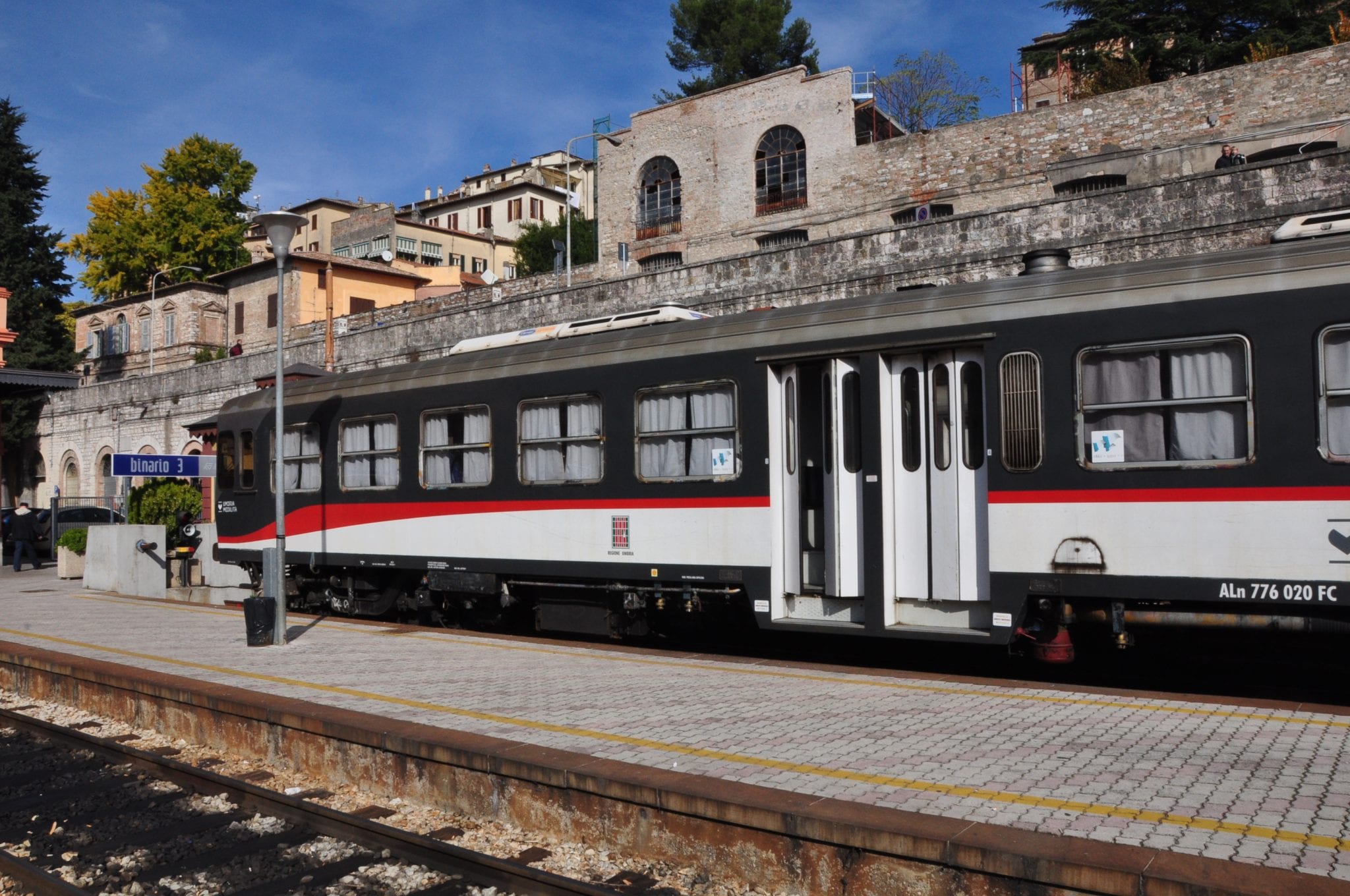
The Umbrian Train Line
FAQs – Trains in Italy
Why are the trains in Italy better than other transport options?
To be honest, driving in Italy, particularly in Italian cities, can be confusing, chaotic, stressful and, for the uninitiated, even dangerous. (But if you do want to drive, you should definitely read our top 6 tips for driving in Italy.) Between the cost of car rental and gas it’s often cheaper to go by rail.
Meanwhile, with all of the hassles of flying and the time required to get out to the airport, a flight often winds up taking as long, or longer, than the train, and, again, is often more expensive.
What’s the difference between high-speed and regional trains in Italy?
High-speed trains (such as Frecciarossa and Italo services operated by Trenitalia and Italo) connect major cities quickly and comfortably, often with reserved seating and onboard services. Regional trains are slower, stop more frequently, and are used for shorter local journeys. They’re usually cheaper, but less predictable in terms of travel time and comfort.
Do I need to book tickets for trains in Italy in advance?
It depends on your route. For high-speed trains, it’s usually best to book in advance, especially during busy travel periods, as prices increase closer to departure and seats can sell out. For regional trains, advance booking is not necessary—you can usually buy tickets on the day of travel. Just remember that some discounted fares are only available when booking early.

Travel by train to see more towns and cities, and join a local tour to discover the stories and sights!
Book a Tour

Pristine Sistine - The Chapel at its Best
€89

1794 reviews

Premium Colosseum Tour with Roman Forum Palatine Hill
€56
850 reviews

Pasta-Making Class: Cook, Dine Drink Wine with a Local Chef
€64
121 reviews

Crypts, Bones Catacombs: Underground Tour of Rome
€69
401 reviews

VIP Doge's Palace Secret Passages Tour
€79
18 reviews

Legendary Venice: St. Mark's Basilica, Terrace Doge's Palace
€69
286 reviews
You May Also Like

Follow us
Stay up to date with travel tips, local insights and all things Italy on our social channels!


Subscribe to our Newsletter
Get curated Italy travel tips delivered to your inbox!

