
Visiting the Roman Forum: Fun facts and history
May 17, 2026
If there’s one place in Rome where history truly comes alive, it’s the Roman Forum. Once the political, religious, and commercial heart of the Roman Empire, this sprawling archaeological site is where emperors gave speeches, triumphal parades marched, and some of the most important decisions in Western history were made.
Today, walking through the Roman Forum means stepping directly into the world of ancient Rome. Crumbling temples, triumphal arches, basilicas, and ancient roads tell the story of a civilization that shaped the modern world.
Here’s everything you need to know before visiting the Roman Forum, from what it is and what to see, to insider tips on the best time to go.
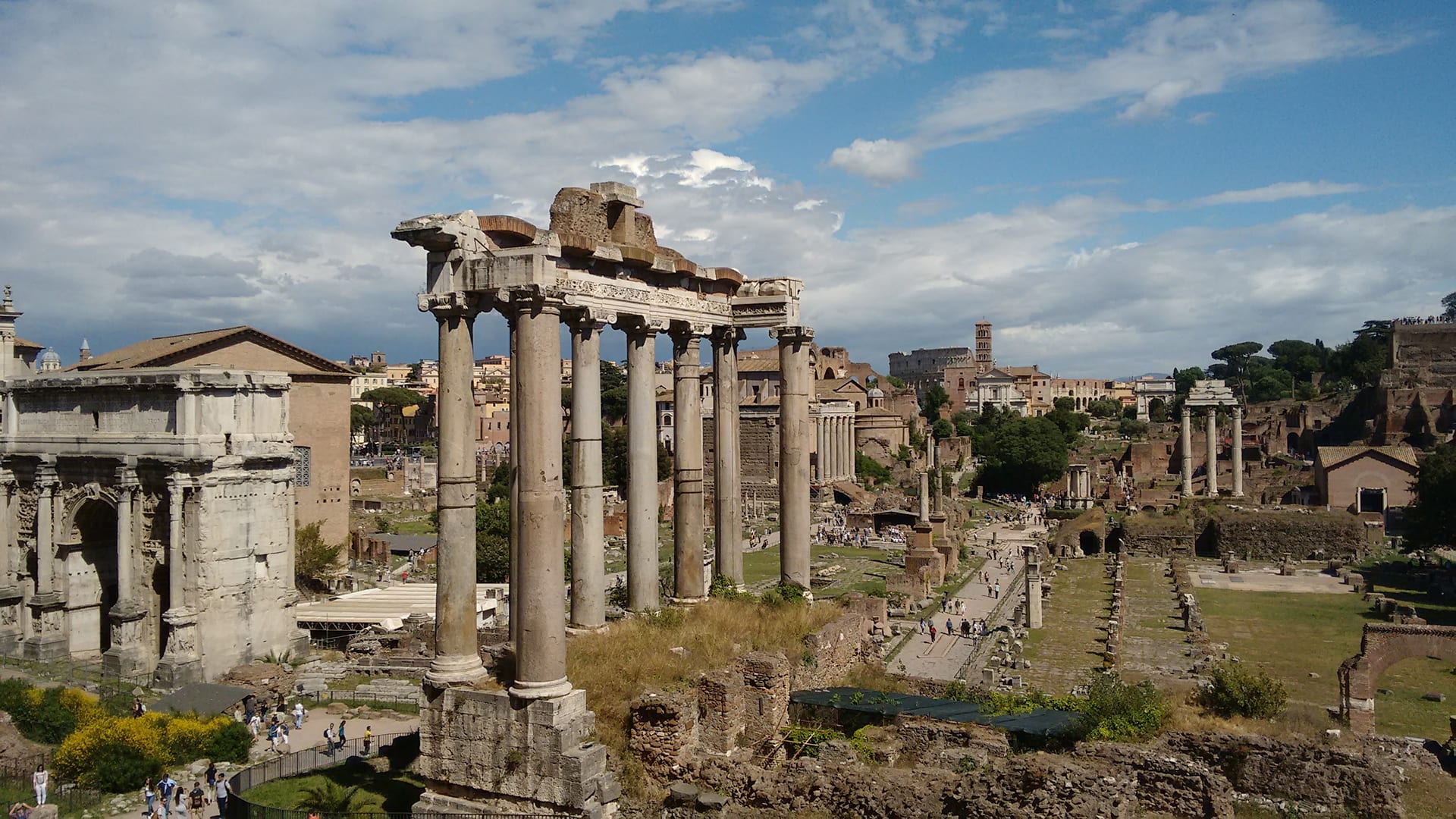
The impressive site of the Roman Forum
What is the Roman Forum?
The Roman Forum (Forum Romanum) was the civic and political center of ancient Rome. Located between the Palatine Hill and Capitoline Hill, it served as the city’s main public square for over a thousand years.
This is where Romans came to:
- vote in elections,
- attend religious ceremonies,
- conduct business,
- celebrate military victories,
- and debate laws that shaped the empire.
Think of it as the ancient Roman version of a city hall, courthouse, cathedral, stock exchange, and town square, all rolled into one.
How long is the Roman Forum?
The Roman Forum stretches roughly 500 metres (1,640 feet) through the heart of ancient Rome.
That may not sound huge, but don’t be fooled, there’s a lot packed into that space. With multiple levels, side paths, and major monuments, most visitors spend 1.5 to 3 hours exploring it properly. If you combine it with nearby Palatine Hill and the Colosseum (which most tickets do), you can easily spend half a day here.
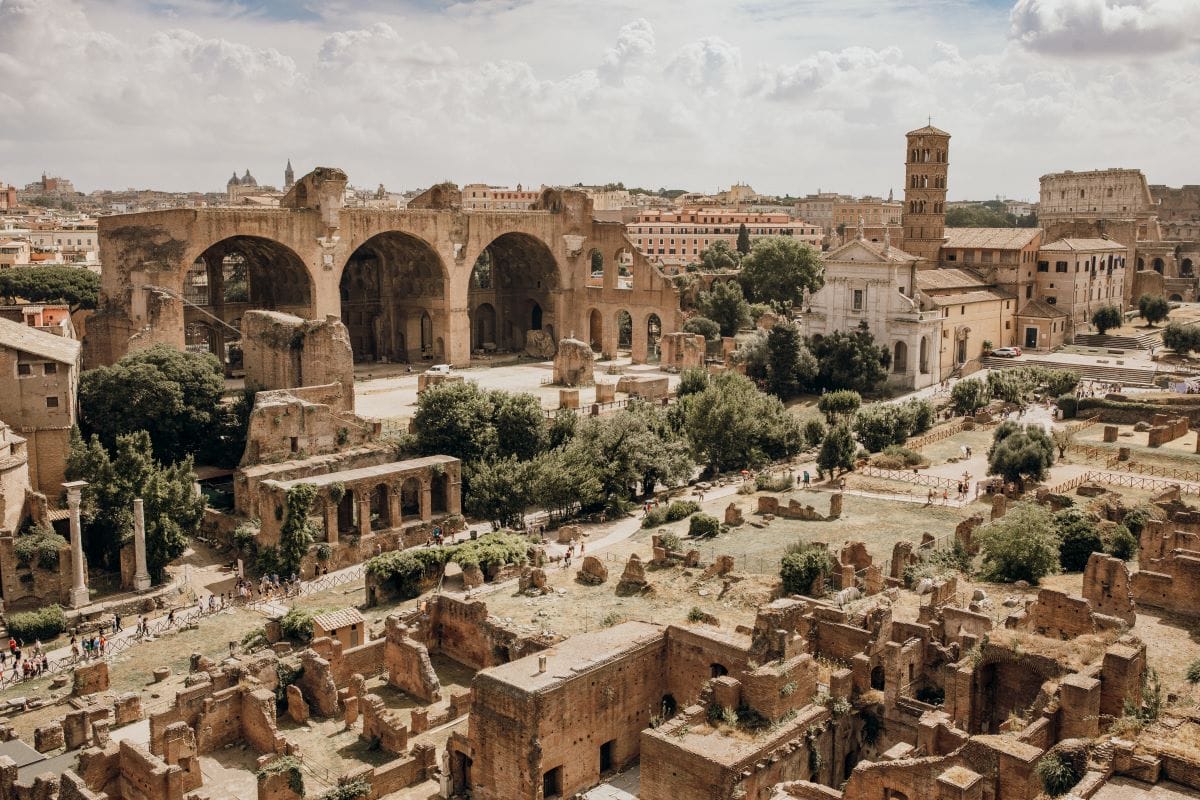
The Super Sites of Rome include the ancient ruins of the Roman Forum.
When was the Roman Forum built?
The Roman Forum began as a marshy valley in the 7th century BC. According to Roman tradition, it was developed after early kings drained the swamp using the Cloaca Maxima, one of the world’s earliest sewer systems. Construction and expansion continued for centuries:
- early temples appeared in the 6th century BC
- major republican buildings followed
- emperors like Julius Caesar and Augustus added monumental new structures
- many ruins visible today date from the 1st century BC to 4th century AD
In other words: the Roman Forum wasn’t built all at once, it evolved alongside Rome itself.
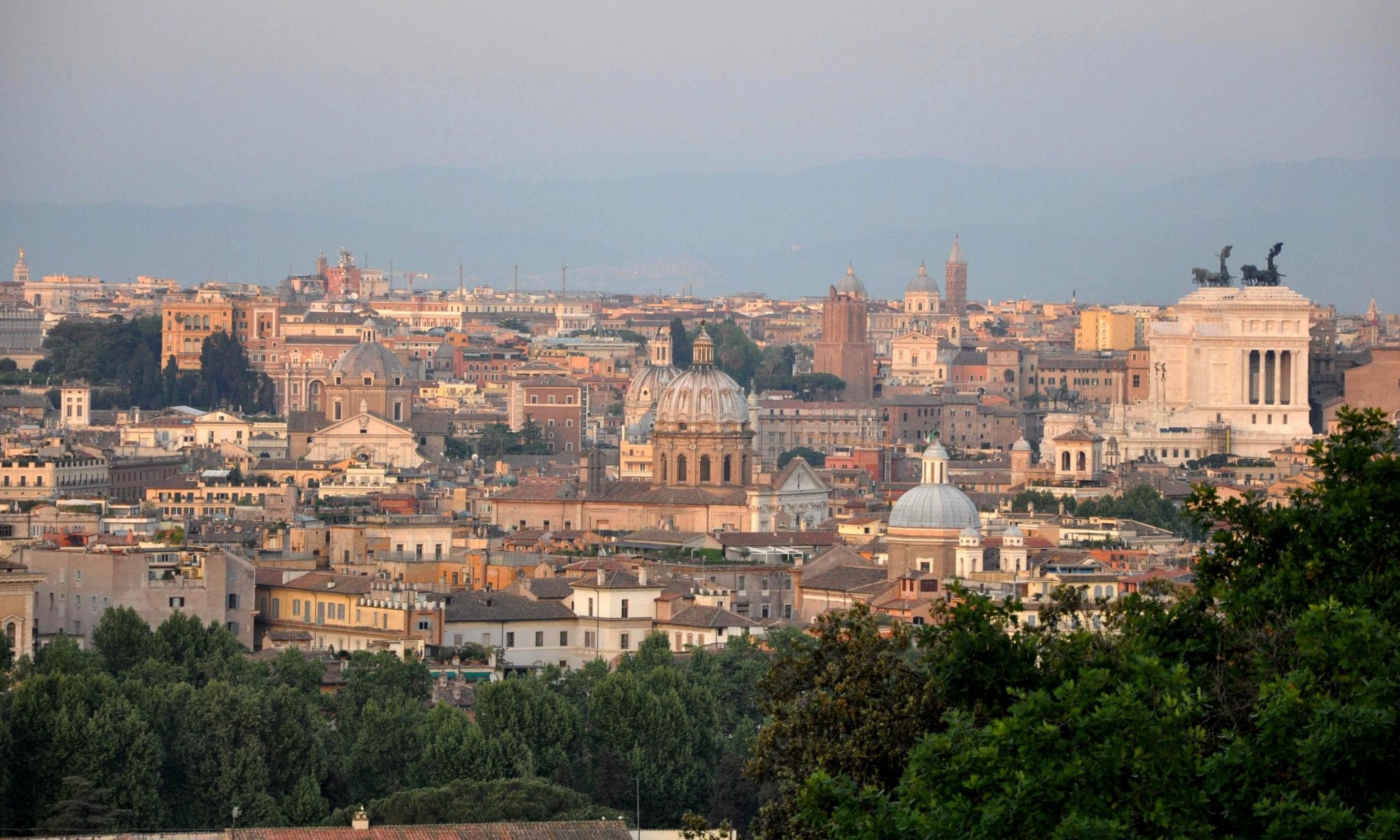
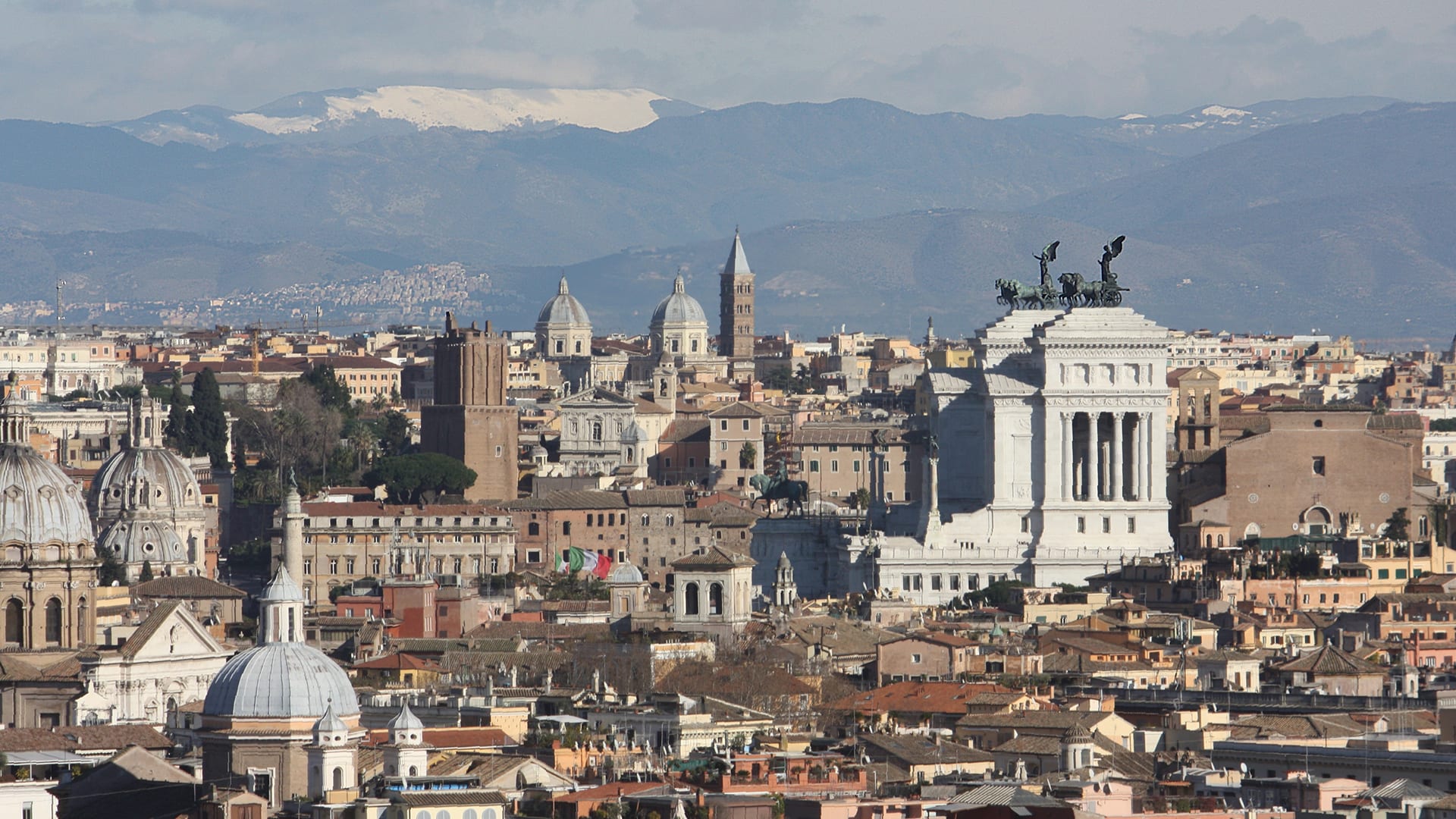
One of the best views of Rome!
What was the Roman Forum used for?
The Roman Forum was the beating heart of public life. Its many roles included:
- Politics: Senators met nearby, speeches were delivered, and laws were announced to the public.
- Religion: Important temples honored gods like Saturn, Vesta, and Castor and Pollux.
- Commerce: Markets, banking, and trade happened daily in and around the Forum.
- Justice: Court cases and legal hearings were held in the large basilicas.
- Celebration: Victorious generals processed through the Forum during grand military triumphs.
Roman Forum facts
Here are a few fascinating facts to impress your travel companions:
- The Roman Forum was used continuously for more than 1,000 years.
- Ancient Romans called it simply “the Forum.”
- After the fall of Rome, it became a cow pasture known as Campo Vaccino (“cow field”).
- Archaeological excavation only began seriously in the 18th and 19th centuries.
- Some of Rome’s oldest surviving roads are still visible here, including parts of the Via Sacra, the city’s sacred road.
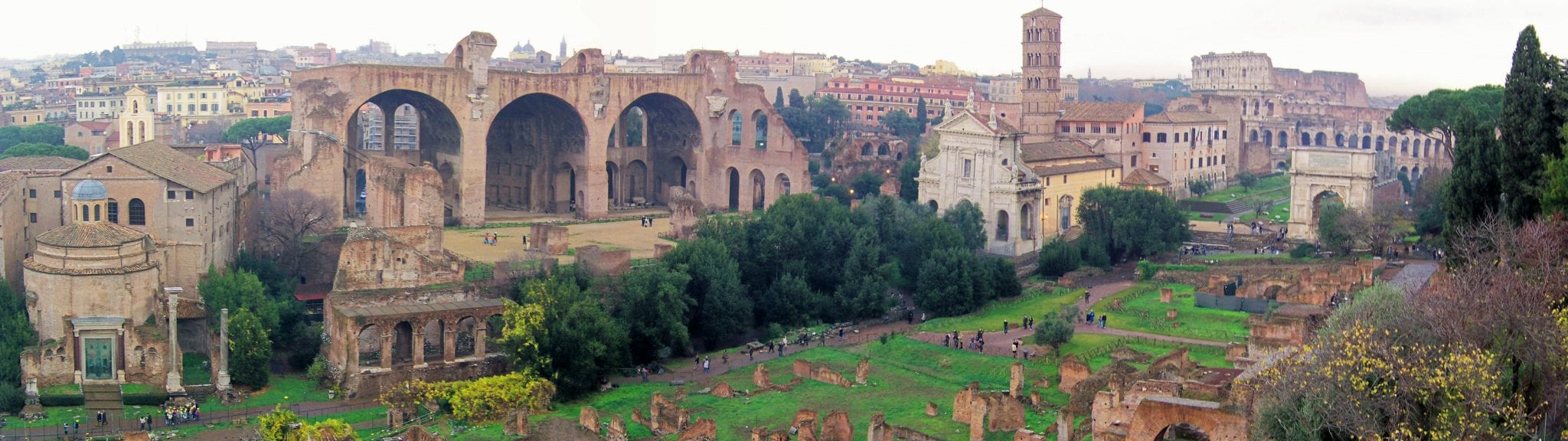
The sheer size and scale is impressive when you are stood like an ant next to these structures
Insider Tip: Stay nearby for sunset! And afterwards, head toward the Trevi Fountain or enjoy some sightseeing in Rome at night.
Key sights to see in the Roman Forum
Temple of Saturn
- One of the Forum’s most iconic ruins, with its surviving columns dominating the skyline. It once housed the Roman state treasury.
Arch of Septimius Severus
- A beautifully preserved triumphal arch celebrating Roman military victories.
Temple of Antoninus and Faustina
- One of the best-preserved temple façades in the Forum, later converted into a church.
House of the Vestal Virgins
- The elegant home of Rome’s priestesses, who tended the sacred flame of Vesta.
Temple of Julius Caesar
- Built on the cremation site of Julius Caesar after his assassination.
Via Sacra
- Walk the same road used by Roman generals during victory parades.
Curia Julia
- The remarkably intact Senate House where Roman senators once met.
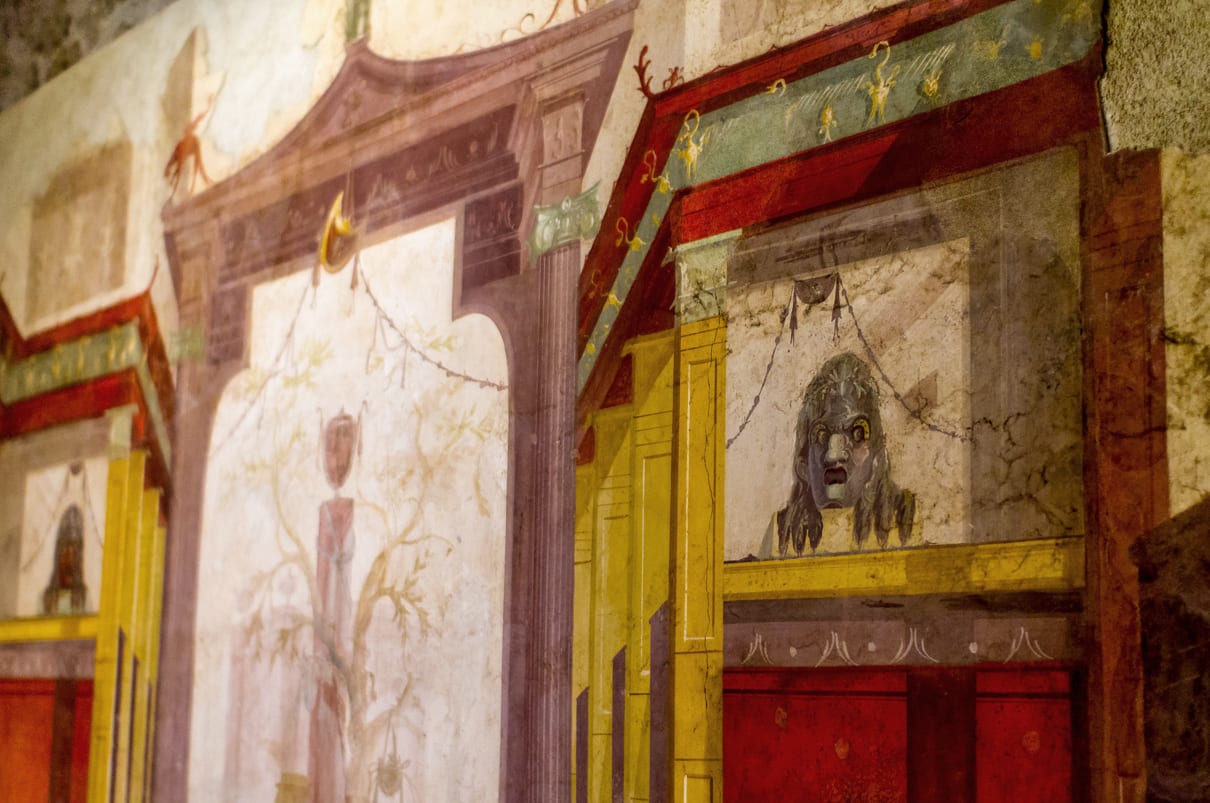
Marvel at the frescoes in the House of Augustus
Nearby: visit the House of Augustus
While you’re here, don’t miss the beautifully preserved frescoes inside visit the House of Augustus on nearby Palatine Hill.
Insider Tip: Take a guided tour. Without context, the Forum can feel like “just ruins.” A guide transforms stones into stories.
Take a 360º Virtual Tour with us
In this video, our very own co-founder and story-teller Jason Speigel, walks us through some aspects of the Forum’s incredible past, and shows how having an excellent tour guide will make all the difference.
Video Transcription:
“We are standing overlooking the Roman Forum, without a doubt one of the most important archeological spots in the entire Western world. The decisions that were made here inside the Roman Forum literally helped shape the course of Western history down to our lives today.
If you look over to the right you will see a beautifully preserved ancient triumphal arch, the arch of Septimius Severus. Looking a little bit into the distance just behind me, on the other side of the forum was the Basilica Guilia where the court cases of ancient Rome were held, or the supreme court.
Over to the left you have the Senate House, the Curia, where the Senate used to meet and vote on important decisions. Just down in front of that was the Comitium, where we got our word “committee”, where they would meet and debate to discuss a certain matter before going inside to vote. The rostro, the speaking platform, is just down to the right of that, where the orators would speak down to the togan Romans, just down in the centre space that we’re looking at.
Right over here there was a banking center, and then a whole series of temples including the temple to the God Julius Cesar. That’s the spot where Julis Cesar was cremated, after his assination, where his body was said to ascend to the heavens, and they built a temple in his honour in that spot. Looking down a little bit further away to the right of that, you can see three small columns, that was the temple of Vesta, where the Vestal virgins used to burn the eternal flame of Rome. And all the way on the other end we have another arch, the arch of Tidus, which then flows down to the area of the Colosseum.
So again, it’s hard not to understate the importance of this area, and I still think you can feel the history emanating from these stones.”
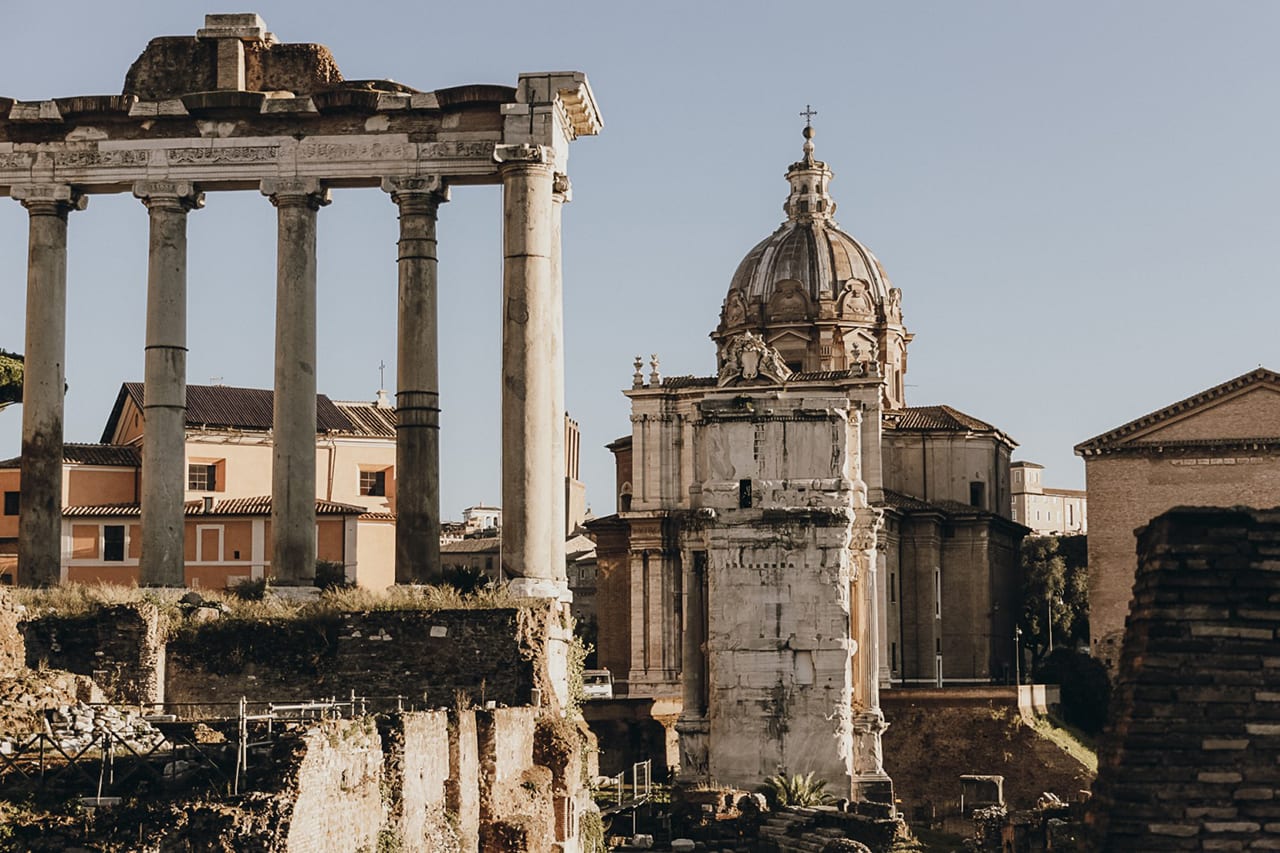
Visiting the Roman Forum is best in the early morning or late afternoon
FAQs – Visiting the Roman Forum
When’s the best time to visit the Roman Forum?
The best time to visit is early morning (best overall). Arrive right when it opens for cooler temperatures, softer light for photos, smaller crowds. Alternatively, come in the late afternoon, which is excellent for golden-hour photography and a quieter atmosphere. Avoid midday in summer, the Roman Forum has very little shade, and temperatures can be intense.
What do I need to bring with me?
You need to bring key items that you would normally want with you on a hot sunny day, such as a bottle of water, sun hat, sunscreen and your camera! Also wear comfortable walking shoes – ancient Roman paving stones are beautiful, but uneven!
Do I need to buy an entrance ticket?
Yes, you need an entrance ticket to visit the Roman Forum. The good news is that tickets are usually sold as a combined pass, which also includes entry to the Colosseum and Palatine Hill, making it one of the best-value sightseeing tickets in Rome. Check here for more information about the Super sites – top attractions in Rome
Should I book the Roman Forum in advance?
Because these are three of the city’s most popular ancient sites, it’s highly recommended to book in advance, especially during peak season, to secure your preferred entry time and avoid long queues. If you want to bring the ruins to life, a guided tour is the best way to understand the stories behind what you’re seeing.
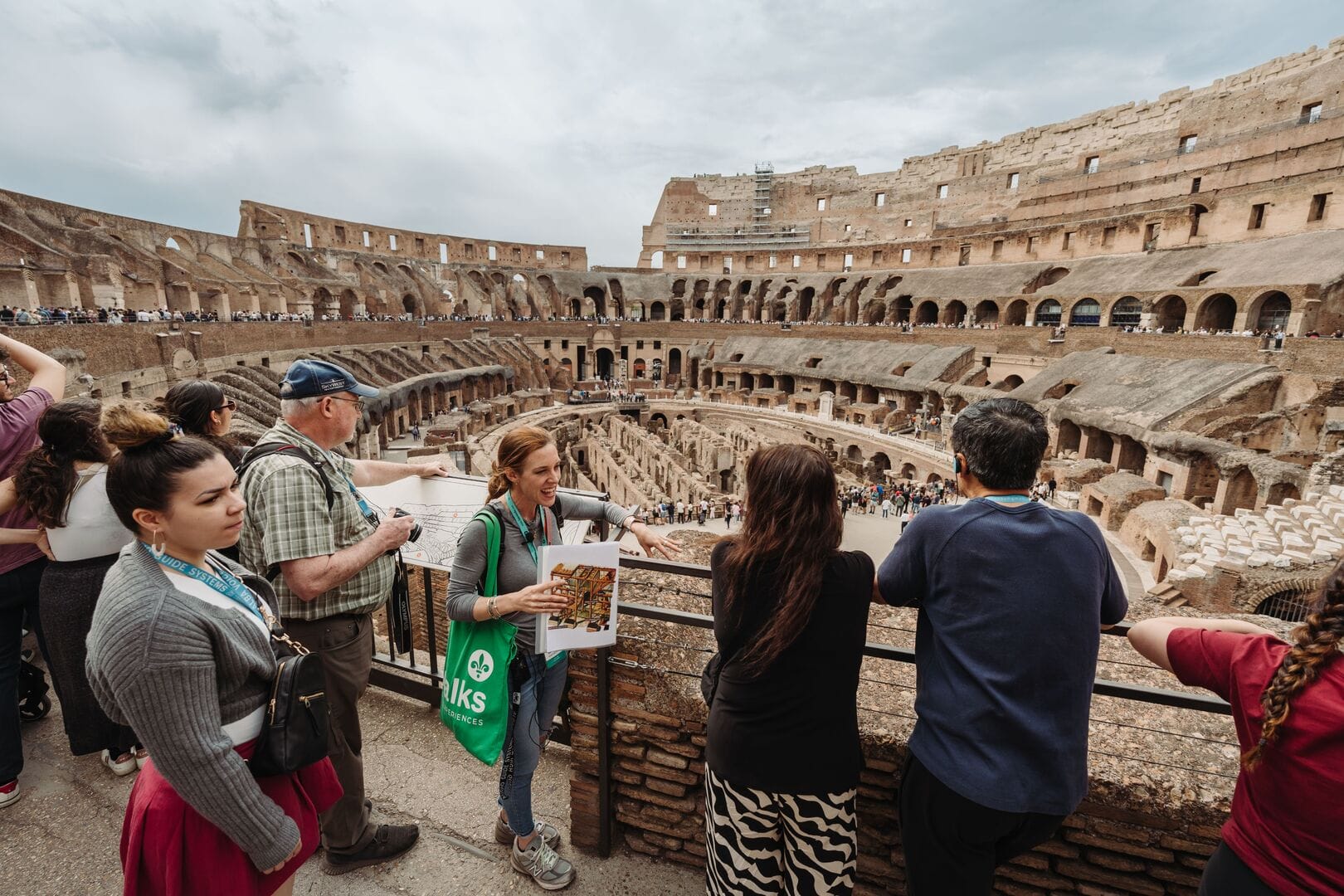
A guide will help turn stones into stories!
The Roman Forum isn’t just another archaeological site, it’s where the story of Rome unfolded. Walking its ancient streets gives you something rare: the feeling that history isn’t gone at all, it’s still here, under your feet. And in Rome, that feeling never gets old.
Ready to experience the Roman Forum the way it was meant to be seen?
Join a Roman Colosseum Tour with Walks of Italy and explore the Forum, Palatine Hill, and the Colosseum with an expert guide who brings ancient Rome vividly to life.

Book a Tour

Pristine Sistine - The Chapel at its Best
€89

1794 reviews

Premium Colosseum Tour with Roman Forum Palatine Hill
€56
850 reviews

Pasta-Making Class: Cook, Dine Drink Wine with a Local Chef
€64
121 reviews

Crypts, Bones Catacombs: Underground Tour of Rome
€69
401 reviews

VIP Doge's Palace Secret Passages Tour
€79
18 reviews

Legendary Venice: St. Mark's Basilica, Terrace Doge's Palace
€69
286 reviews
You May Also Like
Follow us
Stay up to date with travel tips, local insights and all things Italy on our social channels!


Subscribe to our Newsletter
Get curated Italy travel tips delivered to your inbox!

