
The Sistine Chapel in the Vatican Museums: Best Tips for Visiting
August 26, 2026
The Sistine Chapel is one of the most visited attractions in Vatican City and a highlight of every visit to the Vatican Museums. Home to Michelangelo’s world-famous ceiling frescoes and The Last Judgement, it attracts millions of visitors every year.
Whether you’re planning a visit or simply curious about its history and rules, this guide to visiting the Sistine Chapel covers everything you need to know for an unforgettable experience.
Sistine Chapel at a Glance
- Location: Vatican Museums. Part of Vatican City’s UNESCO World Heritage Site
- Built: 1473–1481 during the reign of Pope Sixtus IV
- Named after: Pope Sixtus IV
- Architect: Giovannino de’ Dolci
- Famous artists: Michelangelo, Sandro Botticelli, Pietro Perugino, Domenico Ghirlandaio, Cosimo Rosselli and Pinturicchio
Why Is the Sistine Chapel Famous?
The Sistine Chapel is famous for housing some of the greatest masterpieces in the history of art, most notably Michelangelo’s breathtaking ceiling frescoes and The Last Judgement.
Completed between 1508 and 1512, the ceiling transformed Renaissance art and includes the iconic Creation of Adam, one of the most recognisable images in the world.
Beyond its artistic significance, the chapel remains an active place of worship and serves as the location of the papal conclave, where cardinals gather to elect each new pope.
The Sistine Chapel also forms part of Vatican City’s UNESCO World Heritage Site, making it one of the world’s most important cultural, historical and religious landmarks.
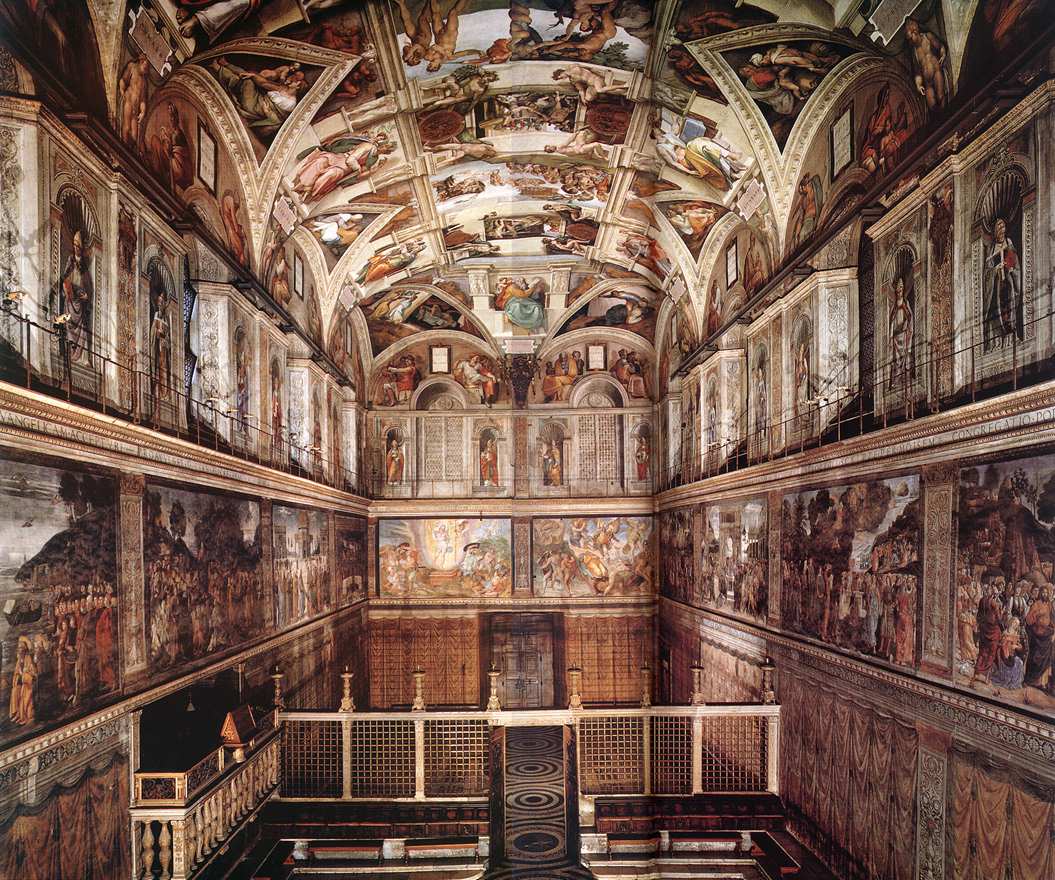
The Sistine Chapel really is a masterpiece, to put it lightly!
What to See Inside the Sistine Chapel
Opening Times
The Sistine Chapel is visited as part of the Vatican Museums, so it follows the same opening times rather than operating independently.
- Monday to Saturday: 8:00am – 8:00pm (last entry at 6:00 PM)
- Closed on Sunday, except the last Sunday of each month: 9:00am – 2:00pm (last entry at 12:30pm – free entry)
- Visitors are required to leave the galleries at least 30 minutes before closing time
Insider Tip: Since the Sistine Chapel is the final stop on the Vatican Museums route, aim to enter early in the day or later in the afternoon to experience it with slightly fewer crowds.
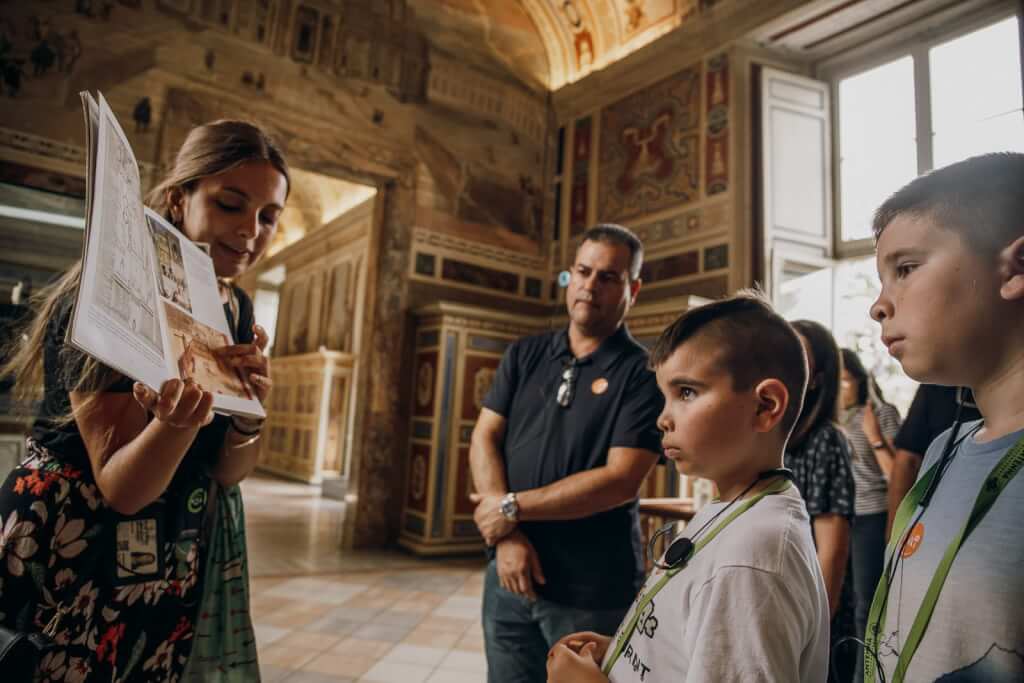
Taking a guided tour opens up more options, and more stories that bring history to life!
Scheduled Closures
Opening hours and closures can change for special events or religious occasions, so always check the official Vatican Museums website before your visit.
- The Vatican Museums are closed on Sundays, except for the last Sunday of the month.
- They are also typically closed on the following dates:
- January 1 (New Year’s Day), January 6 (Epiphany), February 11 (Lateran Treaty anniversary), March 19 (St. Joseph’s Day), Easter Sunday (date varies each year), June 29 (Feast of Saints Peter and Paul), August 15 (Assumption of Mary), November 1 (All Saints’ Day), December 8 (Immaculate Conception), December 25 (Christmas Day), December 26 (St. Stephen’s Day)
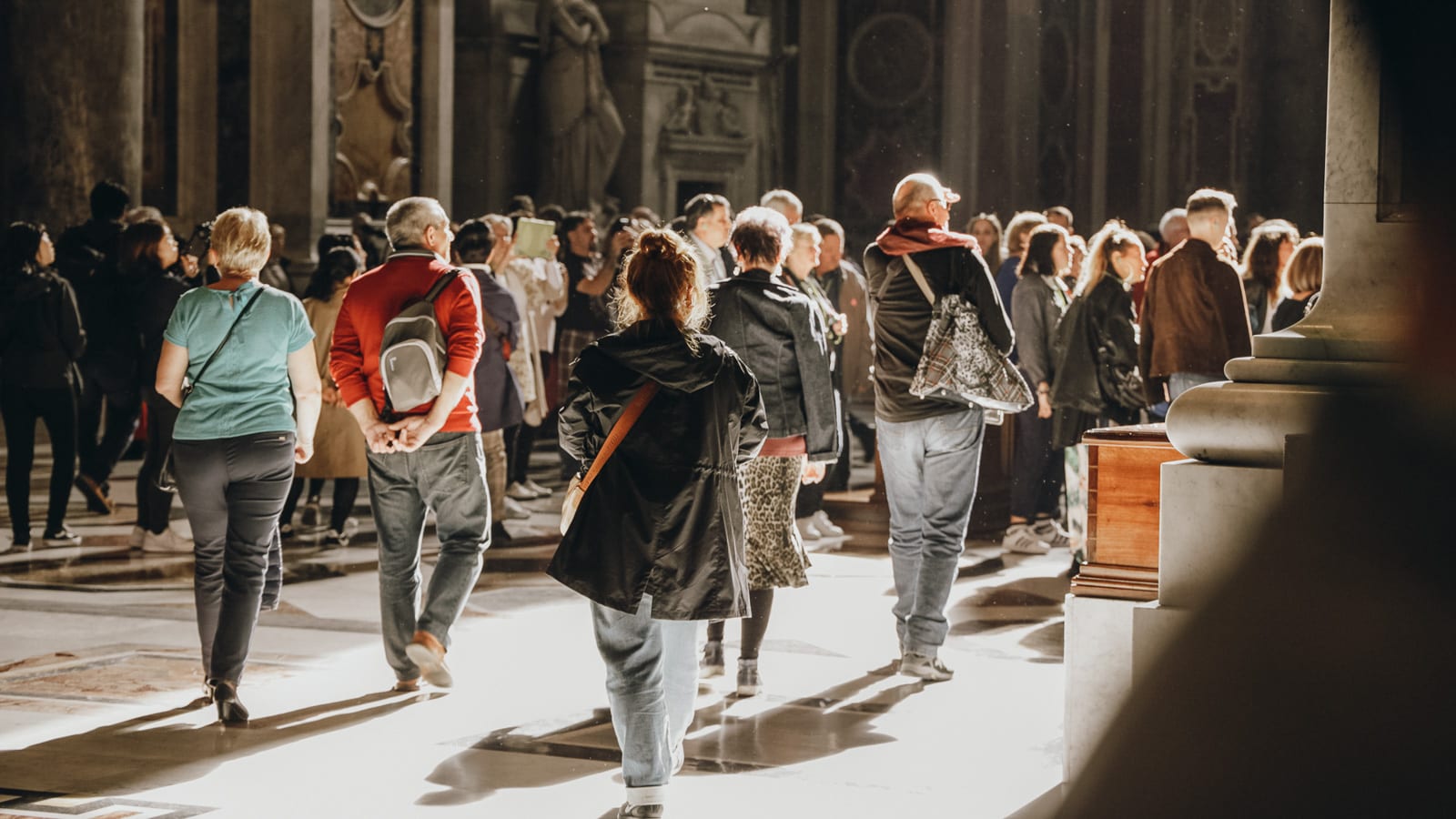
It can get busy so check our tips for the best times to visit!
When is the Best Time to Visit the Sistine Chapel?
May through September is typically considered high season in Rome, with an additional surge in visitors around Easter. As one of the most iconic attractions in the Vatican Museums, the Sistine Chapel is busy almost every day of the year.
Which day is best?
Mondays are often busier due to Sunday closures, while Fridays and Saturdays attract weekend visitors. Wednesday is the day the pope gives his papal audience in St. Peter’s Square, where as many as 80,000 people turn up. So, if your schedule allows, try to plan for Tuesday, or Thursday for as these are usually the quietest days.
Insider tip: The last Sunday of every month is free admission to the museum. It may sound alluring, but it’s also the most crowded day of the month, so you need to weigh up if you would rather save money, or go on a quieter day!
What time is best to?
To avoid the majority of the crowds, timing is key. Mid-morning (around 9am–noon) is often the busiest period as most organised tour groups are inside the museums. The quietest experiences are usually early in the morning at opening time (8am) or later in the afternoon, closer to closing.
If you’re visiting on your own, aim to enter the museums as soon as they open and head straight to the Sistine Chapel, or consider a late-afternoon visit when crowds begin to thin slightly. Just keep in mind that visitors must leave the galleries at least 30 minutes before closing time, so plan accordingly.
Insider Tip: A small number of tour groups, like our Pristine Sistine tour, are allowed inside before the Vatican opens to the public each day. For the most exclusive Vatican imaginable, join our VIP Vatican Key Master’s Tour: Unlock the Sistine Chapel, where you enter before dawn and travel with the Key Master as he unlocks silent rooms and galleries.
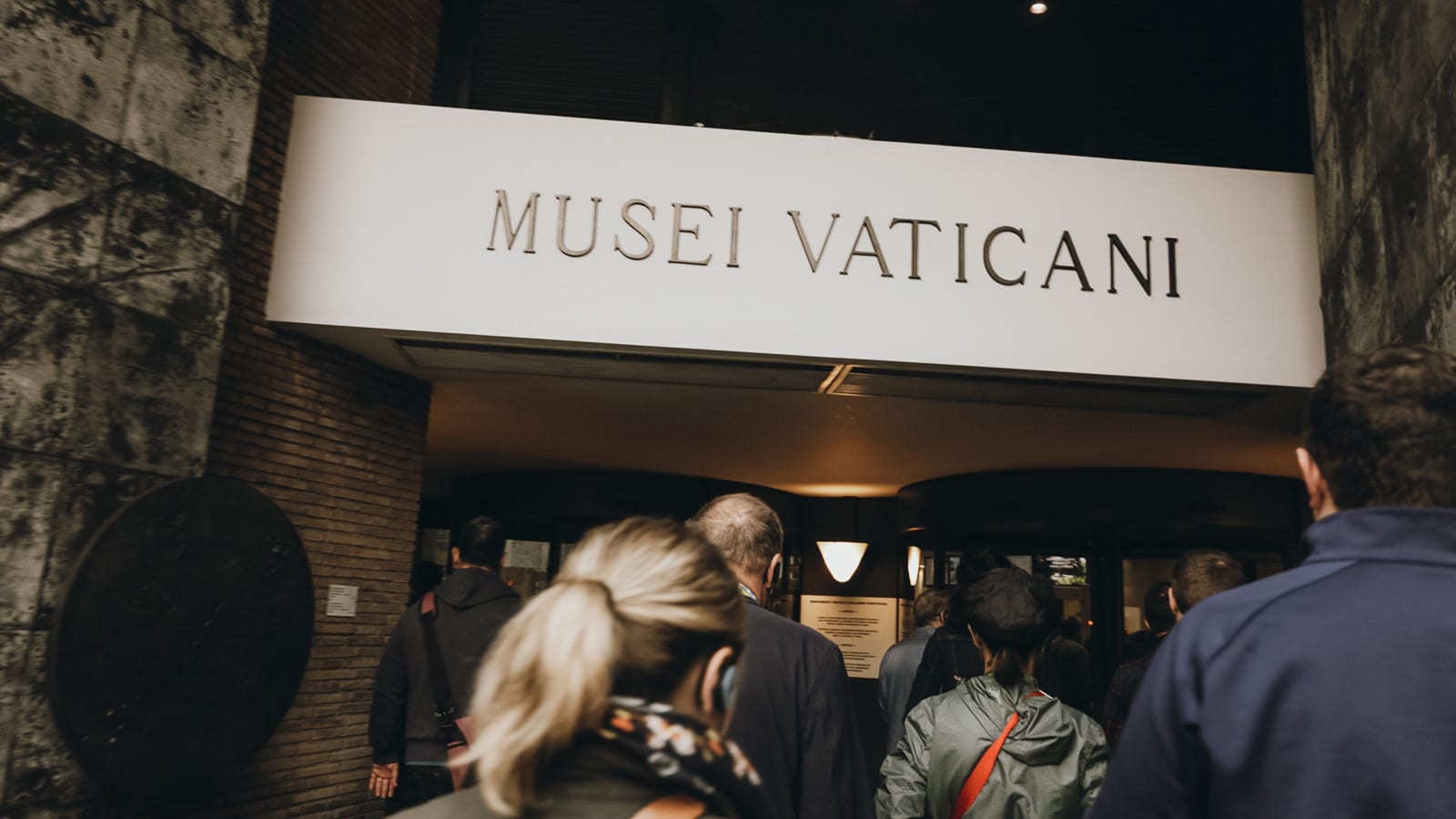
The Sistine Chapel is part of the Vatican Museums and is included in the general admission ticket
How Long Should You Spend in the Sistine Chapel?
Most visitors spend 20 to 30 minutes inside the Sistine Chapel, although art lovers may wish they had longer. Since the chapel is the final stop on the Vatican Museums route, you’ll likely spend 2 to 4 hours exploring the museums before you arrive.
Once inside, take your time to admire Michelangelo’s breathtaking ceiling, The Creation of Adam, and The Last Judgement, as well as the remarkable frescoes by Botticelli, Perugino and other Renaissance masters. If you’re visiting with a guided tour, your guide will provide the context and stories before entering the chapel itself, allowing you to fully appreciate the artwork while respecting the chapel’s rule of silence.
Sistine Chapel Tickets: Prices & How to Book
Tickets to the Sistine Chapel are included with entry to the Vatican Museums, as there is no separate ticket for the chapel itself. Standard admission is €20, or €25 when booked online (including the reservation fee), while reduced tickets are available for eligible visitors with valid ID. You can book directly through the official Vatican Museums website, selecting a timed entry slot to help avoid long queues. While it’s possible to buy tickets on the day, availability can be limited and wait times are often long, especially in peak season.
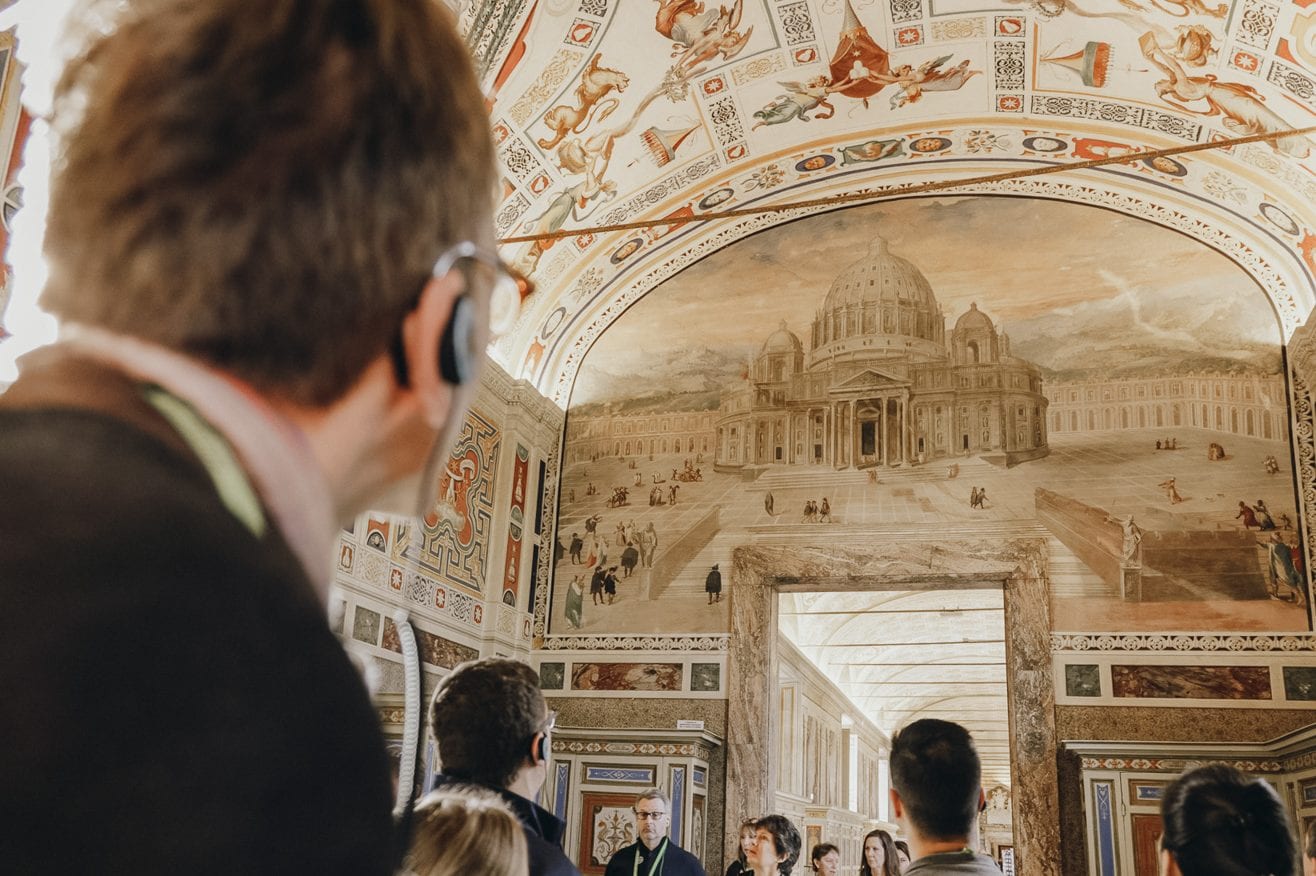
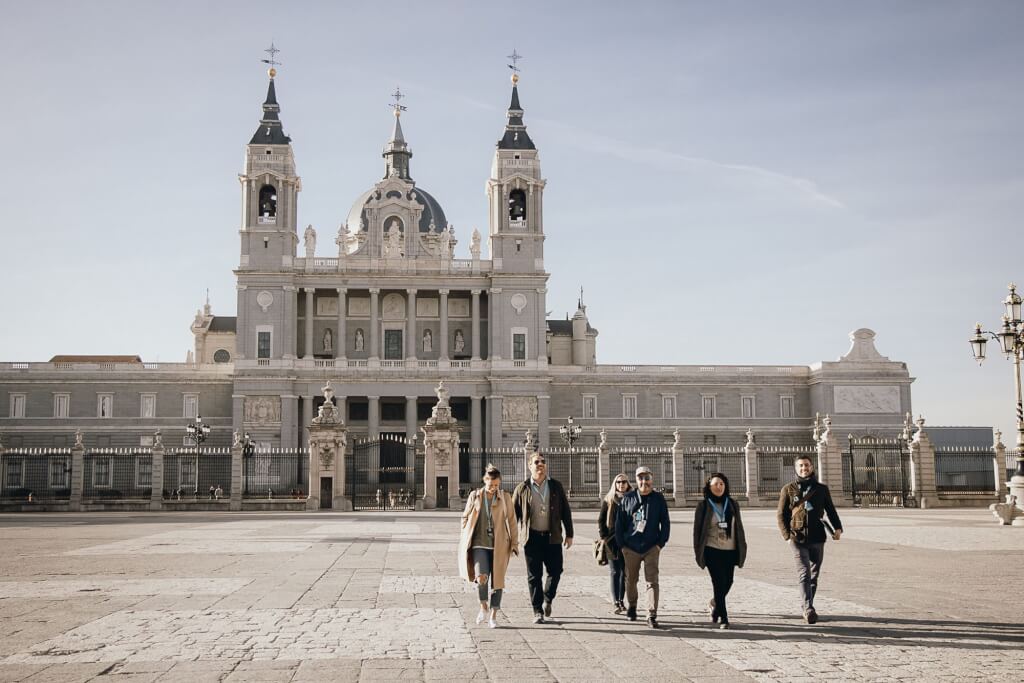
A group enjoying the “Pristine Sistine” Tour, with early access for a quieter visit.
Guided Tours
For an even smoother and more enriching experience, many visitors choose to book a Vatican City guided tour that includes the Sistine Chapel. You can choose from a range of options designed to suit different travel styles, all of which include access to the chapel as part of a broader Vatican experience.
Popular choices include the Complete Vatican Tour, which covers the Vatican Museums, Sistine Chapel, and St. Peter’s Basilica with skip-the-line entry and expert guidance, as well as the Pristine Sistine early morning tour, which gets you in ahead of the main crowds for a calmer visit.
For something truly special, there are also VIP experiences like the Key Master’s Tour or Alone in the Sistine Chapel, offering rare early or after-hours access to this iconic space.
Whichever option you choose, these tours are designed to save time, reduce stress, and help you better understand the art and history, turning what can feel like an overwhelming visit into a far more meaningful experience.
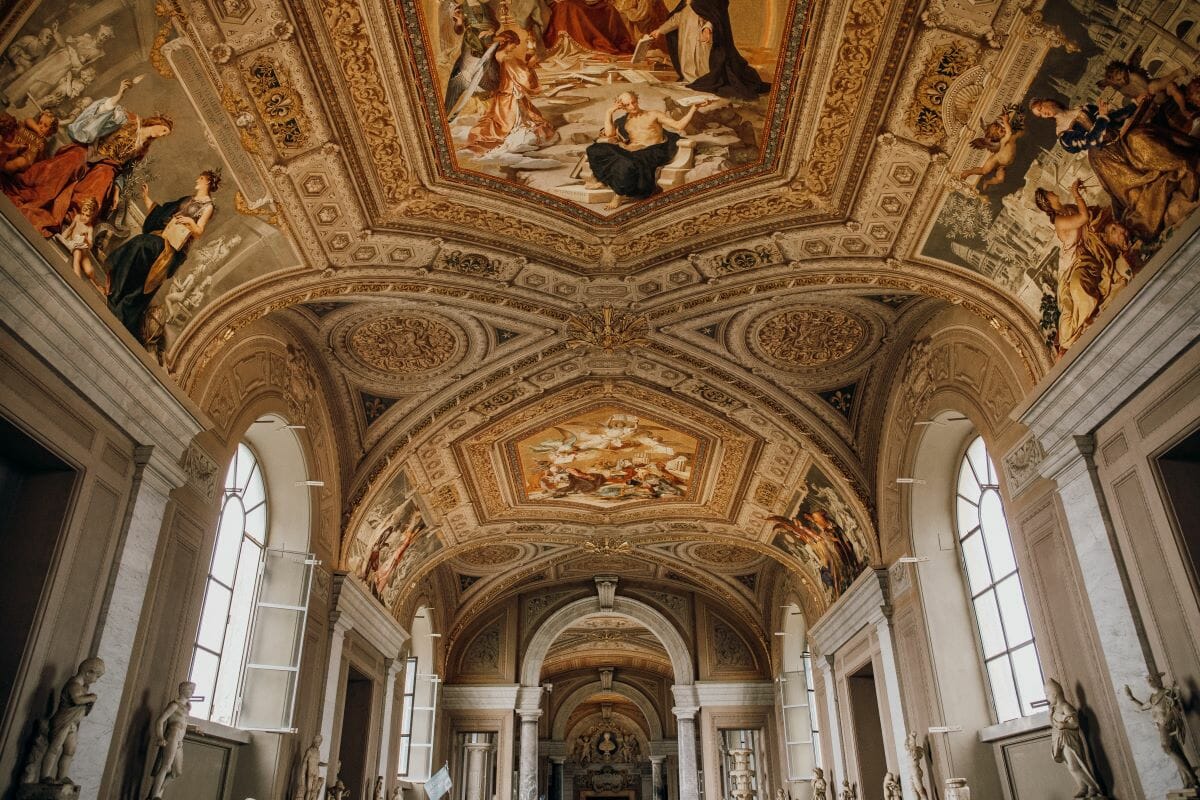
The great artworks in the Sistine Chapel adorn every angle, from floor to ceiling
Sistine Chapel Rules: What You Need to Know
The Sistine Chapel is a holy place and the rules are strict and uncompromising to maintain respect – please familiarise yourself with them before your visit.
Dress code
The Vatican Museums and the Sistine Chapel within it have a strict dress code, requiring visitors to dress respectfully and appropriately. Both men and women should be sure to wear clothes that cover their shoulders and knees. Even in summer you may not be permitted to enter if you are wearing clothes that are considered too revealing, so avoid shorts, tops with no sleeves and items such as crop tops! Hats are also not allowed.
Insider Tip: For full details of the dress code, and recommendations on what to pack and wear during your stay, check out our article on how to navigate the Vatican Dress Code.
Silence Please
It is prohibited to speak in anything above a whisper in the Sistine Chapel. This is because the large number of people that visit the chapel every day would make it almost impossible to enjoy if everyone were speaking at once.
Using a mobile phones is also a no-no! Make sure it is on silent and in your pocket or bag throughout your time in the Sistine Chapel. In addition, all tour groups are required to wear headsets and the use of microphones or any voice amplifiers is prohibited.
Photography
All photography is strictly prohibited inside the Sistine Chapel for a combination of preservation, privacy, and historical reasons.
- The chapel’s priceless frescoes are sensitive to light and environmental changes, and limiting camera use helps protect them from long-term damage.
- Just as importantly, the chapel remains an active place of worship, and the Vatican aims to maintain a respectful, quiet atmosphere and area of private worship for visitors.
- There’s also a lesser-known historical factor: during the major restoration of the frescoes in the late 20th century, exclusive photography rights were granted to the company that helped fund the project, reinforcing the long-standing ban.
Personal Belongings
You cannot bring any bag, backpack suitcase or container larger than 40cm x 35cm x 15cm into the Vatican Museums complex. Similarly, you can’t enter with medium to large umbrellas, any umbrellas with spiked tips, camera tripods, signage (apart from signs used by certified guides) or walking sticks – except those required by disabled visitors. All of these items can be left in the cloakroom.
Food and Drink
You aren’t allowed to bring food or drink into the Vatican Museums or Sistine Chapel. You can, however, leave them in the cloakroom and collect them at the end of your visit.
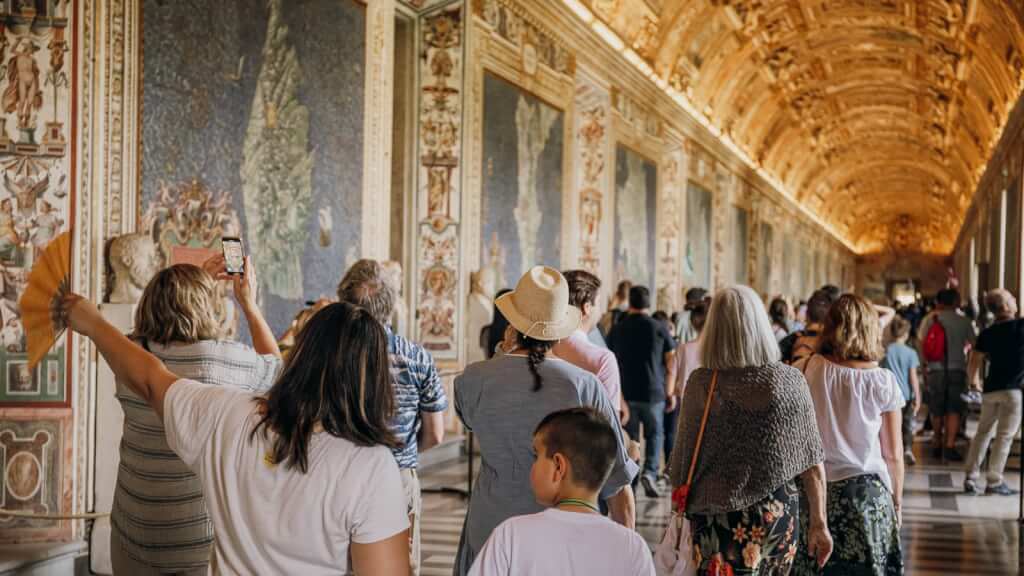
Best time to visit the Sistine Chapel is during the week, early morning or late afternoon.
Where is the Sistine Chapel Located?
The Vatican complex is so immense, many people wonder where is the Sistine Chapel located? Located within the Vatican Museums, visitors must enter through the Vatican Museums entrance.
The chapel itself is in the Apostolic Palace, the official residence of the Pope. It’s only reachable via the Vatican Museums tour route, as it’s located at the very end of the museum path.
This winding route ends at the Sistine Chapel. Along the way, you’ll pass through key areas such as The Pinecone Courtyard (Cortile della Pigna), The Gallery of Maps, The Raphael Rooms (Stanze di Raffaello) and various classical sculpture halls and galleries.
If you want to visit St. Peter’s Basilica after the museums, you’ll need to exit and walk around the outside of Vatican City walls to reach St. Peter’s Square, this takes roughly 10 – 15 minutes on foot, depending on crowds and security queues.
Insider Tip: There is a shortcut from the Sistine Chapel to St. Peter´s Basilica. The Chapel is the last room in the Vatican Museums and the main exit takes you out onto the street. That is, unless you’re on a small-group guided tour, which will take you through a “secret” passageway, passing a staircase designed by Bernini, that deposits you right into St. Peter’s Basilica.
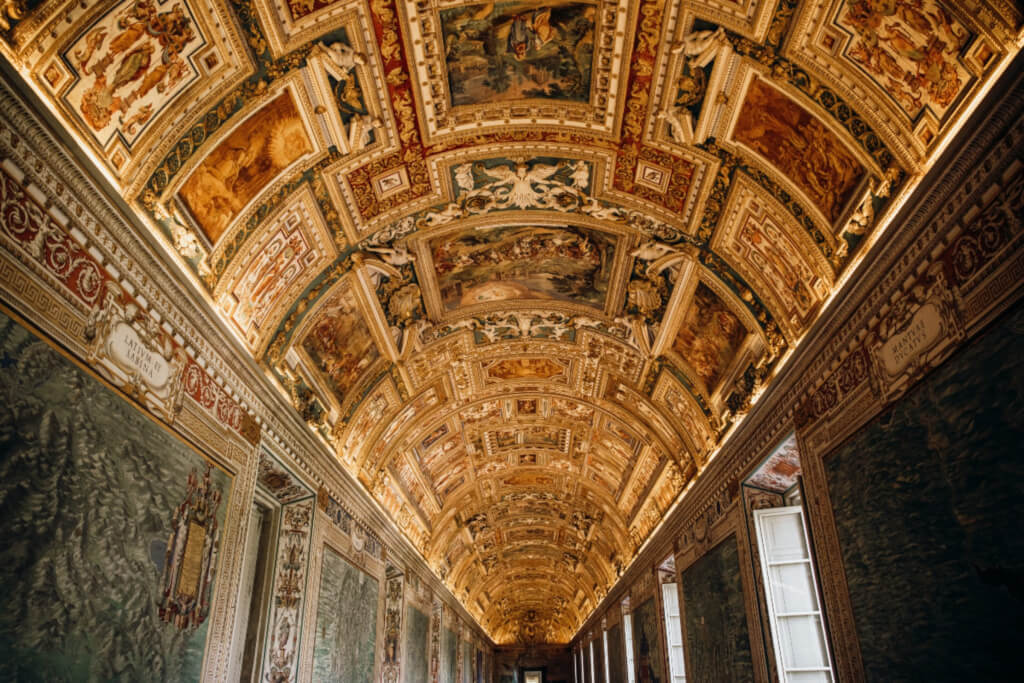
The Gallery of Maps
How to get to the Vatican Museum and Sistine Chapel
The easiest way to reach the Vatican Museums and the Sistine Chapel is by metro or taxi.
If travelling by taxi, make sure to specify “Musei Vaticani” (Vatican Museums entrance), not St. Peter’s Basilica. The two entrances are in different locations and are about a 10–15 minute walk apart.
If using the metro, take Line A (orange line) and get off at either Ottaviano or Cipro. From Ottaviano, exit onto Viale Giulio Cesare, continue towards the Vatican walls, and follow the signs for the museum entrance on Viale Vaticano. The walk takes around 5 – 10 minutes depending on the exit used.
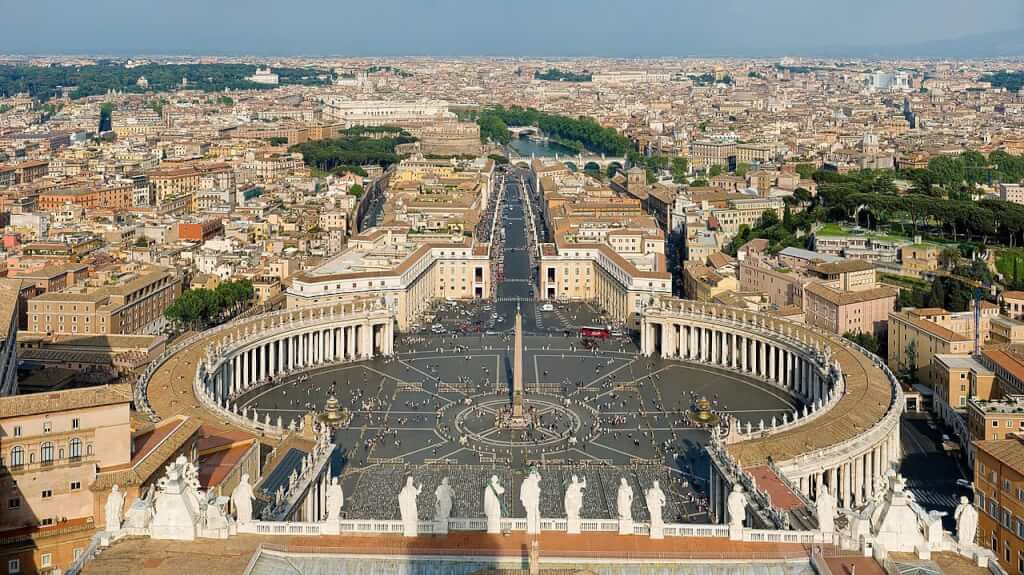
This incredible view is from more than 425 feet high – from St. Peter´s Basilica’s dome.
Visiting the Sistine Chapel: What to see
The Ceiling Frescoes
When Michelangelo received the commission to paint the ceiling of the Sistine Chapel in 1508 he was not stepping into an unmarked space. The chapel had been built some 30 years before by the now mostly forgotten architect Giovannino de’ Dolci during the the reign of Pope Sixtus IV – for whom it’s named (it is not called the Sixteenth Chapel, as the common misnomer states).
Sixtus had the space’s walls frescoed by some of the greatest artists of the day, including Sandro Boticelli, who is now more famous for his paintings, The Birth of Venus and Primavera, and Pinturicchio whose work is on display in other parts of the Vatican.
The ceiling, however, was blank except for a coat of ultramarine blue with golden stars at regular intervals. And what a ceiling: 10,000 square feet of it needed to be frescoed!
Unlike contemporaries like Raphael, Michelangelo did not employ assistants to finish paintings that he had planned and started. Instead, he spent three to four years using specially designed scaffolding to access it and paint it himself.
The chapel itself is located in the Apostolic Palace, the official residence of the Pope.
This is even more astonishing when you consider that it isn’t a painting, in which oil paints are applied to dry plaster. Frescoes must be painted onto fresh, (read: damp) plaster, which means that once a section was started, it had to be completed that day. Thus the entire wall had to be painted as a jigsaw puzzle – piece by agonizing piece.
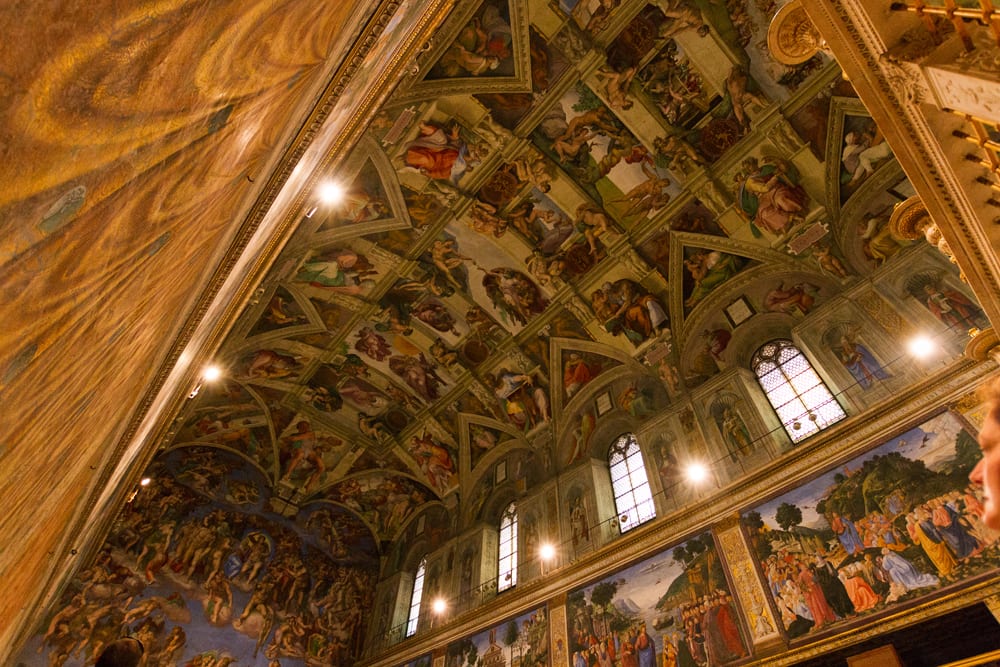
From the Separation of Light from Darkness all way through the Drunkenness of Noah, he casts the spectator into the midst of the creation of life according to the Bible. The work’s scale and mastery dwarf the humans staring up at it, filling the entire chapel with a hushed sense of awe and a palpable impression of the divine. Whether it is artistic divinity or religious divinity is up to the spectator to decide.
Fun fact: Did you know that, at first, Michelangelo was hesitant to accept this enormous assignment and was paranoid that it was an elaborate trick set up by his artistic rivals.
The Creation of Adam
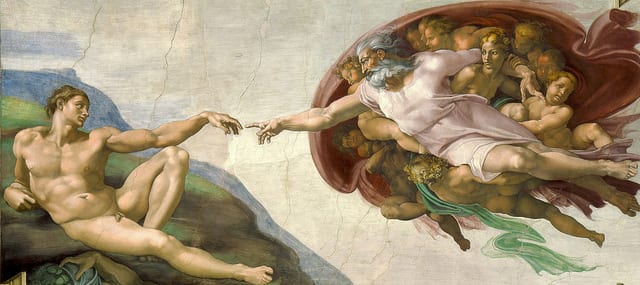
The Creation of Adam on the Sistine Chapel ceiling by Michelangelo
Arguably the most famous image in the chapel, The Creation of Adam captures the moment God gives life to Adam. The nearly touching hands of God and man have become one of the most reproduced images in the world. What makes this panel so powerful is its simplicity, set against a minimal background, the focus is entirely on the dynamic connection between the two figures. It’s a perfect example of Michelangelo’s ability to convey emotion, movement, and meaning through the human form.
- Fun Fact – Did you know that the now-iconic image of the grey-haired and grey-bearded God on the 12,000-square-foot ceiling was the first of its kind. Previously, artists avoided creating an image of God in human form. Thus, this depiction created a human/divine archetype that still persists to this day.
The Last Judgement
Michelangelo’s other great addition to the Sistine Chapel is the colossal Last Judgement, painted on the altar wall that rises up behind you as you enter the chapel. If the ceiling is concerned with the origins of life, the Last Judgement paints a none-too-rosy picture about where it’s going.
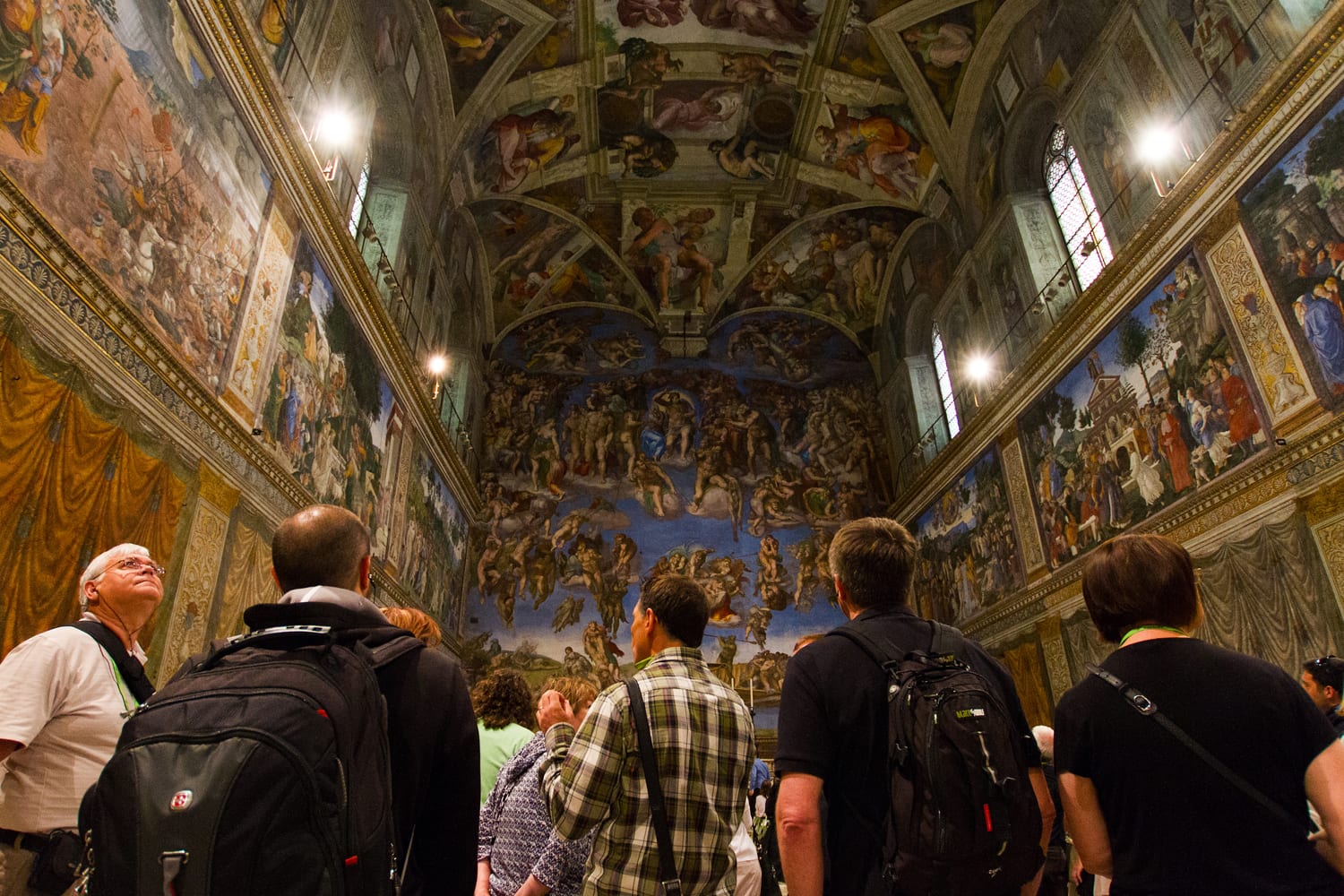
Visitors to the Sistine Chapel are reminded to talk in a whisper while taking in the masterpiece.
It shows the second coming of Christ as he lays divine judgement on a who’s who of biblical characters. Painted some 20 years after the ceiling, when Michelangelo was 66, it is a darker work. While its depictions of the human body are considered second to none, its tone of damnation and divine retribution often feels more oppressive than uplifting. Why this should be remains a matter of debate among art historians.
The Last Judgement is a work that needs to be seen in person to experience its full force.
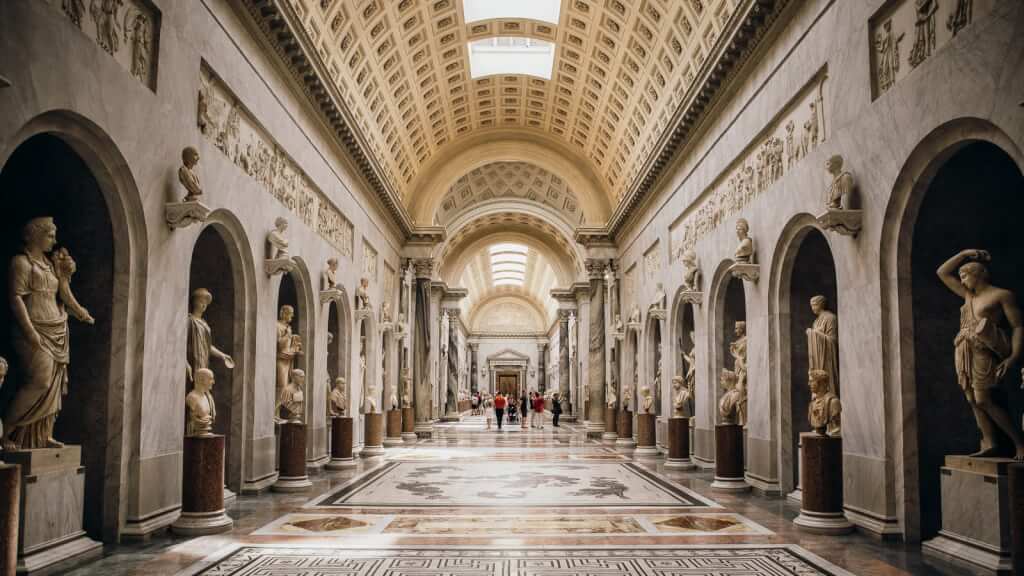
As you make your way through the Vatican Museums, you’ll pass various classical sculpture halls and galleries.
Prophets & Sibyls
Framing the central panels of the ceiling are monumental figures of prophets and sibyls, figures from both biblical and classical traditions believed to have foretold the coming of Christ. The prophets come from the Old Testament, while the sibyls were female seers from ancient mythology. Michelangelo presents them as powerful, contemplative figures, each with distinct expressions and poses. Their inclusion reflects the Renaissance idea of uniting classical knowledge with Christian theology.
Ignudi (Nude Figures)
One of the most intriguing elements of the ceiling is the series of nude male figures known as the ignudi. Positioned around the central panels, these figures don’t have a direct narrative role, but they demonstrate Michelangelo’s extraordinary understanding of human anatomy. Each figure is uniquely posed, twisting and turning in ways that add energy and movement to the overall composition. Their purpose is still debated, but they are widely admired as some of the finest studies of the human form ever created.
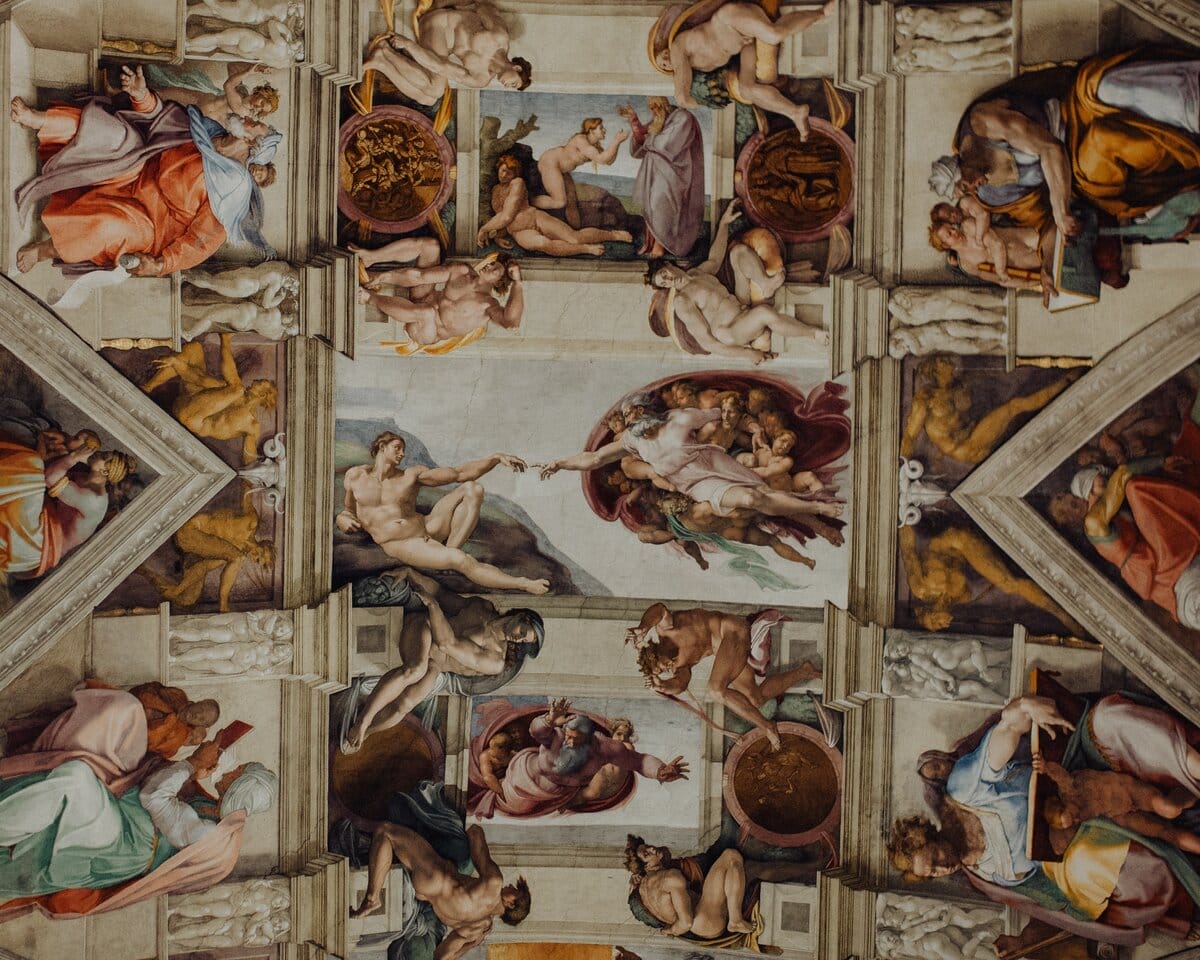
The ceiling of the Sistine Chapel with depictions of stories from the bible and the human form.
Earlier Wall Frescoes
While Michelangelo’s work often steals the spotlight, the side walls of the chapel feature earlier frescoes by renowned Renaissance artists such as Sandro Botticelli and Pietro Perugino. Painted in the late 15th century, these works depict scenes from the lives of Moses and Christ, drawing parallels between the Old and New Testaments. Though sometimes overlooked, these frescoes provide important context and showcase the artistic brilliance that predated Michelangelo’s contributions.
Papal Conclave Setting
Beyond its artistic significance, the Sistine Chapel plays a vital role in the life of the Catholic Church. It is here that the papal conclave takes place, the secretive process by which a new pope is elected. Cardinals gather beneath Michelangelo’s frescoes to cast their votes, with the outcome announced to the world through the famous white smoke rising from the chapel chimney. This ongoing function adds a unique layer of living history to the space, making it not just a museum highlight, but an active and deeply symbolic location.
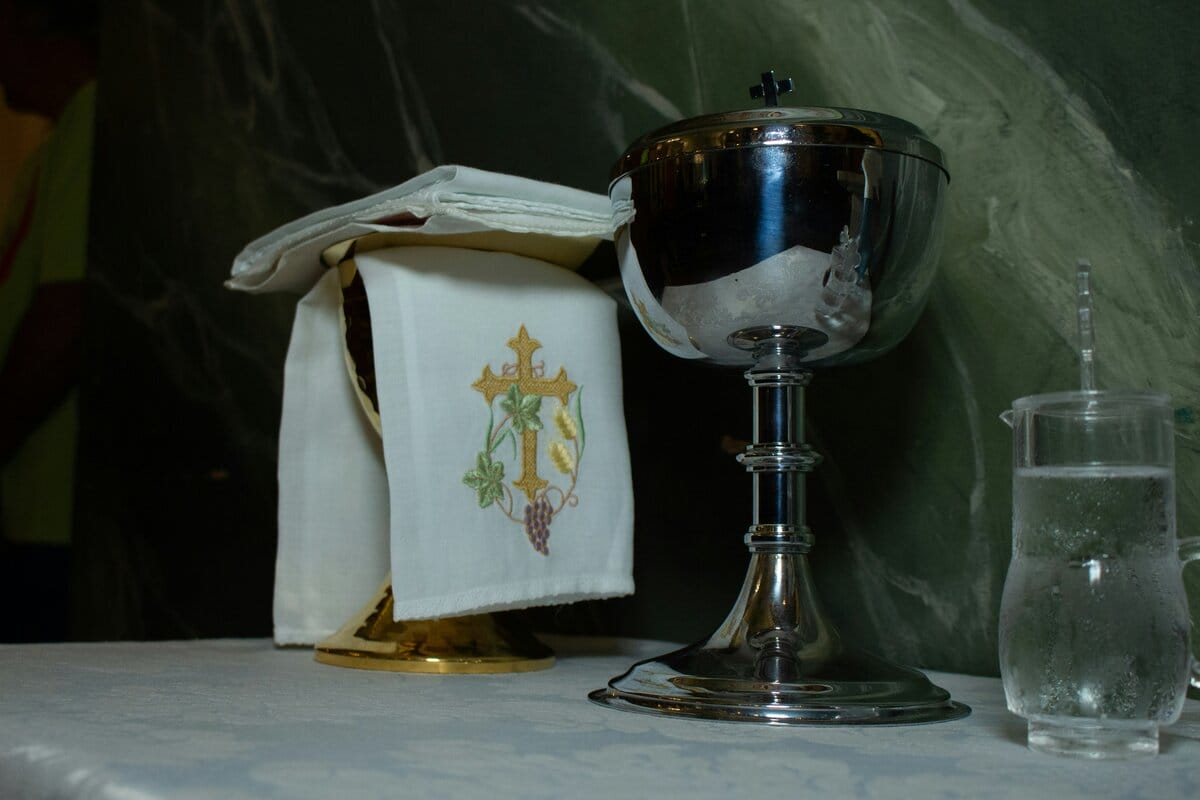
A symbol of the papal conclave, where centuries-old rituals guide the election of a new pope
FAQs – Visiting the Sistine Chapel
Where is the Sistine Chapel located within the Vatican Museums?
The Sistine Chapel is situated at the very end of the Vatican Museums tour route in Vatican City. After exploring the museum’s many galleries, you’ll reach the chapel just before exiting.
Can you visit the Sistine Chapel without a guided tour?
Yes, you can visit the Sistine Chapel independently by purchasing a Vatican Museums ticket. Guided tours, however, often provide deeper insights and may offer skip-the-line benefits.
Do I need to buy Sistine Chapel tickets in advance?
It’s highly recommended to buy Vatican Museums tickets in advance, as the Sistine Chapel is one of the most popular attractions and lines can be long. You can book directly through the official Vatican Museums website, selecting a timed entry slot.
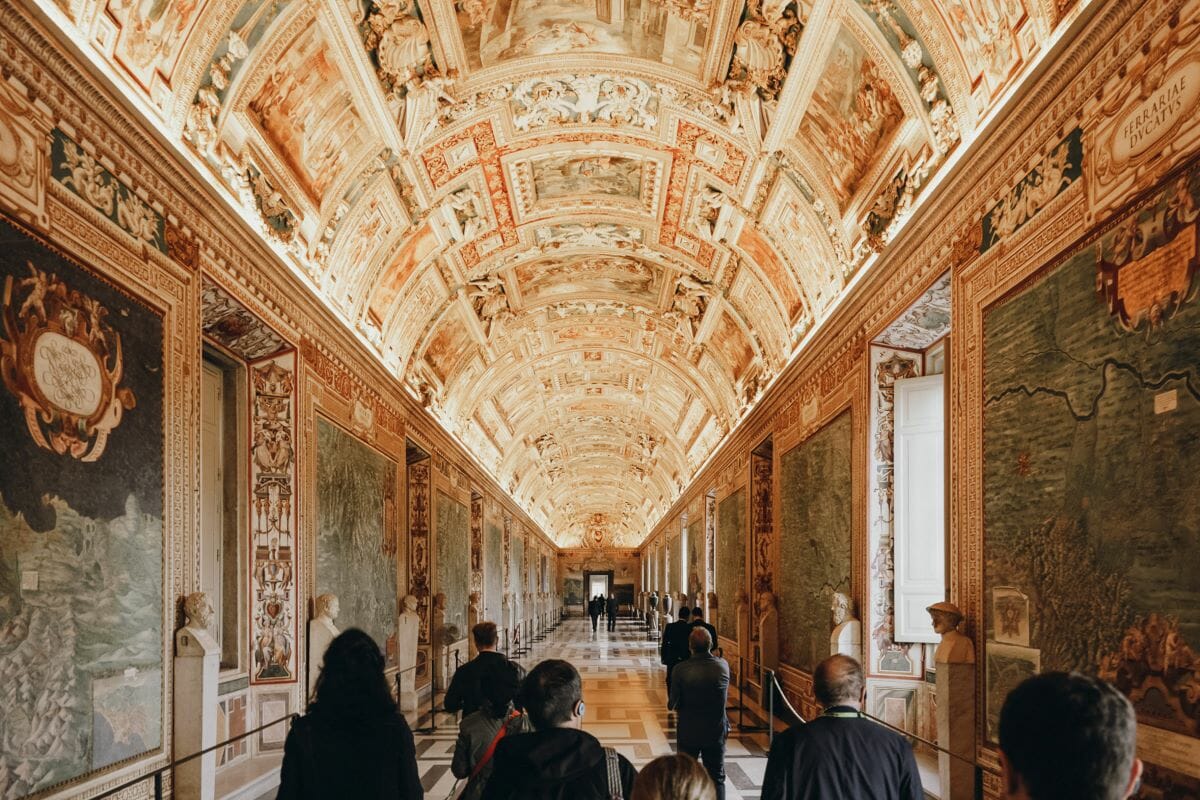
Inside the Vatican before the crowds!
If you’re going to visit the Sistine Chapel, why not make it as enjoyable as possible?
The Vatican is incredibly crowded every day, all year long. It can be quite frustrating getting in and around the museums, especially the Sistine Chapel. Skip the crowds and the stress by signing up for our Pristine Sistine tour, which gives you special access into the chapel before the general public.
If you were ever going to sign up for a tour, this is the place to do it!

Book a Tour

Pristine Sistine - The Chapel at its Best
€89

1794 reviews

Premium Colosseum Tour with Roman Forum Palatine Hill
€56
850 reviews
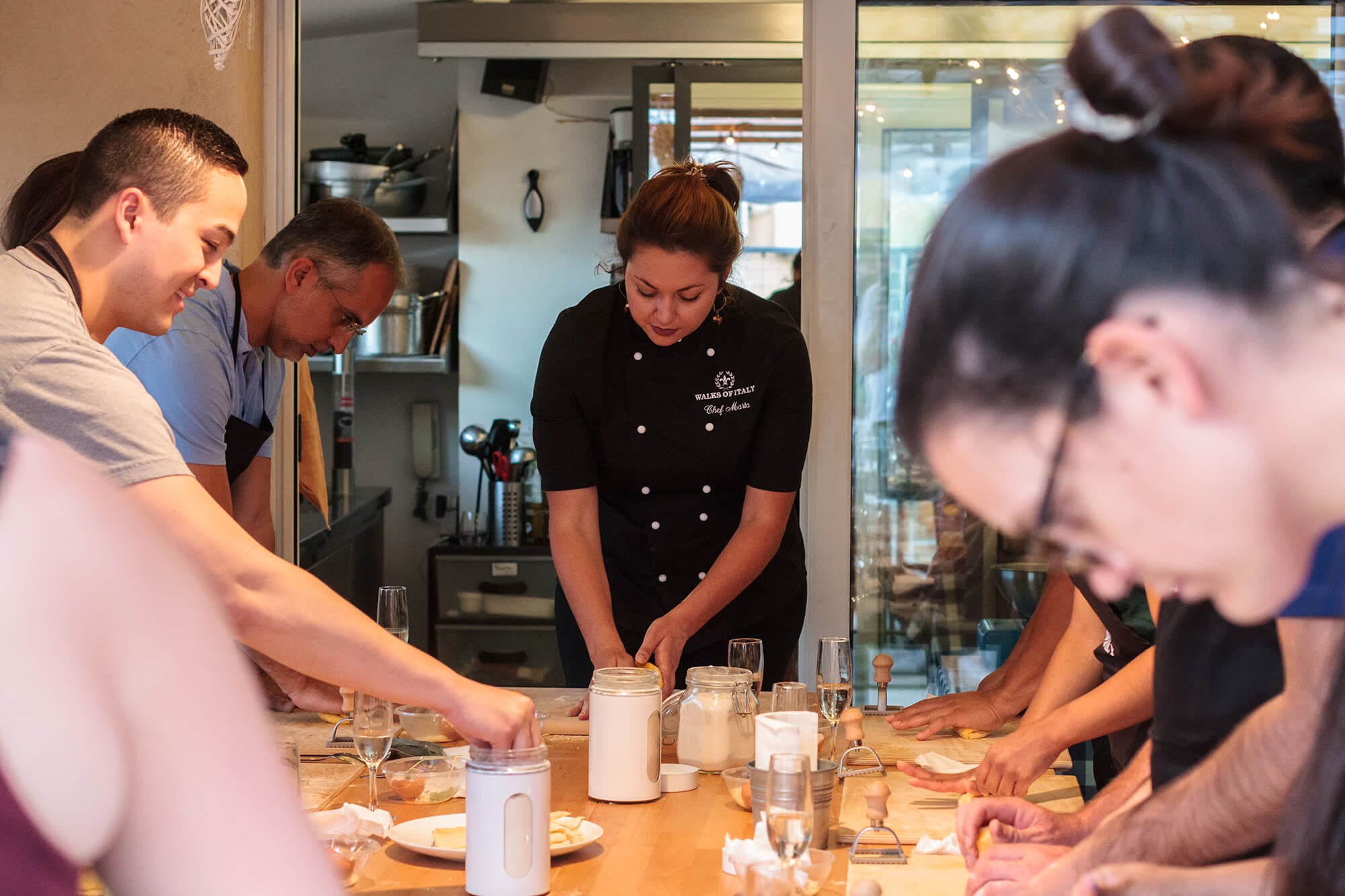
Pasta-Making Class: Cook, Dine Drink Wine with a Local Chef
€64
121 reviews

Crypts, Bones Catacombs: Underground Tour of Rome
€69
401 reviews

VIP Doge's Palace Secret Passages Tour
€79
18 reviews

Legendary Venice: St. Mark's Basilica, Terrace Doge's Palace
€69
286 reviews
Follow us
Stay up to date with travel tips, local insights and all things Italy on our social channels!


Subscribe to our Newsletter
Get curated Italy travel tips delivered to your inbox!

