
Perfect Day Trip to Bologna from Florence: What to See, Do & Eat
November 1, 2026
One of the top advantages of having Florence as base during your trip to Italy is the ability to visit other equally beautiful and fascinating destinations in just one day. A top contendor? The magical and captivating Bologna, a city full of history, culture, and art. And this is in addition to boasting the oldest university in Europe and having one of the most influential gastronomies in Italy! A day trip to Bologna from Florence will surprise you with its beautiful squares, architecture, porticoes, towers, delicious food, and much more.

Bologna is famous for its storied history, beautiful porticos, and delicious food. Photo credit: Maria Bobrova on Unsplash
How Far Is Bologna from Florence?
Bologna is approximately 57 miles (91 km) from Florence as the crow flies, or around 63 miles (101 km) by road. So… its not far at all, and the journey is quick and easy and perfectly manageable for a day trip, or overnight trip. You can choose to go by car, train or bus, and for most visitors, the train is the quickest and most convenient option, avoiding traffic and the challenges of parking in Bologna’s historic centre.
- High-speed train services from Florence’s Santa Maria Novella station to Bologna Centrale take as little as 35–40 minutes
- By car, the drive typically takes around 1 hour 10 minutes to 1 hour 30 minutes, depending on traffic.
- The bus journey to Bologna from Florence takes around 1 hour 15 minutes to 1 hour 40 minutes, depending on the service and traffic.
Getting to Bologna from Florence
As you can see above, getting to Bologna from Florence is fast and easy, by car, train or bus, depending on your preference. Here are further details of the best way to do a day trip to bologna from Florence.
By Train from Florence to Bologna
Taking the train from Florence’s Santa Maria Novella station to Bologna Centrale is one of the quickest and easiest ways to travel between the cities. Both Trenitalia and Italo operate direct high-speed services, with journey times of around 35 – 40 minutes. Trenitalia also runs slower regional services, which typically take around 90 minutes, depending on the departure.
High-speed tickets generally cost more than regional fares, but booking in advance can help you find competitive prices, and promotional fares sometimes make high-speed travel surprisingly affordable. Both operators offer frequent departures throughout the day, so if your plans are flexible, compare timetables and fares before choosing your train as prices can vary considerably throughout the day.
Practical tip: Compare options on the official Trenitalia and Italo websites and always check for special promotional or seasonal offers!
By Bus from Florence to Bologna
If you’re looking to save money, travelling by bus from Florence to Bologna is a good alternative to the train. Itabus operates services between the two cities, with fares advertised from as little as €4.99, although prices depend on your travel date, departure time, and availability.
The journey typically takes around 1 hour 15 minutes to 1 hour 40 minutes, depending on the service and traffic. Some buses depart from Villa Costanza, on the outskirts of Florence, while others stop at Piazzale Montelungo, close to the city centre. Check your departure point carefully and allow extra time to reach it. Booking in advance and comparing departure times can help you find the best fare.
Practical tip: Book ahead on the Itabus website, remember to check the specific departure location!
By Car or Taxi to Bologna
Driving from Florence to Bologna takes around 1 hour 15 minutes to 1 hour 30 minutes via the A1 motorway, covering approximately 63 miles (101 km). Hiring a car gives you flexibility to explore the Tuscan countryside along the way, while a taxi or private transfer offers a more convenient, door-to-door option.
However, motorway tolls, fuel, and parking can add to the cost, and Bologna’s historic centre has restricted traffic zones (ZTL), so if you are driving independently also check parking arrangements before setting off, so you know which areas may be off limits.
Practical tip: For Bologna’s official parking information, including the restricted traffic zone (ZTL) and restrictions, see Bologna Welcome – Parking and getting around

Traveling from Florence to Bologna? By taking the high-speed train, you can be here in less than an hour. Photo credit: Thaddaeus Lim
What to see in a day in Bologna
Piazza Maggiore
Start your day by exploring the vibrant Piazza Maggiore, where locals and tourists alike gather to enjoy its charming atmosphere. The center of Bologna, this square is the perfect place to immerse yourself in the Bolognese culture.
Pay close attention to every detail that surrounds you, taking a moment to admire the stunning architecture of Palazzo Comunale, Palazzo del Podestà, Palazzo dei Notai, Palazzo dei Banchi, and Basilica di San Petronio.
One thing that makes this square unique is its red and white mosaic pavement, commonly called Crescentone. This is because locals relate its rectangular shape to the crescente, a typical Bolognese focaccia. If you don’t notice the mosaic, you can spot it from the top level of the Palazzo Comunale.

Bologna’s Piazza Maggiore is the perfect place to start your visit. Photo credit: Maria Bobrova on Unsplash
Piazza Maggiore also hosts events throughout the year, including concerts and festivals. One of the highlights of Bologna’s summer calendar is Sotto le Stelle del Cinema (Under the Stars of Cinema), a popular open-air film festival that brings the square to life with free screenings on warm summer evenings.
Basilica di San Petronio
In the same Piazza Maggiore, you will see the remarkable architecture of the Basilica San Petronio, known for its unfinished facade. This church is one of the most important in Bologna, as it is dedicated to the patron of the city, San Petronio.
This basilica is one of the largest of the Middle Ages, and is one of the best places to see art in Bologna. You can appreciate its magnitude from the inside with its 22 chapels, some of them adorned with frescoes by influential artists such as Giovanni da Modena, Jacopo di Paolo, and Giacomo Francia. A visit to this church is like admiring an art gallery.
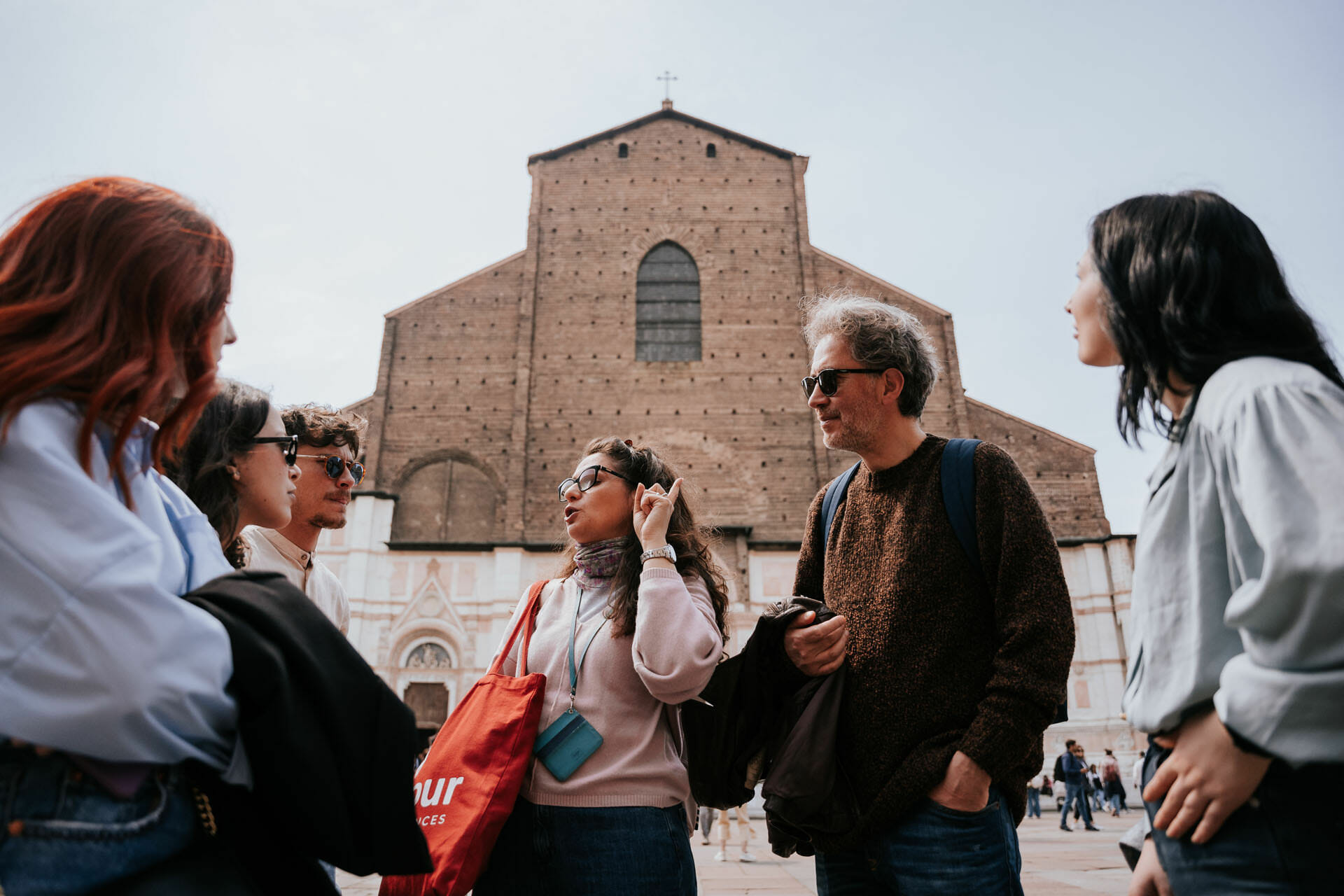
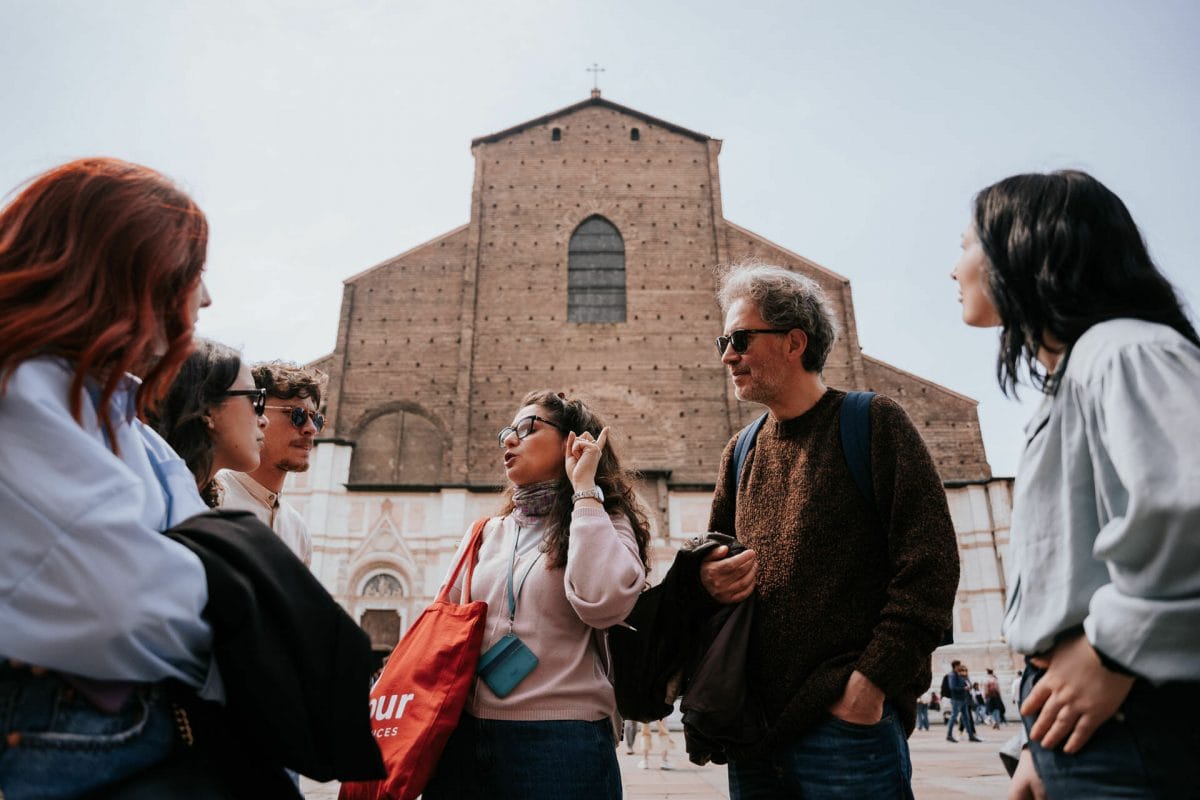
Soak up the architecture and atmosphere in Bologna’s Piazza Maggiore, including the Basilica di San Petronio
The Leaning Towers: Asinelli and Garisenda
If you thought that the leaning tower was a phenomenon only to be seen in Pisa, Bologna confirms that this is not the case. Ainelli and Garisenda are the city’s two leaning towers and the iconic landmarks of Bologna.
These towers are a reminder of the city’s rich culture and history. Despite their age, they stand tall thanks to impressive engineering techniques to prevent them from falling. Among the best things to do in Bologna is climbing both towers, which offer a spectacular view of the city. If you love beautiful views, this is a must-do on your visit to Bologna from Florence.
Insider’s tip: Looking for more activities in this charming city? Check out the Devour Tours guide to the best things to do in Bologna.

On a short day trip to Bologna from Florence, climbing one (or both) of the city’s towers is an ideal activity. Photo credit: Bogdan Dada on Unsplash
La finestrella di Via Piella (Canal windows on Via Piella)
Opening a window and finding a magical and beautiful world behind it seems like a fairy tale, but visiting the window of Via Piella in Bologna is the real thing.
La finestrella di via Piella is a window that encourages you to contemplate the beauty of Bologna. The window overlooks the old town, with its beautiful buildings and a canal that gives the impression of being in Venice. This hidden treasure in the city offers an unforgettable experience to visitors from all over the world.

This corner of Bologna is called This corner of the city is known as “little Venice” for its beautiful canal views. Photo credit: Adam Gritco on Unsplash
Bologna’s Porticoes (Portici)
Bologna is known as the “città dei portici” or city of porticoes, because it is the city with the most porticoes in the world. But what exactly is a portico?
A portico is a covered walkway, usually with a roof supported by columns or arches, that runs along the front of a building or beside a street.
Bologna is famous for its extensive porticoes which form a distinctive part of the city’s architecture. Among them, 12 have UNESCO Heritage designations, and others have records of being the tallest in the world. For example, there’s the San Luca portico which stands at 3,796 meters; the widest, as the church of Santa Maria dei Servi; the highest, as Palazzo Acivescovile at 10 meters high; and the Via Senzanome, the narrowest at just 95 meters.
The porticoes were initially born thanks to urban planning; citizens were required to expand their apartments on the upper levels, leaving the lower level for public use. Residents soon learned that the porticos provided the ideal way to get around the city during rainy or hot days. Even when the weather is nice, you’ll still want to explore the stores, cafes, and restaurants that line them all.
Quadrilatero and Mercato di Mezzo
Crossing Piazza Maggiore through the Palazzo dei Banchi is the Quadrilatero and Mercato del Mezzo area, the magical world of Bologna for foodies and shopping lovers. This area has been the trade center for centuries and the pulsating heart of the Bolognese. It is home to countless shops, restaurants, bars, cafes, galleries, and other attractions, where you can find everything from fresh produce to artisanal products.
In the Quadrilatero and Mercato del Mezzo, you will discover several historic stores that are still active in which to immerse yourself in the history of Bologna and its culture.
Insider tip: This is the ideal place to taste the flavors of Bolognese cuisine via the many food, drink, and street food stalls.
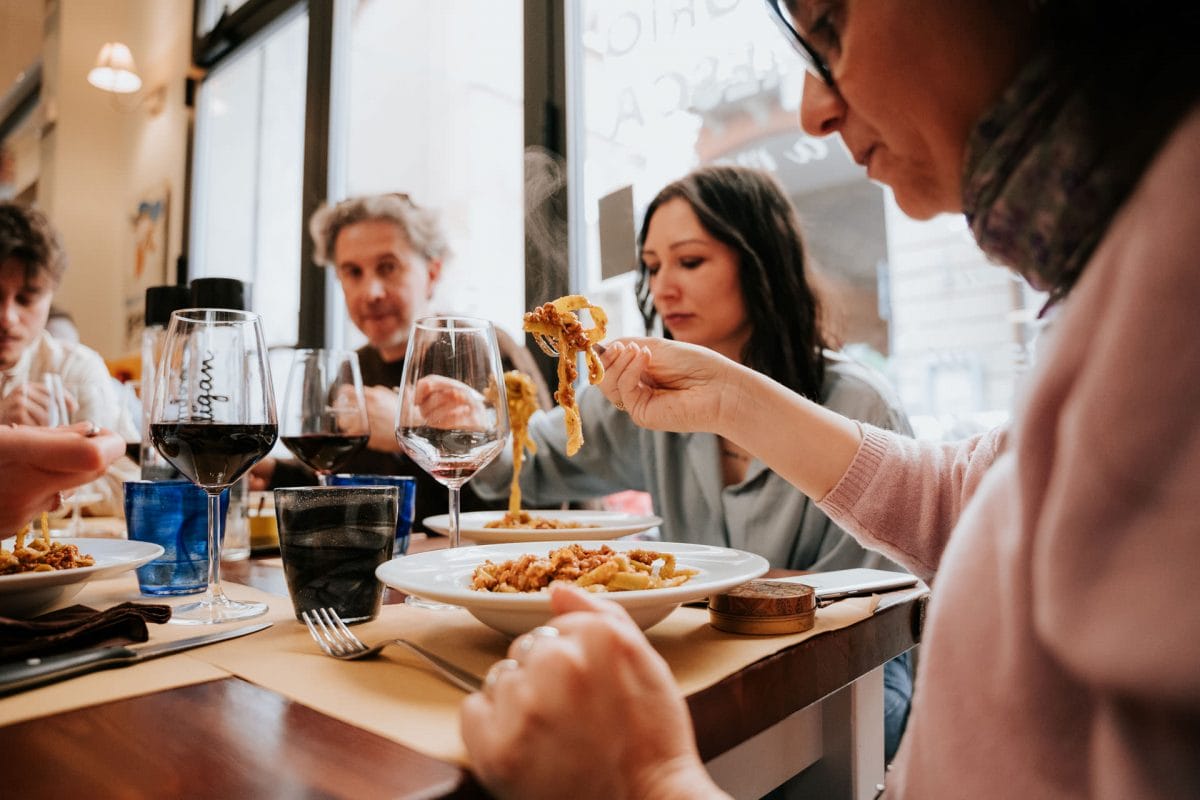
Bologna food will not disappoint… dig into pasta, wine, and charcuterie like you’ve never experienced.
FAQs – A Trip to Bologna from Florence
Is Bologna worth visiting in a day?
Yes, Bologna is an excellent choice for a day trip from Florence. With frequent high-speed trains connecting Florence and Bologna in around 40 minutes, you can spend most of the day exploring without a long journey. Its historic centre is compact and walkable, making it easy to see highlights such as Piazza Maggiore, the Two Towers, the porticoes and the Quadrilatero food market in one day. Bologna is also famous for its food, so leave time for a traditional lunch or a taste of local specialities.
When’s the best time of year to do a day trip to Bologna from Florence?
Spring (April to June) and early autumn (September and October) are generally the best times for a day trip to Bologna, thanks to comfortable temperatures for walking and sightseeing. Summer can be hot, particularly in July and August, while winter is often cold, damp and foggy. However, Bologna’s extensive porticoes provide shelter from both sun and rain, making the city a worthwhile destination year-round. If you’re visiting in summer, plan outdoor sightseeing for the morning and enjoy a leisurely lunch during the hottest part of the day.
What food is Bologna famous for?
Bologna is renowned for its cured meats and traditional charcuterie, particularly Mortadella Bologna, a smooth, delicately spiced pork sausage often studded with cubes of pork fat. You’ll also find prosciutto di Parma, aged ham from nearby Parma, and salame rosa, a cooked pork sausage typical of Bologna. Look out for these specialities in the Quadrilatero market district, where traditional delicatessens serve them sliced fresh, often alongside local cheeses and bread.
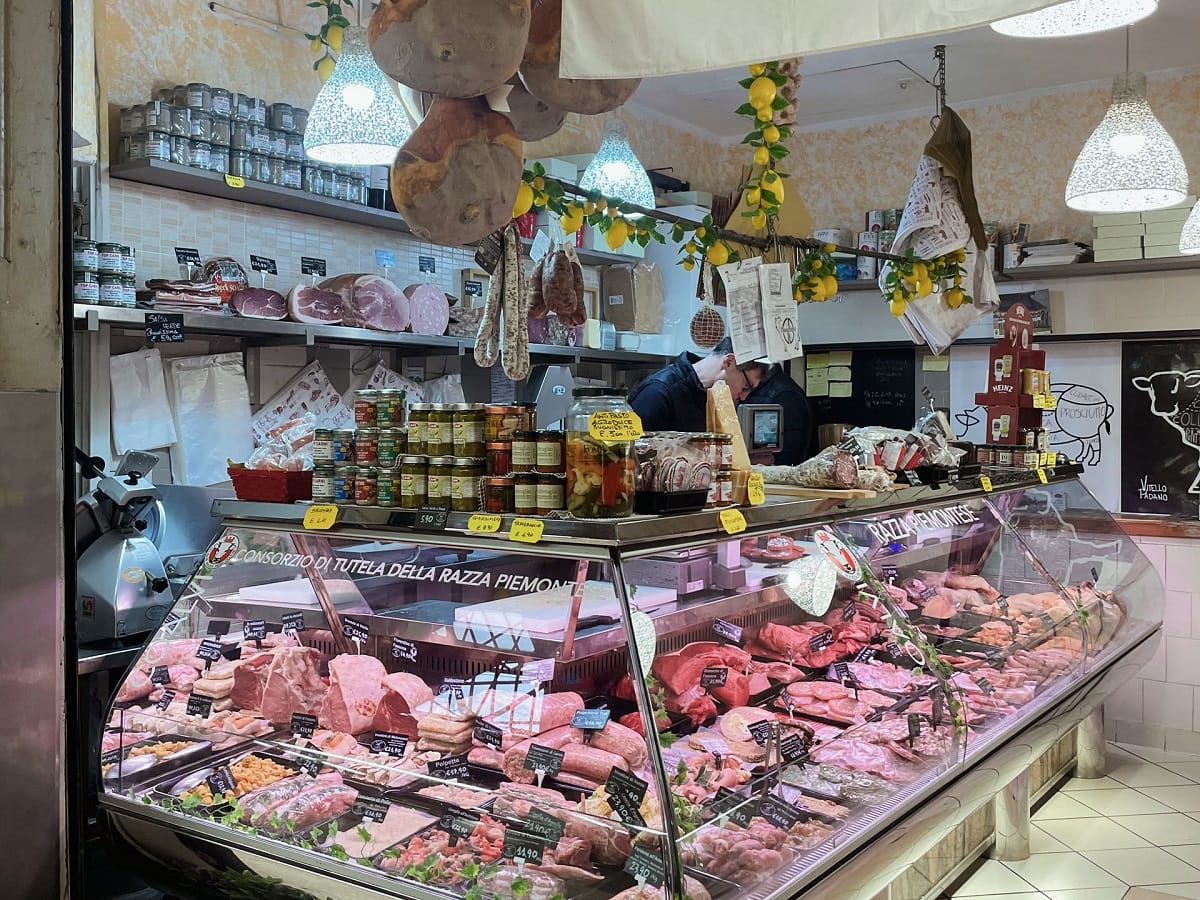
A typical Italian butcher shop and delicatessen with an impressive display of local specialities meats.
Ready to turn your trip to Italy into an unforgettable experience?
Make the most of your time in Emilia-Romagna with a local expert who can bring the city’s history, culture, and cuisine to life. Discover our Bologna tours, explore the Renaissance treasures of Florence on our tours of Florence, or sample the region’s delicious specialities on a Bologna food tour.
From world-famous landmarks and museums to immersive food and cultural experiences, these small-group guided tours offer deeper insight, seamless access, and unforgettable moments you’d miss on your own.
Book a Tour

Pristine Sistine - The Chapel at its Best
€89

1794 reviews

Premium Colosseum Tour with Roman Forum Palatine Hill
€56
850 reviews
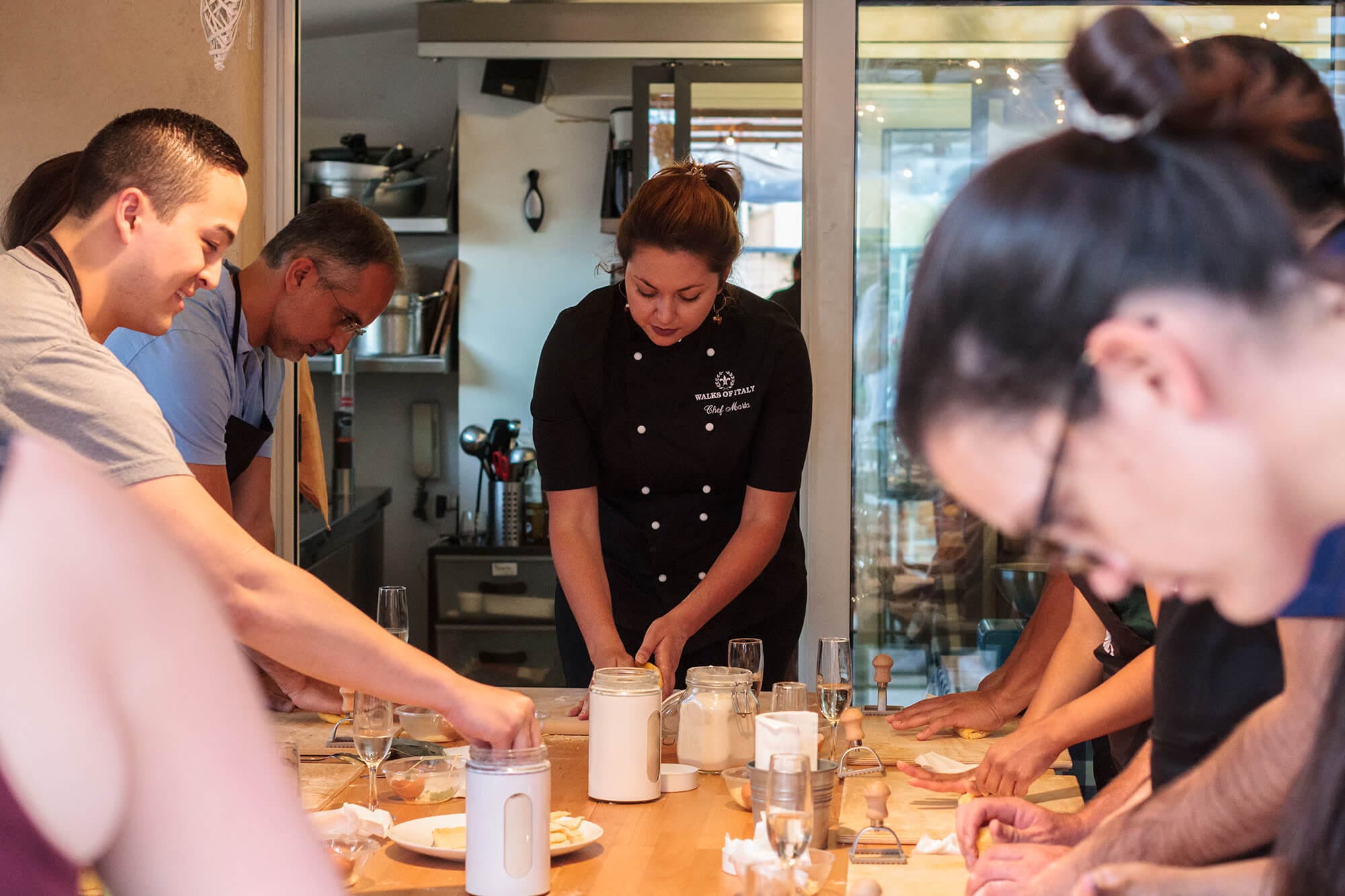
Pasta-Making Class: Cook, Dine Drink Wine with a Local Chef
€64
121 reviews

Crypts, Bones Catacombs: Underground Tour of Rome
€69
401 reviews

VIP Doge's Palace Secret Passages Tour
€79
18 reviews

Legendary Venice: St. Mark's Basilica, Terrace Doge's Palace
€69
286 reviews
Follow us
Stay up to date with travel tips, local insights and all things Italy on our social channels!


Subscribe to our Newsletter
Get curated Italy travel tips delivered to your inbox!

Show Comments