
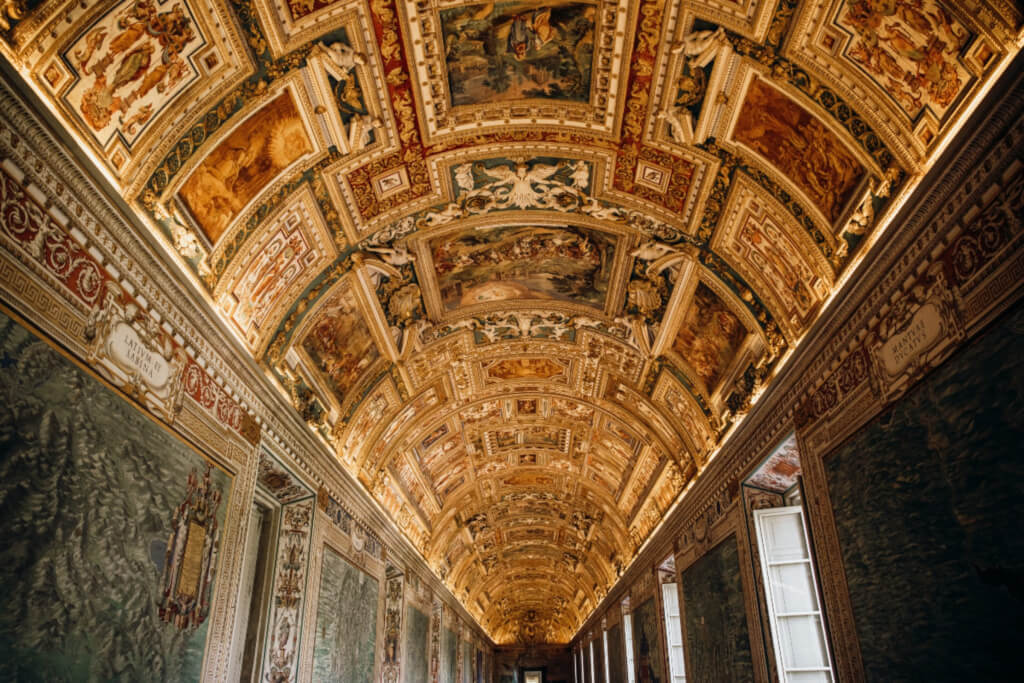
10 Fascinating Facts About Vatican City: The World’s Smallest State
May 22, 2026
Which is the most mysterious country on the planet? Here are some clues; 1. It has a population of less than 100 people. 2. It is a place where you don’t need a passport or visa to enter. 3. This nation hires soldiers from another country to protect it, and 4. the head of state leads the country until he (and it’s always a he) dies. If your answer is the Vatican, then well done, you would be right! And if you’re looking for more fascinating facts about Vatican City, you’ve come to the right place!
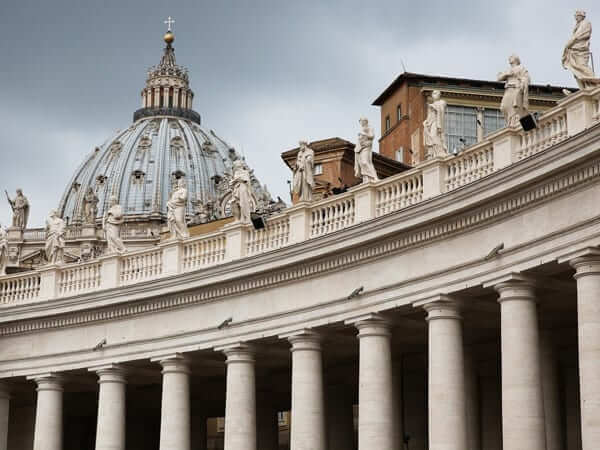
The architecture in the Vatican city is fascinating, with a multitude of features to discover
Foundation Facts About Vatican City
Before we dive into the Vatican’s strangest secrets and most surprising stories, it helps to start with the basics. Here are some essential facts about the world’s most fascinating country.
How big is Vatican City?
At just 121 acres (49 hectares), Vatican City is the smallest country in the world. Completely surrounded by Rome, it’s so compact you could walk across it in under an hour. To put that in perspective, it’s about one-eighth the size of Central Park, yet it attracts millions of visitors every year.
How old is Vatican City?
While the Catholic Church has been headquartered in Rome for nearly 2,000 years, Vatican City itself is surprisingly young. It officially became an independent state in 1929, following the Lateran Treaty, which formally established its sovereignty.
Is Vatican City its own country?
Yes, it is a fully sovereign nation, complete with its own borders, laws, and government. Despite being located in the middle of Rome, Vatican City operates independently from Italy and is recognized internationally as the world’s smallest independent state.
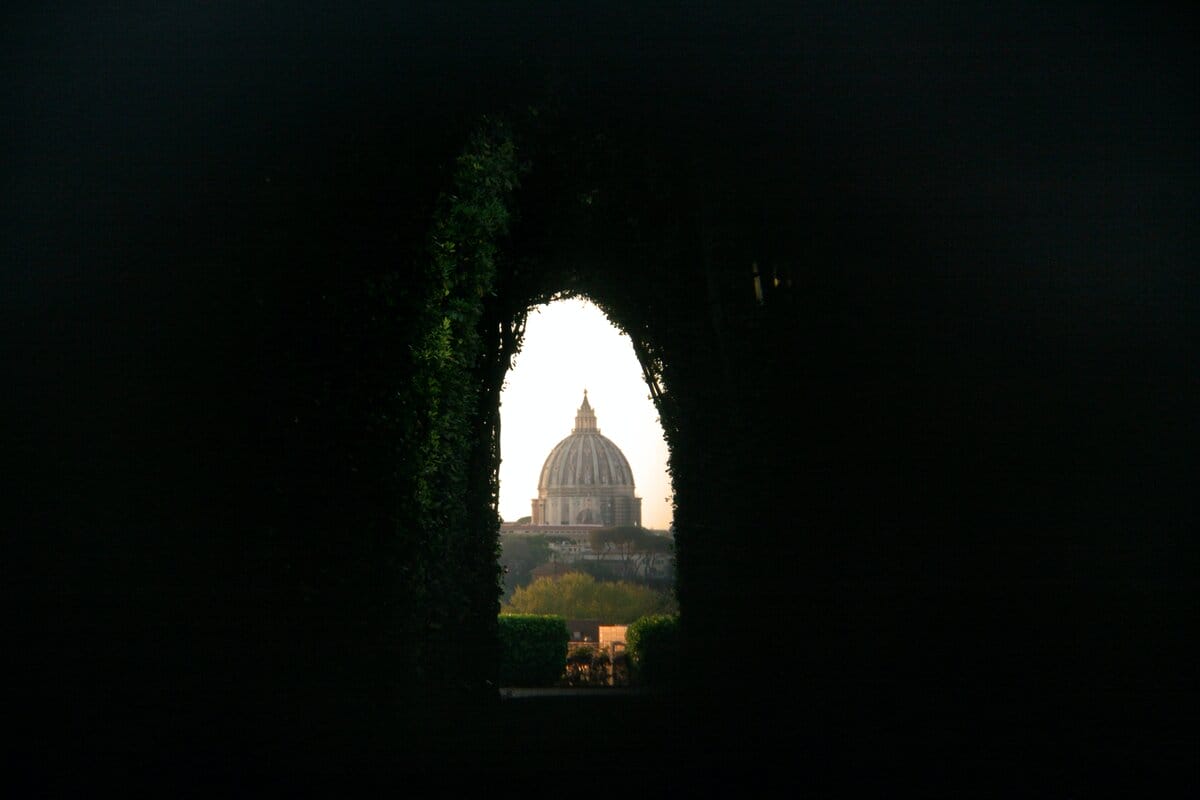
Underneath the massive St. Peter’s Basilica lies the Vatican Necropolis. Photo credit: Benjamin Fay
Books have been written, films made, and endless theories debated in an attempt to understand Vatican City, yet somehow this tiny nation only becomes more mysterious the more you learn about it. It is packed with secrets, strange traditions, and fascinating stories. Here are 10 mind-blowing facts about Vatican City that most visitors never discover.
10 Mind-blowing Facts about Vatican City
1. Vatican City is younger than your grandparents
Though the papacy has shaped Rome, and much of the Catholic world, for nearly two millennia, Vatican City itself is surprisingly young: it is less than 100 years old – as we mentioned above it officially became an independent state in 1929.
This was following the Lateran Treaty, which ended a long political dispute between the papacy and the Italian state. Before that, popes ruled the expansive Papal States for nearly 1,000 years.
Today, the pope (also known as the Supreme Pontiff or Roman Pontiff) is both the bishop of Rome and the spiritual leader of more than a billion Catholics worldwide. His office, known as the papacy, governs the Holy See, the sovereign entity that gives Vatican City its unique status on the world stage. While modern popes no longer wield territorial power as they once did, their influence remains vast – shaping global diplomacy, culture, and faith far beyond the walls of the Vatican.
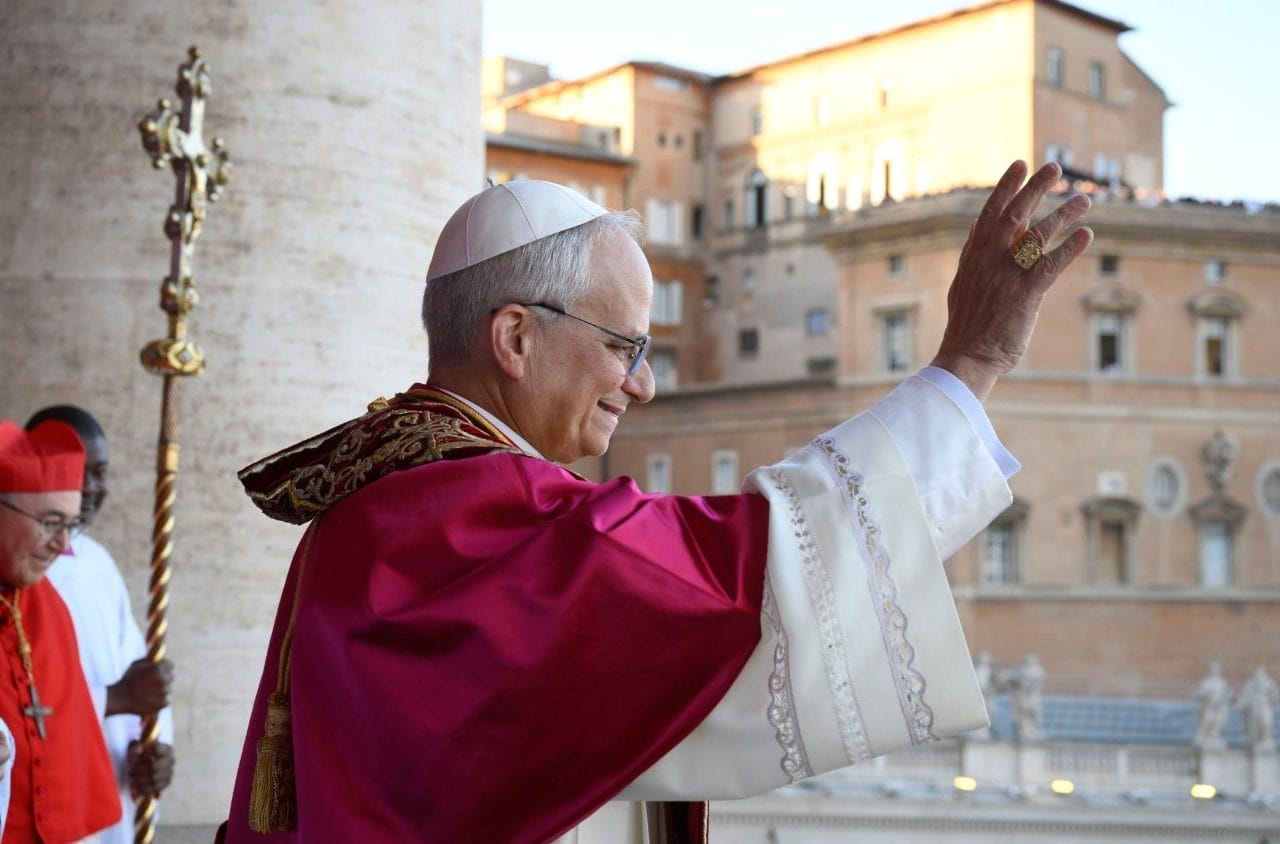
Pope Leo XIV appears on the balcony of St. Peter’s Basilica (@Vatican Media)
2. Mussolini helped create modern Vatican City
Yes, really. The Vatican as we know it today was born through a deal between Benito Mussolini and Pope Pius XI. As part of the agreement, Mussolini bulldozed a medieval neighborhood to create the grand boulevard Via della Conciliazione, the dramatic approach to St. Peter’s Basilica you walk down today.
The micronation known as Vatican City was born out of a treaty. In 1929, after much fighting (and passive-aggressive street naming practices), Pope Pius XI and Benito Mussolini came to an agreement. The Lateran Treaty recognizes the existence of the Italian state and the Vatican. And this micronation was born.
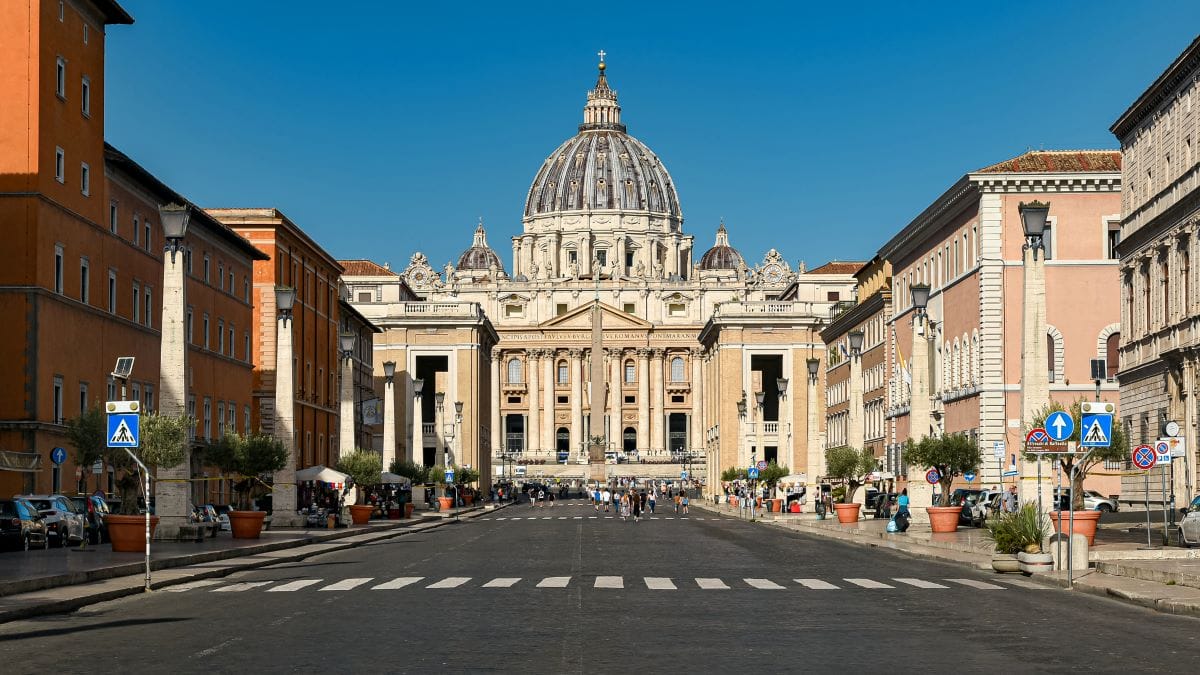
The Via della Conciliazione is one of the most dramatic approaches to one of the most impressive sites. Photo credit: Jorge Franganillo
3. The Vatican has its own everything, even a prison
Tiny country, full government.
The Vatican has its own…
- army, in the form of the Pontifical Swiss Guard)
- bank and currency, with ATM´s in Italian, English and Latin*
- post office and postal service
- pharmacy
- train station
- publishing house
- electrical generating plant
- and yes… its own jail – with 2 prison cells
Not bad for 800 residents.
*Insider tip: If you want some sanctus pecunia, or holy money, wait until you get to Vatican City to take some cash from the ATM. If you use an ATM or cash machine in Vatican City, you’ll have the option to conduct the transaction in Italian, English and … Latin. But, only agree to the Latin option if you can actually understand inserito scidulam quaeso when it pops up on the machine in front of you!
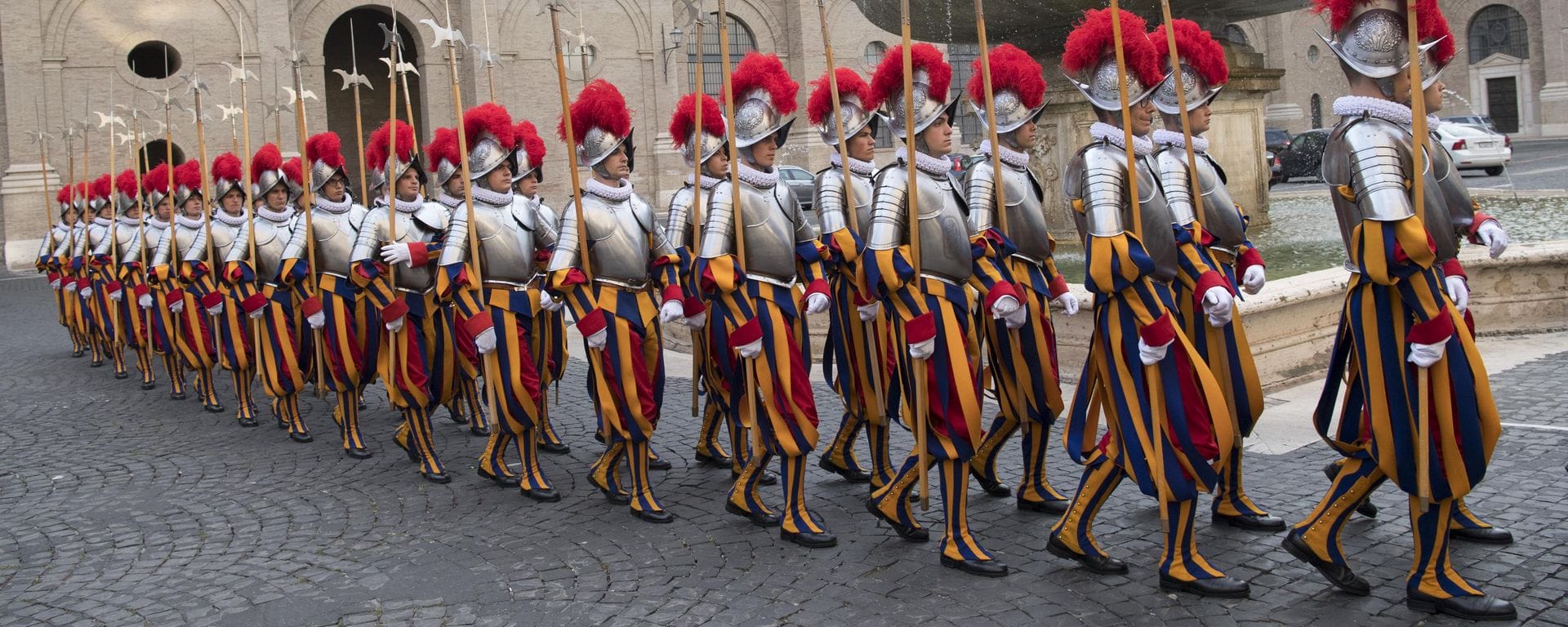
Photo credit: www.schweizergarde.ch
4. Its library holds one of the world’s oldest Bibles
The Vatican Apostolic Library, founded in 1471, contains 75,000 manuscripts and over 1 million books.
Many of the Vatican library’s most priceless works were lost to Spanish and German invaders during the infamous 1527 Sack of Rome. Its crown jewel? The Codex Vaticanus, one of the oldest surviving handwritten copies of the Bible, dating back to the 4th century. That’s older than most countries.
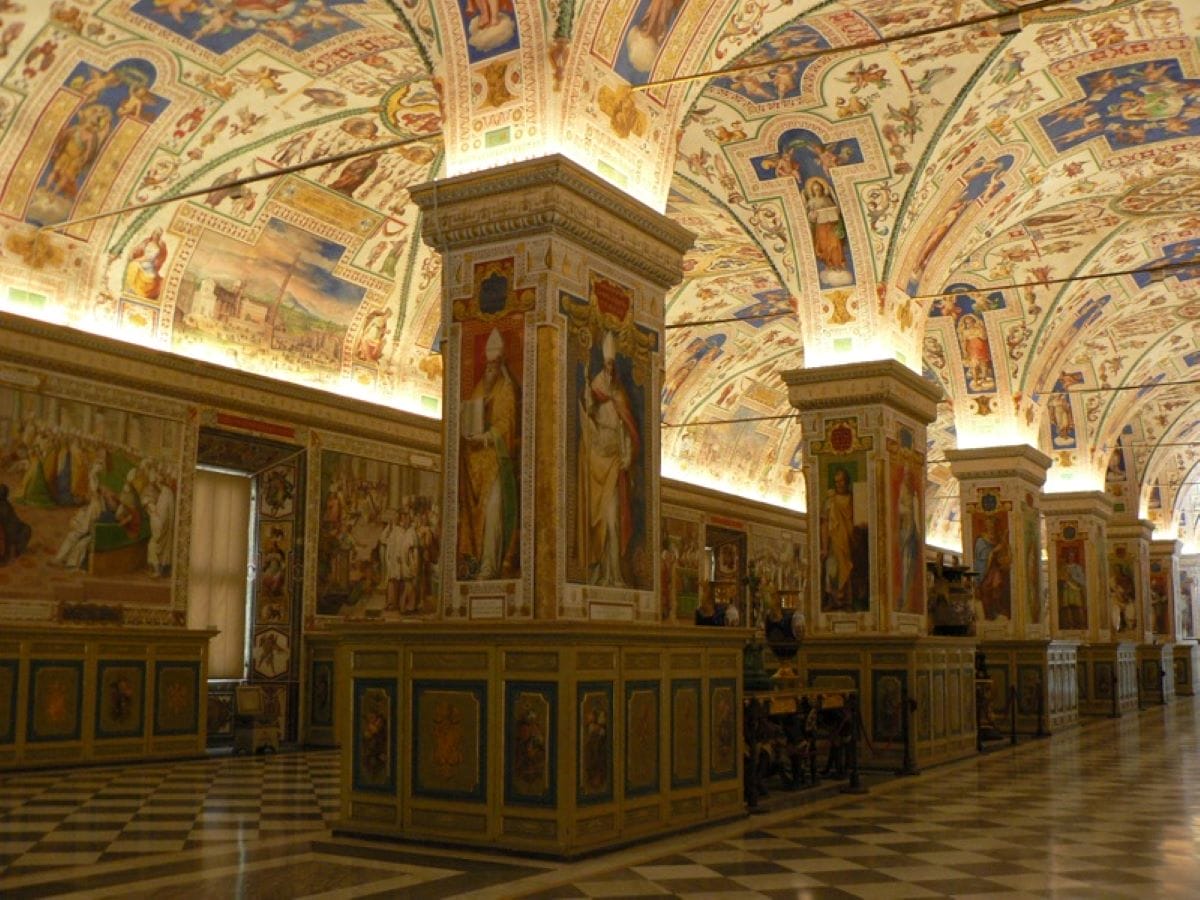
Not many people visit the Vatican’s library, but it’s definitely worth a stop. Photo credit: candiche
5. St. Peter’s Basilica sits on top of a cemetery
Long before the basilica, this was a Roman burial ground. Today, beneath St. Peter’s Basilica lies an ancient necropolis, complete with Roman streets, mausoleums, and what many believe are the remains of Saint Peter himself. The tombs are still there. And the Vatican allows visitors to stroll around millennia-old streets lined with millenia-old mausoleums.
If you want to experience this hidden underground world yourself, you can tour the crypts of St Peter’s Basilica and explore one of the Vatican’s most fascinating and least-visited sites.
The highlight, especially if you’re a Catholic, is a peek at the supposed bones of St. Peter resting in his (well-lit) tomb.
One curious addendum: In 1942, St. Peter’s bones were discovered by archaeologists and then promptly lost. They were rediscovered (in a cardboard box stashed away in a back Vatican office) and a decade later placed back in the spot where they were originally found.
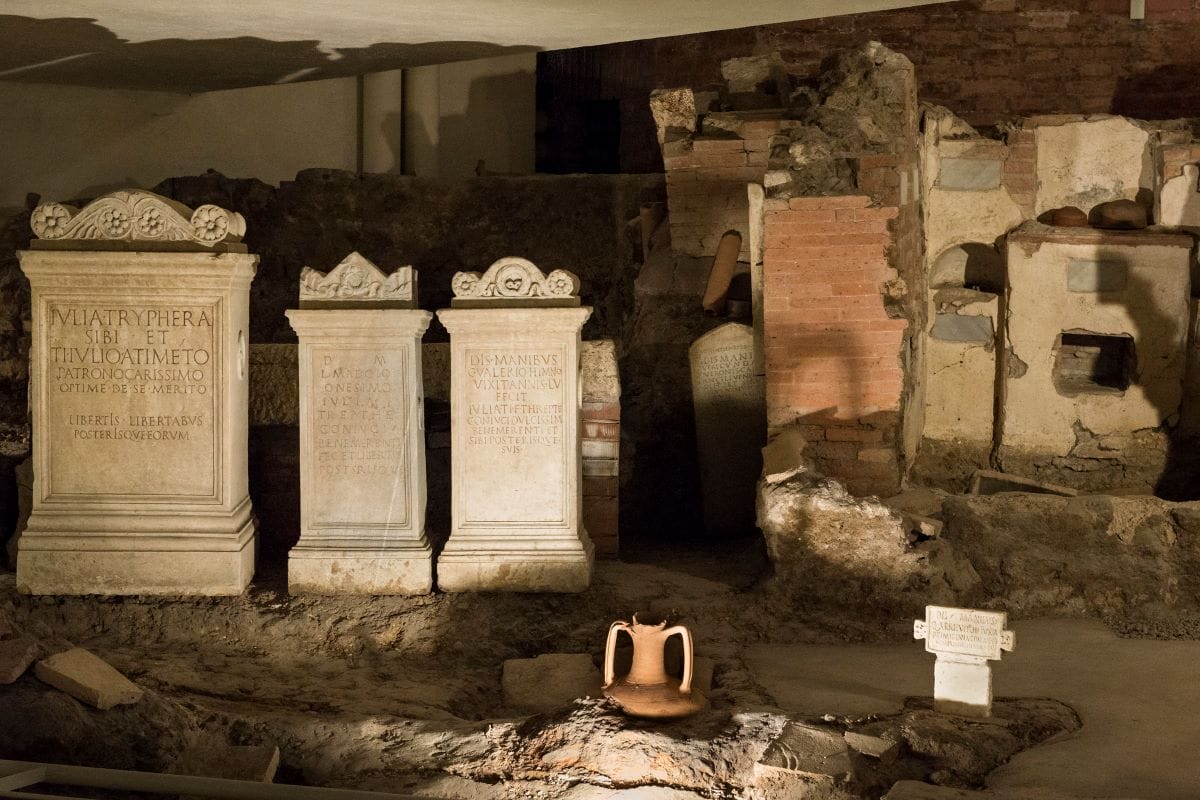
For those looking for the creepier side of the Vatican, head on down to the ancient necropolis. Photo credit: Egisto Sani
6. There was an older St. Peter’s Basilica
The current basilica is actually version two.
The original Old St. Peter’s Basilica was built by Constantine the Great in the 4th century and stood for over 1,000 years before being demolished to make way for today’s giant masterpiece. Talk about a renovation.
7. St. Peter’s Basilica was built by a Renaissance dream team
An all-star team of legendary Renaissance and Baroque architects and artists gave a hand in building the “new” St. Peters, including Bramante, Michelangelo, Raphael, and Bernini. The result? One of the most extraordinary churches on earth.
Interior highlights that can’t be missed are the Sistine Chapel ceiling, located inside the Vatican Museums and painted by Michelangelo, and Bernini’s monumental “Baldacchino,” a 100-foot tall canopy that serves as the focal point of the church.
Insider information: Much of the marble used to build St. Peter’s was filched from the Colosseum. Pope Nicholas II had 2,500 wagon loads of marble brought over from the ancient stadium. And to make the Baldacchino, Bernini had much of the roof of the Pantheon stripped of its bronze.
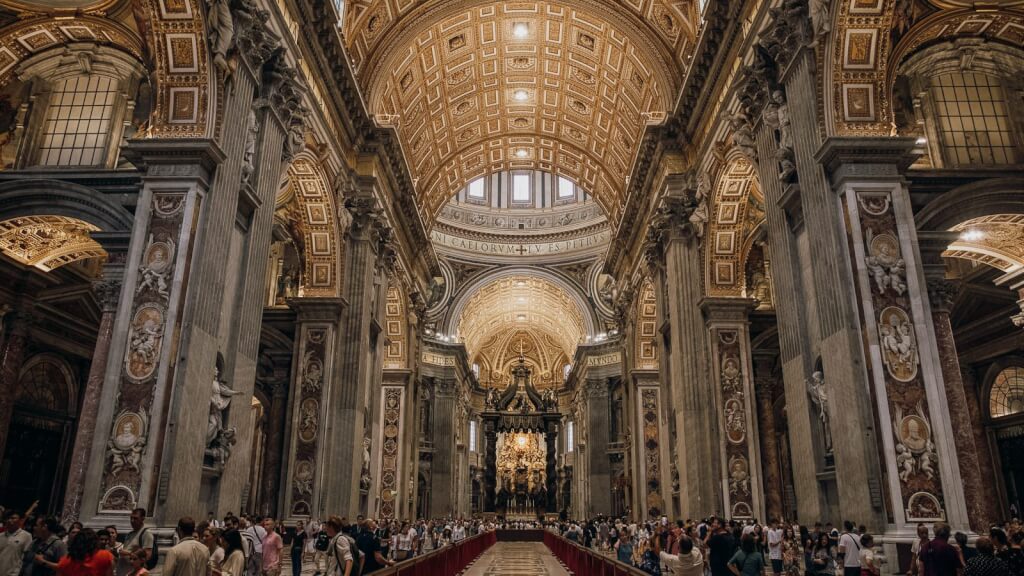
Inside St. Peter’s Basilica, you can see the “Baldacchino,” canopy at the end of the central aisle.
8. Michelangelo didn’t just paint the ceiling
In fact, Michelangelo was asked to paint something simple on the ceiling of the Sistine Chapel. But the famed artist, who at this time was much more well known as an architect, decided to challenge himself. The result is the most famous fresco in the world. It took the great artist four and a half years standing on a 60-foot-high scaffolding.
Not many people realise that it was toward the end of Michelangelo’s life when he returned to paint the “Last Judgment” on the far wall. If you look closely, you can see how the painting style of the day had changed: from the harmonious Renaissance style on the ceiling to the more chaotic and ornate mannerism on the back wall. The image of St. Bartholomew holding his own skin is actually a self-portrait of Michelangelo.
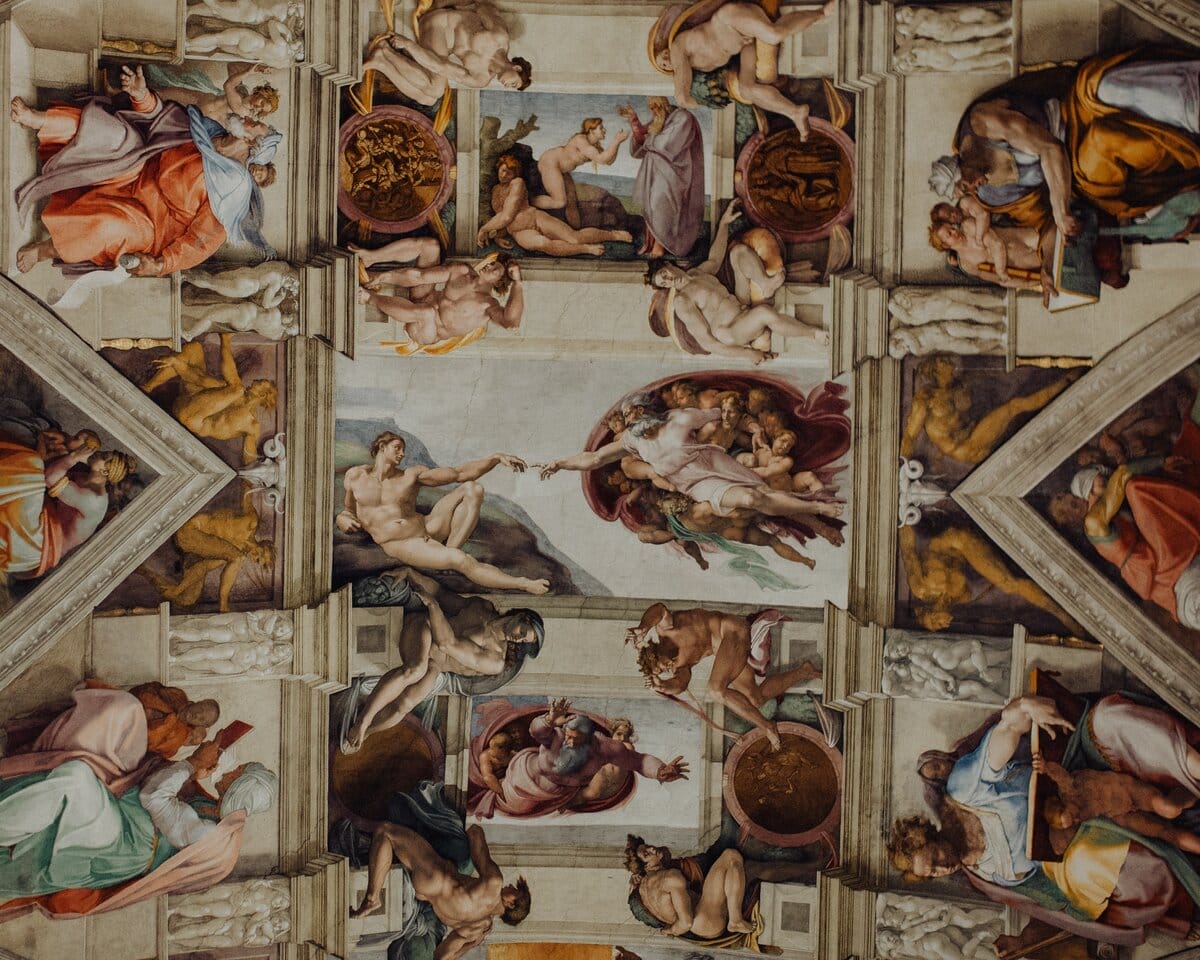
The Sistine Chapel ceiling is often the highlight of most Vatican visitors
9. Bernini’s Embrace: The Genius Behind St. Peter’s Square
St. Peter’s Square is one of the most dramatic public spaces in the world. And most of the thanks goes to Bernini, who designed the two dramatic “arms” that hug the circumference of the oval-shaped space.
In all, there are 284 columns supporting the two colonnades and 140 statues of saints standing atop.
The square is centered by a massive 3,300-year-old Egyptian obelisk, which took 800 people to erect in the late 16th century.
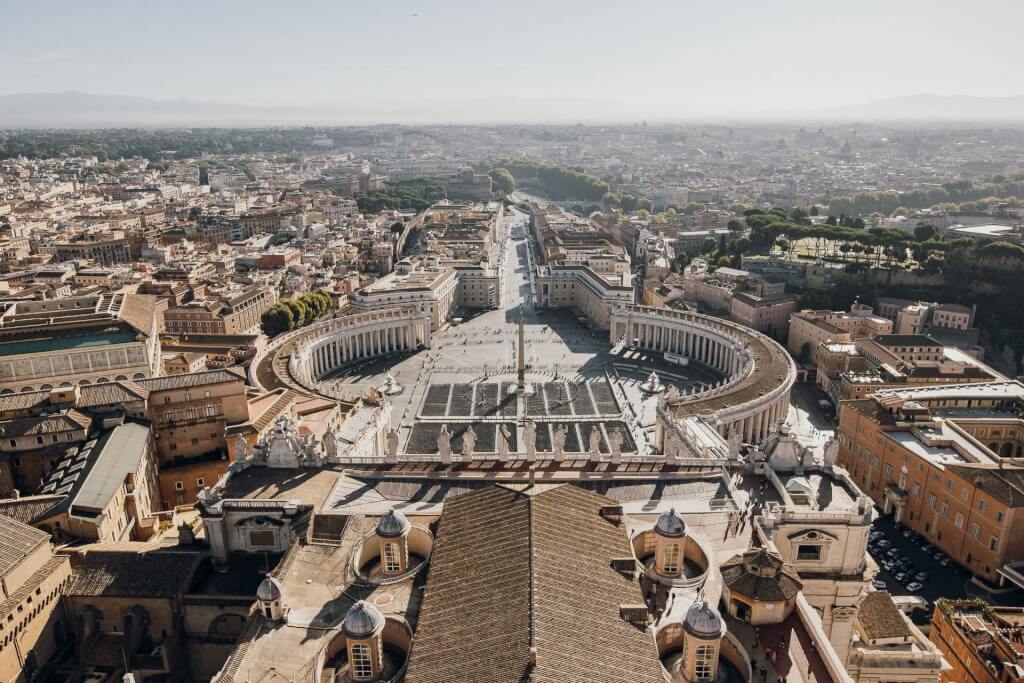
St. Peter’s Square from above, where Bernini’s grand colonnades embrace the heart of Vatican City against the vast backdrop of Rome.
10. Vatican City leads the world in two odd categories
Because its population is so tiny, Vatican statistics get weird. It consistently ranks among the highest in the world for:
- wine consumption per capita
- crime per capita (mostly pickpocketing)
So yes, the world’s holiest city may also be its most wine-loving.
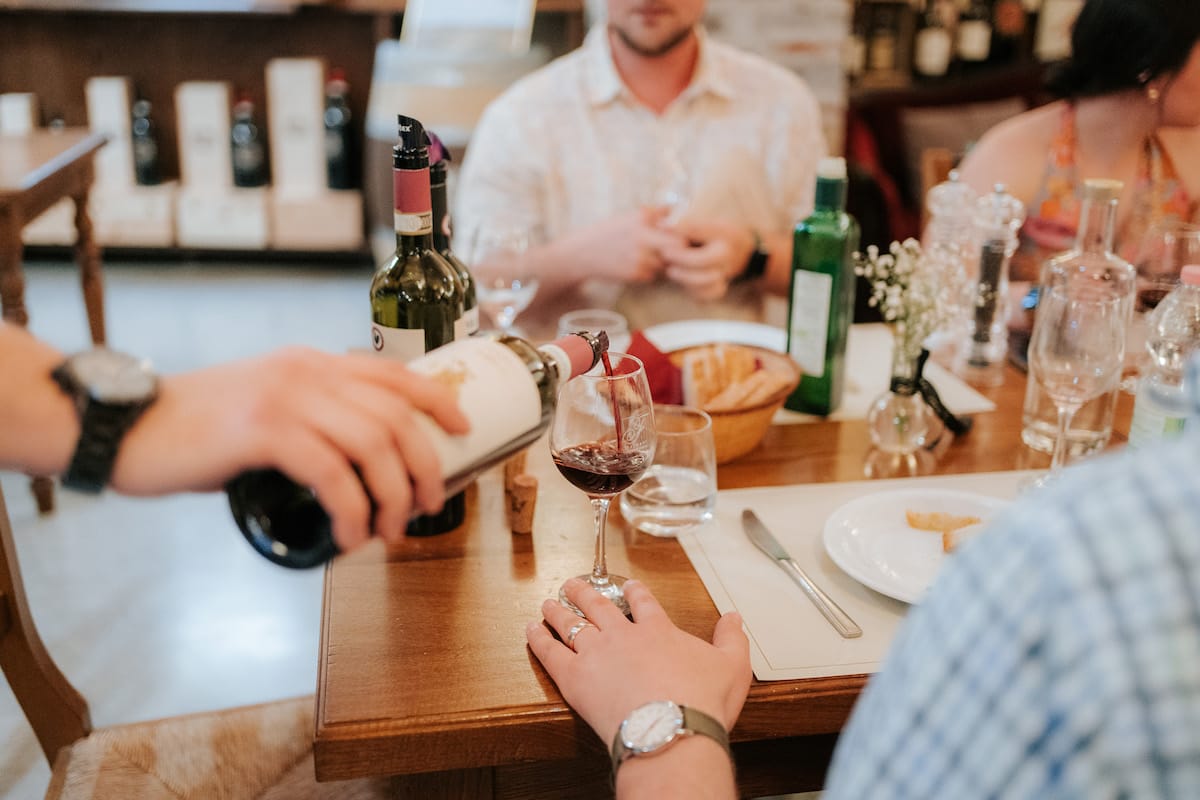
A glass of wine is obviously a firm favourite
If you’re ready to uncover even more of Vatican City’s hidden stories, secrets, and surprising details, the best way is to experience it with an expert by your side.
Join one of our small-group Vatican city tours, led by passionate local guides who bring the history, art, and intrigue of the Vatican to life far beyond what any guidebook can offer.
Prefer a more personalized experience? Book a private Vatican tour and explore at your own pace, with time to linger over the masterpieces, ask questions, and uncover the hidden corners and fascinating stories most visitors miss.
Whether it’s your first visit or your fifth, there’s always something new to discover behind the Vatican’s walls.
Book a Tour

Pristine Sistine - The Chapel at its Best
€89

1794 reviews

Premium Colosseum Tour with Roman Forum Palatine Hill
€56
850 reviews
Pasta-Making Class: Cook, Dine Drink Wine with a Local Chef
€64
121 reviews

Crypts, Bones Catacombs: Underground Tour of Rome
€69
401 reviews

VIP Doge's Palace Secret Passages Tour
€79
18 reviews

Legendary Venice: St. Mark's Basilica, Terrace Doge's Palace
€69
286 reviews
Follow us
Stay up to date with travel tips, local insights and all things Italy on our social channels!


Subscribe to our Newsletter
Get curated Italy travel tips delivered to your inbox!

