






Winter and Christmas Food Traditions in Rome
May 14, 2026
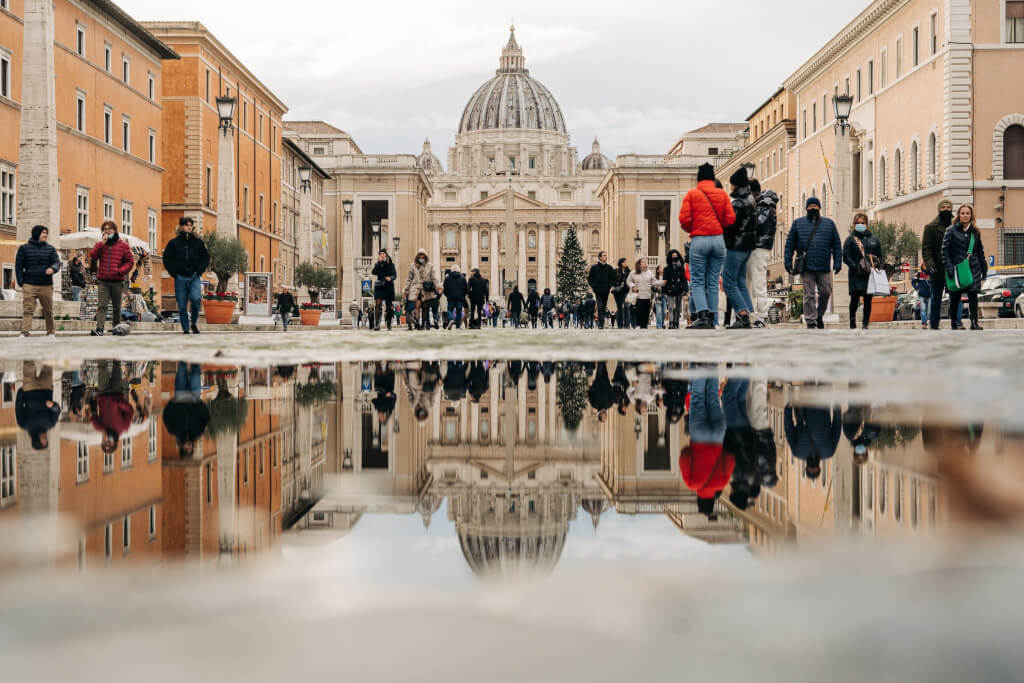
During the second half of November, Rome changes its skin. The sycamores growing on either side of the Tiber River lose all their leaves, the number of rainy and windy days increases, and people start to spend more time inside their homes and cafes than in the charming piazzas. This sparks the preparation for the fall season, and starts the celebration of Winter and Christmas food traditions in Rome.
Special dates in the Christmas season
Before winter officially begins in Rome there is a special date of celebration: December 8th, Immacolata or the Feast of the Immaculate Conception. All around the city, the season of Christmas festivities opens. Christmas trees, nativity scenes, and Christmas lights are set up in the historic center. The same happens in homes all around the city.
In the family, people start discussing where they will spend the crucial days of the holidays: December 24th, 25th, and 26th. It’s a tradition that Christmas Eve dinner and Christmas lunch are spent together with immediate family, allowing the children to celebrate with all of the grandparents.
From December 26 to January 6, which is the last day of the holiday, people continue to organize meetings with relatives and friends and take every possible chance to dine together, spending hours at the table.

Insider Tip: To have an authentic, delicious Roman food experience, try learning how to cooking pasta with a chef, or take an amazing food tour with Devour.
Due to the lowering of temperatures and the Christmas holiday period, which lasts for almost a month, from December to February the Romans indulge in more elaborate and caloric dishes and in larger portions. The swimsuit test is still far away… here are some suggestions of how to join in the Winter and Christmas food traditions in Rome.
Italian Winter Beverages
First of all, its worth noting that Rome in winter isn’t just about food, it’s also the perfect season to slow down and warm up with some of Italy’s most comforting drinks. Whether you’re wandering through a Christmas market, pausing in a cozy café, or taking a break between sightseeing stops, these traditional Italian winter beverages are an essential part of the cold-weather experience.
Cioccolata Calda (Italian Hot Chocolate)
Forget the thin, watery hot chocolate you may be used to, Italian cioccolata calda is famously rich, thick, and almost pudding-like. Made with real chocolate and often served with a generous swirl of whipped cream (con panna), it’s the ultimate winter indulgence and an afternoon pick-me-up.
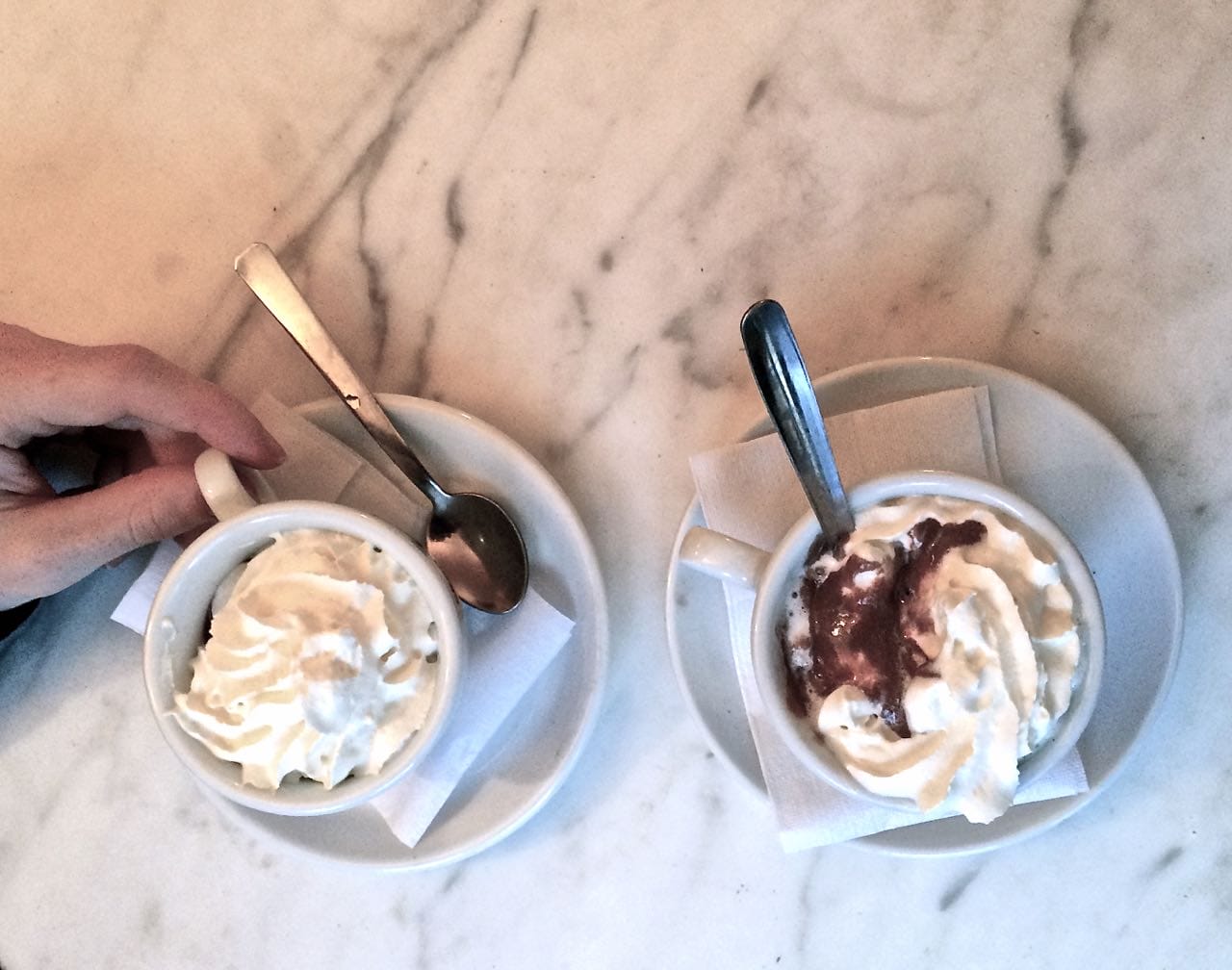
The locals swap summer ice-cream for creamy hot chocolate in the winter season. Photo credit Gillianslists
Vin Brulé (Mulled Wine)
A staple of winter markets across Italy, vin brulé is Italy’s answer to mulled wine: red wine gently heated with cinnamon, cloves, citrus peel, and sugar. You’ll often find it served steaming hot at festive fairs, making it the perfect drink for an evening stroll through Rome’s illuminated piazzas.
Latte di Mandorla (Warm Almond Milk)
While often served chilled in summer, latte di mandorla (almond milk) also appears in warmer versions during winter, especially in artisan cafés. Lightly sweet, creamy, and naturally dairy-free, it’s a comforting alternative to coffee or hot chocolate, and a lovely nod to Italy’s culinary traditions.
Coffee, Roman Style
Of course, no Roman winter day is complete without coffee. Many locals start with a frothy cappuccino in the morning, then switch to a quick espresso or creamy caffè macchiato throughout the day. On a cold afternoon, stepping into a warm café for a coffee break is a ritual worth embracing.
Insider Tip: If you’re exploring Rome after dark, warming your hands around a cup of vin brulé or cioccolata calda while admiring the city’s Christmas lights is one of the simplest, and most memorable, winter pleasures.
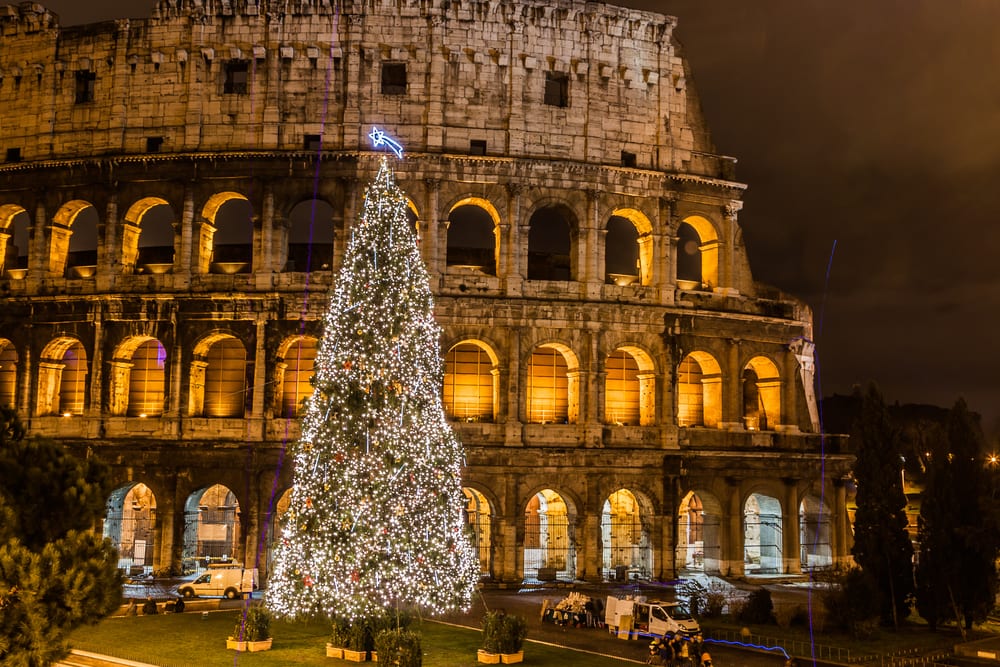
Street Food Traditions in Rome
Rome’s street food culture doesn’t disappear in winter, it simply gets cozier. While many gelato shops in the historic center stay open year-round, locals tend to swap frozen treats for warmer, heartier comfort foods that can be enjoyed while wandering the city’s chilly streets. Winter in Rome is still all about eating on the go, but with dishes designed to warm your hands as much as your stomach.
Trapizzino (Pizza Sandwich)
The trapizzino is a street food born in the Testaccio neighborhood of Rome in relatively recent times. In 2008, Stefano Callegari created the first trapizzino in his pizza store in Testaccio.
One of the city’s favorite cold-weather snacks, the trapizzino is a uniquely Roman creation that combines pizza and sandwich into one delicious handheld meal. Made from fluffy triangular pizza dough stuffed with classic Roman fillings like chicken cacciatore, meatballs in tomato sauce, or slow-cooked eggplant parmigiana, it’s the perfect warming street food after a long day of sightseeing.
With the help of entrepreneur Paul Pansera, Stefano opened six Trapizzino stores in Rome, others in Italy, and even one in New York. Among the most popular varieties are: trapizzino with cuttlefish and peas, trapizzino alla parmigiana, trapizzino with offal and onions, trapizzino with peppers and cod.
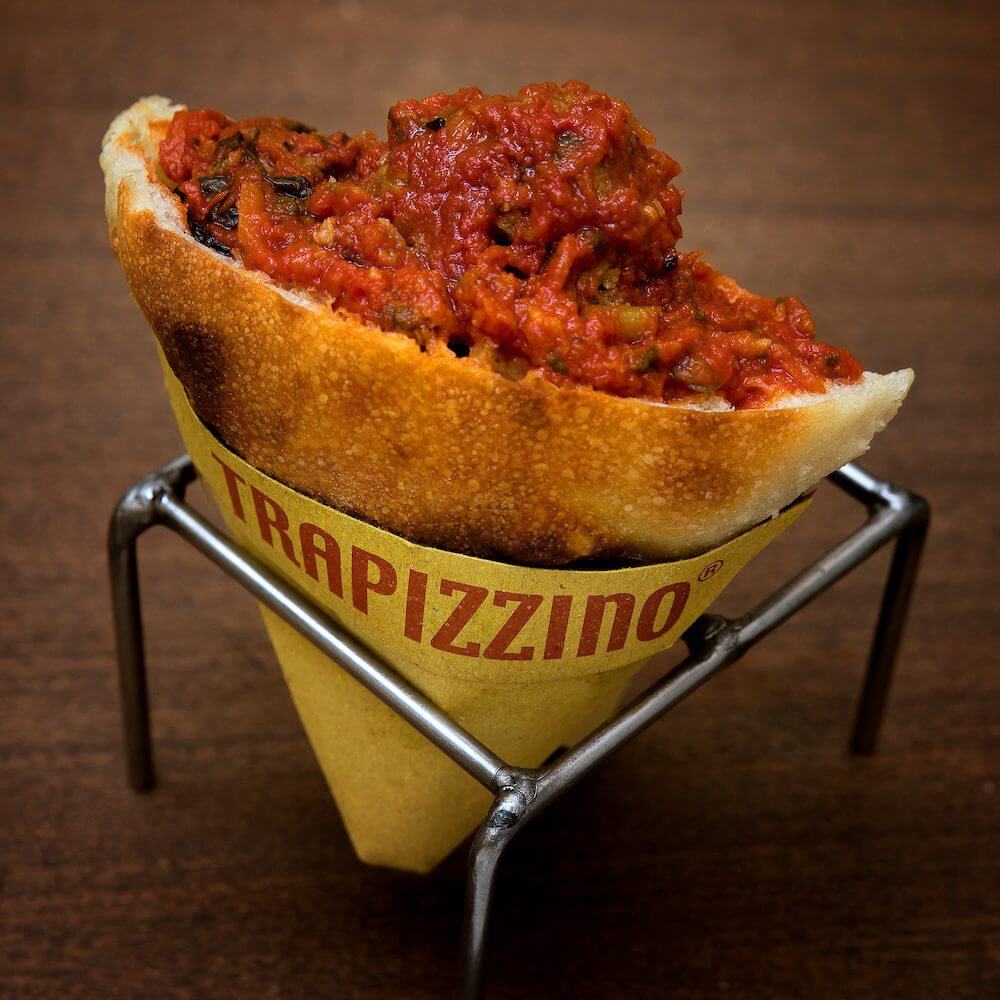
Trapizzino con Polpetta al Sugo. Source: Trapizzino
Caldarroste (Roasted Chestnuts)
Perhaps the most iconic winter street snack in Italy, caldarroste, fresh chestnuts roasted over open flames, are sold from street carts and market stalls across the city. Their smoky aroma drifting through Rome’s piazzas is one of the unmistakable signs that Christmas season has arrived.
Fritti (Fried Delicacies)
Another irresistible selection of delicacies that Romans love to eat in winter are commonly called “fritti” – fried delicacies. This is street food that is also served in many restaurants and often goes with pizza.
Suppli (Rice Balls)
Supplì, a rice cylinder or ball stuffed with tomato pork ragù and mozzarella and then fried in hot oil, is definitely the most popular fritto in Rome. The locals are also into the baccalà fritto or fried cod fillet: cod is left to soak in water in order to remove excess salt, dipped in flour, and then fried in boiling oil.
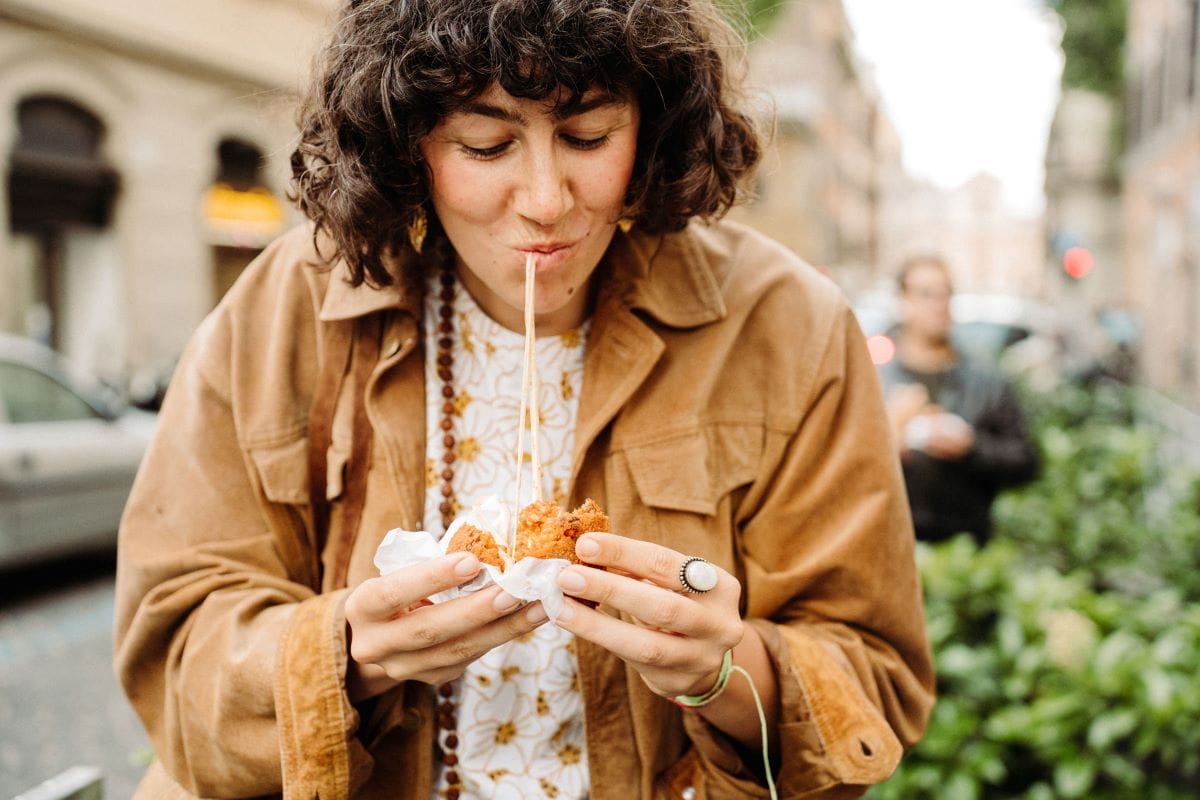
Supplì, a Roman street food that’s extra delicious in winter.
Christmas Market Foods
One of the great joys of visiting Rome in winter is discovering its festive Christmas markets, where twinkling lights, seasonal music, and the scent of warm street food fill the air. From the famous market in Piazza Navona to smaller festive stalls around Piazza di Spagna and St. Peter’s Square, these holiday fairs are as much about eating as they are about shopping. In addition to the street food mentioned above, you will also find these amazing offerings:
Struffoli (Honey Balls)
A festive favorite from southern Italy that has become popular at Christmas markets nationwide, struffoli are tiny fried dough balls coated in honey and often topped with colorful sprinkles or candied fruit. Sweet, sticky, and impossible to eat just one, they’re a must-try if you spot them at a holiday stall.
Frittelle (Fried Dough Treats)
Winter markets are also a great place to sample frittelle, Italy’s answer to festive doughnuts. These golden fried treats can be dusted with sugar, filled with cream, or flavored with raisins and citrus depending on the region and the vendor. Best enjoyed warm, they’re perfect for an afternoon sugar hit!
Insider tip: Where to Find Them… The most famous place to experience these treats is the Christmas market in Piazza Navona. You’ll also find food kiosks near Via del Corso, around the Christmas tree in Piazza Venezia, and at smaller neighborhood markets across the city.
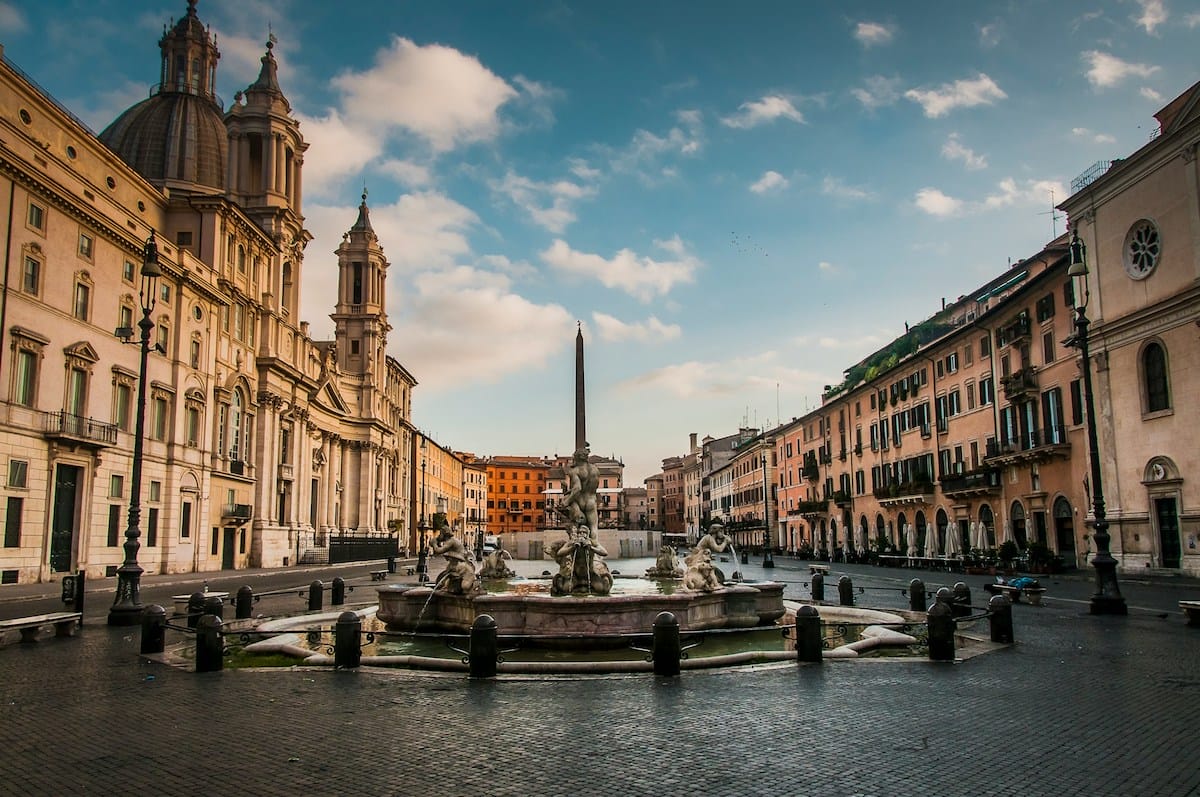
Piazza Navona hosts one of the most famous Christmas markets
Christmas Food Traditions in Rome
While many of Rome’s piazzas light up with handicraft markets like Piazza Navona, Piazza di Spagna, and Piazza Mazzini, the people of Rome are already thinking about their Christmas menu. Even if they try to vary a little from year to year, some traditions stay the same. What is certain is that the Christmas Eve dinner menu is fish-based while the Christmas lunch menu is meat-based.
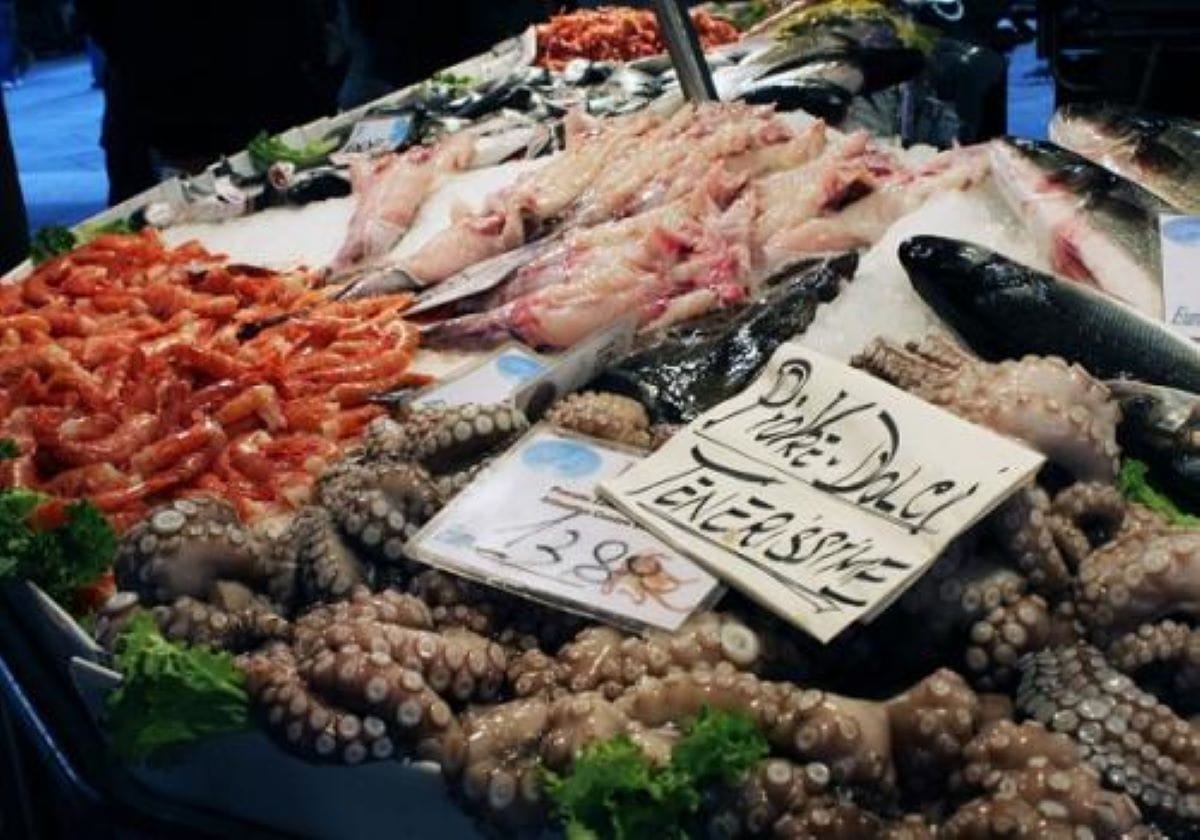
Get to the local food markets for the best fresh fish and seafood!
Christmas Eve Dinner – Traditional Dishes
Because Christmas Eve is a meat-free day in Catholic tradition, the meal focuses on fish and vegetables. It’s a lighter (but still abundant!) spread before the meat-based feast on Christmas Day. Preparing the Christmas Eve dinner (La Vigilia di Natale) is a big responsibility for the host, usually a mother or grandmother, so it is a good habit to show up early to help with the arrangements.
Appetizers: The appetizer is hearty and must include a mixture of fried foods: pieces of apple, ricotta cheese, broccoli, cauliflower, and cod are dipped in batter and then fried in hot oil. Then the starters go on with marinated anchovies, and a salad of octopus and potatoes.
First course: The first course is usually a soup or pasta dish such as spaghetti with clams or pasta seasoned with tomato sauce and seafood, such as linguine allo scoglio. If it is a soup, it is often the skate soup with Roman Cauliflower (see below for more details)!
Main course: For the main course the choice is a bit more varied. Among the most common dishes, there are prawns sautéed in a pan with Italian sparkling wine spumante or roasted fish such as sea bream and sea bass with a side of baked potatoes.
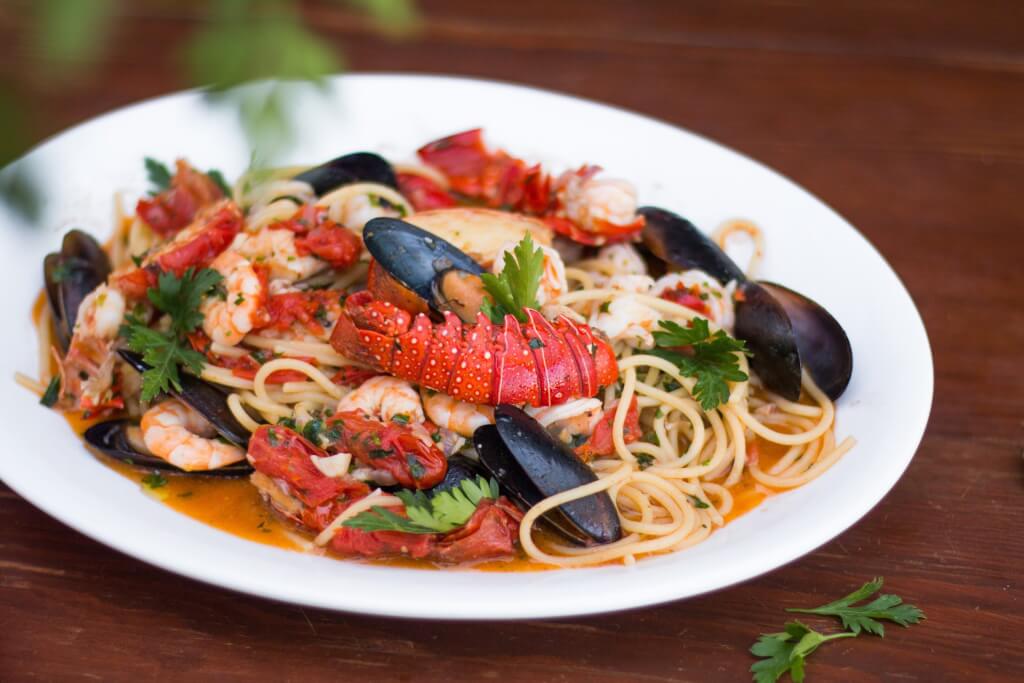
Seafood linguine is one of the winter favourites in Rome
Christmas Lunch – Traditional Dishes
For Christmas lunch, it is traditional to enjoy dishes that are eaten in Rome throughout the winter.
First course: The classic first courses are tortellini in chicken broth and stracciatella. Stracciatella is a typical soup from the peasant cuisine of central Italy. To make it, you prepare a meat broth, then remove the meat to keep to prepare other dishes. A green leafy vegetable such as chard cut is added and the water is brought to a boil again. At this point, you add eggs beaten with parmesan and pecorino cheese. The eggs clump together forming “rags” (stracci), and the soup is ready.
Main Course: For the second course Romans love to eat lamb. The most popular dish is lamb chops dipped in beaten egg, breadcrumbs and then fried in hot oil, which is crispy and tasty. More delicate palates will cook the lamb slowly with tomato sauce in a pan like a stew.
Insider tip: If this is making your mouth water, you might also enjoy our article which includes more details of the the Christmas food traditions in Italy
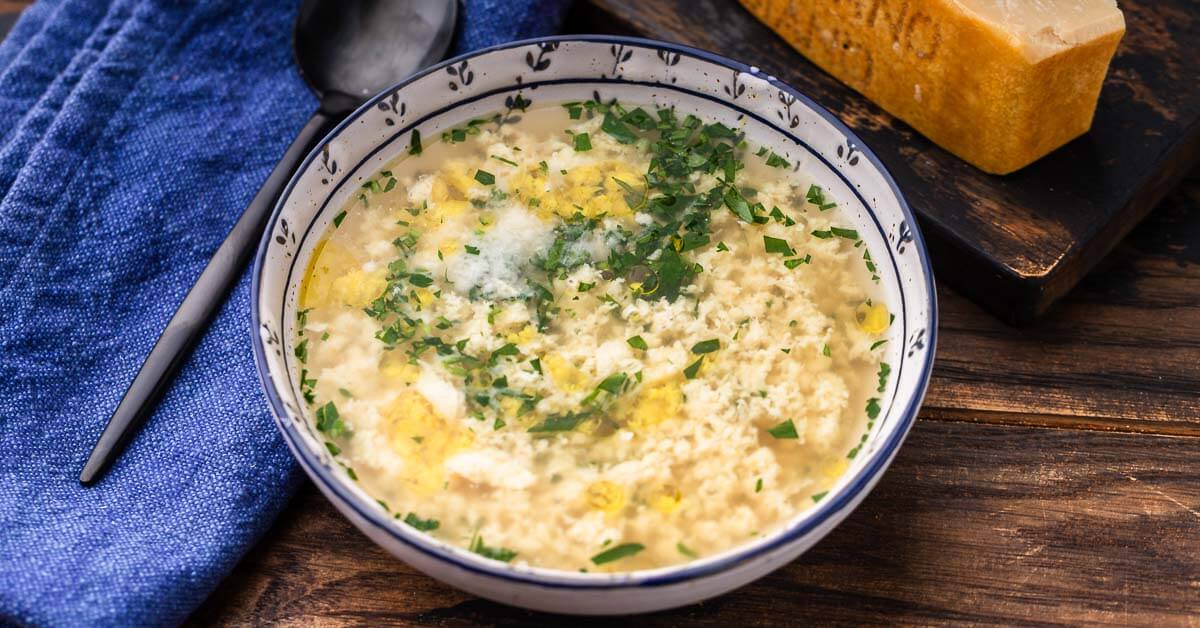
Stracciatella soup is a delicious and filling festive favourite in Rome
Holiday Desserts and Sweets
When the main courses are finished, the Christmas table in Rome is far from over. Italians love to linger over holiday desserts and sweets, often accompanied by coffee, dessert wine, or a small digestivo. Alongside bowls of dried fruit and nuts, festive cakes and traditional treats become the centerpiece of the final course.
Panetonne, Pandoro and Pangiallo
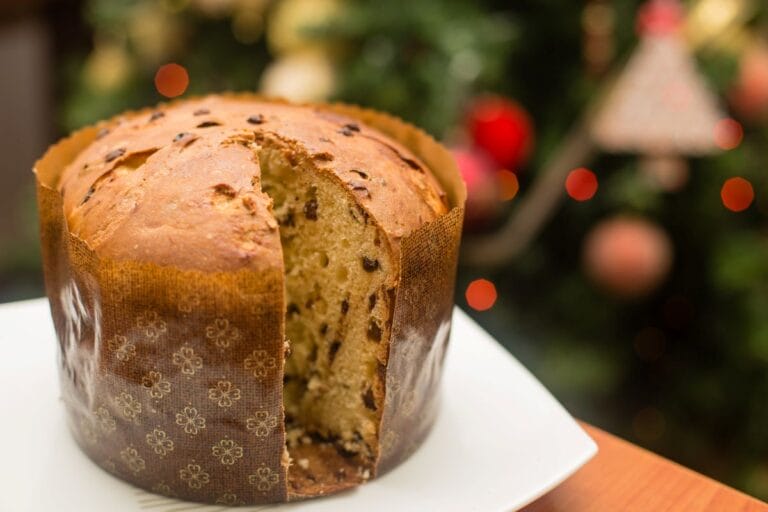
The most iconic are panettone and pandoro, two Christmas staples found across Italy. Panettone, the famous domed sweet bread from Milan, is filled with candied fruit and raisins, while Pandoro from Verona is softer, richer, and dusted generously with powdered sugar.
But Rome’s own traditional Christmas cake is pangiallo romano (“yellow bread”), a dense, fruit-and-nut cake with ancient roots. Its bright golden glaze is said to symbolize the sun, and according to tradition it was originally offered to the Sun god during the winter solstice in Ancient Rome, making it one of the city’s oldest festive foods still enjoyed today.
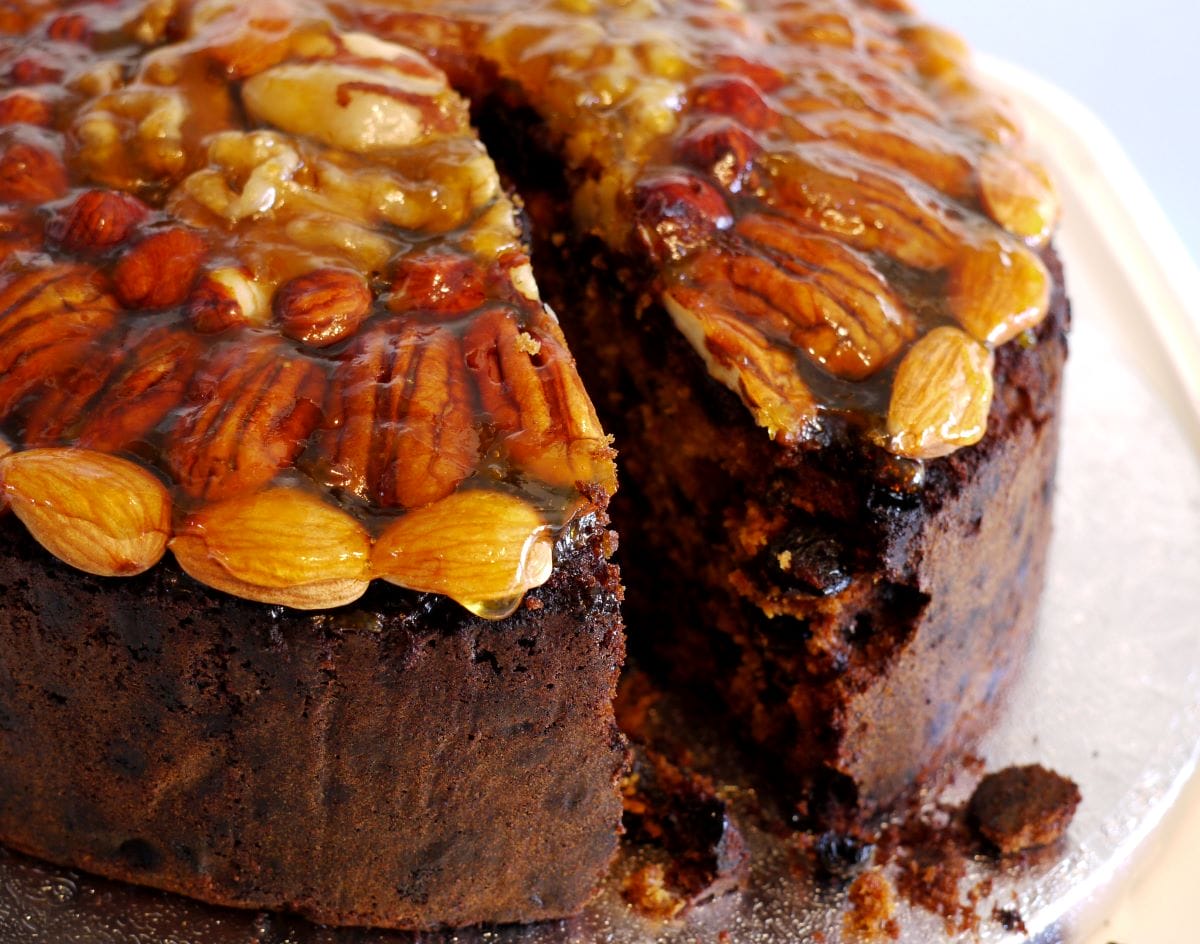
Pangiallo – the Roman Italian Christmas bread topped with a sun-inspired golden nut glaze!
Torrone (Italian Nougat)
Another holiday favorite is torrone, a chewy or crunchy nougat made with honey, egg whites, and toasted almonds or hazelnuts. Found in every Christmas market and bakery window in December, it comes in endless regional variations, from soft and chewy to hard enough to challenge your teeth.
Panforte (Spiced Fruit Cake)
Originally from Siena but beloved throughout central Italy, panforte is a rich, dense cake packed with nuts, candied fruit, honey, and warming spices like cinnamon and nutmeg. It feels almost medieval, and that’s because it is, dating back hundreds of years.
Mostaccioli and Regional Christmas Cookies
No Italian holiday table is complete without cookies. One of the most traditional is mostaccioli – spiced biscuits flavored with honey, cocoa, or almonds, depending on the region. You’ll also spot trays of ricciarelli (soft almond cookies), amaretti, and other bite-sized sweets perfect for nibbling!
Insider Tip: Visit a local Roman bakery in December and you’ll find shelves piled high with festive desserts, perfect for taking back to your hotel room after an evening stroll through Rome’s Christmas lights.
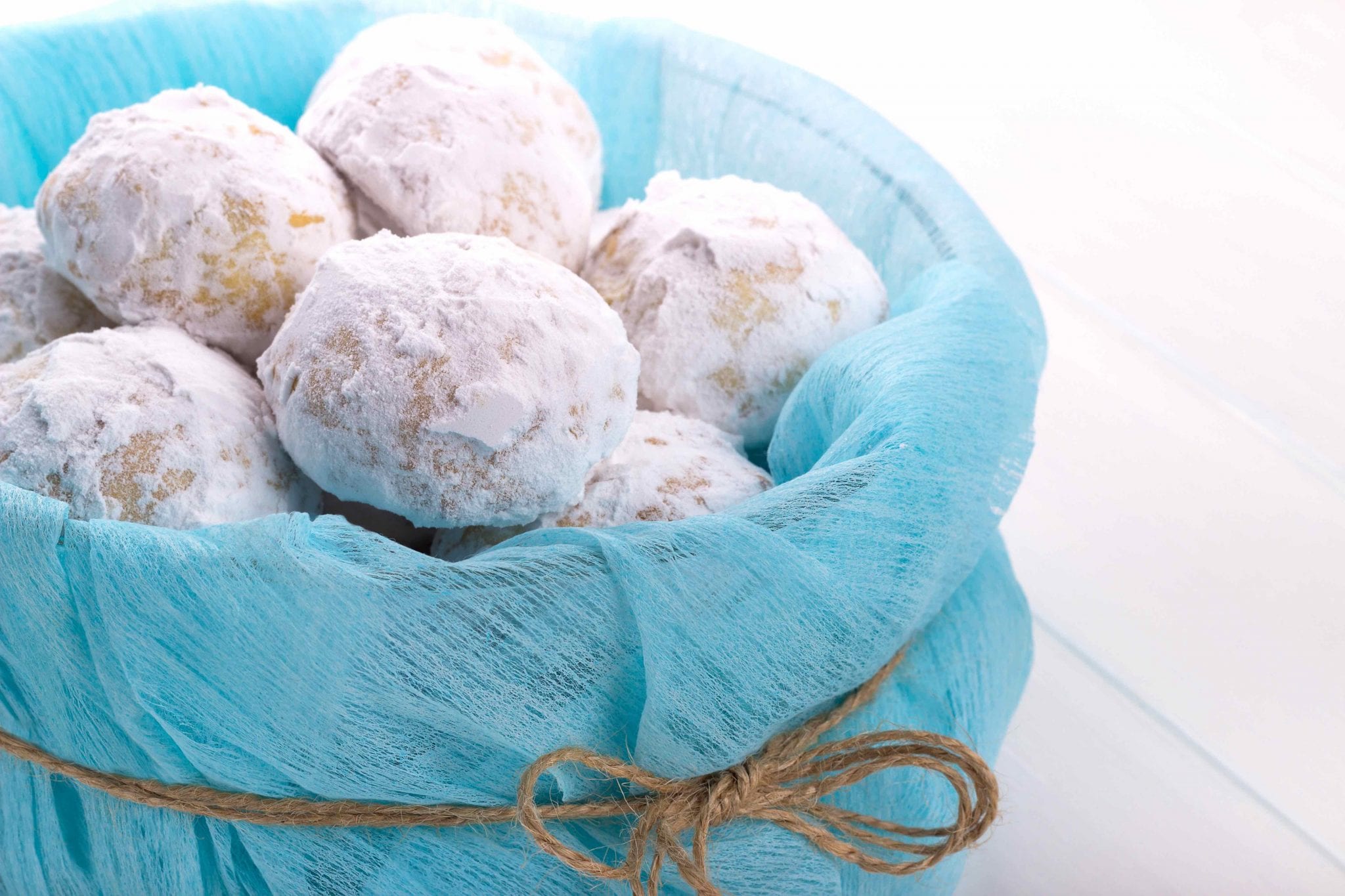
Traditional Christmas cookies with almonds
Seasonal Vegetable Traditions in Rome
Winter harvest is especially generous in the countryside around Rome, which means the city’s cold-weather menus are filled with comforting dishes built around fresh, seasonal vegetables. Roman cuisine has always been deeply connected to the land and the rhythm of the seasons. Wwinter is when some of central Italy’s most flavorful produce truly shines and captures Rome’s tradition of cucina povera, or “peasant cooking,” where humble ingredients become something extraordinary.
Carciofi – artichokes
Brocollini
Besides Roman cauliflower, with its beautiful spiraling tops, another vegetable that is impossible to find in other seasons is broccolini, also known in Italy as “broccoletto” or “cima di rapa“. The leaves of this vegetable are eaten while 3/4 of the stems, the most robust parts, are discarded. In order to keep all the flavor, broccolini must not be boiled but cooked on low heat in a pan with a lid, together with some spoons of water, EVO oil, and two cloves of garlic.
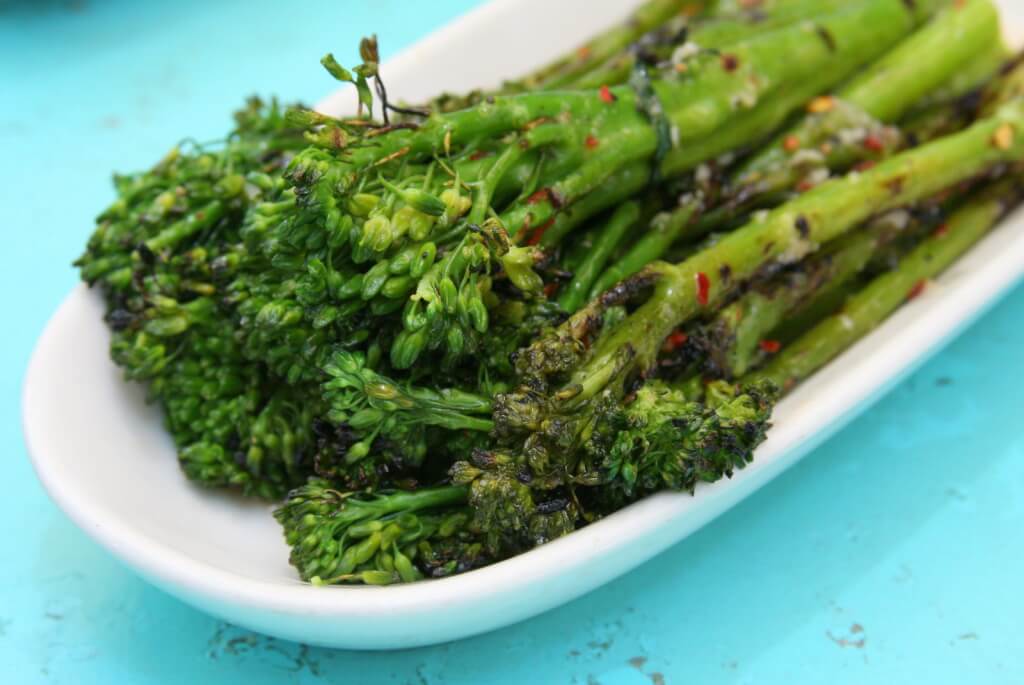
Broccolini, a winter staple and seasonal food tradition in Rome. Source: Flickr
The most popular soup is minestrone: a medley of fresh vegetables usually found on the market stalls already cut and ready to cook: carrots, potatoes, broccoli, cabbage, chard, spinach. Once at home, many Romans add to the veggies cereals such as barley or spelt and legumes, chickpeas and beans, or even pasta. The soup is then flavored with abundant grated cheese like pecorino or parmesan.
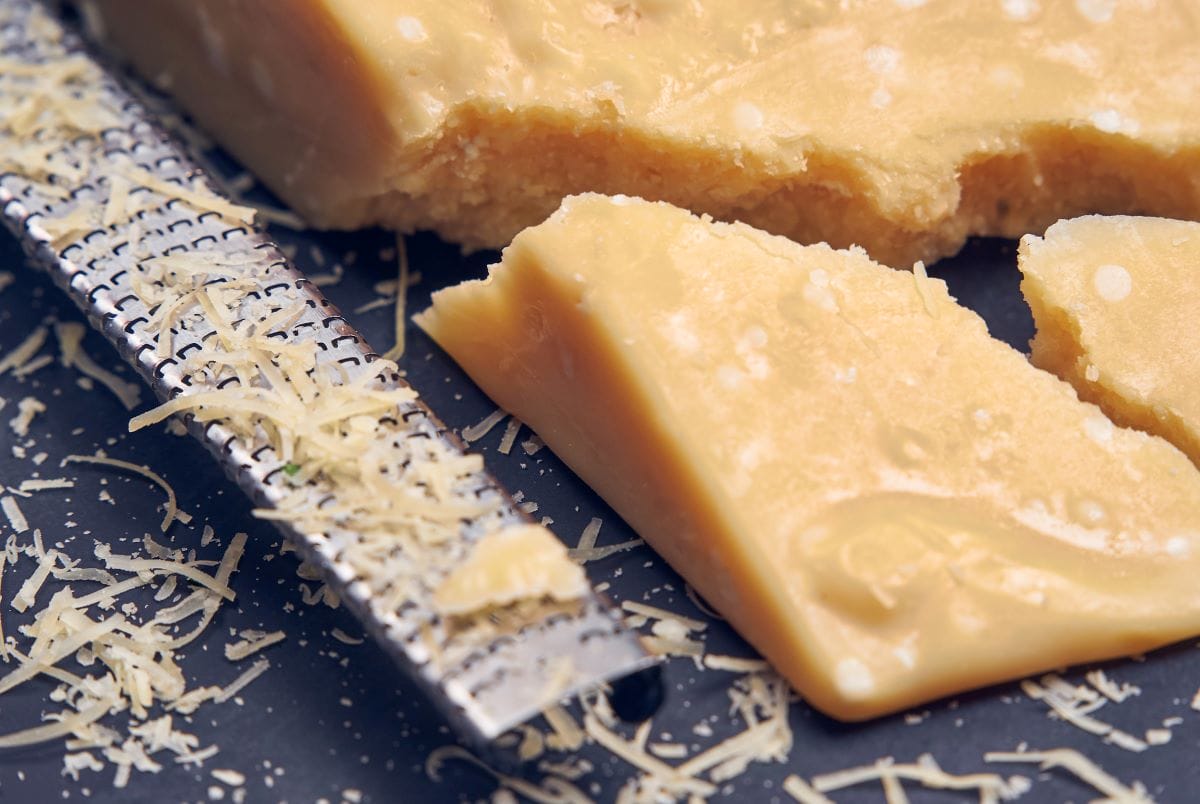
Freshly grated parmesan is one of life´s perfectly tasting pleasures!
Skate Broth
Another soup of the Roman culinary tradition, which now you can find only in a handful of restaurants and during the Christmas Eve dinner is skate broth. This dish is made by simmering skate wings with aromatics like onion, celery, parsley, and a splash of white wine. Chunks of vibrant Romanesco cauliflower and short pasta, often ditalini or broken spaghetti, are added and cooked until tender. This nourishing soup combines the sweetness of fish, the earthy bite of cauliflower, and the satisfying heartiness of pasta, a true taste of old Rome’s cucina povera at its finest.
Insider Tip: If you’re dining in Rome in winter, ask what’s di stagione (in season). Roman restaurants take seasonal produce seriously, and some of the best dishes you’ll eat may be the simplest ones on the menu.
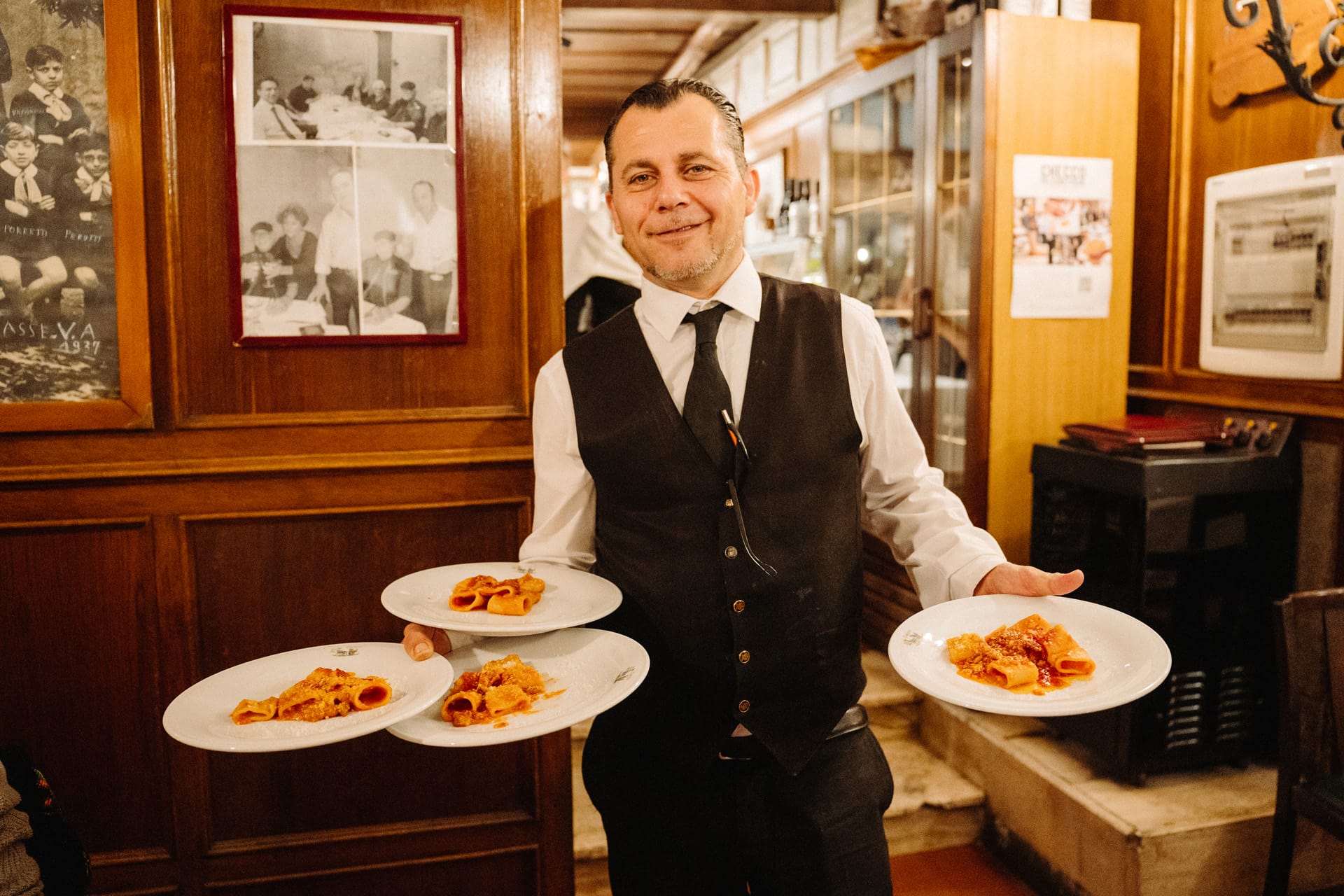
Ask your waiter for the seasonal specialities and their suggestions on traditional meals to try!
FAQs – Food Traditions in Rome
What time of year is best for tasting Rome’s traditional foods?
While Rome’s cuisine is delicious year-round, the winter months (November to February) are ideal for sampling hearty dishes tied to ancient seasonal traditions, such as soups, fried specialties, and Christmas recipes. Autumn is also a great time to enjoy seasonal vegetables and wine festivals.
How many days should I spend in Rome to experience its food traditions?
To truly experience Rome’s food traditions, plan to stay at least three to four days. This gives you enough time to explore both street food favorites like supplì and trapizzino, as well as traditional Roman trattorias, markets such as Campo de’ Fiori, and festive meals during winter or Christmas.
Where are the best neighborhoods in Rome to enjoy authentic local cuisine?
For classic Roman dishes, Testaccio and Trastevere are must-visit neighborhoods. Testaccio is known as the heart of traditional Roman cooking, the birthplace of many famous recipes, while Trastevere offers cozy trattorias and lively street food spots that keep old traditions alive.
Can visitors join cooking classes or food tours to learn about local cuisine?
Absolutely! Rome offers a wide range of cooking classes and guided food tours where you can learn to prepare iconic dishes like carbonara, cacio e pepe, or festive soups like skate broth. These experiences often include market visits, tastings, and insight into Rome’s centuries-old food customs.
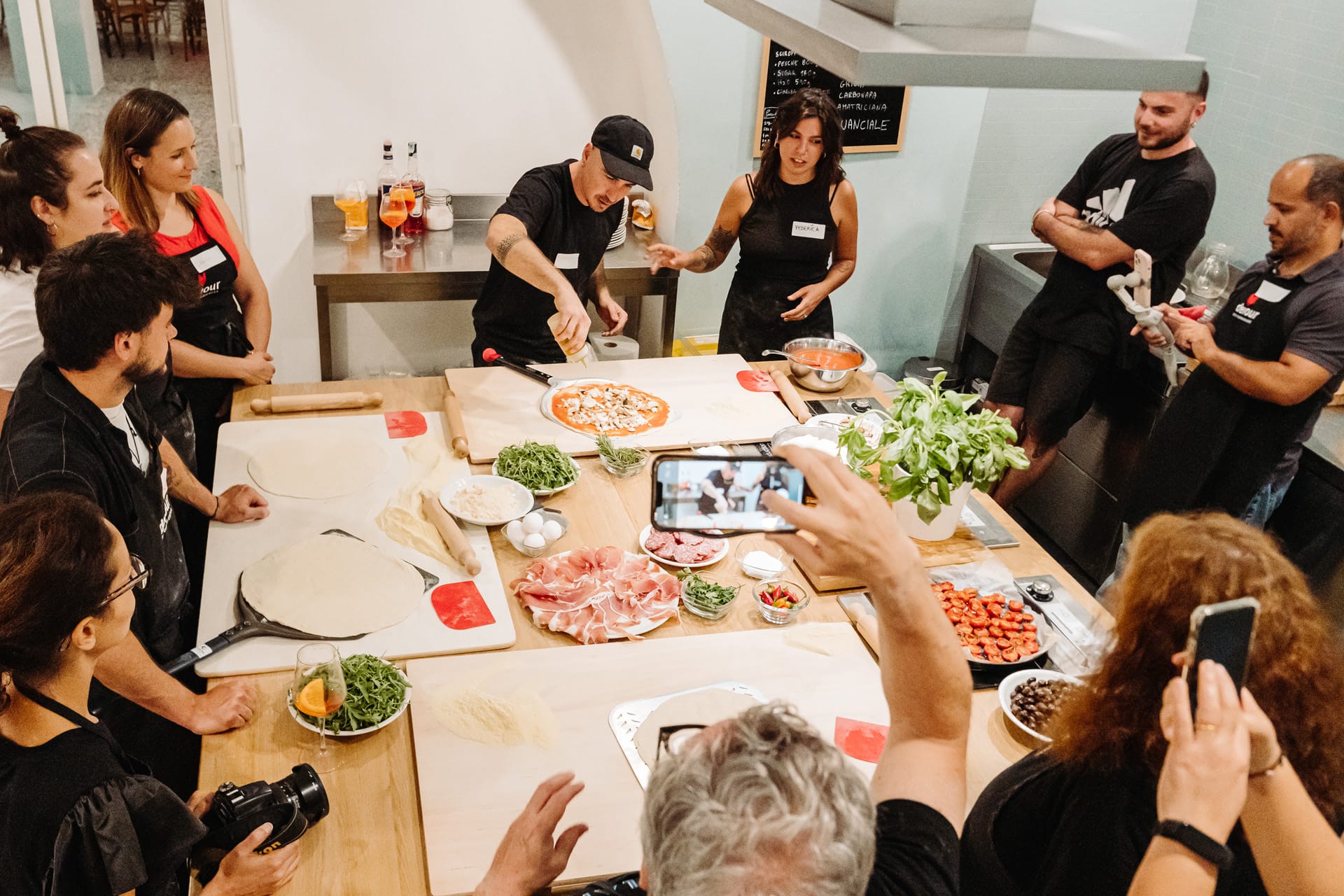
Learn how to make traditional pizza or pasta in Rome, a gift for life!
If reading about food traditions in Rome, and the winter and Christmas dishes has made your mouth water, why not taste them for yourself?
Join a Rome Food Tour and step into local markets, cozy trattorias, and family-run bakeries where these timeless recipes come to life. From warm supplì and fresh pasta to traditional breads and desserts like pangiallo, you’ll discover the flavors, stories, and people behind Rome’s most beloved food traditions.
Or if you´re feeling more adventurous – why not join in the fun in the kitchen and book a Cookery Class and learn how to cook like a true Roman!

Book a Tour

Pristine Sistine - The Chapel at its Best
€89

1794 reviews

Premium Colosseum Tour with Roman Forum Palatine Hill
€56
850 reviews
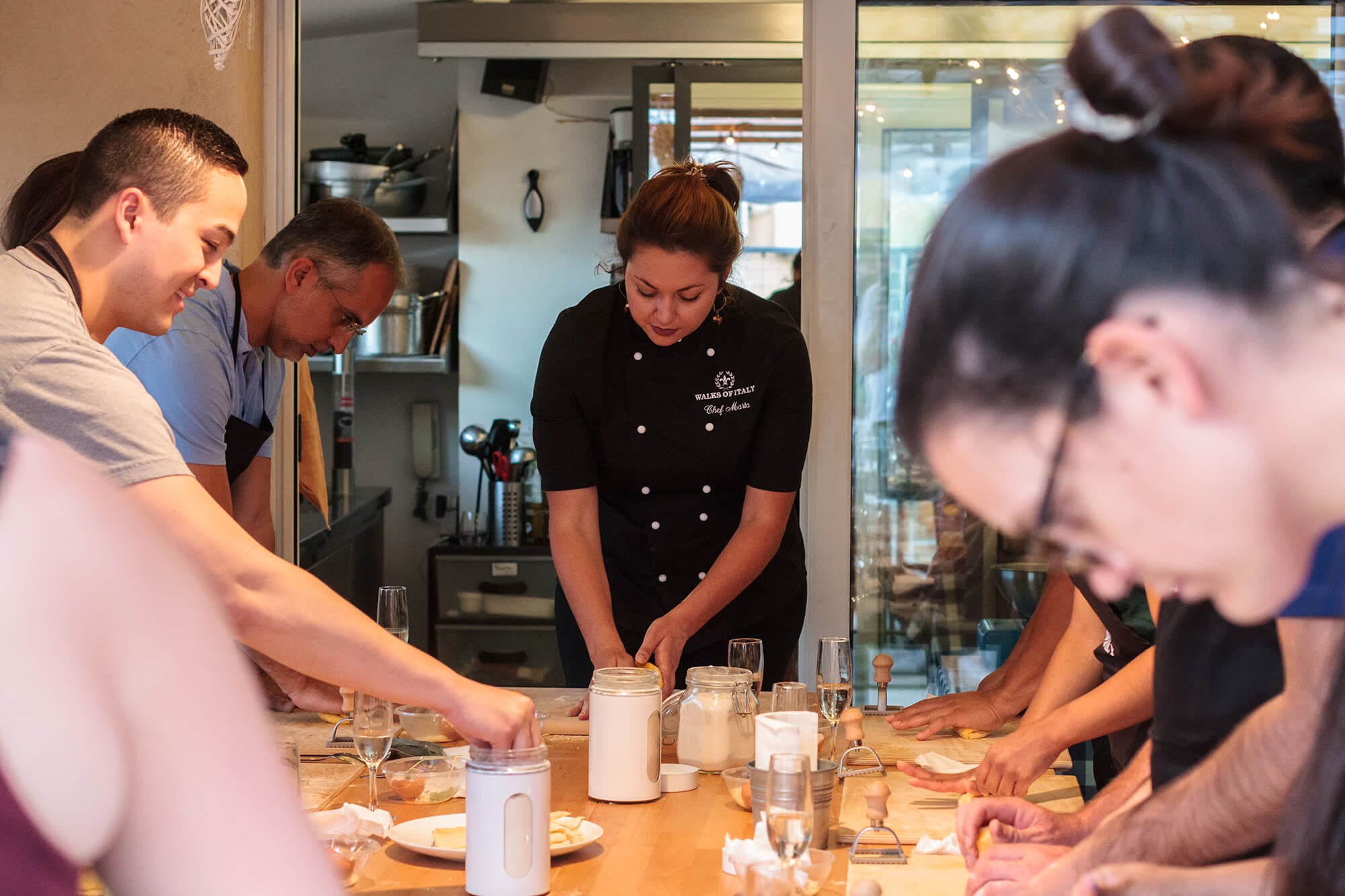
Pasta-Making Class: Cook, Dine Drink Wine with a Local Chef
€64
121 reviews

Crypts, Bones Catacombs: Underground Tour of Rome
€69
401 reviews

VIP Doge's Palace Secret Passages Tour
€79
18 reviews

Legendary Venice: St. Mark's Basilica, Terrace Doge's Palace
€69
286 reviews
You May Also Like
Follow us
Stay up to date with travel tips, local insights and all things Italy on our social channels!


Subscribe to our Newsletter
Get curated Italy travel tips delivered to your inbox!

