




Prehistoric Italy: 5 Fascinating Sites with Italy’s Oldest Ruins
December 15, 2025
The archaeological sites in Pompeii and Rome are undeniably fascinating, but believe it or not, they’re far from the oldest ancient ruins in Italy. Long before the rise of the Roman Empire, and even before written history, early civilizations were already leaving their mark on the Italian landscape. From mysterious stone carvings and monumental tombs to cave dwellings carved directly into rock, prehistoric Italy offers a rare glimpse into how the earliest Italian inhabitants lived, worshipped, and survived.
If you’re curious to go beyond the usual highlights and discover a deeper, lesser-known layer of Italian history, exploring prehistoric Italy is a rewarding place to start. Often located off the beaten path and far less crowded than Italy’s famous ruins, these sites feel raw, atmospheric, and remarkably untouched by time. Here are five of our favorite prehistoric sites in Italy, with origins dating all the way back to the 8th millennium B.C.
5 sites of “Prehistoric Italy”
The “Prehistoric Pompeii” of the Avellino eruption
Footprints from the Avellino eruption
Some 2,000 years before Pompeii was destroyed, Mt. Vesuvius blew its top in a catastrophe dubbed the Avellino Eruption. Despite the different name, it had similar consequences for nearby towns as it would in 79 A.D.
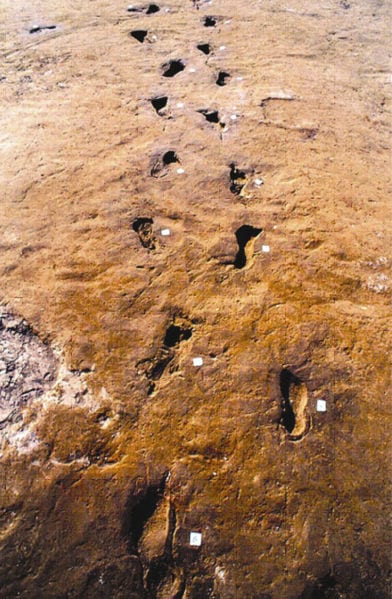
One Bronze Age village, Nola, at Croce del Papa in Campania, was “frozen in time,” complete with huts, pottery, and footprints of fleeing inhabitants. Even furniture was preserved. This unprecedented find was one of the most important for Bronze Age archaeology in the world!
Unfortunately, the prehistoric Italian village of Nola is currently closed because of water damage—but stay tuned to find out when it might reopen.
Giants’ graves of Sardinia
The “giants’ graves” of Sardinia
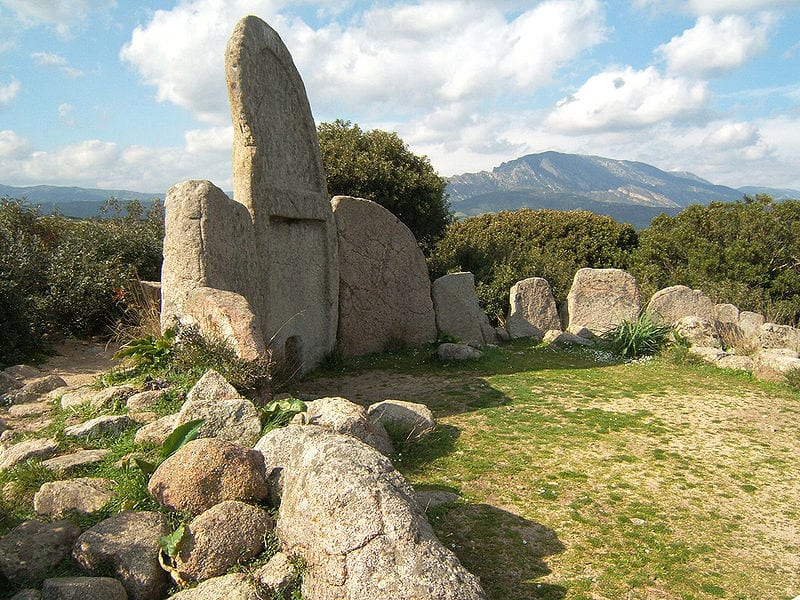
There’s more to visiting Sardinia than sun and sand (Although Sardinia does have one of the best beaches in Italy. The Nuragic civilization reigned here from about the 18th century B.C. all the way up to the 2nd century A.D. And, not surprisingly, they left a mark! One of our favorites are the “Giants’ Graves”—monumental tombs—that date all the way back to the Bronze Age. So far, 321 have been found across the island! You don’t need to see all them, but one or two should be one your list of what to do in Sardinia.
Nuraghi of Sardinia
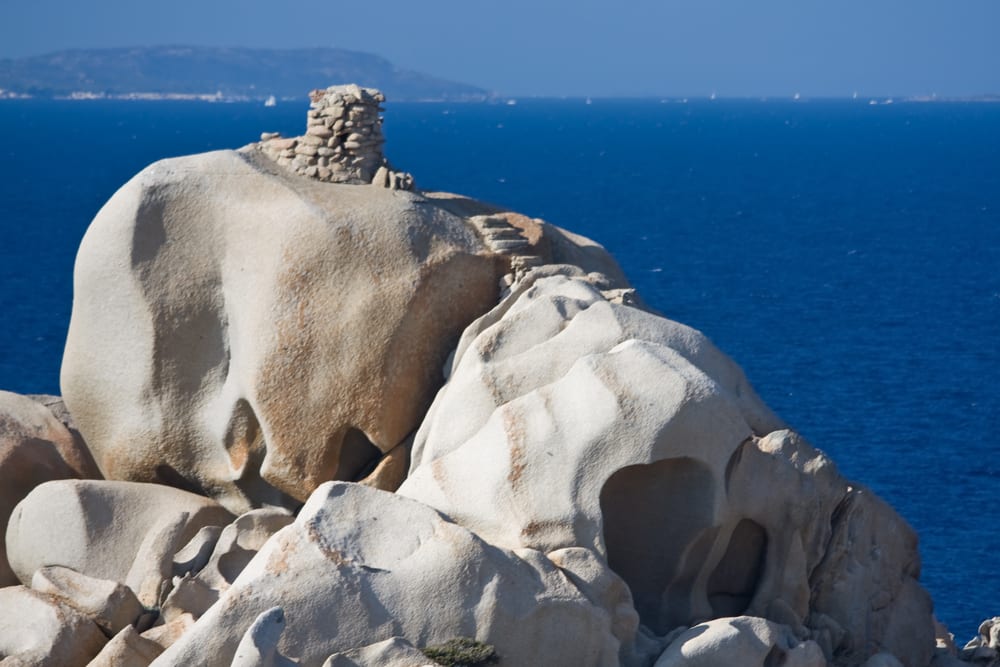
Prehistoric nuragh in Sardinia
As well as the Giants’ graves (and as well as temples, sacred pits, and other fascinating remnants), the people of the Nuragic civilization left behind these unusual structures – stoney constructions that have been compared to beehives. We call them nuraghi (or nuraghe) if there is only one, but we don’t know what they were for. Dwelling? Temple? Fortification? This site from prehistoric Italy remains an enigma.
What makes the mystery even more compelling is that there are so many nuraghi on such a small island. Nearly 7,000 nuraghi stand like forgotten sentinels on the mediterranean landscape, guarding over a culture long disappeared.
Neolithic caves of Matera
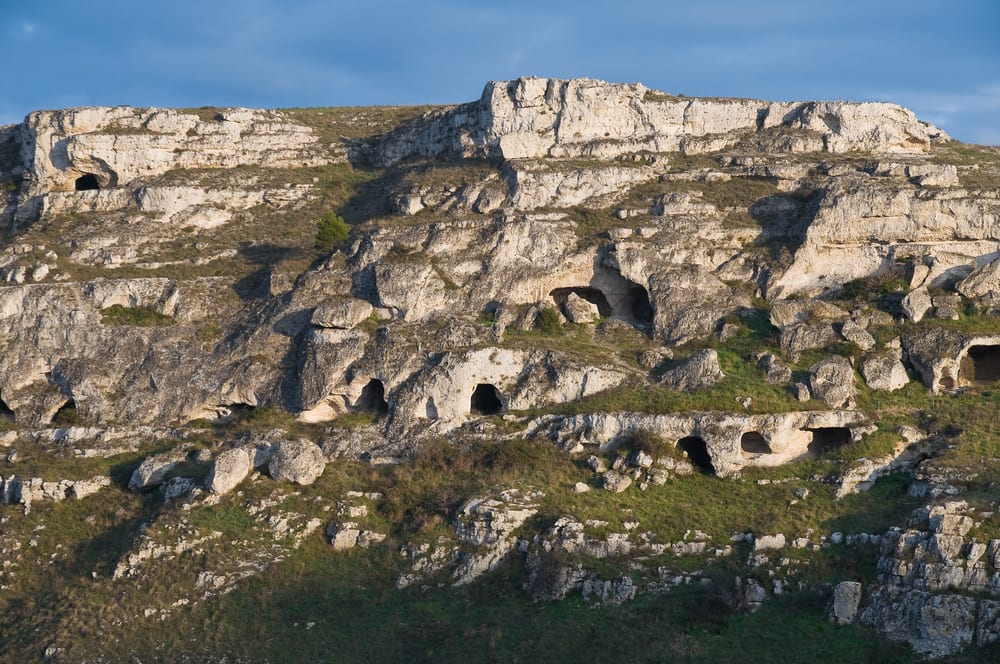
Matera’s Neolithic caves
The hauntingly beautiful settlement of Matera, located in the southern region of Basilicata, is home to one of the first human settlements in Italy. As early as the 13th century B.C., Paleolithic settlers carved cave-dwellings out of the rocks. But what makes it perhaps the most unique of Italy’s early settlements is that more than 3,000 years later, people continue to live in these Sassi di Matera. Matera is also a must-see for its many other buildings carved from the stone, including, most famously, its frescoed churches. If you want to go, read our 7 tips for visiting Matera first.
The Stone carvings of Val Camonica

The stone carvings of Val Camonica
If you’re going to be near northern Italy’s Lake Como or Lake Garda, then don’t miss Val Camonica, one of the largest valleys in the Italian Alps. This valley is home to not only medieval villages and imposing castles, but also to the largest collection of stone carvings, not just in prehistoric Italy, but in all of Europe, with more than 300,000 pieces. The earliest of the carvings date back to the 8th millennium B.C., or the Mesolithic period! The collection is so important, it actually was the first UNESCO-recognized World Heritage site in Italy.
FAQ´s – Prehistoric Italy
How can I visit Italy’s prehistoric sites without a car?
Some prehistoric sites are reachable by train or bus with planning, but many are in rural areas where public transport is limited. In several cases, renting a car or joining a guided excursion is the easiest way to visit multiple locations efficiently. This guide to prehistoric Italy highlights which sites are more remote so you can plan accordingly.
Which prehistoric sites are easiest to combine with a classic Italy itinerary?
Many travelers pair prehistoric sites with well-known destinations. For example, Val Camonica works well with a Lake Garda or Milan trip, while Matera fits neatly into southern Italy itineraries alongside Puglia or Naples. The article helps you spot which ancient sites are close to popular travel hubs.
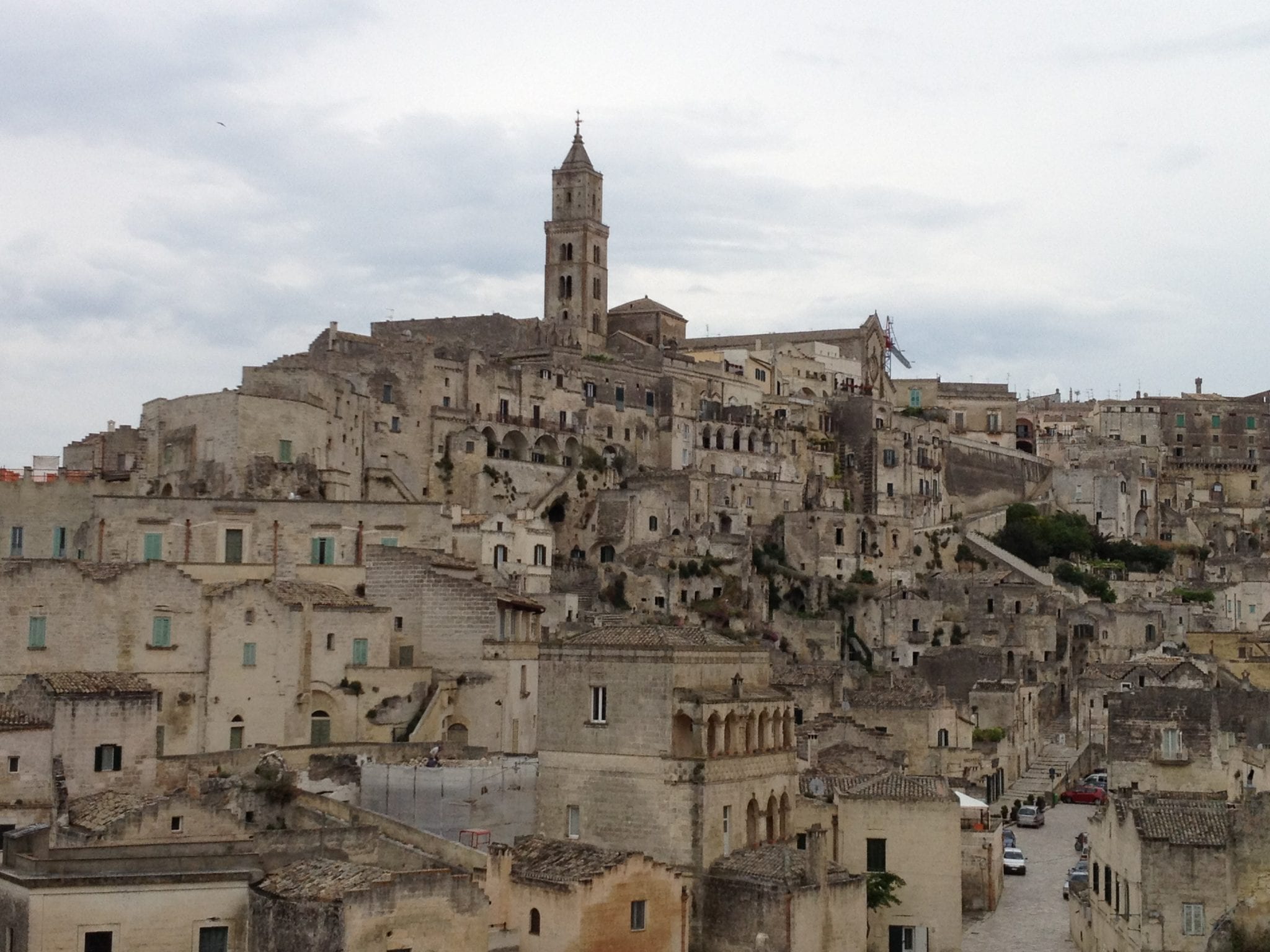
UNESCO World Heritage Sites in Southern Italy – Matera
Are Italy’s prehistoric sites suitable for families and casual visitors?
Yes, many sites feature open-air parks, walking trails, and visitor centers that make them accessible even without a background in archaeology. If you’re traveling with kids or prefer a relaxed pace, the locations featured in this prehistoric Italy guide include options that are both educational and easy to explore.

Exploring Italy’s prehistoric sites offers a fascinating glimpse into the country’s earliest past—but why stop there? Combine these off-the-beaten-path discoveries with a guided tour of Italy’s most iconic ancient sites for a richer, more complete experience. From walking the ruins of ancient Rome with an expert guide to uncovering daily life in Pompeii, a guided tour brings context, stories, and depth that you simply can’t get on your own.
Visit the Walks of Italy website to discover expertly led tours in Italy’s major cities, and create an itinerary that connects prehistoric Italy with the classical world—from ancient cave dwellings and stone carvings to legendary Roman cities frozen in time. It’s the perfect way to blend hidden history with Italy’s most famous archaeological treasures, all in one unforgettable trip.


Book a Tour

Pristine Sistine - The Chapel at its Best
€89

1794 reviews

Premium Colosseum Tour with Roman Forum Palatine Hill
€56
850 reviews

Pasta-Making Class: Cook, Dine Drink Wine with a Local Chef
€64
121 reviews

Crypts, Bones Catacombs: Underground Tour of Rome
€69
401 reviews

VIP Doge's Palace Secret Passages Tour
€79
18 reviews

Legendary Venice: St. Mark's Basilica, Terrace Doge's Palace
€69
286 reviews
Follow us
Stay up to date with travel tips, local insights and all things Italy on our social channels!


Subscribe to our Newsletter
Get curated Italy travel tips delivered to your inbox!

