








Roman Colosseum Underground – What Was Under the Colosseum?
June 15, 2026
Following a major restoration, completed in 2023, the Colosseum Underground (Hypogeum) is now one of the most fascinating areas of Ancient Rome to explore. Carefully restored walkways and new visitor routes allow guests to discover the hidden backstage world where gladiators, animals, and stage crews prepared for the spectacles that captivated thousands of Romans.
Join a VIP Colosseum Underground Tour to walk in the footsteps of the gladiators!
What’s special about the Colosseum Underground?
Putting on the greatest shows of antiquity in the Colosseum required a lot of logistics.
Gladiators trained in specialised schools (ludi) before arriving at the Colosseum for combat. Animals were imported from across the Roman Empire, including North Africa and the Middle East. And on the days of the games, everything needed to go off without a hitch.
That’s why the architects of the Colosseum built in one of the greatest “backstages” that has ever existed – the Colosseum Underground or hypogeum.
This area is where gladiators waited before their battles and also where wild animals were kept before being let out during the shows known as venationes, in which a specialized gladiator hunted them for the crowd.
There were areas that housed trap doors through which the arena floor could be raised and lowered, which played an immensely important role in the games to create crowd-pleasing effects.
Insider tip: If you find these details as fascinating as we do, check out our facts about the colosseum. to discover more about this ancient world.
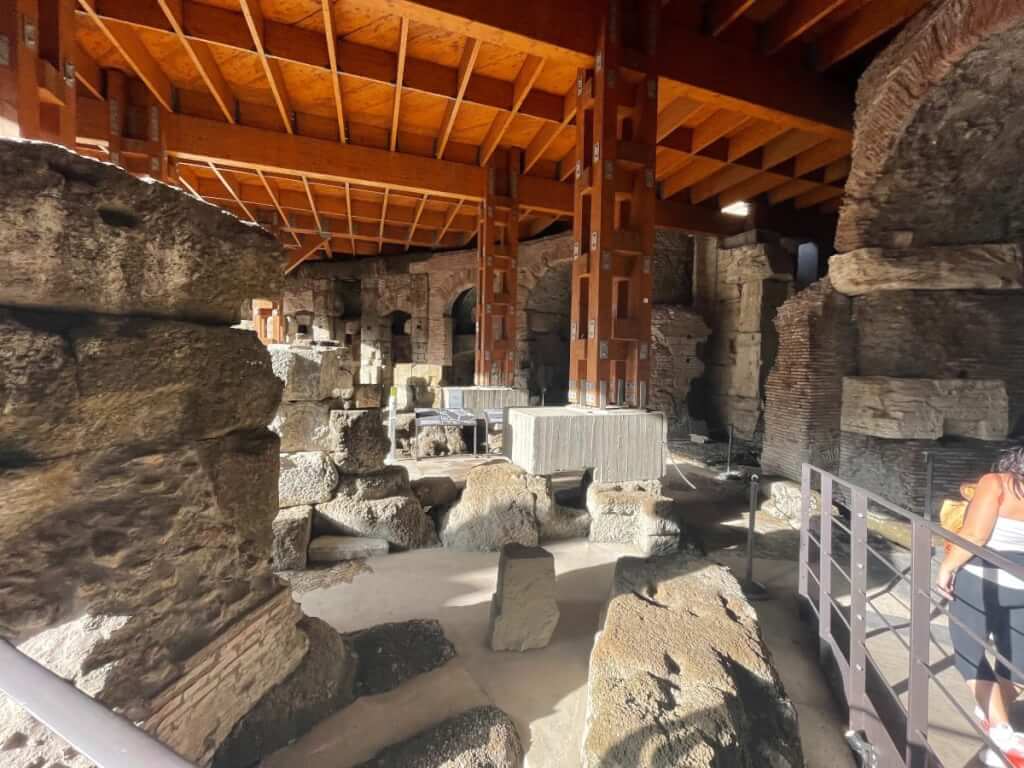
The 2 year renovation from 2021 to 2023 allowed area of the Colosseum Underground to reopen
What Colosseum renovations were needed and why?
Although millions visit the Colosseum every year, the underground chambers remained inaccessible for much of their history. Centuries of earthquakes, weather damage, pollution, and heavy tourism had taken their toll on the fragile masonry and passageways beneath the arena floor.
The underground of the Colosseum actually only opened to the public for the first time in 2011, and there was lots of press and excitement. However, unfortunately it fluctuated between being open and closed for the next 10 years.
Beginning in 2021, archaeologists and conservation specialists undertook a comprehensive restoration of the Hypogeum, completing the project in 2023. The work included cleaning brickwork, reinforcing ancient walls, restoring drainage systems, installing modern lighting, and creating elevated walkways that allow visitors to explore the space without damaging the original Roman structures.
The restoration also dramatically improved accessibility, replacing previously uneven surfaces with carefully designed routes that preserve the archaeology while allowing visitors to experience much more of the underground than ever before.
Today, the Colosseum Underground offers one of the most immersive ways to understand how Rome’s greatest amphitheatre actually functioned behind the scenes.
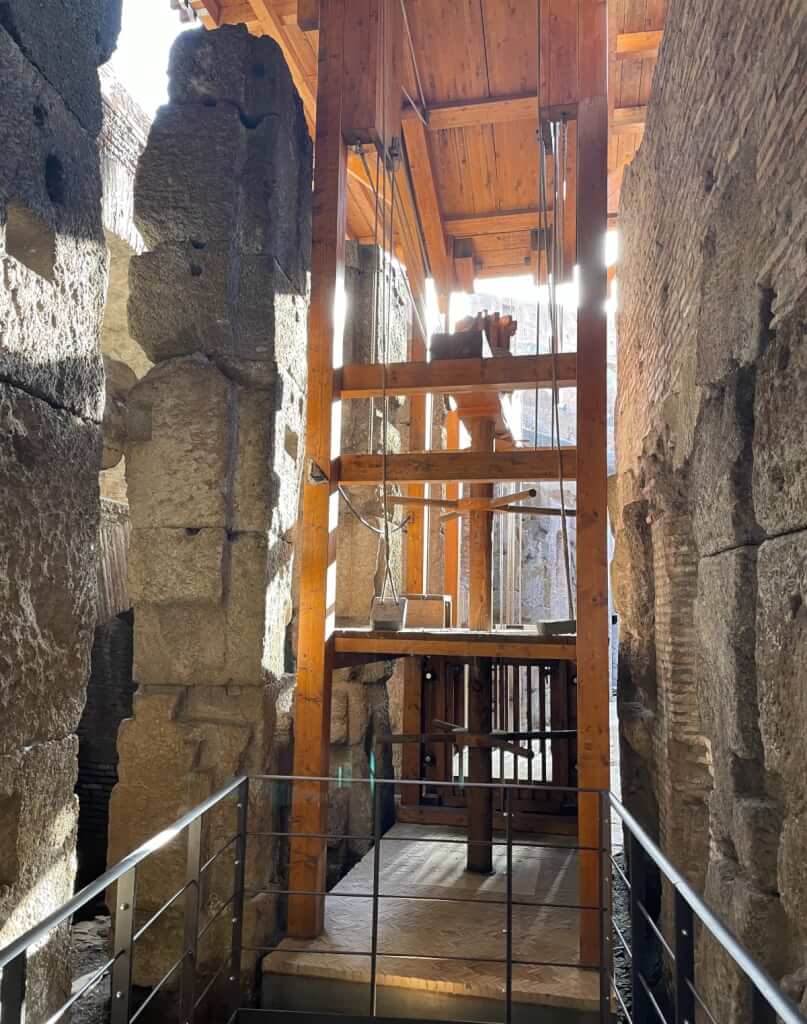
Gain an insight into the underground world of the Colosseum and its theatrical tricks!
Exploring the Colosseum Underground Levels
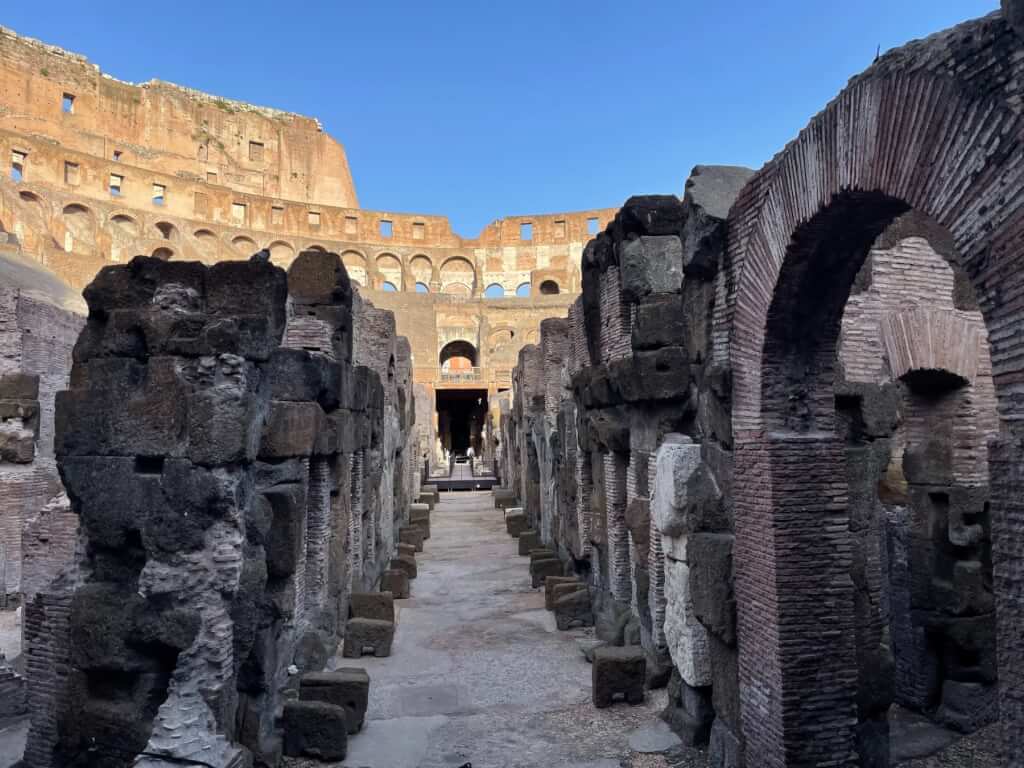
Known by its Latin name, the Hypogeum (“underground”), this vast network stretches beneath almost the entire arena floor and covers approximately half a hectare (around 5,000 square metres).
Rather than a single basement, the underground consists of two interconnected levels of corridors, chambers, cages, storage rooms, and mechanical systems that supported the spectacles above.
The Upper Level of the Hypogeum
The upper level functioned as the main circulation area. Here, gladiators waited for their contests while stage crews coordinated performances. Animals imported from across the Roman Empire were housed in cages connected to wooden elevators and trapdoors that opened directly onto the arena floor.
The Lower Level of the Hypogeum
The lower passages contained additional storage rooms, service corridors, and the complex machinery that powered the Colosseum’s special effects. More than 80 vertical shafts and lifts, operated by teams of workers using ropes and capstans, could raise animals, scenery, and even elaborate stage sets into the arena within seconds.
This remarkable engineering transformed the Colosseum into one of the most sophisticated entertainment venues of the ancient world. Visitors walking through the underground today can still see the grooves, sockets, and foundations that once supported this extraordinary system.
Far from being simply a holding area, the Hypogeum was the operational heart of the Colosseum, the backstage network that made Rome’s spectacular games possible.
Fun fact: Did you know that they have even discovered graffiti at the colosseum?
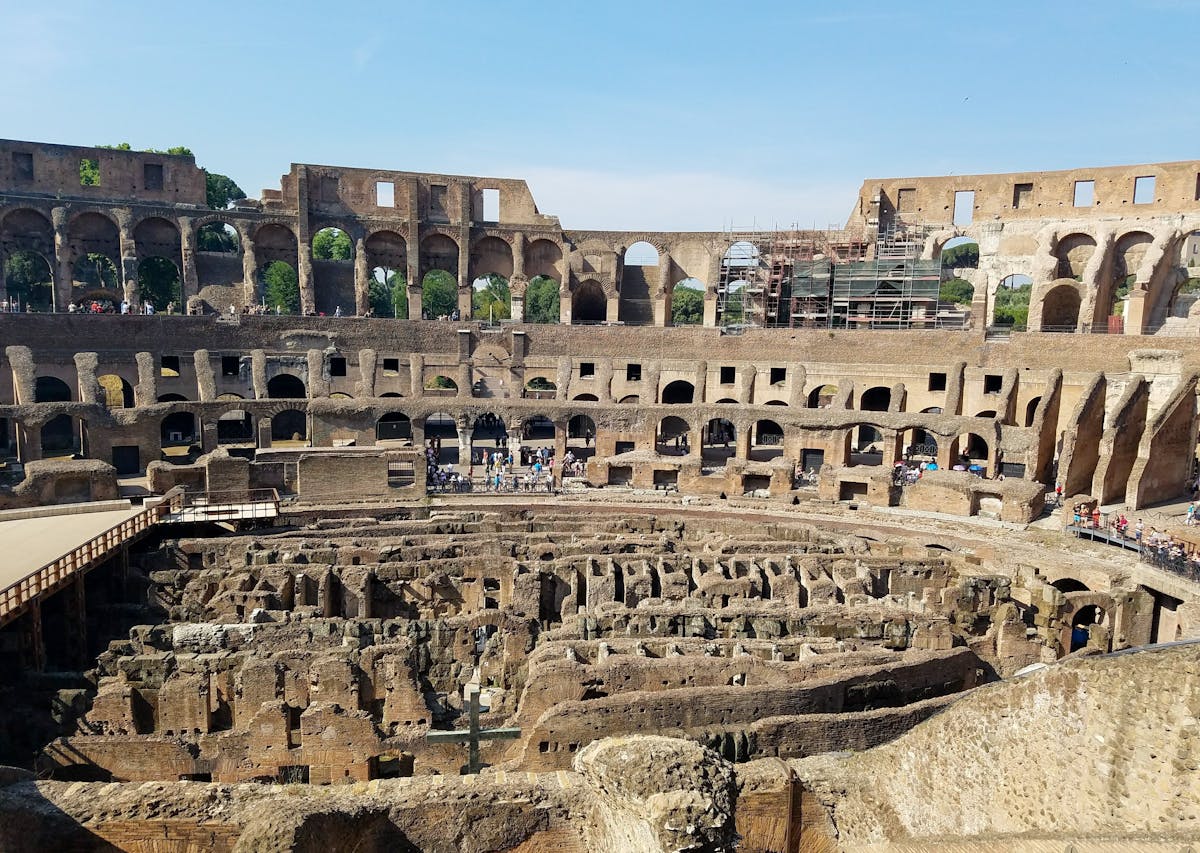
The interior floor of Rome’s ancient Colosseum.
Choosing the Right Colosseum Ticket
One of the biggest surprises for first-time visitors is that not all Colosseum tickets include access to the same areas.
A standard ticket lets you explore the first and second levels, while other ticket types unlock exclusive spaces such as the Arena Floor, the Gladiator’s Gate, the Underground (Hypogeum), or even the panoramic upper levels known as the Attic.
Each experience offers a completely different perspective on Ancient Rome, whether you want to stand where gladiators once fought, descend beneath the arena to explore the hidden tunnels, or enjoy spectacular views from above.
Insider Tip: Before booking, make sure you understand what each ticket includes. Read our guide to Colosseum tickets explained to compare the different options and choose the best one for your visit.

Get ready to explore the Colosseum!
FAQs – the Colosseum Underground
How long does it take to visit the Colosseum Underground?
If you’re visiting with a guided tour, expect to spend around 2.5 to 3 hours exploring the Colosseum, Underground Hypogeum, Roman Forum, and Palatine Hill. The Hypogeum section itself usually lasts around 30–45 minutes, giving you plenty of time to appreciate the tunnels, chambers, and engineering before continuing to the other archaeological sites.
What should I wear for a Colosseum Underground tour?
Comfortable walking shoes are essential, as you’ll be navigating uneven ancient surfaces, stone pathways, and stairs. In summer, bring water, sunscreen, and a hat, as much of the visit takes place outdoors. Although the Hypogeum is shaded, the Roman Forum and Palatine Hill offer very little protection from the sun.
Is the Colosseum Underground accessible for visitors with mobility issues?
Accessibility has improved significantly thanks to the 2021–2023 restoration project, with new walkways and safer visitor routes installed throughout the Underground. However, the archaeological site still includes steps, uneven surfaces, and narrow passages, meaning some areas may not be suitable for wheelchair users or visitors with limited mobility. It’s always best to check the accessibility information before booking.
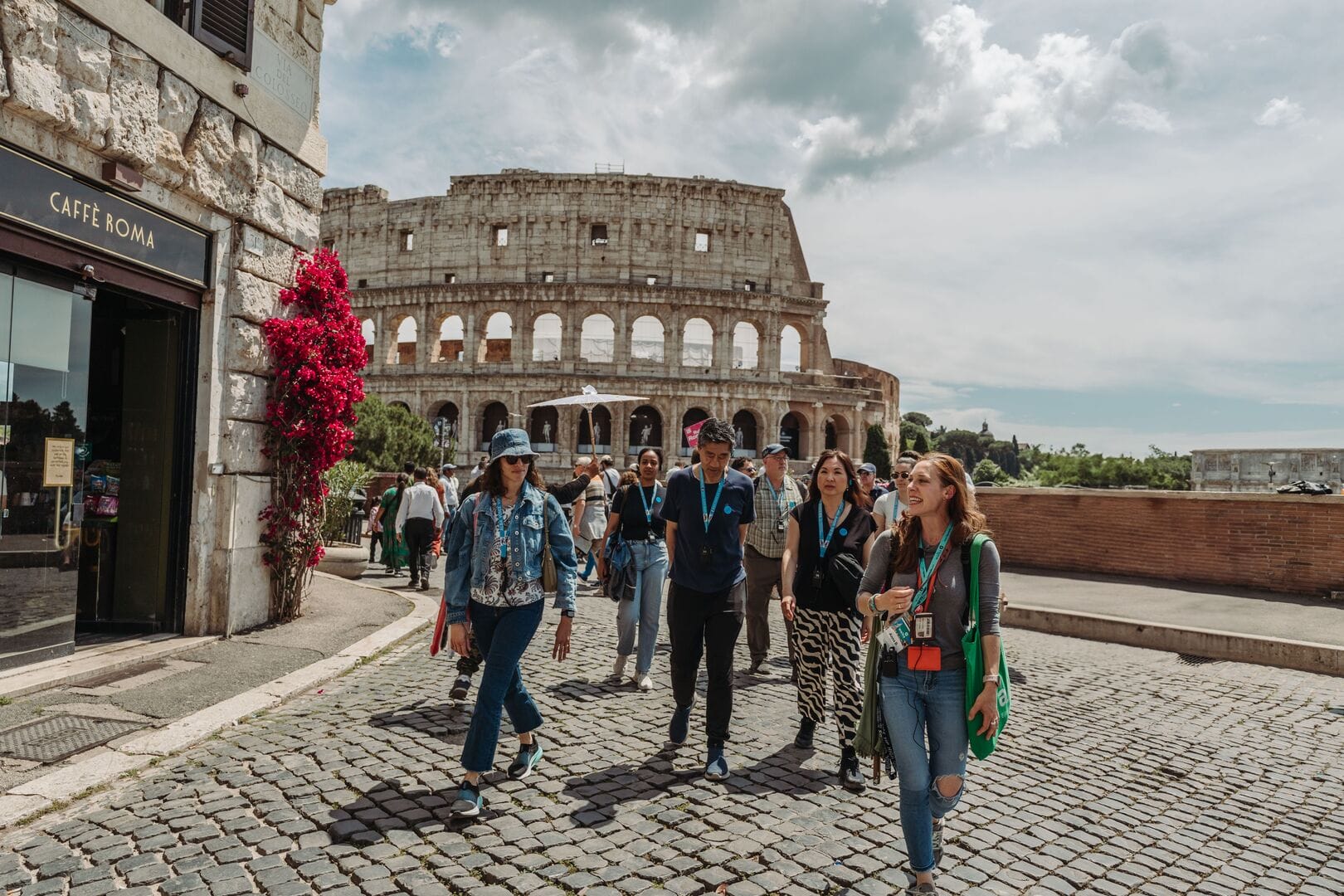
Walk in the footsteps of the Ancient Roman civilisation, and learn more with an expert guide!
Ready to experience Ancient Rome from a whole new perspective?
Join our VIP Colosseum Underground Tour and explore the hidden tunnels where gladiators prepared for battle and ingenious Roman engineering brought spectacular games to life.
Your journey doesn’t end beneath the arena. You’ll also discover the Roman Forum and Palatine Hill with an expert guide, connecting the stories of emperors, citizens, and gladiators as you explore the political, religious, and social heart of one of history’s greatest civilizations.

Book a Tour

Pristine Sistine - The Chapel at its Best
€89

1794 reviews

Premium Colosseum Tour with Roman Forum Palatine Hill
€56
850 reviews

Pasta-Making Class: Cook, Dine Drink Wine with a Local Chef
€64
121 reviews

Crypts, Bones Catacombs: Underground Tour of Rome
€69
401 reviews

VIP Doge's Palace Secret Passages Tour
€79
18 reviews

Legendary Venice: St. Mark's Basilica, Terrace Doge's Palace
€69
286 reviews
Follow us
Stay up to date with travel tips, local insights and all things Italy on our social channels!


Subscribe to our Newsletter
Get curated Italy travel tips delivered to your inbox!

