







Graffiti in the Colosseum – What Did the Colosseum Originally Look Like ?
June 17, 2026
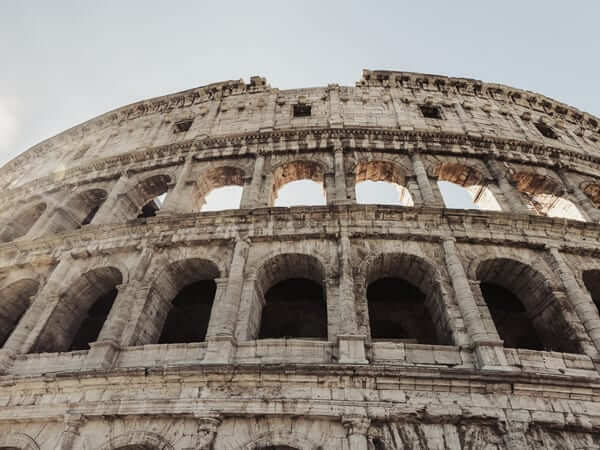
Today, visitors see the Colosseum as a weathered monument of pale stone, but the big question is “what did the Colosseum originally look like?” Well, the simple answer is… “It looked dramatically different!” when it was built and used as an arena 2,000 years ago.
Brightly painted walls, gleaming marble statues, colourful awnings, and intricate decorations transformed Rome’s greatest amphitheatre into one of the most spectacular buildings in the ancient world.
While centuries of earthquakes, looting, and exposure have stripped away much of its decoration, archaeological discoveries continue to reveal how vibrant and sophisticated the Colosseum once was.
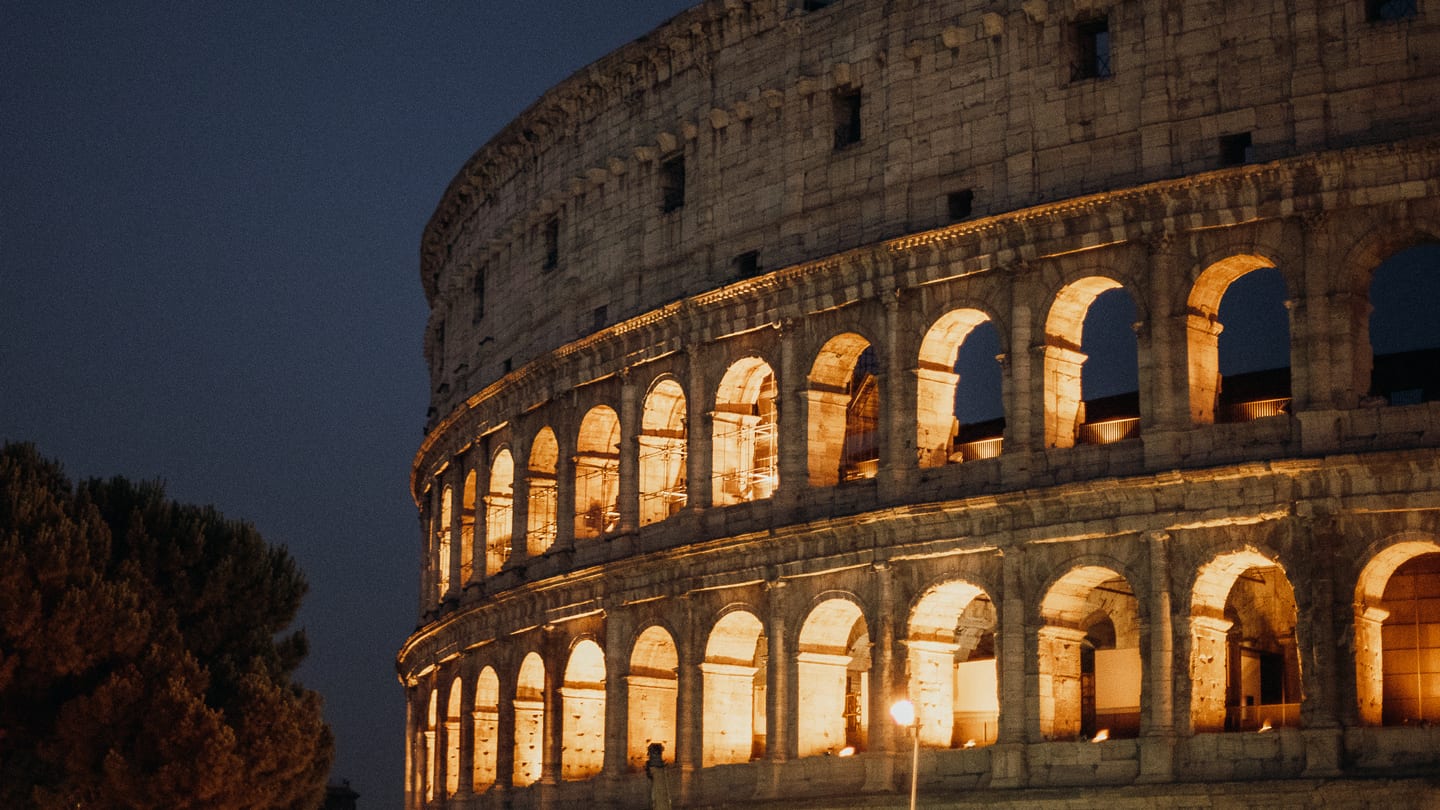
Although the Colosseum still looks incredible today, just imagine what it looked like 2000 years ago, in all it´s glory!
What Did the Colosseum Originally Look Like?
Forget the image of endless grey stone. The Roman Colosseum was designed to impress from every angle.
The exterior travertine blocks were accented with painted details in shades of red and white, while parts of the upper galleries featured vivid pigments that likely represented skies, architectural motifs, and decorative borders. Bronze shields and statues filled the arches, marble columns decorated entrances, and enormous fabric awnings (the velarium) shaded thousands of spectators.
Inside, the arena floor itself was covered in sand to absorb blood during gladiatorial contests, while colourful painted surfaces and polished stone created a far more elaborate setting than the ruins visitors see today.
Insider tip: If you’d like to discover more about the monument’s history, explore our guide to the Colosseum.
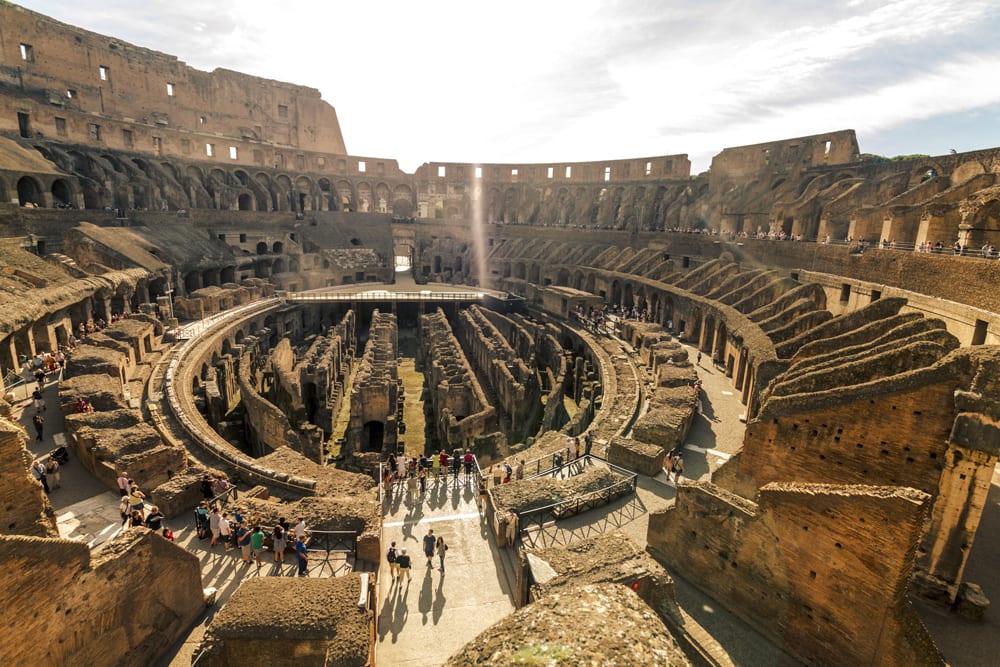
The arena floor, which has since disintegrated, was made of wood and covered in sand
The Hidden Colours of Ancient Rome
For generations people imagined Roman buildings as plain white marble. Modern archaeology has completely changed that perception.
Restoration work on the Colosseum’s upper galleries uncovered traces of original pigments, confirming that many surfaces were painted rather than left bare. Red was particularly prominent, appearing on architectural details throughout the monument, while other fragments suggest the use of white, blue, and additional decorative colours.
These discoveries remind us that Ancient Rome was a colourful city, where temples, statues, and public buildings were designed to dazzle visitors.
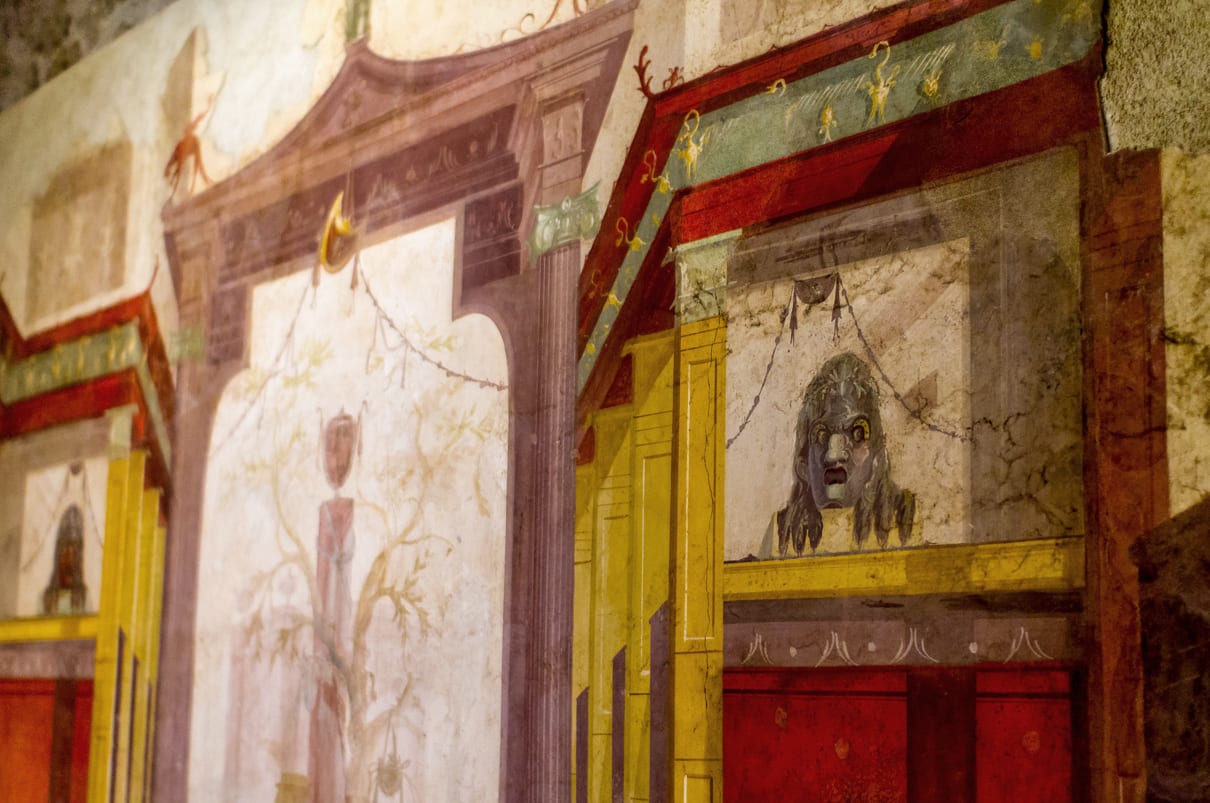
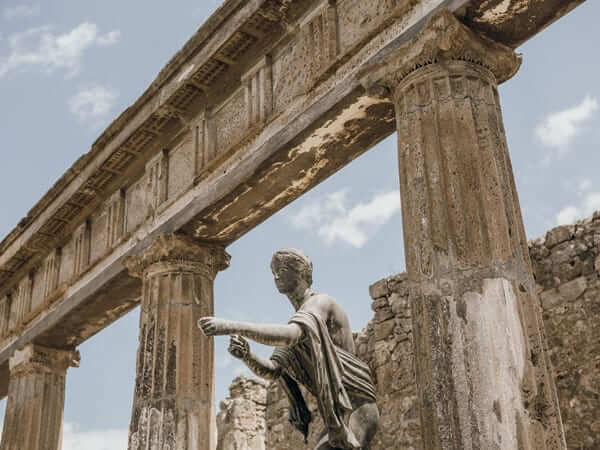
Another famous ancient building that is still standing in Rome – The House of Augustus – is incredibly well preserved and shows the vibrant colours used at the time!
See the Colosseum’s Graffiti for Yourself
One of the most fascinating discoveries inside the Colosseum isn’t a grand sculpture or mosaic, it’s graffiti left behind by ordinary Romans.
Restoration of the upper levels revealed hundreds of inscriptions scratched into the walls. Some celebrate popular gladiators, while others contain names, symbols, and drawings left by ancient visitors.
Among the most unusual are carved phalluses, a common Roman symbol believed to bring good fortune and protect against bad luck. Archaeologists believe many of these may date from repairs following the fire of AD 217.
These simple markings provide a remarkably personal connection with the people who once filled the amphitheatre almost two millennia ago.
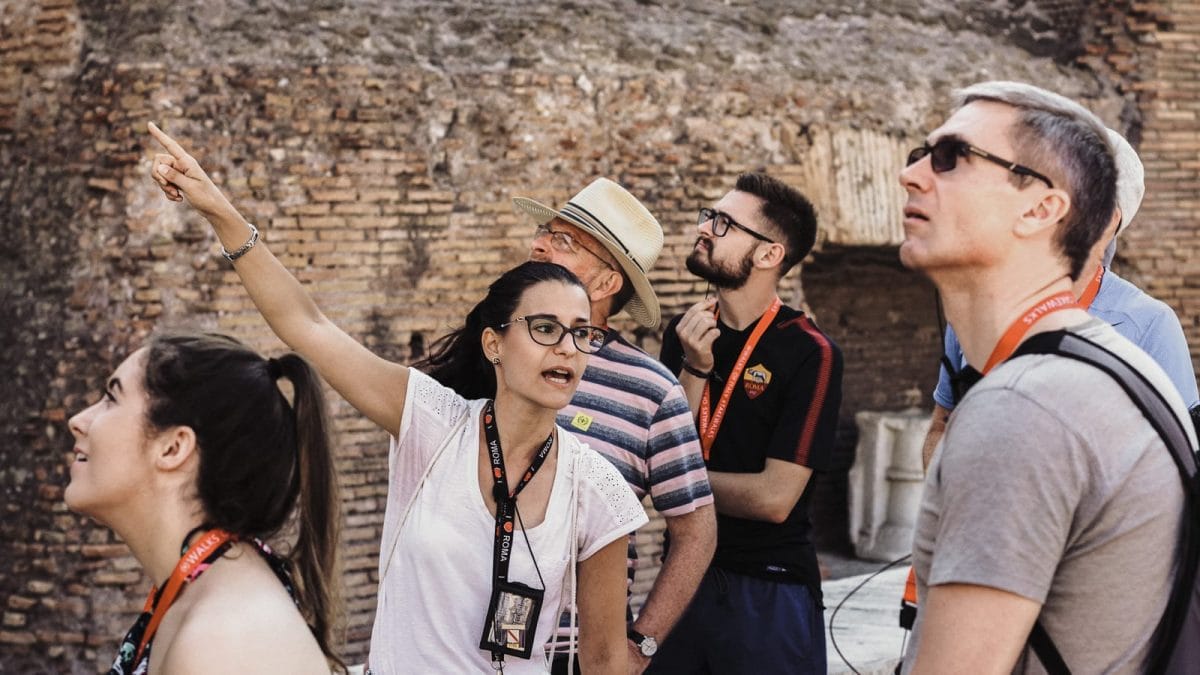
Expert local guides can point out the interesting things that many independent visitors may miss
Can You Visit the Colosseum’s Upper Levels?
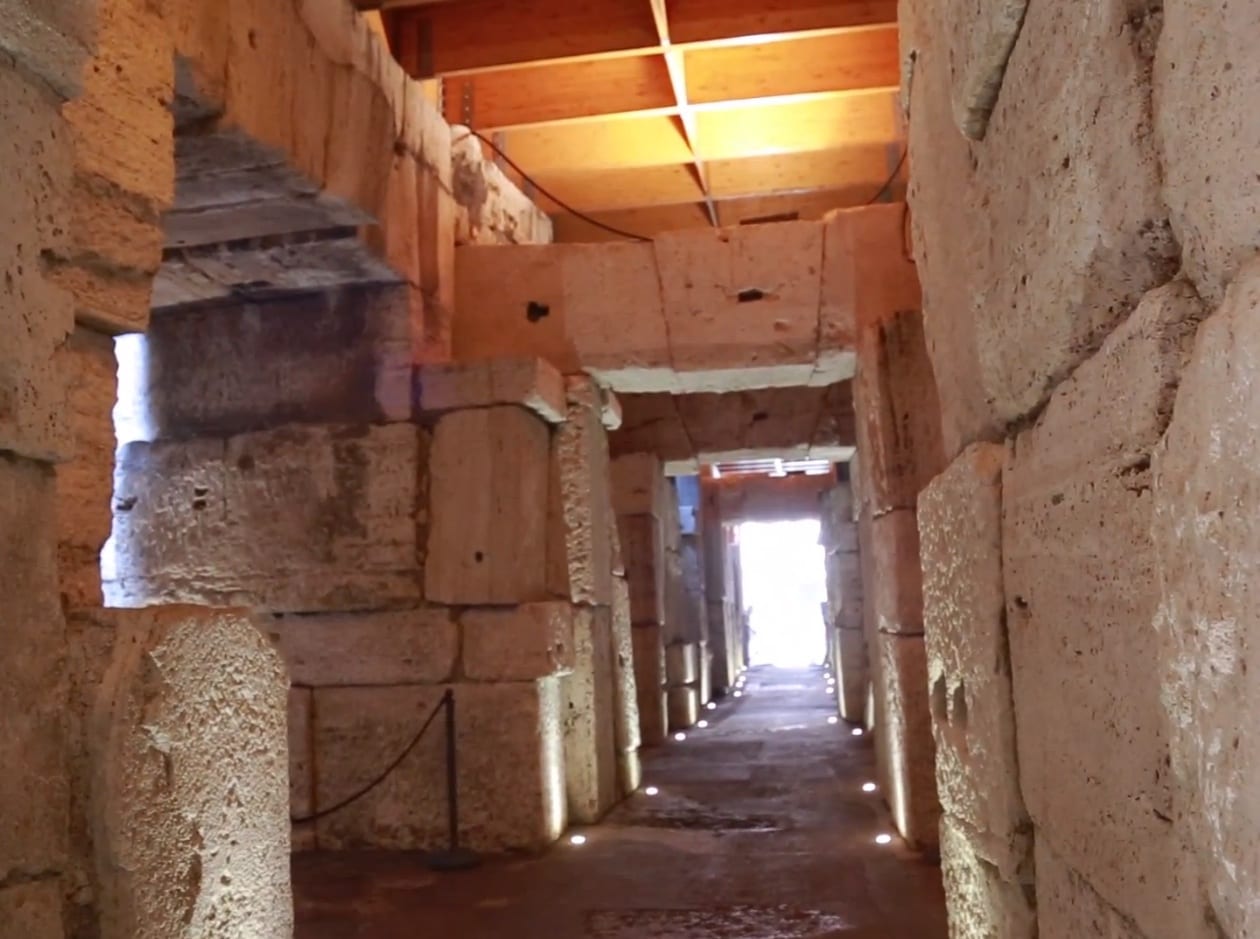
Yes, but access is limited. The third gallery, where many of the painted surfaces and graffiti were discovered, is only accessible through selected ticket types and guided experiences and is not included with every Colosseum admission ticket.
Many visitors instead choose to take a guided tour to visit the Colosseum underground, exploring the Hypogeum where gladiators and wild animals waited before entering the arena. This restricted-access area offers one of the most immersive experiences inside the monument.
Insider tip: Before booking, it’s worth reading our guide to Colosseum tickets explained, which compares the different areas included with each ticket type.
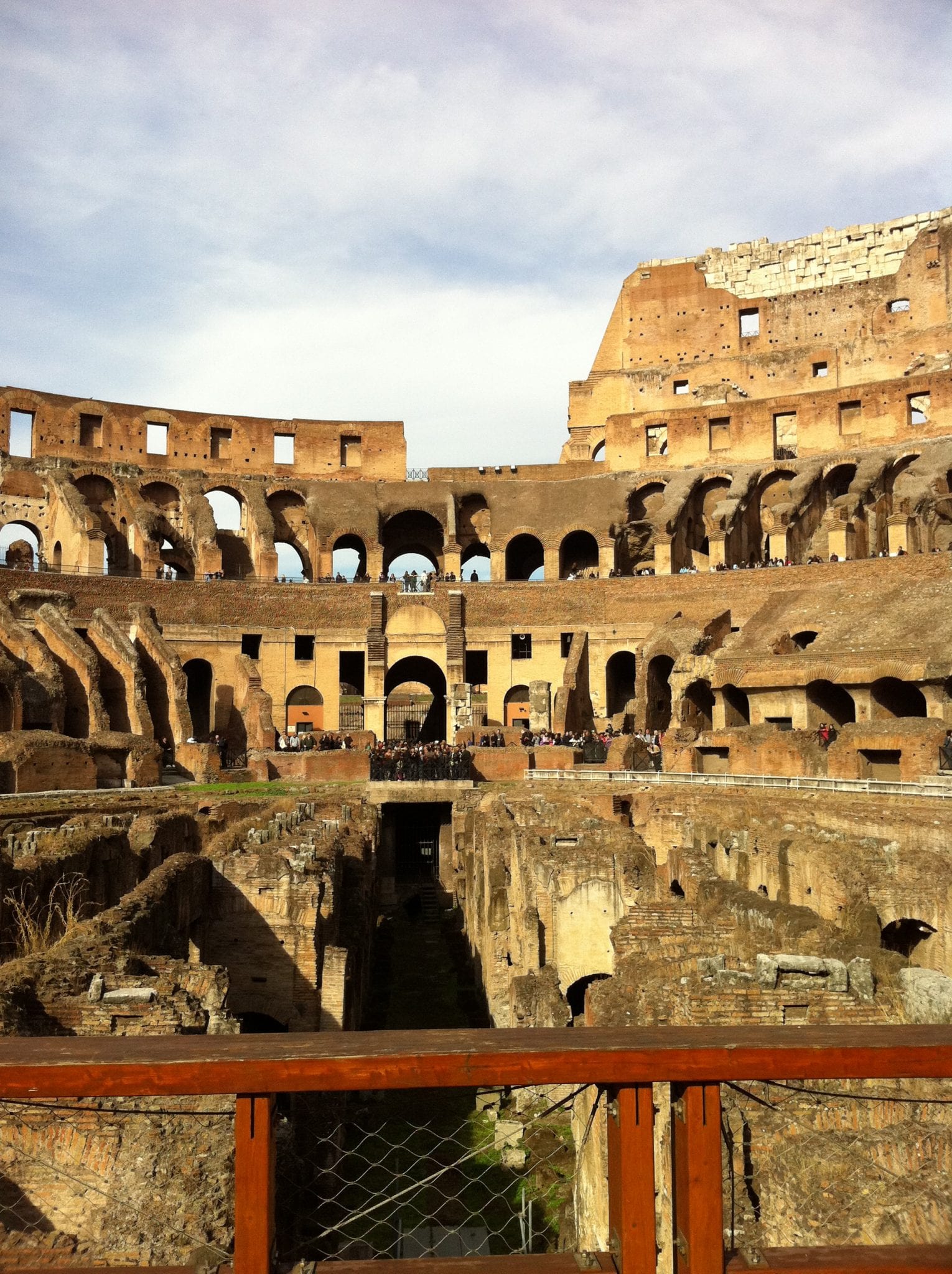
The view of the Colosseum’s third gallery
The Colosseum Underground and Behind-the-Scenes Rome
While the colourful upper galleries reveal what spectators saw, the Colosseum Underground tells the story of everything happening behind the scenes.
This maze of tunnels, cages, lifts, and service corridors powered Rome’s greatest spectacles, allowing gladiators, animals, and elaborate stage scenery to appear dramatically in the arena above.
Together, the underground chambers and upper galleries provide a much richer understanding of how this extraordinary building functioned.
Insider tips: For even more fascinating insights, discover these facts about the Colosseum before your visit.
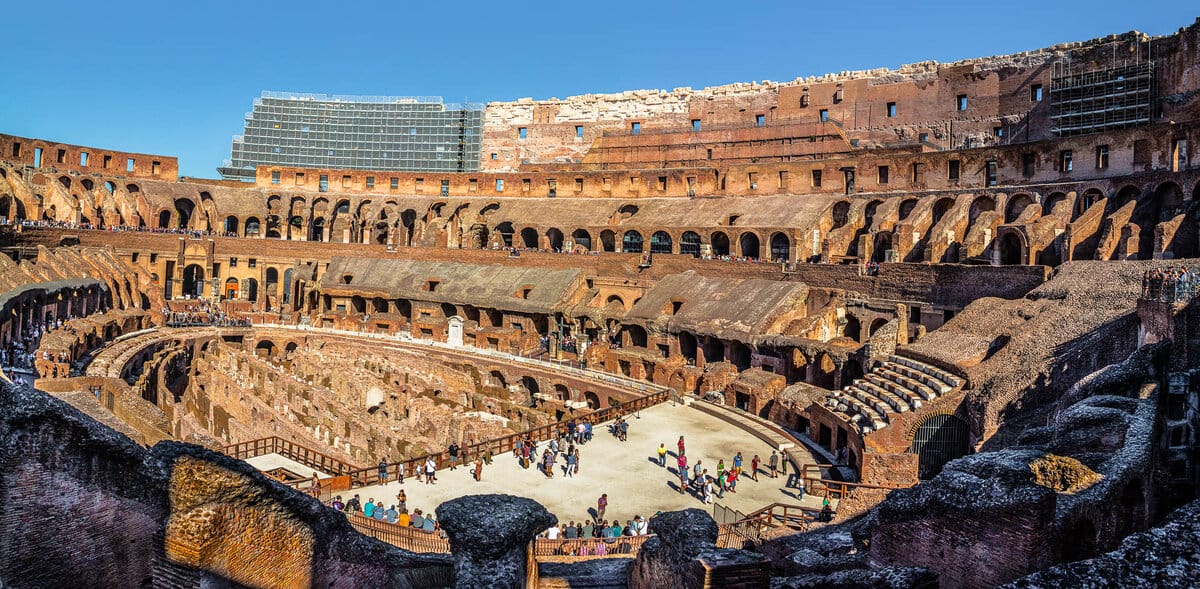
Try to imagine the Colosseum as it was back then, the same gargantuan size but decorated in vibrant colours, what a sight it must have been!
FAQs – What did the Colosseum Originally look like?
Can you still see the Colosseum’s original paint?
Yes. Small traces of original pigments survive on parts of the upper galleries and architectural details. Although most of the decoration has disappeared over the centuries, restoration work has revealed evidence that the monument was once richly coloured.
Where can you see the Colosseum’s ancient graffiti?
The best-preserved graffiti is located in the upper gallery levels, where visitors can find inscriptions, symbols, and carvings left by Romans almost 2,000 years ago. Access is available only through selected tickets or guided visits.
What’s the best way to experience the Colosseum?
Many visitors combine the Arena Floor, Underground, Roman Forum, and Palatine Hill for the most complete experience. A guided tour of Rome offers expert insight into the history, architecture, and hidden stories behind one of the world’s greatest monuments.
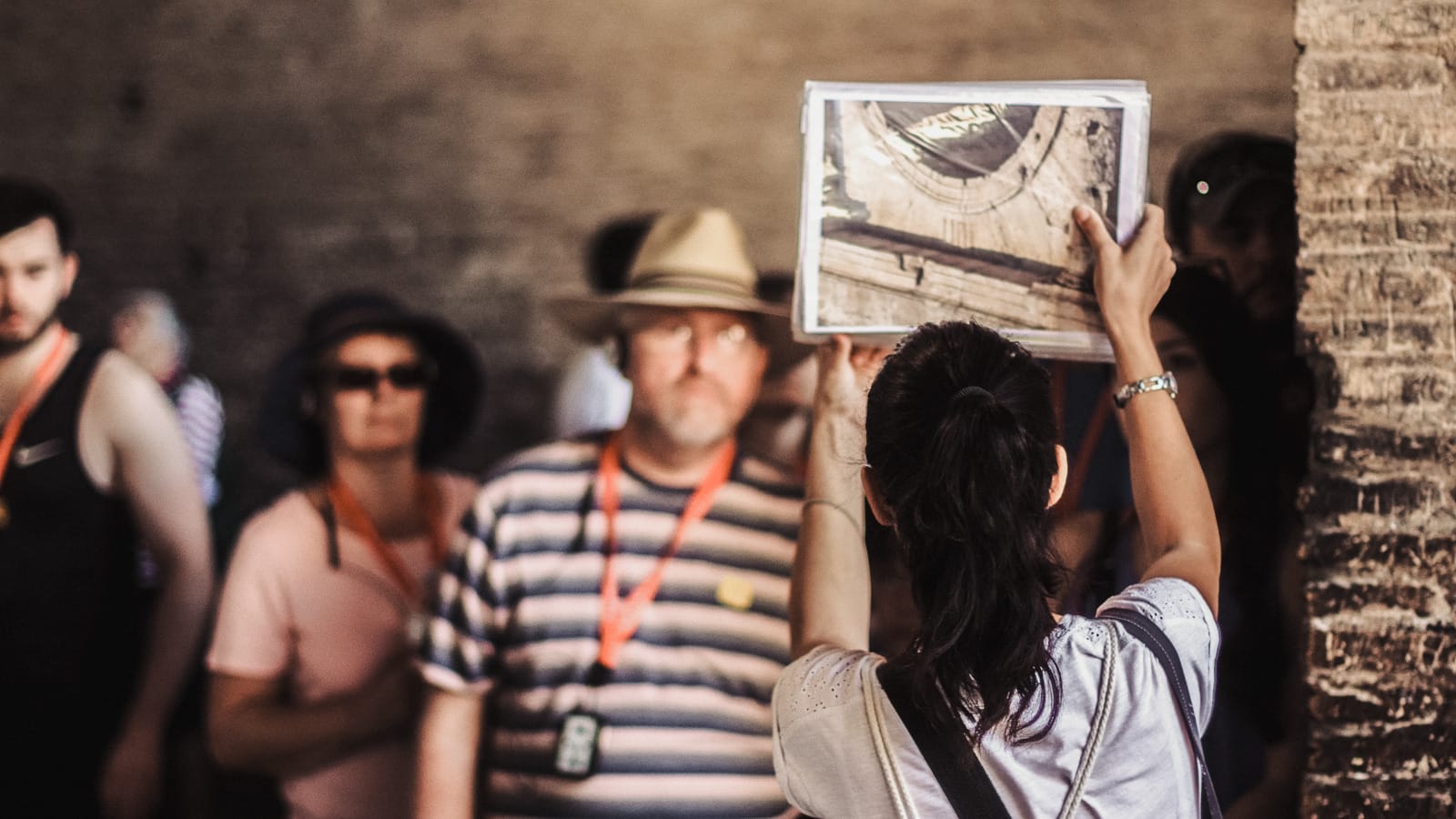
If you want to know the stories that will bring the stones to life, it is worth taking a guided tour of Rome’s Colosseum.
Discover Ancient Rome for Yourself
Whether you’re fascinated by gladiators, hidden underground tunnels, colourful archaeological discoveries, or spectacular Roman engineering, there’s always something new to uncover at the Colosseum.
Explore the different options for a guided tour of Rome to discover the city’s most iconic landmarks with expert local guides and experience the stories behind Ancient Rome’s greatest treasures.

Book a Tour

Pristine Sistine - The Chapel at its Best
€89

1794 reviews

Premium Colosseum Tour with Roman Forum Palatine Hill
€56
850 reviews

Pasta-Making Class: Cook, Dine Drink Wine with a Local Chef
€64
121 reviews

Crypts, Bones Catacombs: Underground Tour of Rome
€69
401 reviews

VIP Doge's Palace Secret Passages Tour
€79
18 reviews

Legendary Venice: St. Mark's Basilica, Terrace Doge's Palace
€69
286 reviews
Follow us
Stay up to date with travel tips, local insights and all things Italy on our social channels!


Subscribe to our Newsletter
Get curated Italy travel tips delivered to your inbox!

