
Seven Hills of Rome: What are they and how to explore them
In the Book of Revelations, 17:9, there’s a passage that goes like this: “This calls for a mind with wisdom. The seven heads are seven hills on which the woman sits.”
What seven hills is this verse in the New Testament referring to?
Many towns in the world are said to be nestled within seven hills: Dubuque, Iowa; Chisnau, Moldova; Asunción, Paraguay; and Prague, Czech Republic are but four of the dozens that make this claim.
But there’s one city among them whose seven hills are the most legendary: Rome. The Eternal City’s seven hills were, in fact, the reference in Revelations. But what are the seven hills, and where are they located in Rome? You can keep reading and get a taste of what the famed seven hills have to offer during a trip to the Italian capital.
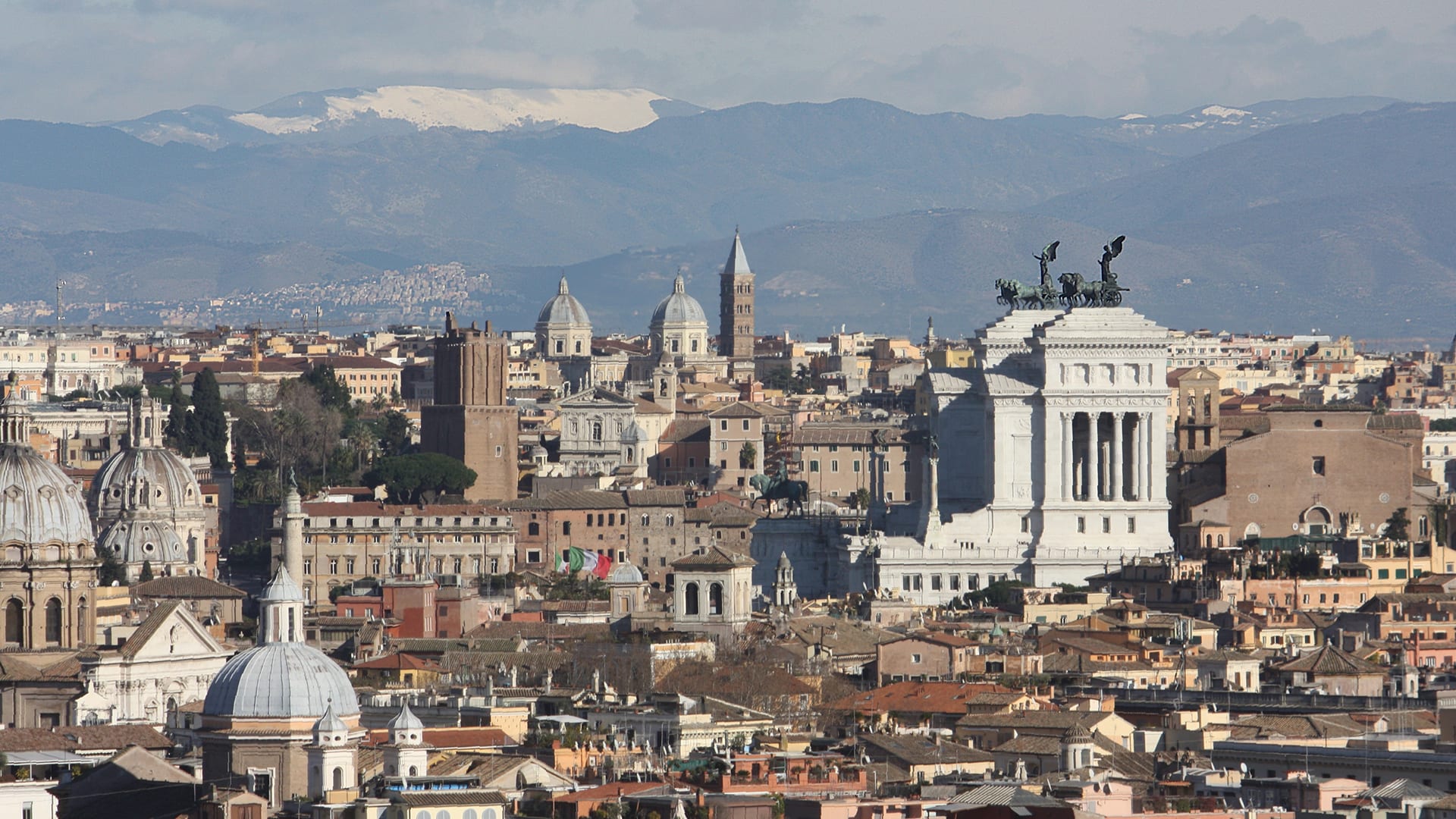
The view of Rome from Gianicolo Hill
Why is Rome called the City of Seven Hills?
Rome has a handful of nicknames: the Eternal City, Caput Mundi, and the Holy City, among them. Another popular name is the City of Seven Hills. Here’s a fun fact: the city’s three tallest hills – Monte Mario, Janiculum, and Monte Ciocci – are not part of the historic seven.
That’s because when the city earned the nickname, the boundaries of the city encompassed just seven hills, all of which were separate settlements thousands of years ago. The hilltops were used as protection. That is, until the denizens of those hills began interacting and formed what we now know as the historic city of ancient Rome. The Servian Wall was built in the early fourth century B.C., and helped solidify Rome as a bigger settlement.
And let’s not forget the (probably) mythical foundations of Rome: the twins Romulus and Remus founded the city of Rome on April 21, 753 BC, on Capitoline Hill.
Insider Tip: To experience these stories beyond the page, you can also explore with a local guide on one of our private tours in Rome, designed to reveal the layers of history hidden throughout the city.
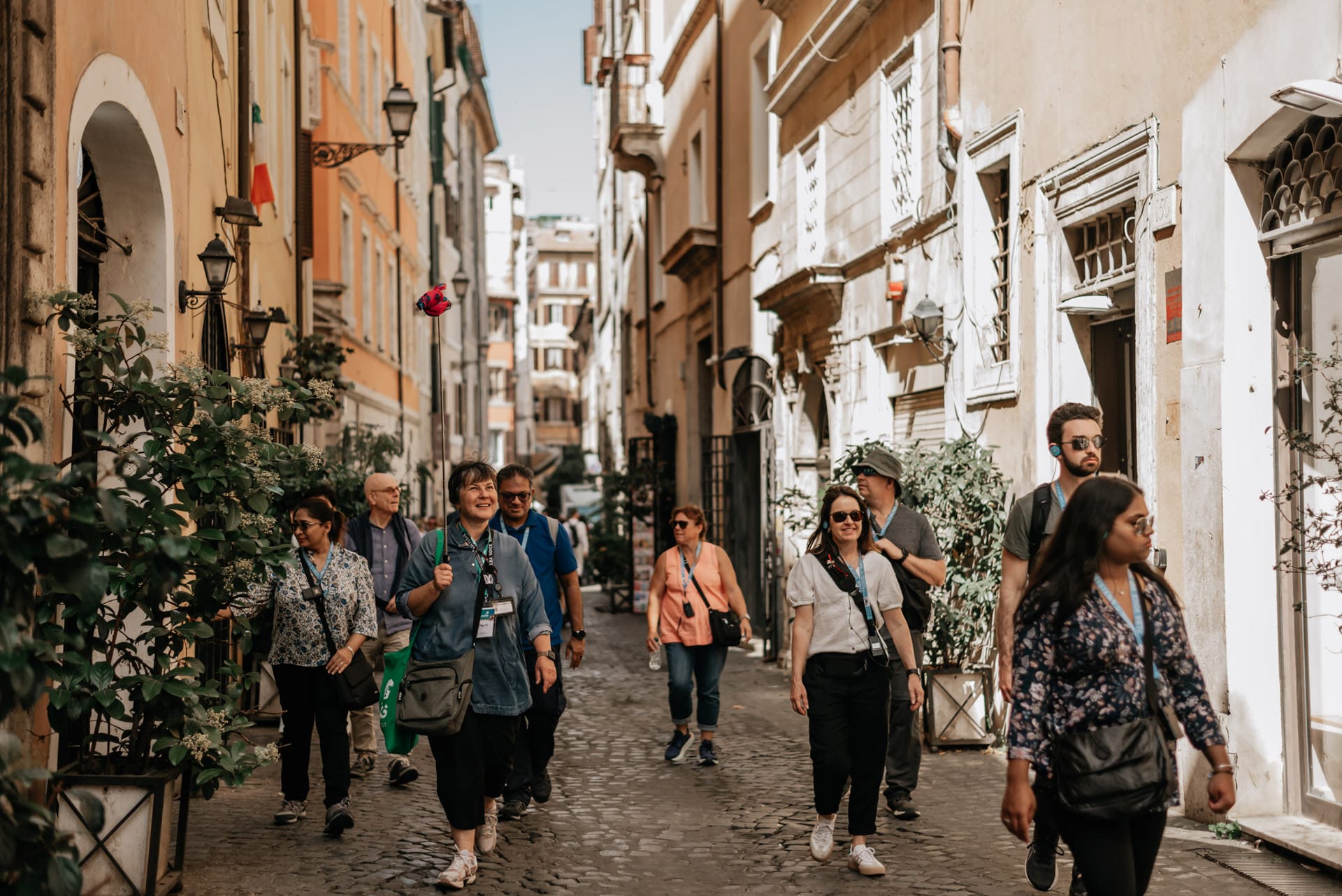
A local expert guide will show you the hidden gems and tell you the story behind them
What are the Seven Hills called?
The names of the historic Seven Hills of Rome are rooted in the city’s pagan past as well as its deep connection to nature and the land it sits on.
Aventine Hill: likely named after King Aventinus, a 7th-century-BC monarch who is reportedly buried on the hill.
Caelian Hill: named after 6th-century-BC Etruscan ruler, Caelius Vibenna. Before that, this hill was named “Querquetulanus mons” because of the ample amounts of oak trees, or quercus, in Latin, on the hill.
Capitoline Hill: Famed Roman historian Livy wrote that this hill’s name is derived from the Latin word for head, caput, because when excavating Capitoline, they found a skull (possibly that of Olus, an Etruscan ruler.
Esquiline Hill: In the early years of Rome, the “city” boundaries were confined to Capitoline and Palatine Hills. So, Esquiline refers to “Exquilini,” or “outside,” meaning it was a suburb—even though today Esquiline Hill is very much in the center of Rome.
Palatine Hill: Many historians agree that the word Palatine is a reference to the ancient pagan god, Pales, protector of shepherds and flocks of sheep.
Quirinal Hill: Originally a small hilltop Sabine village, Quirinal gets its name from the Sabine god, Quirinus.
Viminal Hill: Originating from the Latin word vimen, Viminal Hill was named for a “pliant twig.”
Keep reading: For a more detailed focus on each hill and things you can do while exploring the seven hills of Rome. You can also want brush up on some travel tips for Rome.
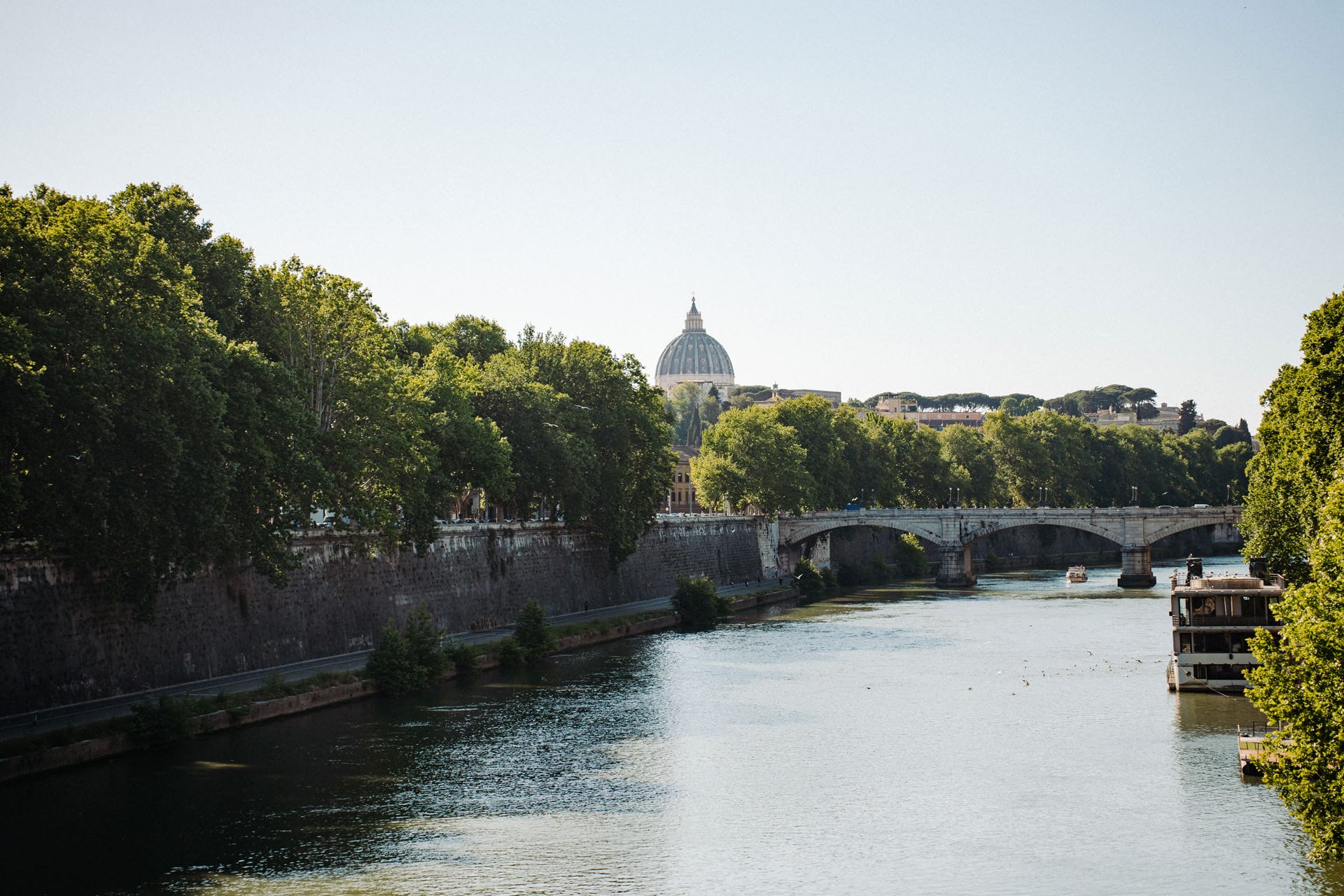
Rome is situated on the Tiber river, and thousands of years of history flows through it!
Seven Hills of Rome: Things To Do
Aventine Hill
Aventine Hill is the southernmost of the Seven Hills and lies closest to the Tiber River. According to Rome’s founding myth, the brothers Romulus and Remus held an augury contest, observing birds for auspicious signs from the gods, to determine which brother had the right to found and name the city. Remus took his augural station on the Aventine, while Romulus chose the Palatine Hill. (Spoiler alert: Romulus came out the victor.)
Today, visitors can explore Aventine Hill’s many historic sites, including the early fifth-century Basilica of Santa Sabina, the oldest surviving basilica in the city. The adjacent convent has housed several notable religious figures over the centuries, including Saint Dominic and Thomas Aquinas in the thirteenth century, as well as Pope Pius V in the sixteenth century.
The Knights of Malta Keyhole is a unique feature. Located at the Priory of the Knights of Malta, press your face close to the large keyhole in the gate and you’ll get a keyhole-framed view of Michelangelo’s dome of St. Peter’s Basilica.
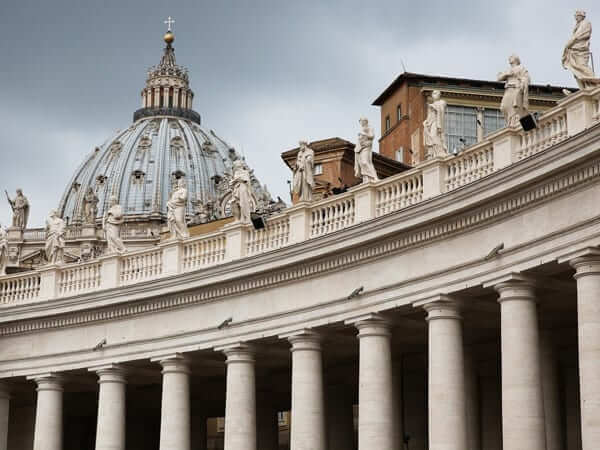
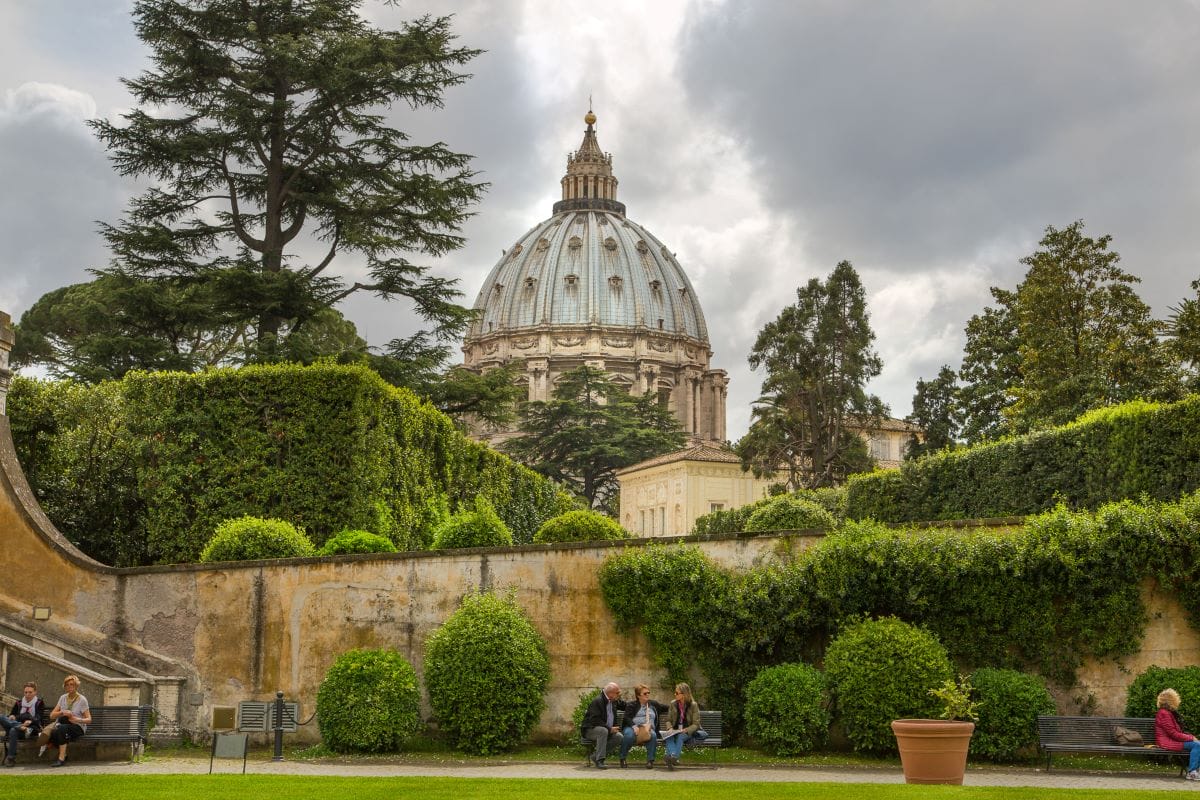 St Peter’s Basilica dome is a sight to behold from any angle
Caelian Hill
During the Roman Republic, Caelian Hill was an upscale residential area. And supposedly, Marcus Aurelius, the powerful, second-century AD Roman emperor, was born 0n Caellian Hill in 121 AD.
These days, the swath of Rome on Caelian Hill is a peaceful area. Make sure you stop into Santo Stefano Rotundo al Cielo, a fifth-century church with graphic murals of early Christian martyrs being killed.
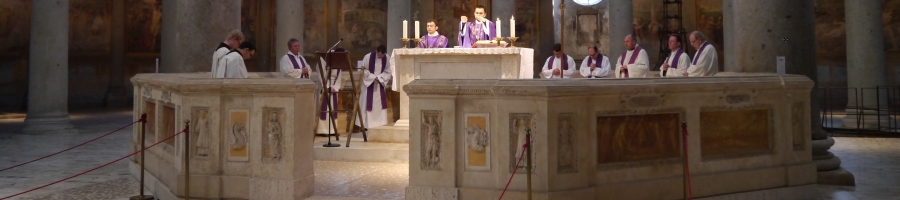
Photo credit : www.cgu.it/it/santo-stefano-rotondo/
The Villa Celimontana is surrounded by a peaceful park studded with Roman ruins and an ancient Egyptian obelisk. Legend suggests that the globe atop the obelisk houses the ashes of Augustus, the first Roman Emperor, but no one really knows for sure.
Capitoline Hill
Capitoline Hill, overlooking the Roman Forum, is where we get the English word “Capitol” from—as in Capitol Hill in Washington, DC. The very important Temple of Jupiter Optimus Maximus Capilolinus was built here in 509 BC and was as enormous as the Parthenon in Athens.
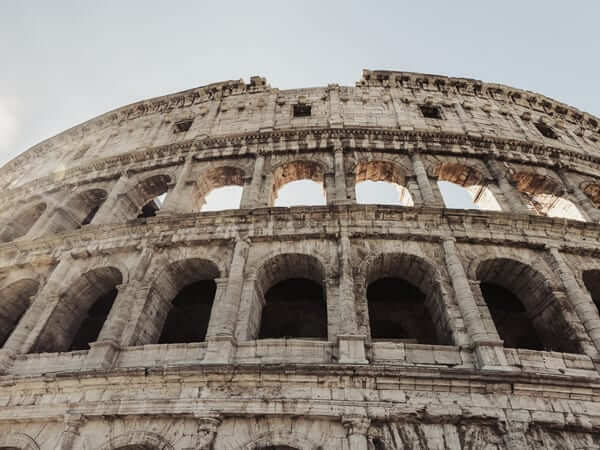
Sadly, the temple is long gone, but visitors who trudge up Capitoline Hill today are rewarded with a wonderful view of the Roman Forum and the Colosseum. You can also admire Piazza del Campidoglio, designed by Michelangelo. And don’t miss the Capitoline Museums, home to a bounty of ancient Roman sculpture and paintings by Caravaggio, Titian, and Velazquez.
Adjacent to Capitoline Hill lies the famous Roman Forum, once the political and social heart of ancient Rome. If visiting the Roman Forum is next on your Rome itinerary, this guide will help you make the most of your experience.
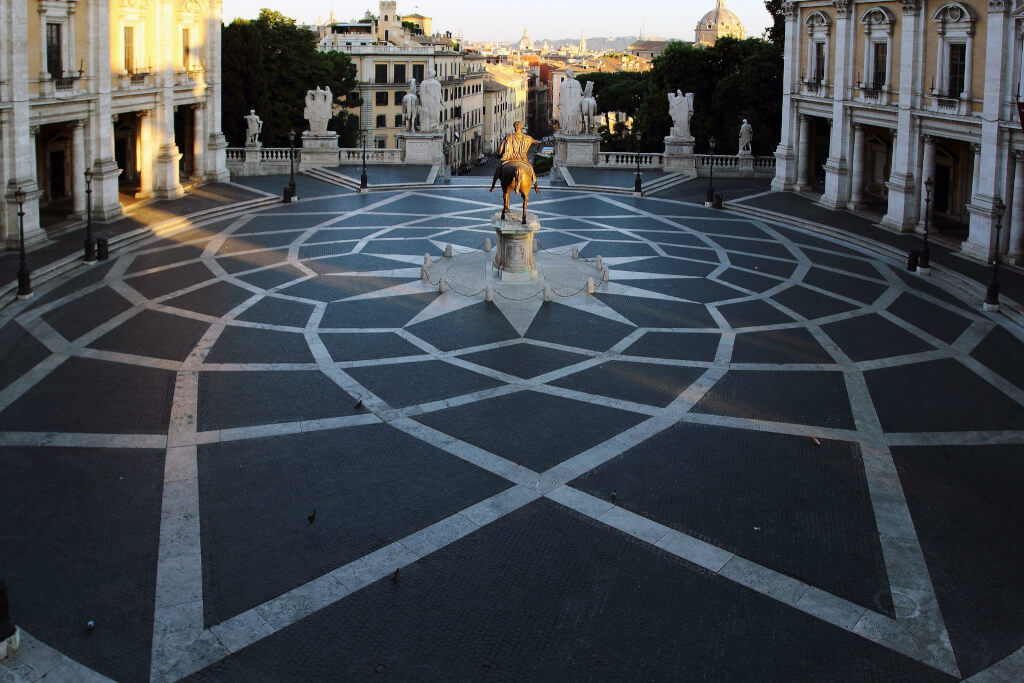
Piazza del Campidoglio
Esquiline Hill
The long, gently sloping hill at the base of the Colosseum is the Esquiline Hill. It goes all the way to Termini Railway Station. There are a few must-visit sites on Esquiline Hill, most of which are among the best churches in Rome: pop into the Church of San Pietro in Vincoli, or Saint Peter in Chains. The church is named after one of the relics on display at the altar: the chains that once held St. Peter. There’s another reason to stop by: Michelangelo’s unfinished sculptures of slaves, meant to be a part of the tomb of Pope Julius II.
Another church that should be part of your itinerary in Esquilino, as it’s said in the local parlance, is the Basilica of Santa Maria Maggiore, home of the Sacra Cula, the Holy Crib that once (supposedly) cradled the baby Jesus. This 5th-century structure is the largest Marian church in Rome.
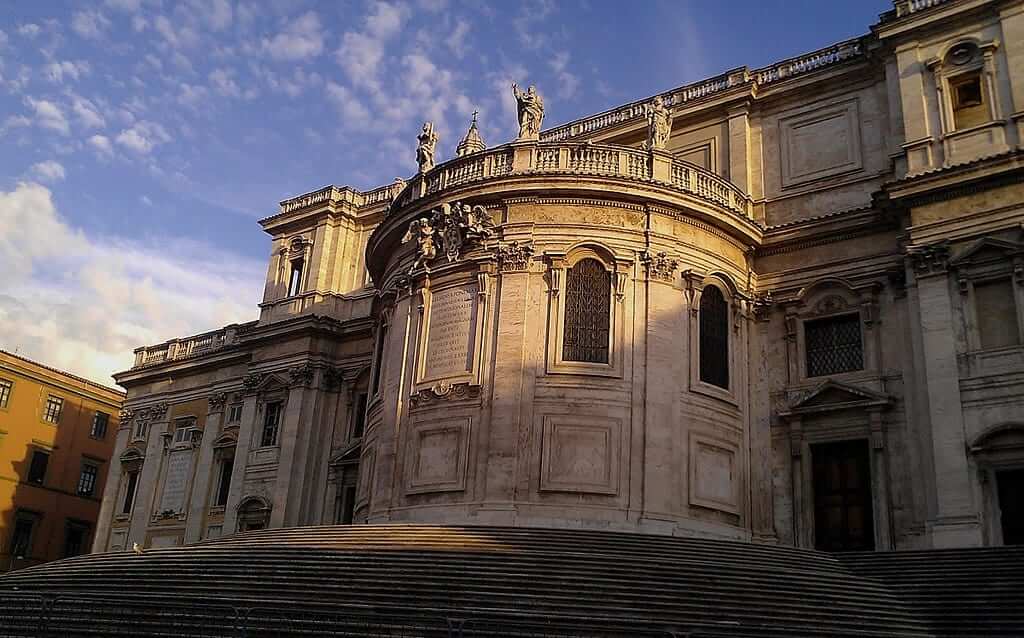
The Basilica di Santa Maria Maggiore
If you can’t get enough of the holy relics, point yourself to the Basilica of Santa Croce in Gerusalemme. In the 4th century, the mother of Emperor Constantine, the future St. Helena, traveled to Jerusalem to go on a sanctified shopping spree. She returned with several relics of the Passion, including a piece of the True Cross, a thorn from Christ’s Crown and a finger from Doubting St. Thomas, among others. They are displayed in the 4th-century church’s Chapel of Relics.
Palatine Hill
Called the “first nucleus of the Roman Empire” because it was the hill that was most centrally located and became a “hot spot” for aristocratic Romans (the English word “palace” hails from “Palatine,” after all). After the fall of the Roman Empire in the 5th century, the hill was abandoned until wealthy Renaissance-era families reclaimed the hill and built palaces on it.
You can visit Palatino from two entrances: through the Roman Forum or the street Via di San Gregorio.
Once you’re at the top of the hill, you’ll most certainly marvel at the views of the Colosseum and the Roman Forum below. The Casa di Augusto is fascinating for its excellent ancient frescoes. The rub, though, is that you only access it via a guided tour. You can check out our tours in Rome to get exclusive access and knowledge from an expert local guide.
Get out of the city centre to see all it has to offer from a different perspective
Quirinal Hill
These days Quirinal Hill, right above the Trevi Fountain, is most famous for the Renaissance-era Quirinal Palace, where the office of the President of Italy is located. If you trudge up the hill, one site you should not miss is the early-17th-century Church of Santa Maria della Vittoria, home of Bernini’s most celebrated sculpture, “The Ecstasy of Saint Teresa.” It’s truly a masterpiece and you have to see it with your own eyes.
Viminal Hill
The smallest of Rome’s seven hills, Viminal Hill is not without its must-see sites. The 1,700-yeare-old Baths of Diocletian could once fit 3,000 Romans. Today, it is a fascinating museum about daily life in Ancient Rome.
Next door to the baths is the Basilica of St. Mary of the Angels and Martyrs. This gargantuan church was largely designed by Michelangelo.
Rome may have more important sightseeing attractions than any other city on the planet. The above sites are just a few of what the Italian capital has to offer. For this reason, consider taking a guided tour of Rome; you’ll get much more bang for your buck.
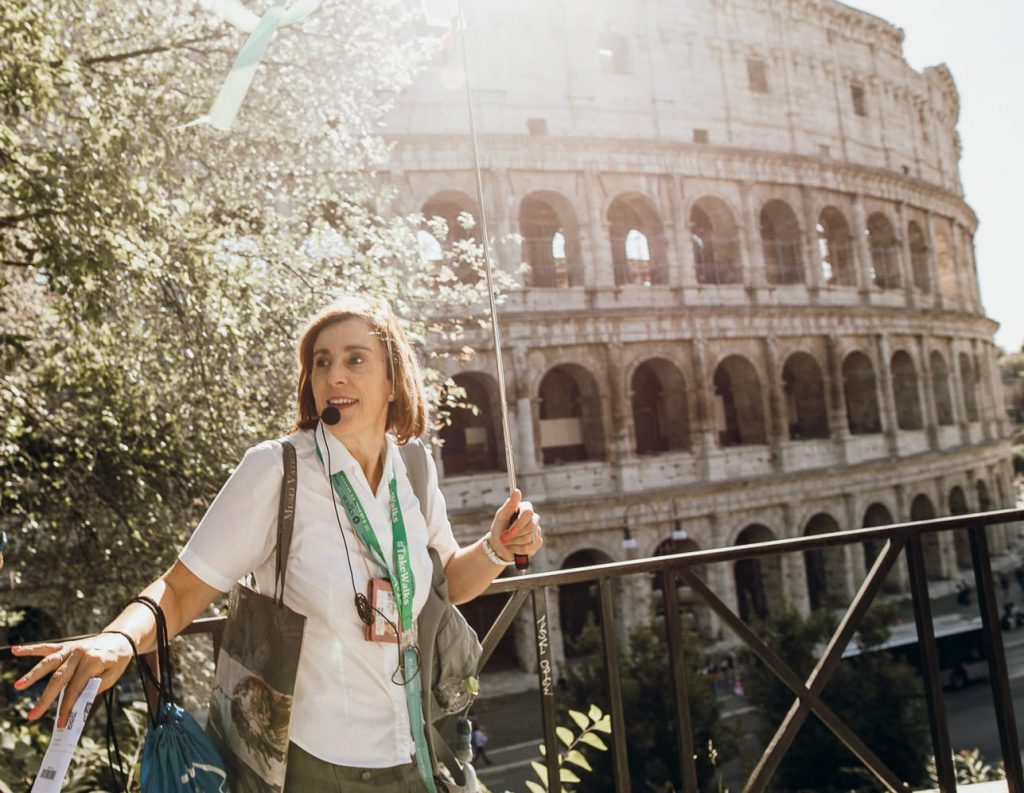
A local expert guide will really help you make the most of seeing all the sights!
FAQs – Seven Hills of Rome
Why should you take a guided tour?
Whether you’re in Rome for one day, one week, or one month, there’s so much to see in this city of nearly three million people. You can try to do it on your own—and people have—but with a tour guide to lead you around, you’ll see much more in a shorter period of time and learn a lot from the educated local guide. The only planning you need to do is to figure out which tour to take. Heavy lifting done!
When is the best time to visit Rome and Vatican City?
In terms of weather, Rome can swelter in the summer months and drop down to heavy jacket weather in the winter. For optimum temperatures, the shoulder season, March to May and September-October—is perfect. Also, there are fewer crowds during the shoulder season.
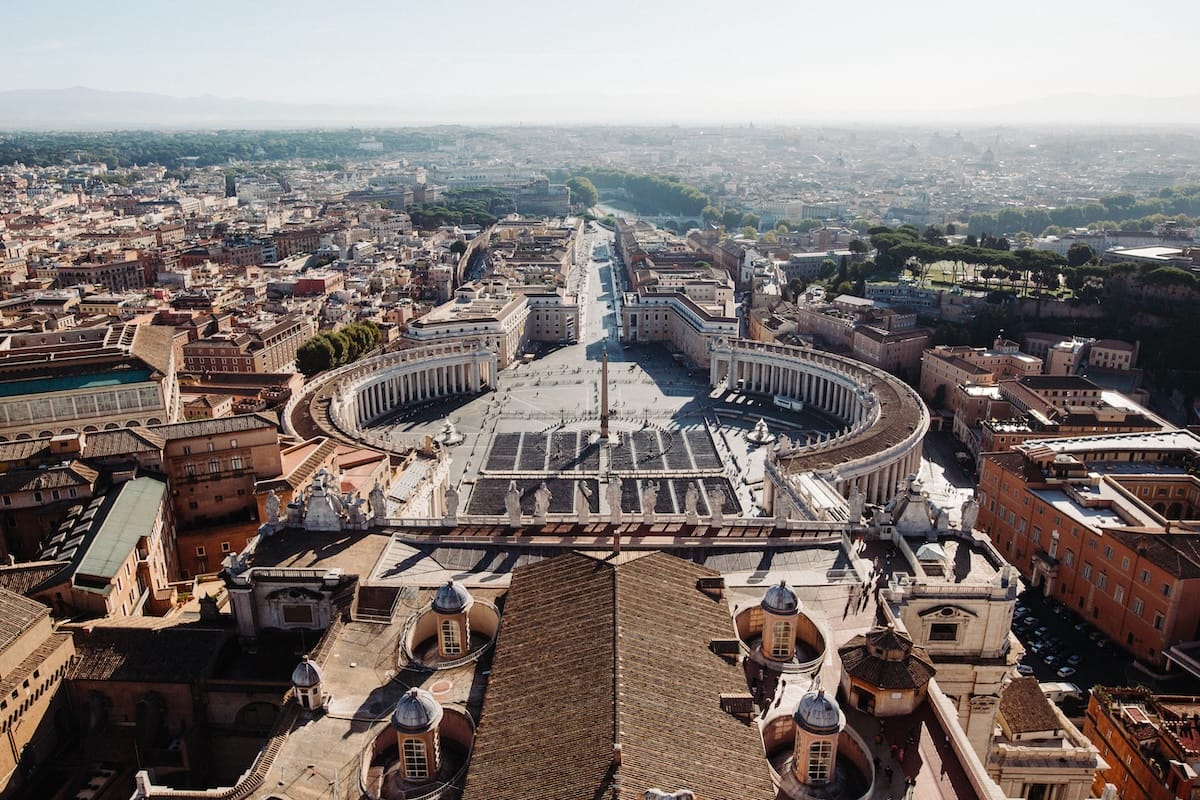
View of The Vatican City from St. Peters Basilica
One Last Word …
“A fool is one who admires other cities without visiting Rome,” said Petrarch, the 14th-century humanist. And if you really want to see it, the best way is with a small-group guided tour where you’ll learn some true insider information and get helpful tips for the rest of your time in the Eternal City. Petrarch would be proud!
Book a Tour

Pristine Sistine - The Chapel at its Best
€89

1794 reviews

Premium Colosseum Tour with Roman Forum Palatine Hill
€56
850 reviews

Pasta-Making Class: Cook, Dine Drink Wine with a Local Chef
€64
121 reviews

Crypts, Bones Catacombs: Underground Tour of Rome
€69
401 reviews

VIP Doge's Palace Secret Passages Tour
€79
18 reviews

Legendary Venice: St. Mark's Basilica, Terrace Doge's Palace
€69
286 reviews
Follow us
Stay up to date with travel tips, local insights and all things Italy on our social channels!


Subscribe to our Newsletter
Get curated Italy travel tips delivered to your inbox!

