

Visiting San Giovanni in Laterano: the Archbasilica of St John Lateran
June 12, 2026
San Giovanni in Laterano, the Archbasilica of Saint John Lateran, is one of the most overlooked major churches in Rome. That’s mostly because of geography and location: southeast of the historical center and landmarks like the Colosseum and the Forum, most visitors to Rome don’t just stumble upon this gargantuan church. You have to seek it out.
And you should do just that. When you point yourself at San Giovanni, here is a guide that will help you appreciate the basilica all the more.
San Giovanni in Laterano is also known as the Basilica of St. John Lateran, Photo credit: Antoine Taveneaux
A brief background on St. John Lateran
First, though, a few historical facts about San Giovanni, or St. John Lateran.
It’s the official seat of the Bishop of Rome and that bishop also happens to be known as “the Vicar of Christ,” “Prince of the Apostles,” “Servant of the Servants of God.” He’s also known simply as the Pope.
That’s right. It would be understandable if you thought, St. Peter’s Basilica was the Pope’s main domain. He might sleep and eat in Vatican City but San Giovanni in Laterano, two and a half miles away, is his official church.
San Giovanni is the highest ranking basilica of the four major papal basilicas in Rome:
And because of this it holds the anomalous title of Archbasilica of Saint John Lateran. In fact, until 1870, the Unification of Italy, all popes had been crowned in this major basilica.
Insider tip: If you find religious history fascinating, why not learn more about the various properties owned by the Catholic Church.
The church was originally commissioned by Roman Emperor Constantine the Great in the 4th century. Photo credit: Jastrow
San Giovanni in Laterano: One church, many faces
The name Laterano comes from the fourth-century Laterani family who owned the property where the church now sits. After Emperor Constantine converted to Christianity in 312 CE, he stripped the family of the land and had this church built, making it the oldest basilica on the planet.
Twelve years after Constantine’s conversation, this shrine became the headquarters of the Church and the papal residence from the early 4th century until the pope moved across the Tiber to the Vatican in the 14th century.
As Rome fell into disrepair during the Middle Ages and its population shrunk down to just 30,000 people, the papacy could no longer seize the power they had of the past and fled to Viterbo, 50 miles north of the Eternal City, as well as Avignon in France.
As a result, San Giovanni, like the city around it, became dilapidated. It didn’t help that there were two fires and an earthquake that further damaged the building throughout the medieval period. It would later go on to see ample amounts of renovation with different historical art and architecture styles overlaying the old ones.
In the mid-17th century, for example, Pope Innocent X hired famed architect Borromini to renovate the place in honor of the 165o Jubilee. He went to work, putting his stamp on the interior in a big way by giving it the Baroque treatment, like most existing churches in Rome at the time.
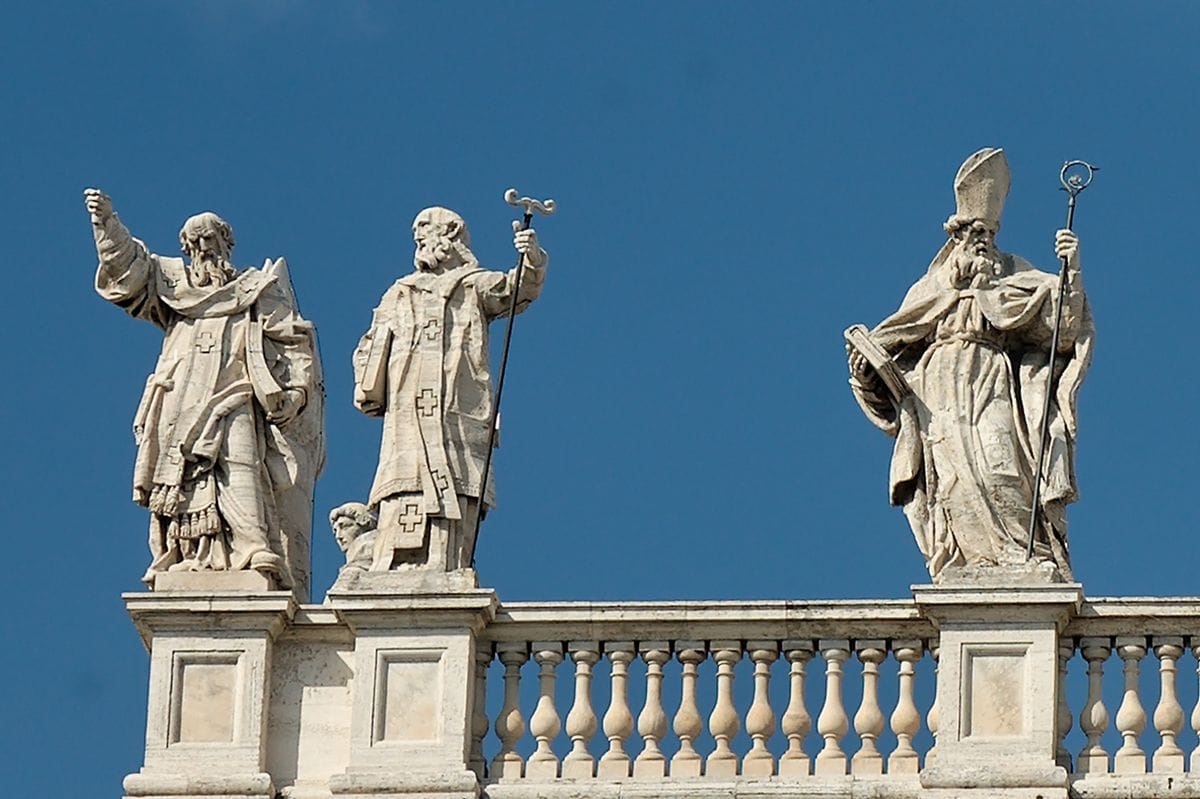
A century later, architect Alessandro Galilei gave the structure a new facade, making the Archbasilica of Saint John Lateran appear more like a palace than a place of worship. The facade of stacked porticoes is highlighted by the line of larger-than-life apostles and saints with Christ triumphantly standing among them.
San Giovanni in Laterano can be overlooked by visitors, but is worth seeking out! Photo credit: Edwin Lee
What to see at San Giovanni in Laterano
Stepping inside the Archbasilica of Saint John Lateran is an experience in itself.
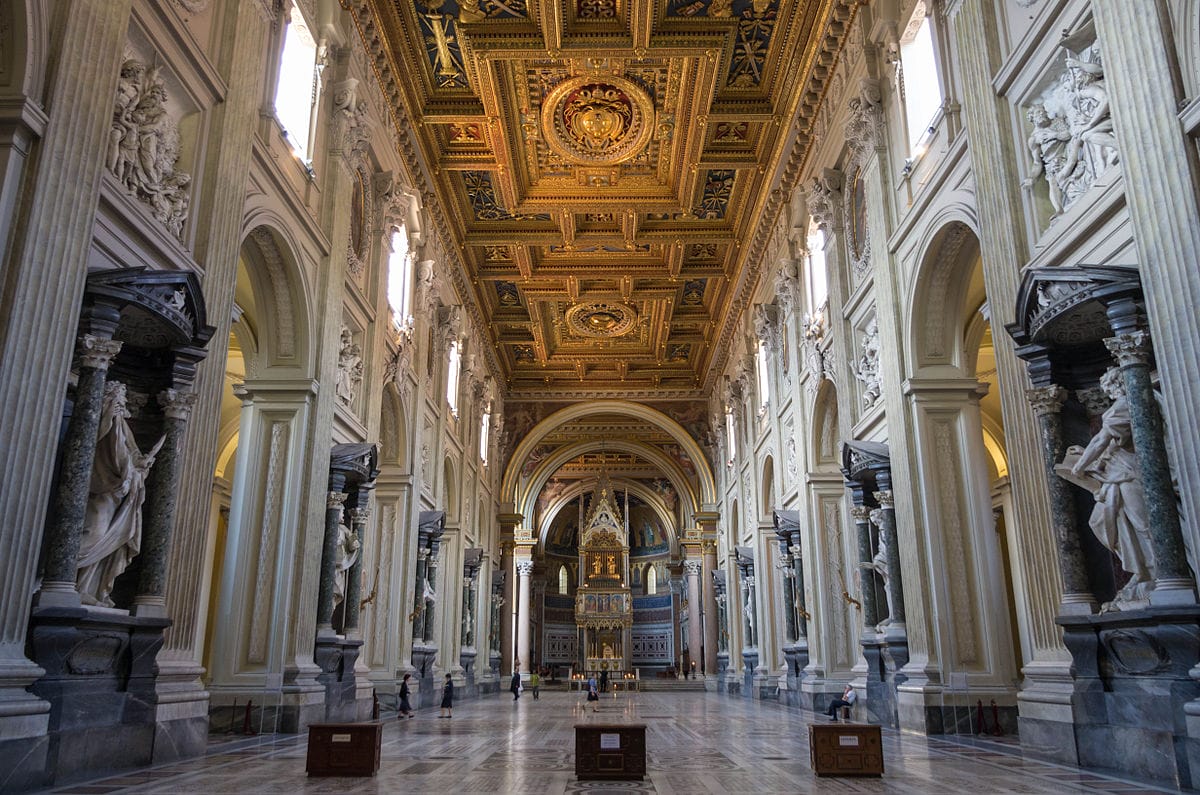
As the oldest and highest-ranking church in the Catholic world, its immense scale immediately sets it apart from any other basilica in Rome. The nave stretches for more than 230 feet (70 metres), while beneath your feet, the magnificent Cosmatesque floor dazzles with intricate geometric patterns created from coloured marble and stone.
The Architecture of the Archbasilica
The building you see today is the result of nearly 1,700 years of additions, restorations, and artistic ambition. In the 17th century, Pope Innocent X commissioned Francesco Borromini to redesign the interior for the Jubilee of 1650, transforming the medieval basilica into a Baroque masterpiece while preserving its ancient foundations.
A century later, architect Alessandro Galilei completed the imposing travertine façade that greets visitors today. Crowned by colossal statues of Christ, St. John the Baptist, St. John the Evangelist, and other saints, the façade resembles a grand palace as much as a place of worship.
Don’t forget to look up inside the basilica too, the richly gilded wooden ceiling largely predates Borromini’s renovations and remains one of the church’s most striking features.
The interior of the Archbasilica of San Giovanni in Laterano. Photo credit: Jason Pier
Paintings and Mosaics
Although the Archbasilica of Saint John Lateran is better known for its architecture than its paintings, there are still remarkable works to discover.
On the first inner column to the right are the surviving fragments of frescoes by the revolutionary early Renaissance artist Giotto, whose naturalistic style changed the course of European painting.
For centuries these murals were hidden beneath later renovations and thought to be lost forever until they were rediscovered in 1952. What remains today is only a small portion of the original, but it offers a fascinating glimpse into one of Italy’s greatest artistic masters.
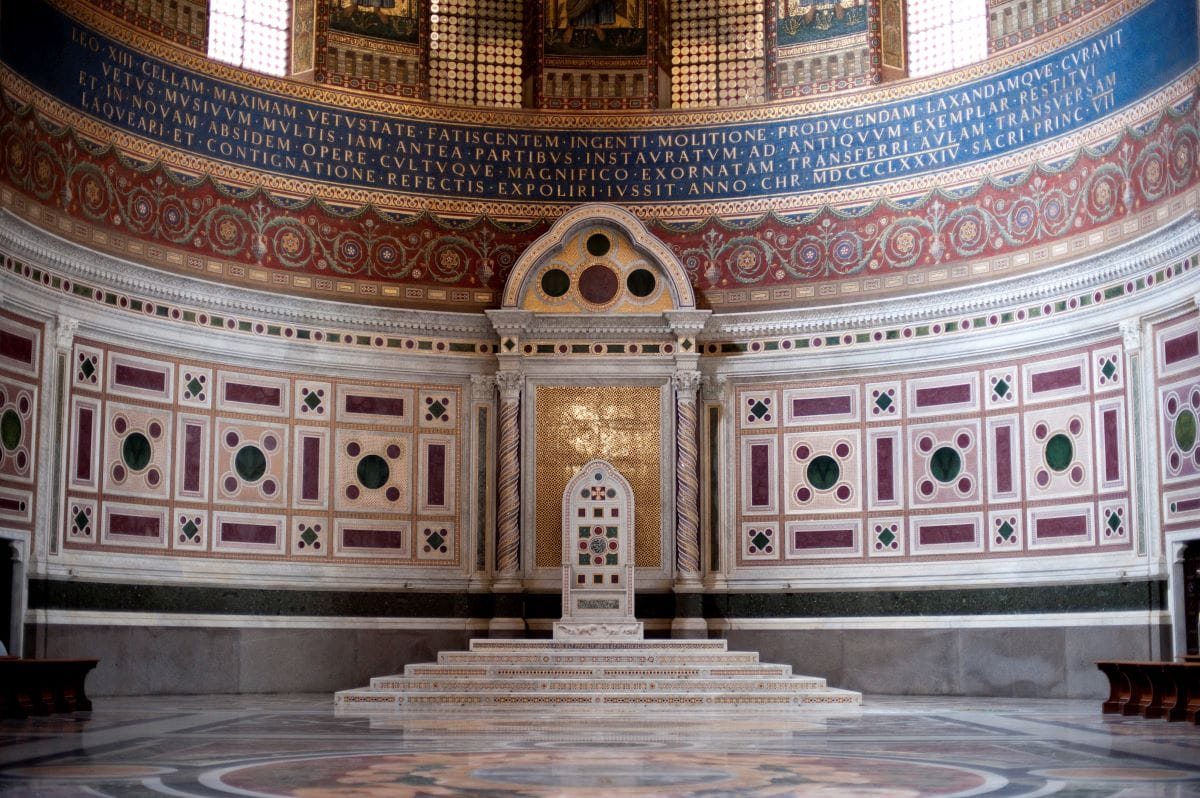
At the far end of the church, the magnificent apse commands attention with its glittering mosaics, combining medieval craftsmanship with later restorations to create one of the most beautiful sacred spaces in Rome.
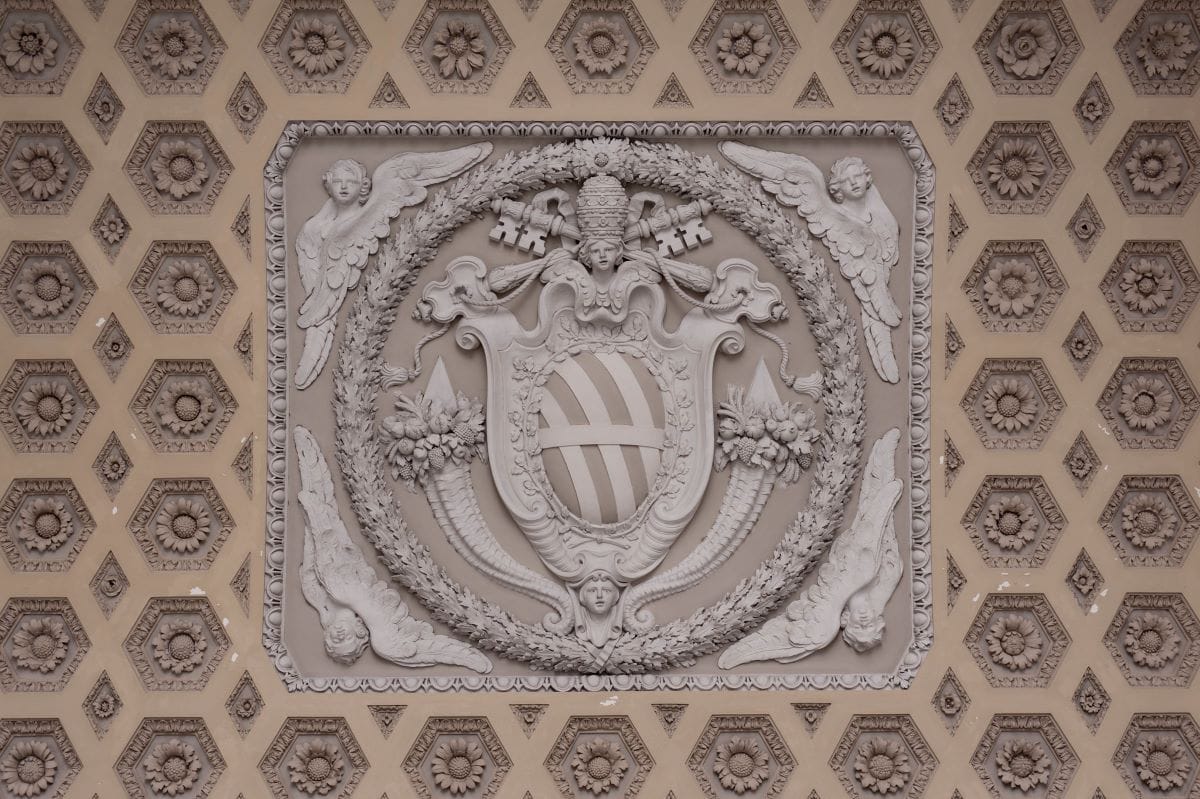
The facade is made of travertine stone. The interior features marble, mosaics, and other ornate materials. Photo credit: Jason Pier
Sculptures and Monumental Design
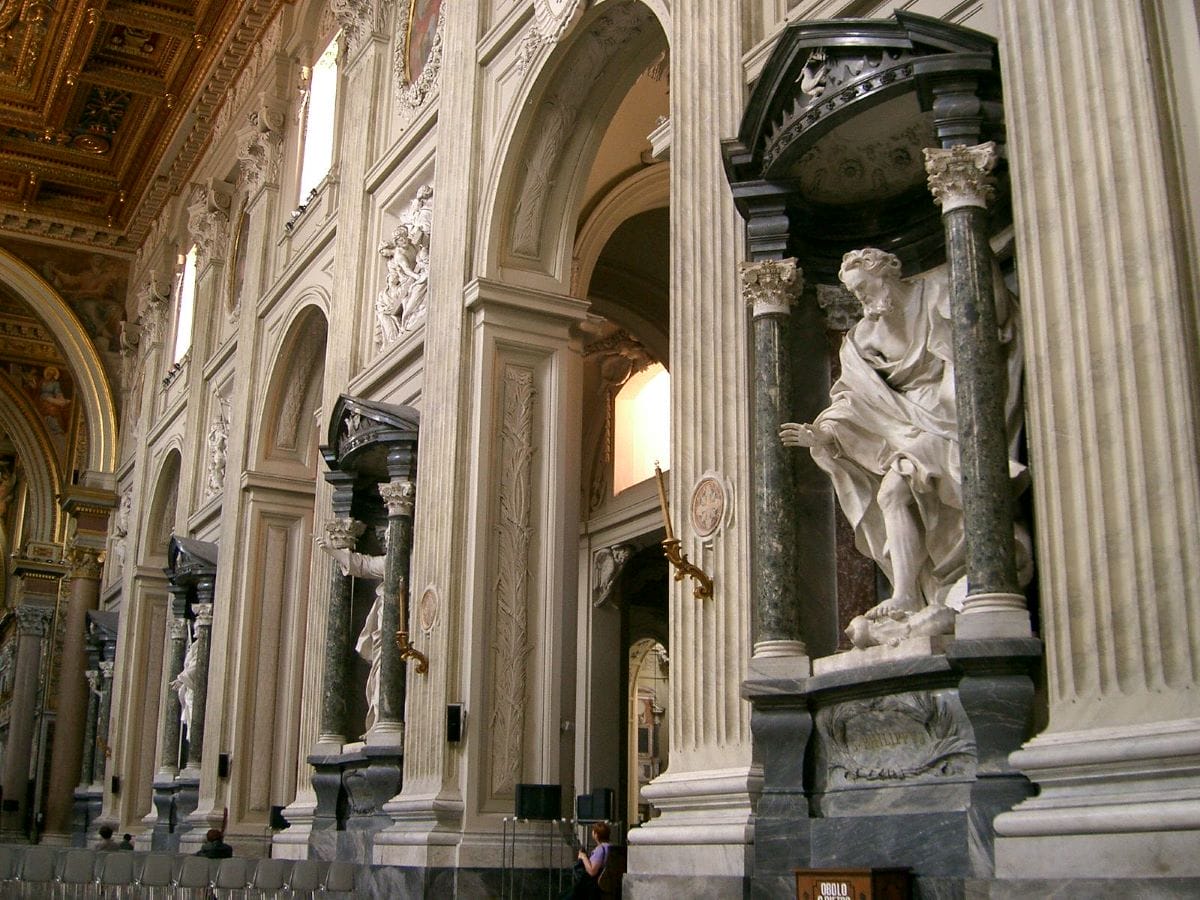
One of the defining features of the Archbasilica is its series of enormous niches lining the nave, each containing a larger-than-life statue of one of the Twelve Apostles.
Created by some of the finest sculptors of the late Baroque period, these dramatic marble figures appear almost alive, their flowing robes and expressive gestures drawing the eye along the length of the church.
Together with the soaring columns and vast interior, the sculptures reinforce the basilica’s role as the ceremonial cathedral of the Pope and the spiritual heart of the Catholic Church.
Relics and the High Altar
The basilica houses some of Christianity’s most treasured relics.
Above the papal altar stands an elaborate 14th-century Gothic baldacchino, one of the oldest of its kind in Rome. Hidden within its upper reliquaries are what tradition identifies as the skulls of Saint Peter and Saint Paul, making the altar one of the most sacred locations in the city.
While these relics are not visible to visitors, their presence has made the Archbasilica of Saint John Lateran an important pilgrimage destination for centuries.
Rather than rushing through looking for individual masterpieces, take time to absorb the atmosphere. Few places in the world have served continuously as a centre of Christian worship for so long, and the sheer scale of the basilica is every bit as impressive as its artistic treasures.
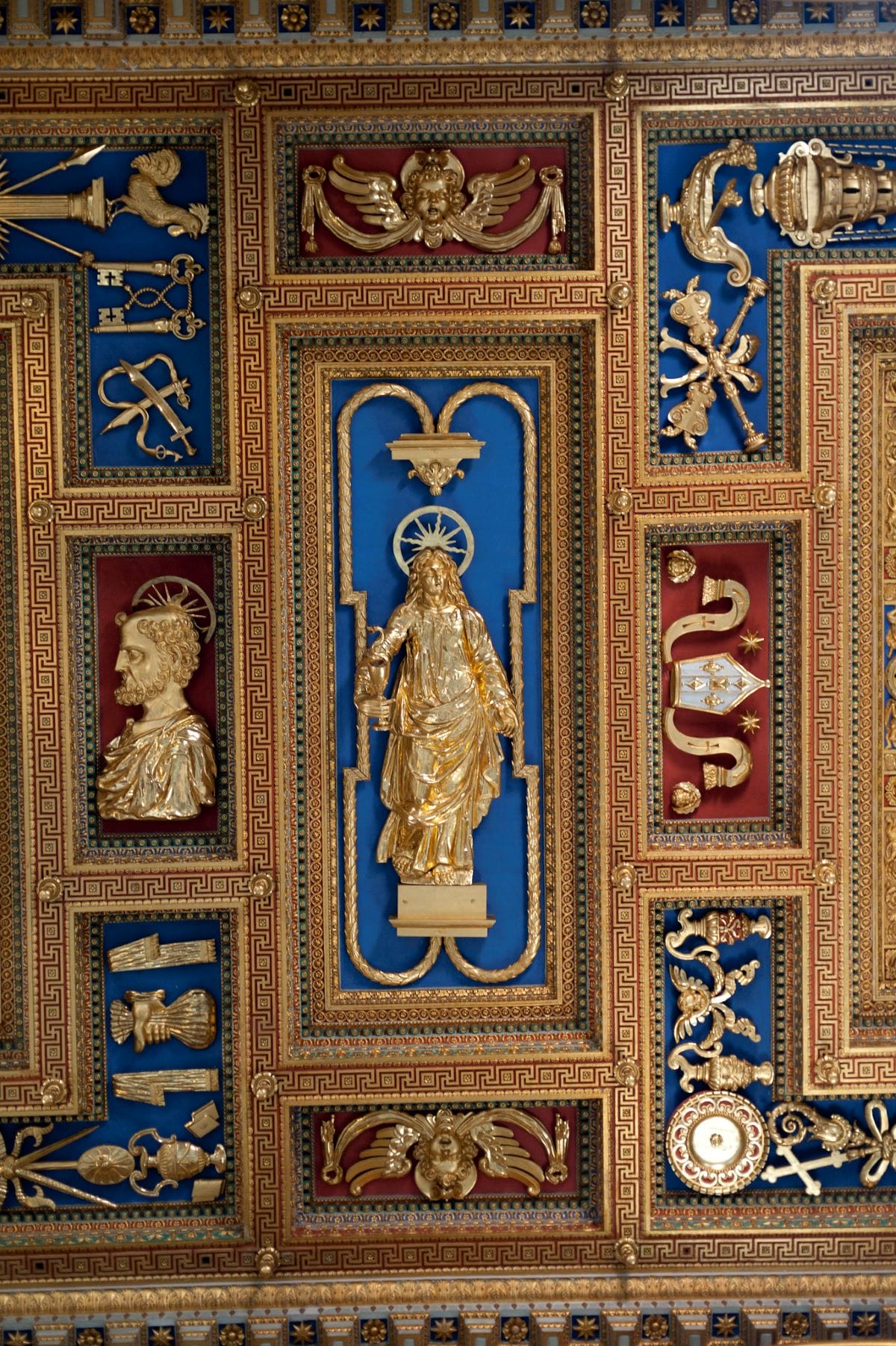
It’s all in the details! Photo credit: Jason Pier
Additional sights in this religious complex
The Archbasilica of Saint John Lateran is much more than a single church – it’s an entire religious complex packed with fascinating sights.
Romanesque cloisters
Just beside the basilica are the peaceful Romanesque cloisters, a hidden oasis filled with elegant twisted columns, medieval carvings, and quiet gardens that offer a welcome escape from the crowds.
The Lateran Obelisk
Outside, the piazza is dominated by the Lateran Obelisk, the tallest ancient Egyptian obelisk in the world at over 140 feet (42 metres). Transported from Egypt during the Roman Empire, it stands as one of the city’s most impressive monuments.
The “Scala Sancta”, or Holy Stairs
Across the street lies the Lateran Palace and one of Rome’s most remarkable pilgrimage sites: the Scala Sancta, or Holy Stairs. Tradition holds that these 28 marble steps were brought from Jerusalem by St. Helena, the mother of Emperor Constantine, and that they once formed part of Pontius Pilate’s palace, making them the final staircase Christ climbed before his trial.
Many pilgrims still ascend the steps on their knees in prayer, while visitors who prefer not to can use the adjacent staircases and continue to the Sancta Sanctorum chapel at the top, one of the oldest and most sacred chapels in Rome.
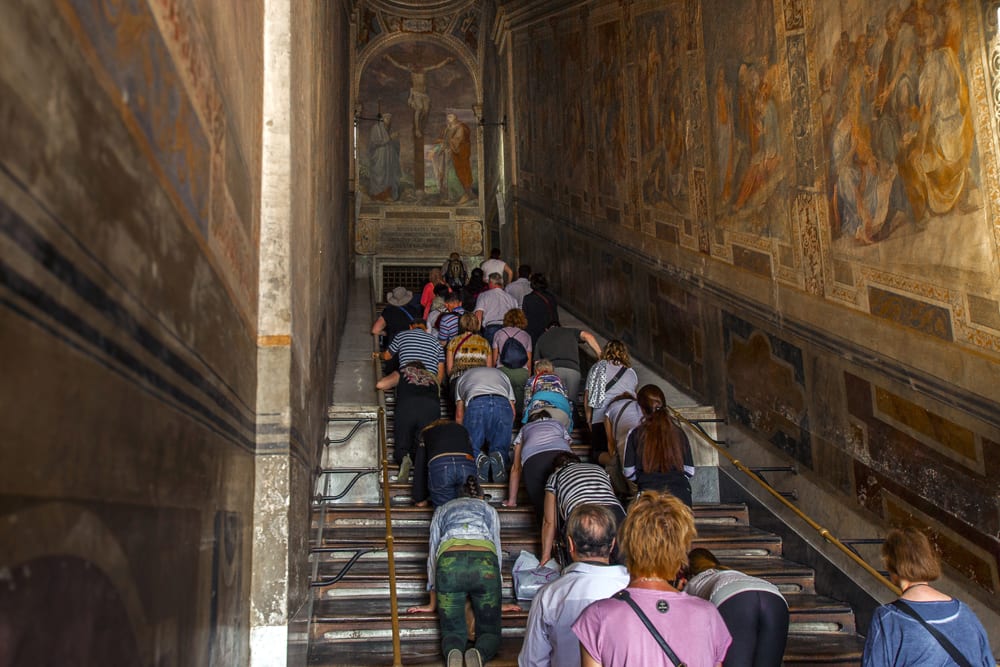
People come from far and wide to kneel at the Scala Sancta
The “Sancta Sanctorum”, or Holy of Holies
The Scala Santa is flanked by two other non-holy steps. At the top, is a small chapel called the Sancta Sanctorum, or “Holy of Holies.” That’s because it has housed some of the most precious holy relics in all of Christendom: The heads of some of the apostles, a chunk of wood from the table used during the Last Supper, the Virgin’s veil, and even the foreskin of Jesus*!
At one time no one but the pope could step foot in this chapel. Now with just a few euros, anyone can enter this diminutive sacred space to ogle the various wall murals. The 13th century mosaics and the mosaic floor are candy for the eyes.
Fun fact: During 1527 Sack of Rome, in which German and Spanish soldiers pillaged the Eternal City, one German mercenary busted into the Sancta Sanctorum. He hit the jackpot and swiped a bejeweled golden cross reliquary from the altar. As he headed north toward his homeland, about 30 miles north of Rome, he was captured and thrown in a cave like cell in Calcata, a medieval hilltown that still exists. When the reliquary was opened, the relic inside was none other than the Santissimo Prepuzio – the Holy Foreskin! The relic remained in Calcata until 1983 when it disappeared under mysterious circumstances, never to be seen again!
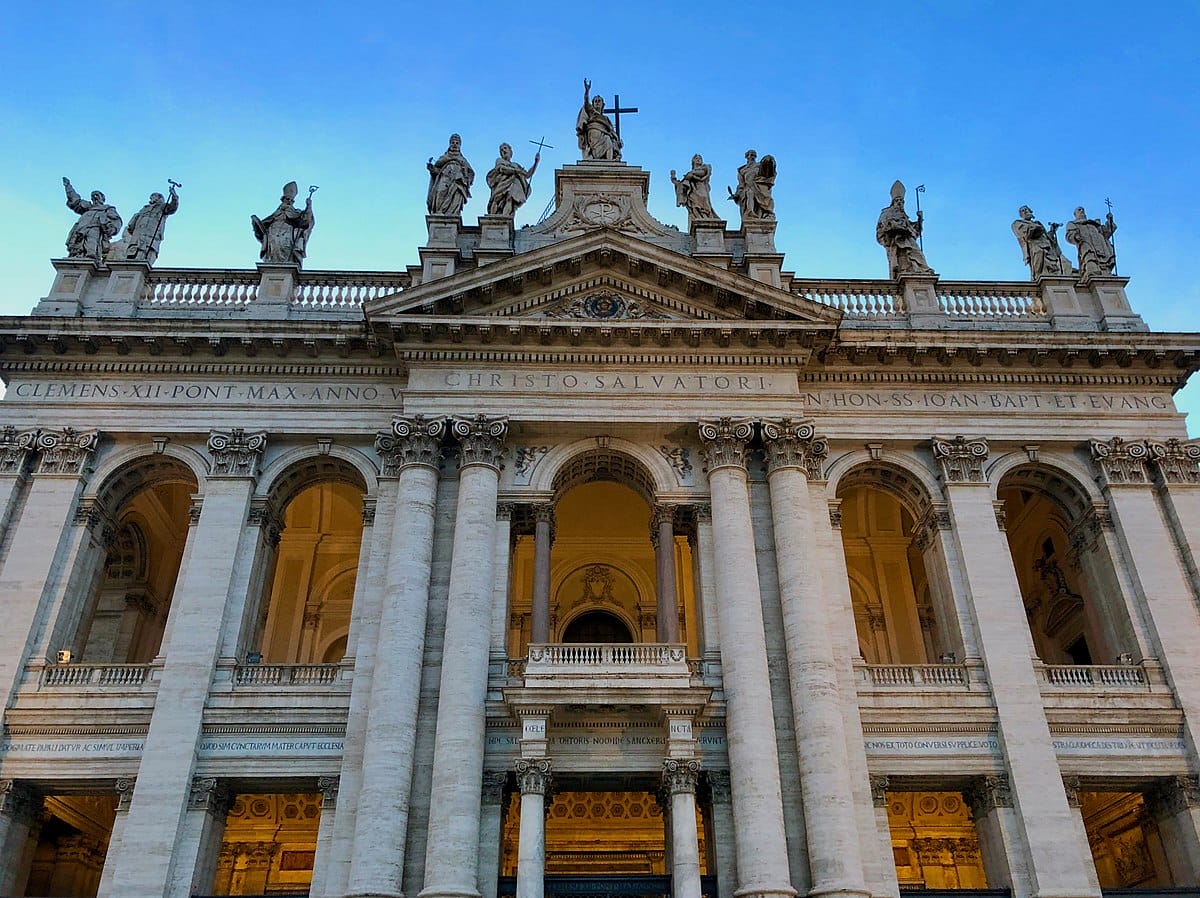
Over the centuries, the basilica underwent various renovations and reconstructions, but the current structure largely dates back to the 17th century. Photo credit: Sonse
FAQS – San Giovanni in Laterano
What are the opening hours?
The Archbasilica is generally open daily from 7:00 a.m. to 6:30 p.m., while the cloisters and museum areas typically operate from 9:00 a.m. to 5:00 p.m. (last admission around 4:30 p.m.). Opening times may vary during religious celebrations and major Catholic holidays, so it’s always worth checking the official schedule before your visit. Arriving early in the morning is the best way to enjoy the basilica before larger tour groups arrive.
Is there an entrance fee?
Entry to the Archbasilica is free, making it one of the best-value historic sites in Rome. If you’d like to visit the adjacent Romanesque cloisters or the Sancta Sanctorum (Holy of Holies) chapel and Scala Santa complex, a separate ticket is required. Guided tours are also available for visitors who want to explore the basilica’s history, architecture, and sacred treasures in greater depth.
How do you get to there?
The Archbasilica of Saint John Lateran (San Giovanni) is located about a 20-minute walk from the Colosseum in southeastern Rome. The easiest way to reach it is by Metro Line A, getting off at San Giovanni station, which is just a few minutes’ walk from the entrance.
Several city buses also stop nearby, making it easy to combine your visit with the Colosseum, the Roman Forum, or the nearby Scala Santa and Lateran Palace.
Which guided tours link best to a visit to the Archbasilica?
While most Rome itineraries focus on the Vatican or the Colosseum, it’s easy to add the Archbasilica of Saint John Lateran to your day with the right guided tour. Here are three excellent options:
- Premium Colosseum Guided Tour with Roman Forum & Palatine Hill: This tour finishes in the Colosseum area, just a 20–25 minute walk from the Archbasilica. The scenic route through the Celio district also passes the Basilica of San Clemente and Santi Quattro Coronati, making it a fantastic way to explore several historic churches in one afternoon.
- Colosseum Tour with VIP Caesar’s Palace & Roman Forum Super Sites: Ideal for history enthusiasts, this experience takes you through the heart of Ancient Rome before allowing you to continue on foot to San Giovanni in Laterano, combining the city’s imperial and religious heritage in a single visit.
- Rome in a Day Tour: Including Vatican, Colosseum & Historic Center: If you’re short on time, this comprehensive full-day tour covers Rome’s most iconic landmarks. Although it doesn’t stop at the Archbasilica, it’s just a quick taxi ride or a few stops on Metro Line A from the Colosseum, making it easy to visit afterwards.
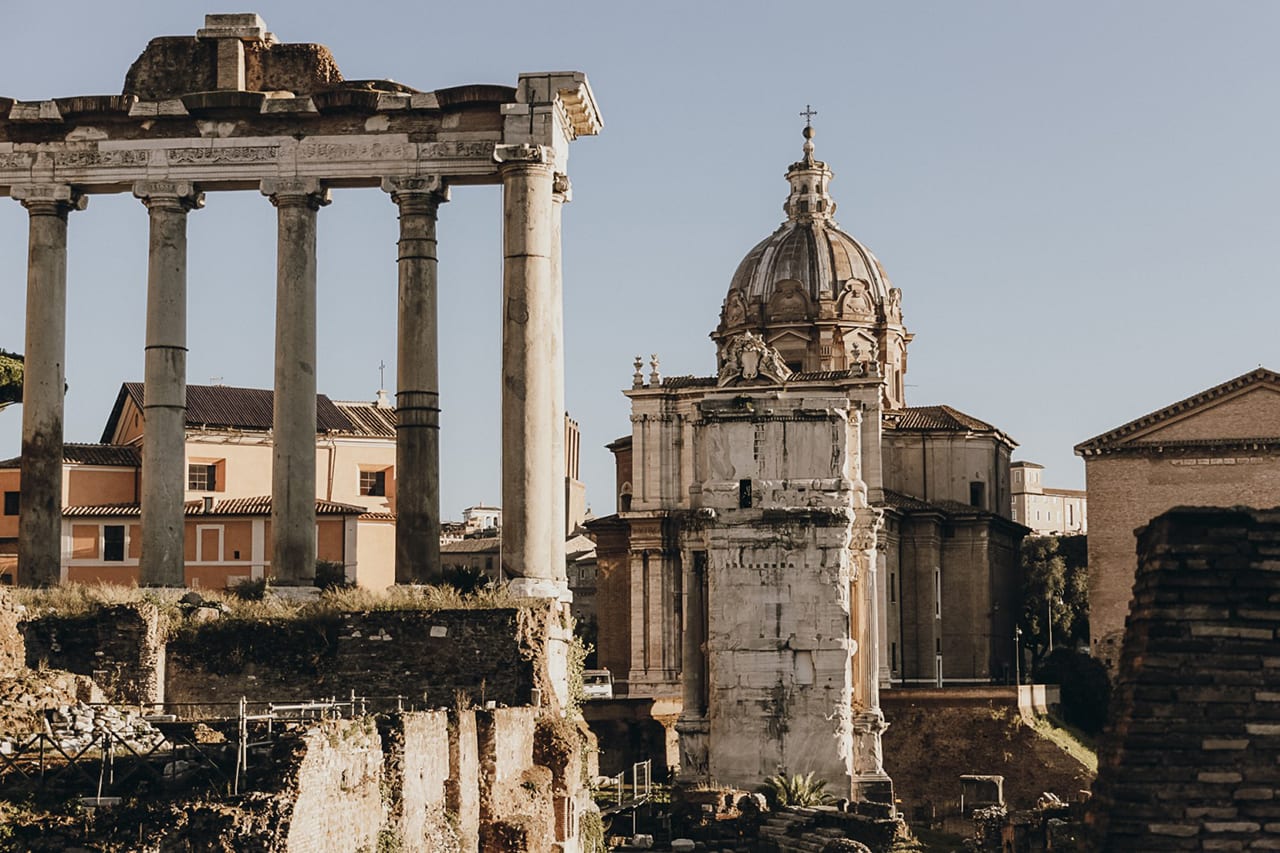
There are so many things to see and do in Rome, including the Roman Forum
Want to explore more of Rome’s remarkable churches and ancient landmarks?
The Archbasilica of Saint John Lateran is one of Rome’s greatest hidden treasures, but it’s only one piece of the city’s extraordinary history.
Pair a visit to the Archbasilica of Saint John Lateran with one of the expert-led tours of Rome from Walks of Italy. Their Colosseum experiences end just a short walk from the Archbasilica, making it easy to continue your journey through Rome’s history—from the heart of the Roman Empire to the oldest and highest-ranking church in the Catholic world.

Book a Tour

Pristine Sistine - The Chapel at its Best
€89

1794 reviews

Premium Colosseum Tour with Roman Forum Palatine Hill
€56
850 reviews

Pasta-Making Class: Cook, Dine Drink Wine with a Local Chef
€64
121 reviews

Crypts, Bones Catacombs: Underground Tour of Rome
€69
401 reviews

VIP Doge's Palace Secret Passages Tour
€79
18 reviews

Legendary Venice: St. Mark's Basilica, Terrace Doge's Palace
€69
286 reviews
Follow us
Stay up to date with travel tips, local insights and all things Italy on our social channels!


Subscribe to our Newsletter
Get curated Italy travel tips delivered to your inbox!

