

Rome celebrated a Jubilee year in 2025, a Holy Year for Catholics that takes place every quarter of a century. Throughout the year, millions of pilgrims from every corner of the globe travelled to the Eternal City (and, of course, Vatican City) to celebrate their faith and take part in centuries-old traditions. One of the most important Jubilee customs was making a pilgrimage to each of Rome’s four papal basilicas – Saint Peter’s, Saint John Lateran, Saint Mary Major, and St. Paul Outside the Walls.
Each one is a masterpiece of history, art, and architecture. But of the four, the basilica that receives the least attention, largely because of its location on the southern edge of Rome, is St. Paul Outside the Walls.
Before you visit, here are some fascinating things to know about the Basilica Papale di San Paolo fuori le Mura.
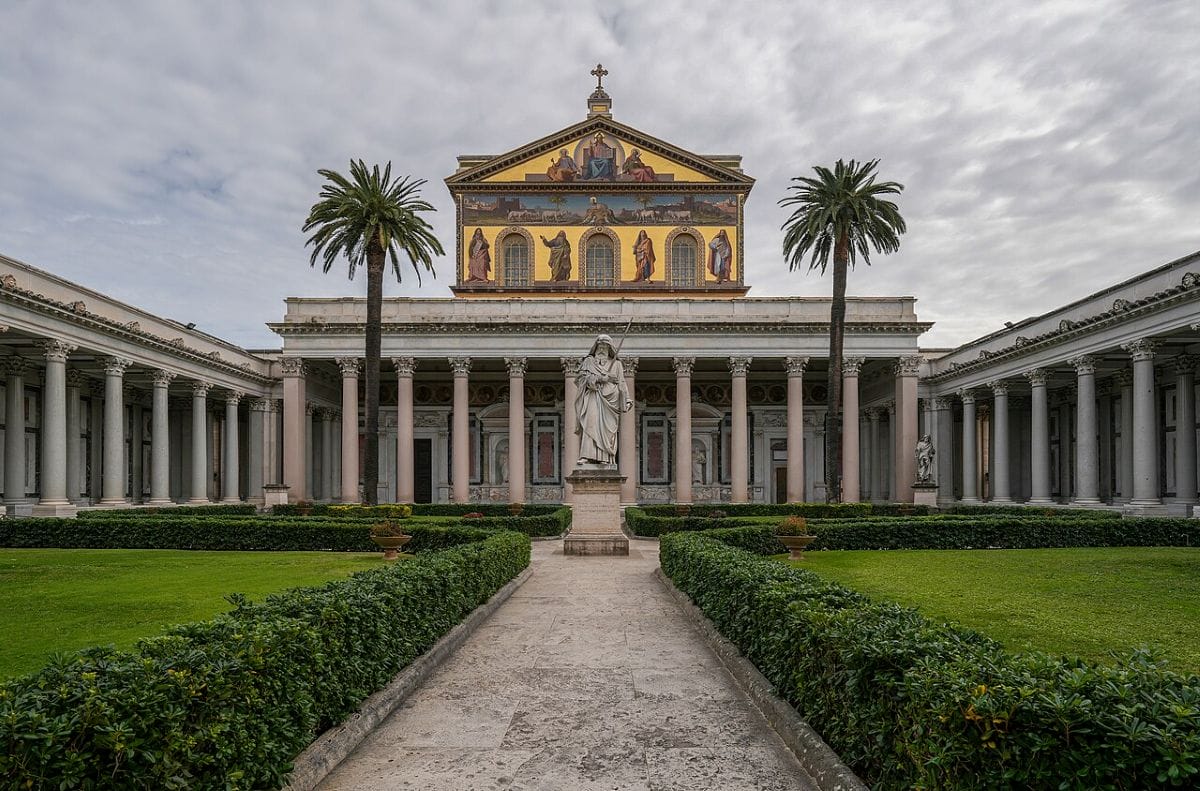
This gargantuan basilica should most definitely be on your itinerary, pilgrimage or not.
The origins of St. Paul Outside the Walls
To understand how St. Paul Outside the Walls came into existence, we have to go back to the year 313 AD. That’s when everything changed in the Western world.
That’s when Roman general Constantine was preparing for a huge battle just outside of Rome against his rival, Maxentius. The winner would go on to become the sole emperor.
The problem for Constantine was that Maxentius’ army was much bigger; it seemed certain Constantine was in for a defeat. That is, until he supposedly and famously saw a massive, flaming cross in the sky with the inscription: “In Hoc Signo Vinces,” (“By This Sign, Conquer”). And then his troops went out and smeared the opposition.
Well, Constantine’s troops didn’t exactly obliterate Maxentius’. Instead, the opposing army, having replaced the Milvian Bridge with a span of boats across the Tiber (so Constantine’s army would have trouble getting across it) actually had to use the makeshift bridge themselves during the battle. When they did, a large part of the army, including Maxentius, drowned. Chalk one up for Constantine.
However he won, Constantine, now emperor, saw this as a miracle and, as a result, Christianity became officially tolerated and, eventually, would become the state religion of the Roman Empire.

The Triumphal Arch was made to honor St. Paul. Photo credit: Mentnafunangann
Why is it Outside the Walls?
With Christianity now an official religion of the Roman Empire, Emperor Constantine set about to construct some temples of worship. One of the first to be built was St. Paul. The location is no accident. It was chosen because it was the site of the cella memoriae, the spot where early Christians came to pray to St. Paul the Apostle.
In 67 AD, Paul and Peter met near this spot and said farewell to each other one final time. Days later, they would both be executed. While Peter was famously crucified on Vatican Hill (hence, the spot where his eponymous basilica sits today), Paul was said to have been beheaded two miles outside of the Aurelian Walls.
After Paul was killed, a Roman named Lucina claimed his body and buried it in a vineyard near the Tiber River. Today there’s a church built over the spot where Paul was executed called San Paola alle Tre Fontane (St. Paul at the Three Fountains). Legend says that when Paul was decapitated, his head bounced three times, and at each place where it landed, a fountain sprung up.
From a grave to a chapel to a basilica
About a decade later, Pope Anacletus had a small chapel built over the supposed spot where Paul is buried. In 324 Constantine had a church built on the site.
A half-century later, with hundreds of Christians making pilgrimages here regularly, the emperor knocked down Constantine’s small church and had a much larger one built. The building was first consecrated by Pope Innocent I in 402 and it was not finished until the reign of Leo I about 50 years later.
That plus-sized house of piety is pretty much what you see today, save for some 19th-century renovation that was done after a disastrous fire in July 1823.

After fire destroyed part of the exterior’s mosaic it was replaced with the one in this photo. Photo credit: Rita batacchi
Visiting St. Paul Outside the Walls
The Courtyard and St. Paul Statue
The first thing you may notice about this giant basilica is the arcaded courtyard, the largest of its kind in Rome. There is a monumental statue of St. Paul in the center of the courtyard, sculpted out of Carrara marble by Giuseppe Obici in the 19th century.
The Holy Door
When standing at the facade, you’ll see three doors. The door to the right is the Holy Door, almost always closed. But in a Jubilee year, the door is opened.
The Holy Door at St. Paul Outside the Walls is one of four Holy Doors in Rome’s papal basilicas. Traditionally sealed and only opened during Jubilee years, it symbolizes the path to salvation and forgiveness. Pilgrims who walk through the Holy Door during a Jubilee year can receive a plenary indulgence, a significant spiritual benefit in Catholic tradition.
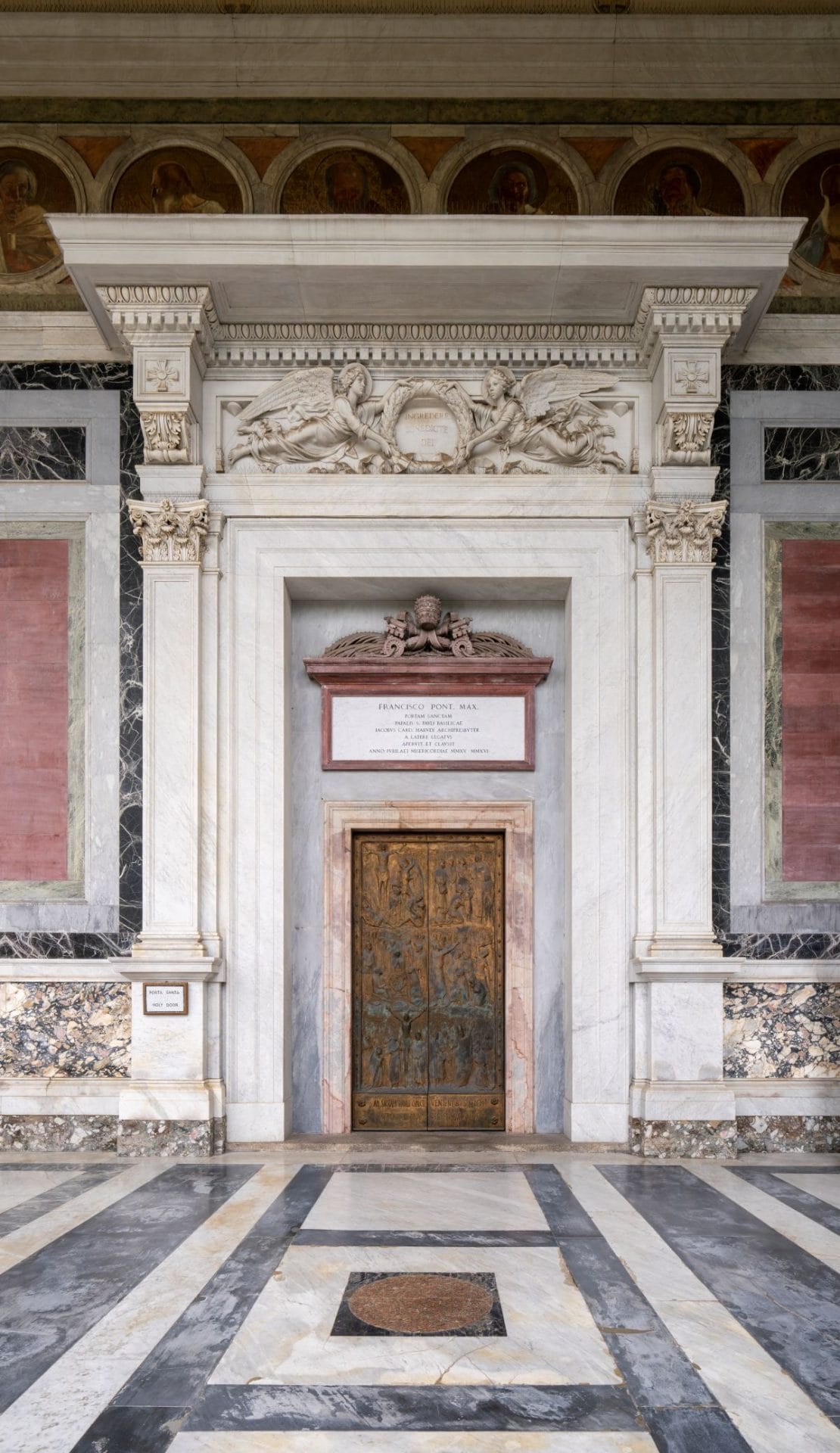
The Holy Door is only open during Jubilee years. Photo credit: StPaul.jpg
The Nave
Once inside the 440-foot-long nave, notice the vastness of the interior, set across by 5 aisles complete with 80 columns. St. Paul is one of the 15 largest churches in the world (and second largest in Rome) and it’s easy to gauge its size from here.
The gold interior is largely a 19th-century neoclassical creation, made after the great fire of 1823. The walls of the nave are also decorated with paintings that depict the life of St. Paul.

The interior is full of enormous marble columns and gold mosaics you won’t want to miss. Photo credit: Pymouss
The Papal Medallions
Some of the most striking things about the interior of the basilica are the 265 large medallions that line the walls. There is one for every pope, though you may notice that only the most recent popes are likely represented accurately. From Saint Peter to Pope Francis, you can follow the line of the papacy while standing inside the nave.
Legend says that when there is no more room for another papal medallion, the world will come to an end. True or not, you should not fear: there is enough space for at least 8 more popes.

Inside the basilica, the current pope is always illuminated. Photo credit: Anbonifacio
The Tomb of St. Paul
Although it was a legend that the church was built over St. Paul’s final resting place, church authorities relied on faith to assume this legend had merit. During the Jubilee year of 2000, many pilgrims had expressed disappointment that they could not touch or even see the tomb of St. Paul, the Apostle.
And so in response to this, in 2002, Vatican archeologists went digging. And in December 2006, those same Vatican archeologists announced that they had, in fact, found a white marble tomb underneath the altar in St. Paul Outside the Walls.
Three years later, Pope Benedict XVI announced the results of a radiocarbon dating test on the remains inside the sarcophagus below the altar in St. Paul’s. The tomb and its remains date back to the first or second century – suggesting that they do, in fact, belong to St. Paul.
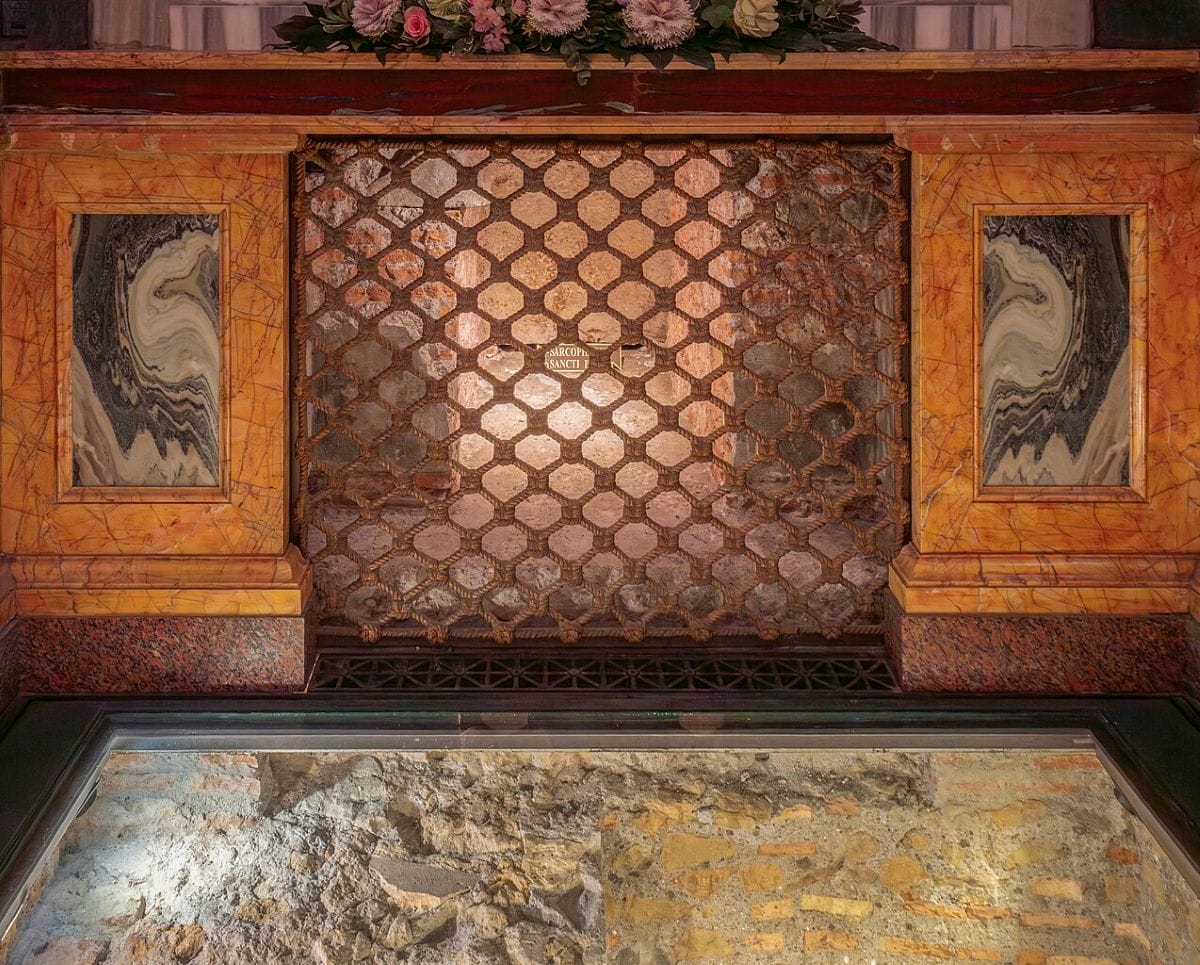
Look below the altar to see St. Paul’s tomb. Photo credit: StPaul.jpg
The connection between St. Paul Outside the Walls and the Vatican
St. Paul Outside the Walls is one of the four major papal basilicas of Rome, along with St. Peter’s Basilica, Archbasilica of St John Lateran, and Santa Maria Maggiore. As a papal basilica, it holds a special connection to the Vatican and the Pope.
While it’s not located within Vatican City, it remains under the Pope’s jurisdiction and serves as a key site for religious ceremonies during Jubilee years. Historically, it has played a vital role in Catholic tradition as a place of pilgrimage and prayer, especially for those honoring the Apostle Paul.
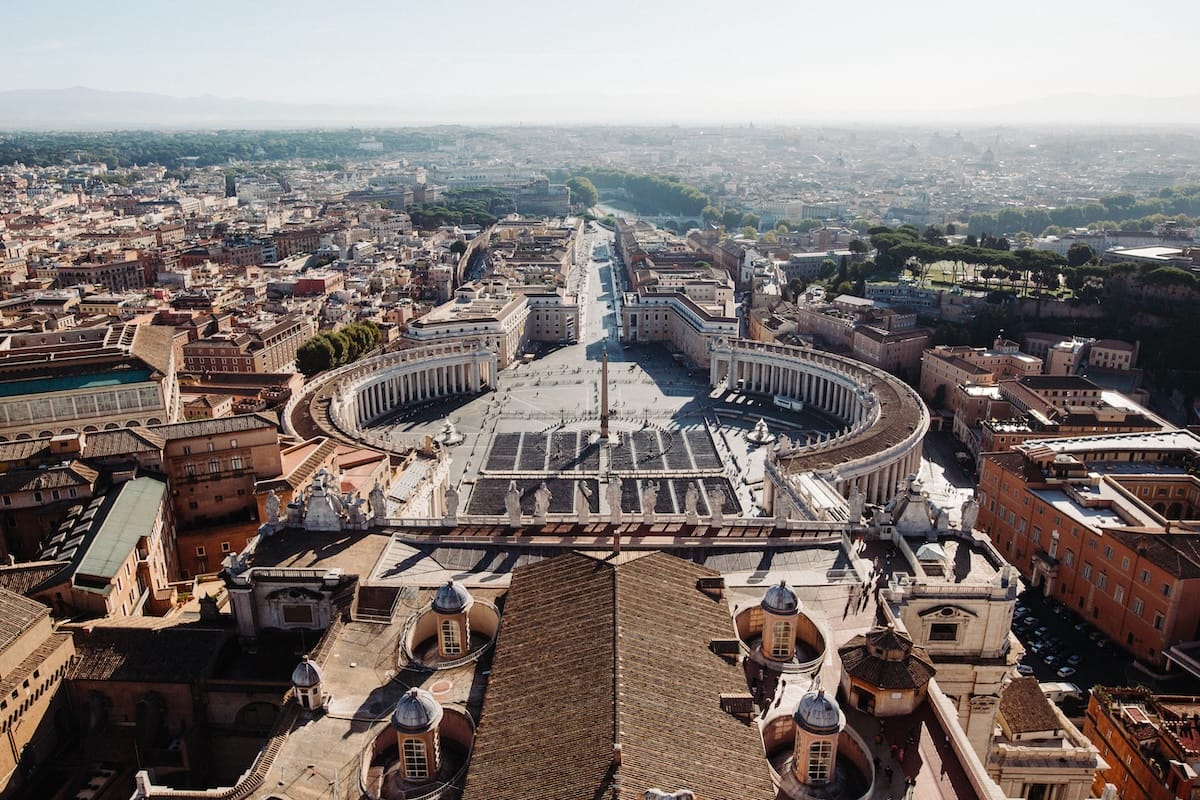
The Vatican has a special connection to St. Paul Outside the Walls and shouldn’t be missed.
FAQs – St. Paul Outside the Walls
What are the opening hours for St. Paul Outside the Walls?
St. Paul Outside the Walls is generally open every day, making it easy to include in your Rome itinerary. The basilica typically welcomes visitors from early morning until early evening, with shorter hours for the cloister and archaeological areas. For the most peaceful experience, plan to arrive shortly after opening or later in the afternoon, when the basilica is usually quieter and you’ll have more space to admire its magnificent mosaics, cloisters, and architecture.
As opening times can occasionally change for religious celebrations, special events, or holidays, it’s always a good idea to check the official schedule before your visit.
Is St. Paul Outside the Walls free to visit?
Entry to the Basilica of St. Paul Outside the Walls is completely free, making it one of the best-value cultural and religious sites in Rome. Visitors can explore the vast nave, admire the glittering Byzantine-style mosaics, and visit the tomb of St. Paul without purchasing a ticket.
Some parts of the complex, however, require paid admission. The beautiful medieval cloister and archaeological area have a separate entrance fee, while guided tours may also incur an additional cost.
How do I get to St. Paul Outside the Walls?
St. Paul Outside the Walls is located in Rome’s Ostiense district, around two miles (3 km) south of the historic centre, making it easy to reach by public transport.
- Metro: Take Line B to Basilica San Paolo station, then walk just a few minutes to the basilica.
- Bus: Several routes serve the area, including 23 and 769, with stops close to the main entrance.
- Taxi: From central Rome, the journey takes 15–25 minutes, depending on traffic.
Once you arrive at Piazzale San Paolo, the basilica’s imposing quadriportico and distinctive façade make it impossible to miss, with clear signs directing visitors to the main entrance.
Are there any attractions near St. Paul’s?
Yes! The area around St. Paul Outside the Walls offers several attractions worth exploring:
- San Paolo alle Tre Fontane (Via di Acque Salvie, 1): Located a short distance away, this church marks the site of St. Paul’s martyrdom. Legend says three fountains appeared where his head touched the ground.
- Tiber River Walks: Enjoy a peaceful stroll along the nearby Tiber River, which offers scenic views and quiet reflection.
- Centrale Montemartini Museum: This unique museum combines ancient Roman statues with industrial machinery, creating a fascinating juxtaposition of art and technology.
- Testaccio Neighborhood: Known for its authentic Roman cuisine and vibrant market, Testaccio is a great place to grab a meal after your visit.
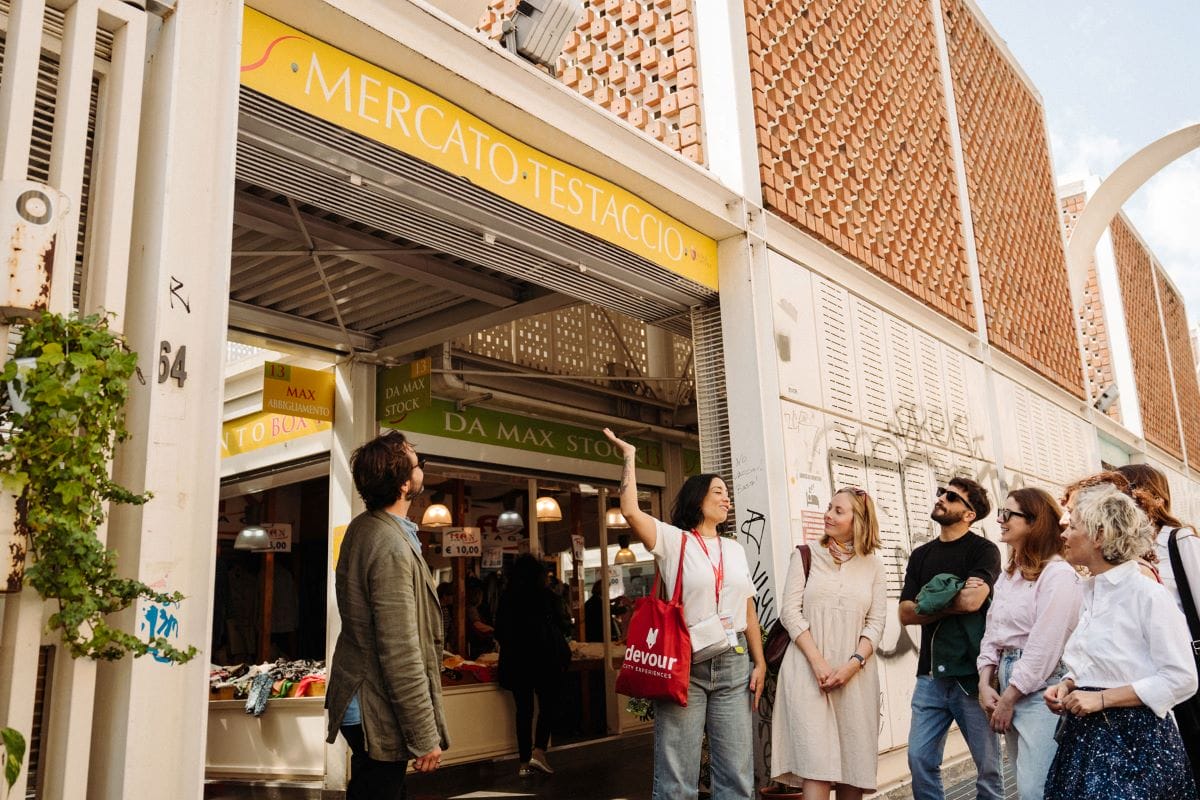
Check out the Testaccio neighborhood after your visit to refuel.
Ready for a Roman adventure?
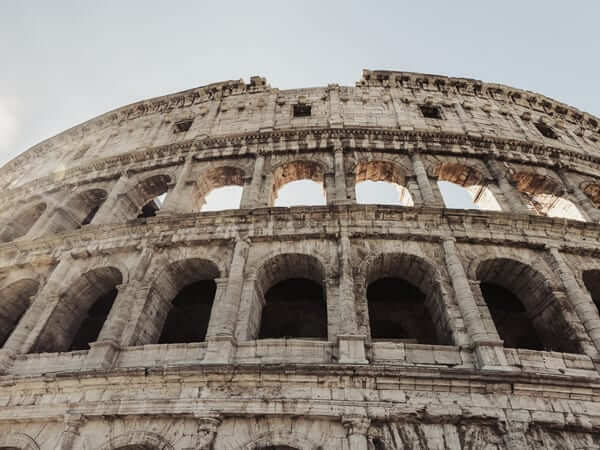
Whether you’re visiting Rome’s magnificent papal basilicas, exploring the ancient wonders of the Colosseum, or admiring the masterpieces of the Vatican Museums, a guided tour brings the city’s history to life.
Discover expert-led experiences designed for first-time visitors, history enthusiasts, families, and art lovers alike, and find the perfect tour of Rome to make the most of your time in the Eternal City.

Book a Tour

Pristine Sistine - The Chapel at its Best
€89

1794 reviews

Premium Colosseum Tour with Roman Forum Palatine Hill
€56
850 reviews

Pasta-Making Class: Cook, Dine Drink Wine with a Local Chef
€64
121 reviews

Crypts, Bones Catacombs: Underground Tour of Rome
€69
401 reviews

VIP Doge's Palace Secret Passages Tour
€79
18 reviews

Legendary Venice: St. Mark's Basilica, Terrace Doge's Palace
€69
286 reviews
Follow us
Stay up to date with travel tips, local insights and all things Italy on our social channels!


Subscribe to our Newsletter
Get curated Italy travel tips delivered to your inbox!

