





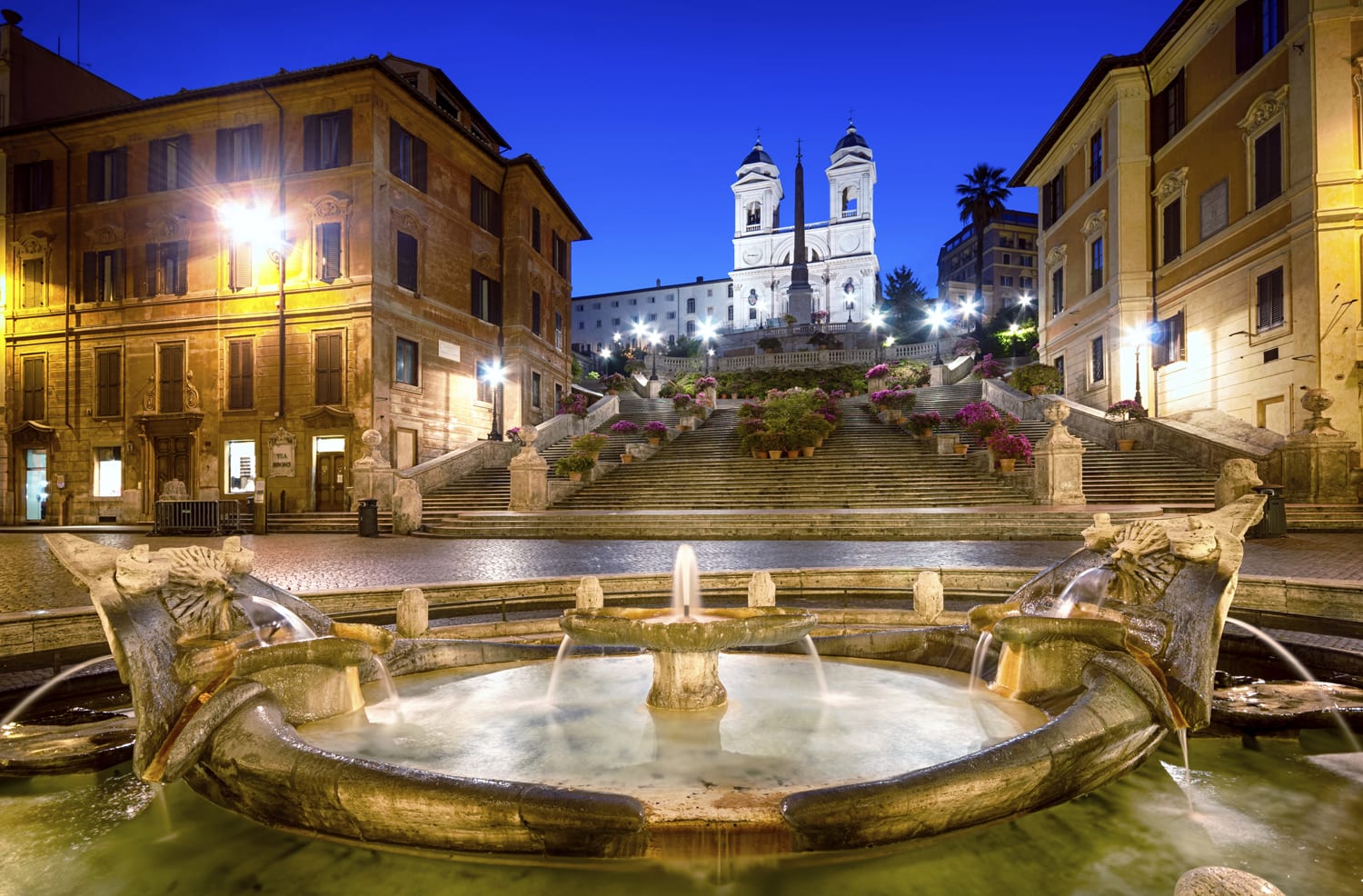
Can You Sit on the Spanish Steps? 11 Surprising Ways To Get in Trouble in Italy
January 29, 2026
Whether you know them by virtue of Audrey Hepburn and Gregory Peck in the classic film Roman Holiday, or have seen them yourself, the Spanish Steps are one of the most famous landmarks in Rome. But there is also rumour and intrigue and many a tourist now asks the question: Can you sit on the Spanish Steps?
Can you sit on the Spanish Steps?
To many this may seem a silly question, and one might think the answer would be “of course, why not?” However, as of 2019, a ban has been introduced to prevent tourists from sitting on the 135 steps, spanning from the Trinita de’ Monti to the Piazza di Spagna. Indeed, a hefty fine of €250 awaits anyone spotted using the steps as a resting spot, enforced by whistle-wielding high-vis-wearing officials patrolling the area by day. Should anyone do damage or create stains on the staircase, the fine increases to €400.
But why can´t you sit on the Spanish Steps? The ban came into force after the area underwent a major cleaning and restoration project in 2016. The €1.5 million initiative was funded by the jewelers Bulgari, in celebration of their 130th anniversary. Reactions to the ban have varied. Some have denounced it as an extreme measure. Others welcome it as necessary to prevent damage to one of the city’s most iconic landmarks, which is frequently subjected to wear and tear. But for anyone unaware of the measures, it could prove an expensive mistake.
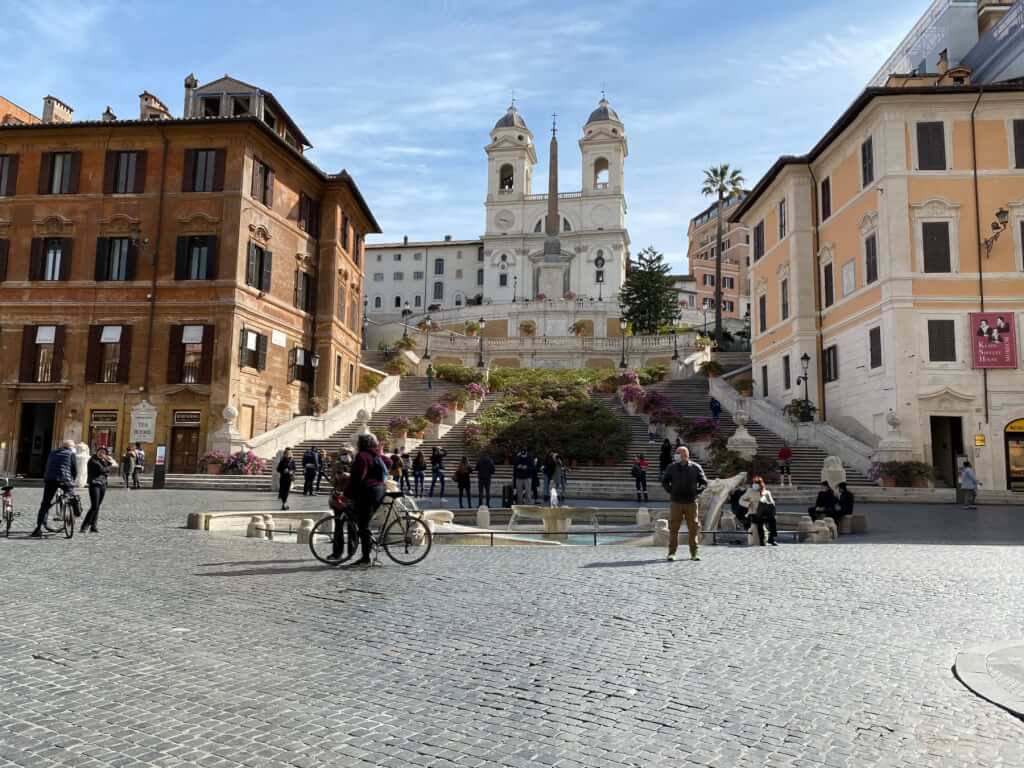
Can you sit on the Spanish Steps? Definitely not! If you do you could face a fine of up to 400€
This is just one in a number of surprising ways to get fined in Italy. The Italian government has introduced a number of bans in order to protect important landmarks and historic monuments across the country; from jumping in fountains to snacking on streets – you’ll even find footwear restrictions in place in some areas!
Things that could get you fined in Italy
So, along with sitting on the Spanish Steps, there are plenty of other ways to get in trouble with Italian law. Luckily, we’ve compiled a handy guide to keep you on the straight and narrow.
1. Wearing Loud Shoes in Capri
The Island of Capri should be listed in the dictionary next to ‘ideal holiday destinations’. With sparkling blue seas and stunning coasts, it looks like a postcard come to life. It comes as no surprise that Capri gets its fair share of tourists: Everyone wants a slice of the calm, tranquil surroundings. However, this peaceful aura is something the locals want to preserve – at all costs.
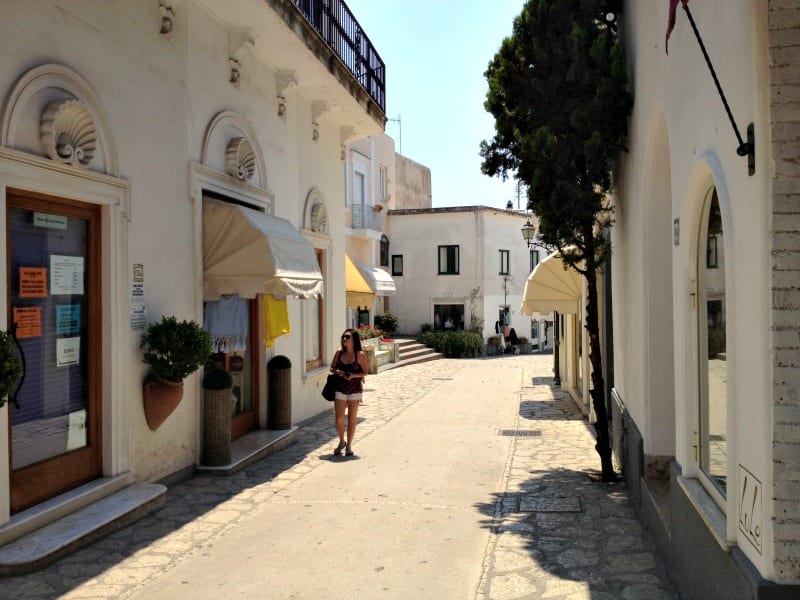
A visitor soaks in the sun as they stroll down the quiet streets of Anacapri
Therefore, noisy footwear – including squeaky sandals, flip flops and clogs – are banned on the island. And if you think that’s not enforced, think again. In 2010 a couple was fined £100 (each) for wearing excessively noisy footwear. So forget about high-heels and tread softly as your stroll the quaint streets!
2. Frolicking in Fountains
Italy’s heat means fountains come as a welcome reprieve. Even the sound of rushing water can be enough to make things seem cooler. While most people would agree that jumping into the Trevi Fountain is ill-advised, Italian authorities are now clamping down on any kind of interactions with the country’s iconic fountains.
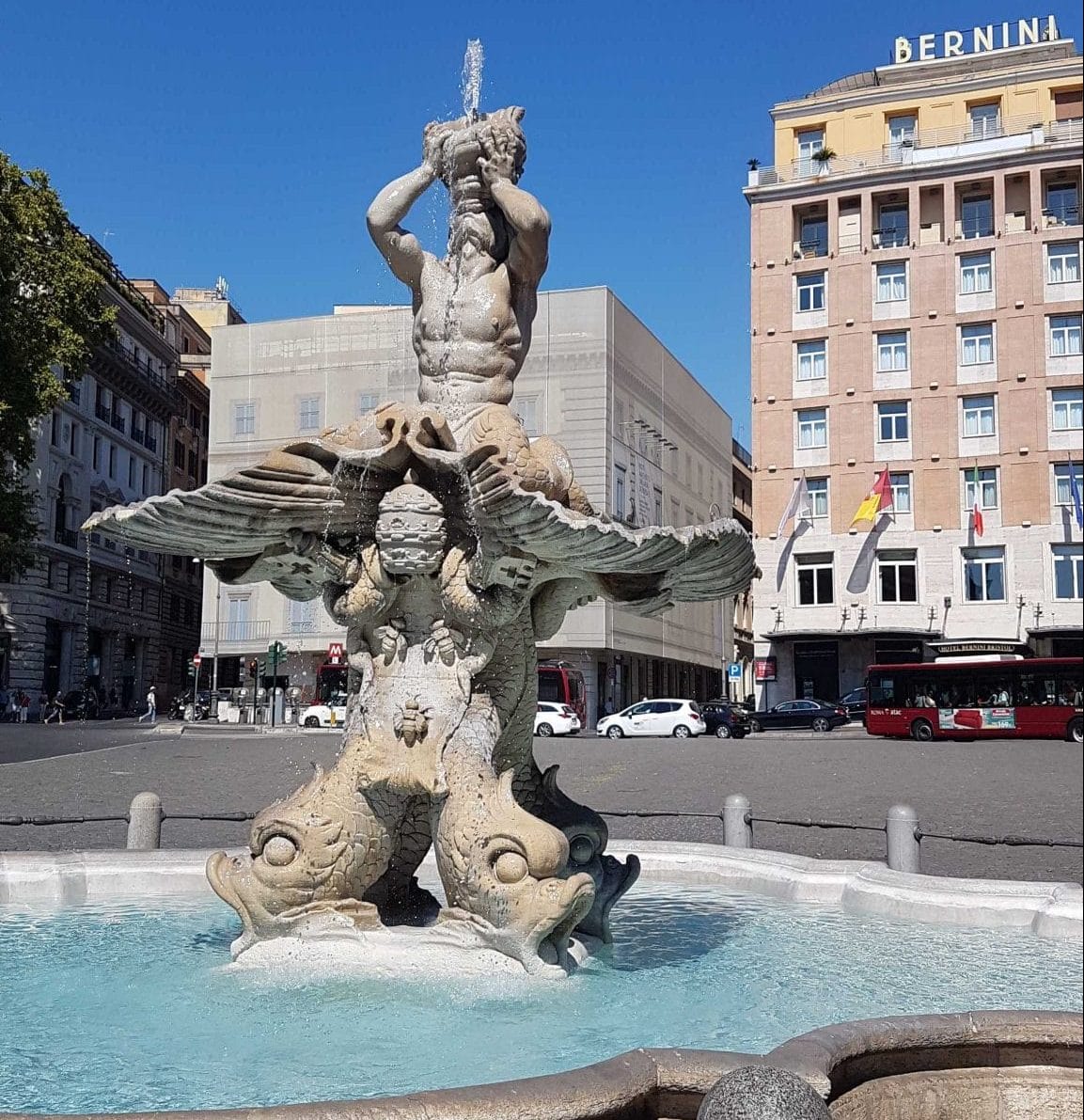
Fontana del Tritone
Now so much as dipping your feet into the waters of a historic fountain could result in a €450 fine. This actually happened to one elderly tourist discovered at the fountain of the Altare della Patria. Indeed, the zero-tolerance policy comes after a skinny-dipping incident in the same fountain which sent ripples of shock through the country and outraged local residents.
3. Making Sandcastles in Eraclea
Whether you’re a cathedral sculptor or can’t manage much more than a misshapen tower, nothing says ‘summer’ more than building sandcastles at the beach. But you’ll have to think of alternative ideas if you’re planning to go to Eraclea.
Italian mayors have been given the power to enact a series of by-laws, in an effort to enhance ‘public decorum’, one of which prevents sandcastles being built in the small city near Venice. Deemed to be an obstruction and a hazard to public safety, it goes alongside collecting shells as souvenirs. Which brings us to…
4. Sand ‘Theft’ in Sardinia
“Free”, yet meaningful, sand from a tropical destination seems like an ideal souvenir. But sand theft is increasing in popularity and threatening resorts and ecosystems. In some place it has created a deficit and in 2017, a ban was introduced making it illegal to take any sand from the Italian island of Sardinia.
But this hasn’t deterred everyone: In August 2019 two French tourists found themselves facing up to six years in jail for allegedly attempting to take 40kg of sand home in their suitcases. Instead of risking a fine of €3,000, we can think of a few cheaper places to get some great Italian souvenirs.
5. Feeding Pigeons in Venice
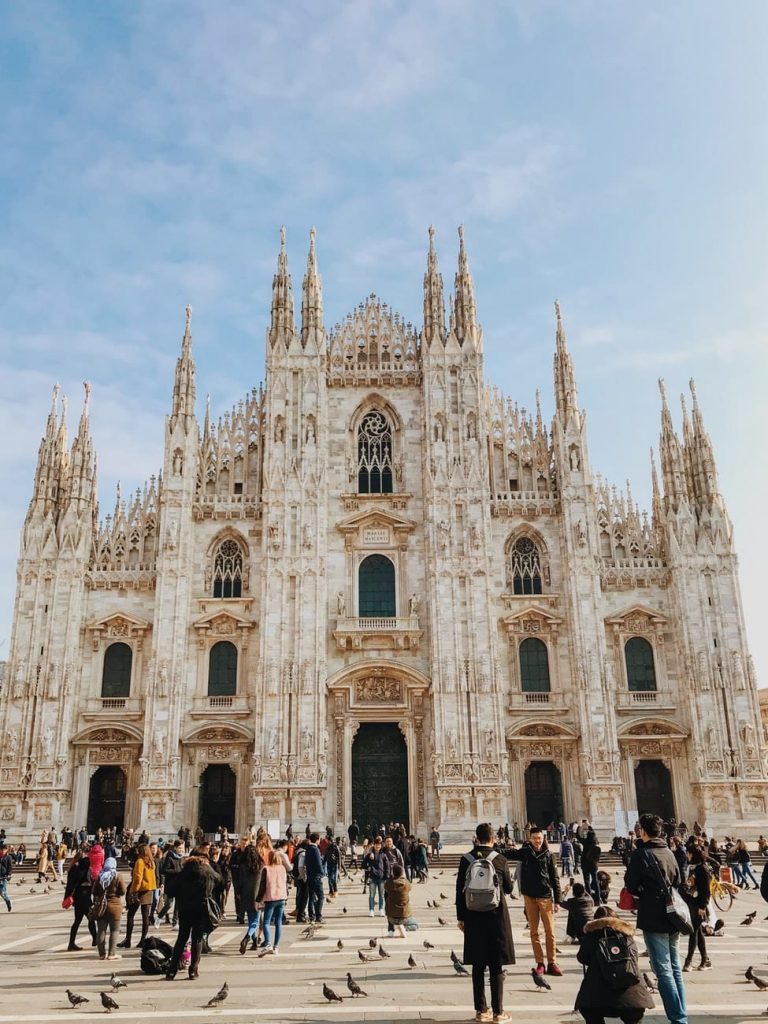
A part of the city’s iconography, pigeons have taken up residency in Venice. A photo with one of the birds has become one of the quintessential markers of a trip to the Floating City. However, those images could soon be a thing of the past as a feeding ban has now been enacted in St. Mark’s Square among other spots throughout the city.
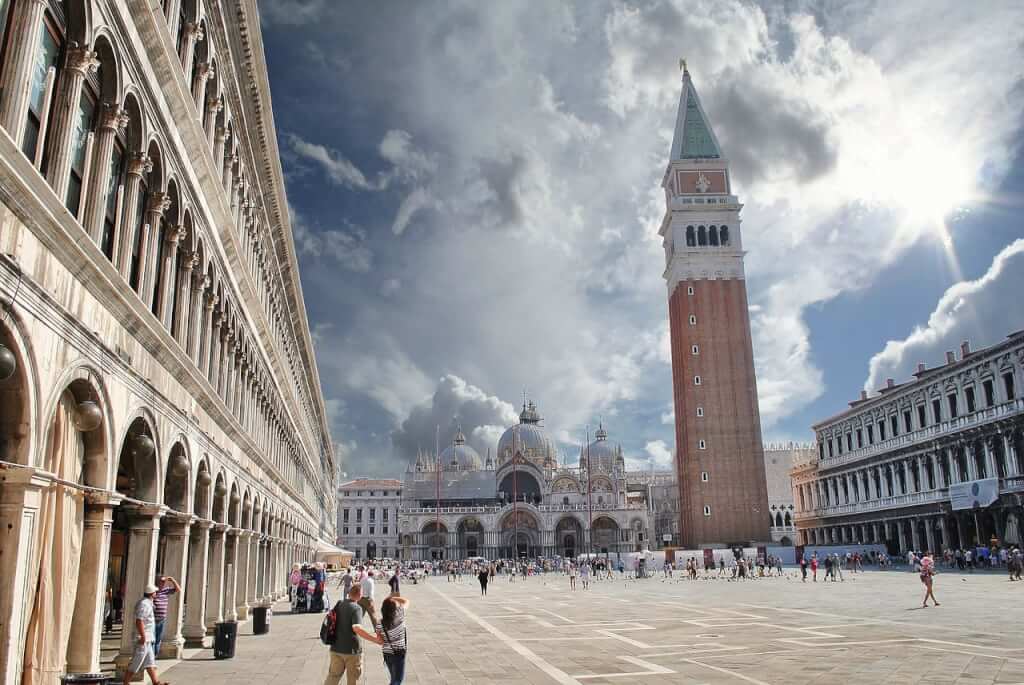
St. Marks Square is one of various locations in Venice where feeding the local pigeons is banned.
It comes as an effort to counteract damage to monuments in addition to decreasing restoration and cleaning fees. Of all Italy’s bans, this one has perhaps provoked the most public outrage – and not from visitors, but locals, many of whom are angered that the vendors selling corn and pigeon-feed from nearby stalls are now being left without a livelihood.
6. Snacking in Florence
We all know that Italy is the home of fine food. The mere mention of Italian cuisine is enough to conjure images of rich ravioli and stuffed tortellini, not to mention creamy lasagna. With so many dynamic flavors, it’s a titanic effort not to indulge. But beware of munching in Florence, where a ban is in place to prevent snacking at certain times during the day.
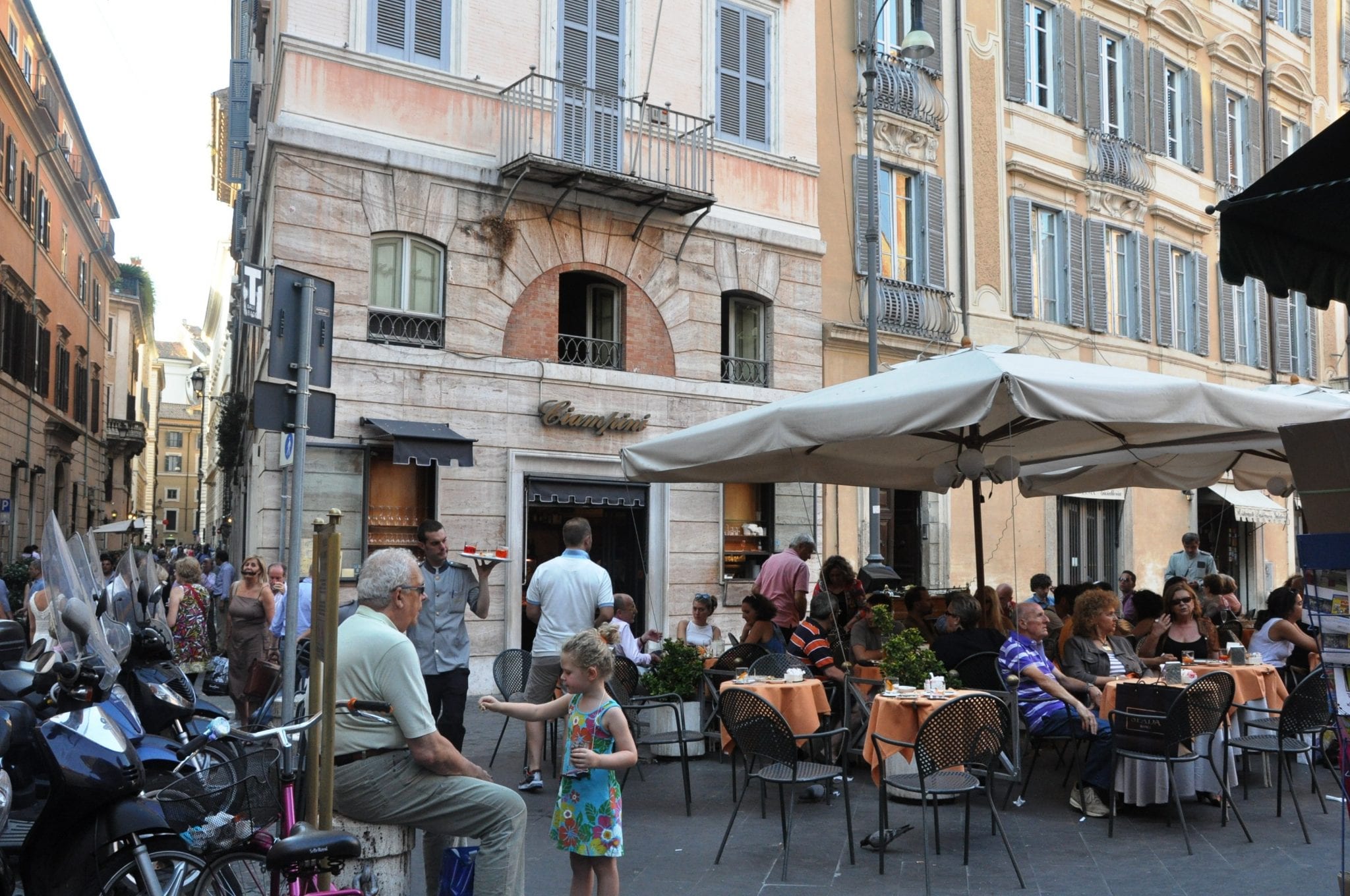
At Ciampini, there’s not just great gelato, but a lovely view of the piazza!
This is in effect on the four streets that run through the city’s historic center – Via de’Neri, Piazzale degli Uffizi, Piazza del Grano and Via della Ninna. In the afternoon from 12 – 3 pm and in the evening from 6 – 10pm, anyone caught eating could face a fine of up to €500.
The solution? Breakfast later so you won’t get hungry during the peak hours – or take an evening stroll with Walks of Italy and discover some delicious gelato on our Welcome to Florence Tour!
7. Steaming up the Windows in Eboli
If Paris is the ‘City of Love’, Italy is the country of passion.
Boasting Casanova and Romeo & Juliet among its citizens, the country has plenty of romantic spots. But anyone hoping to recreate Jack and Rose’s iconic scene in Titanic while in Eboli should think again.
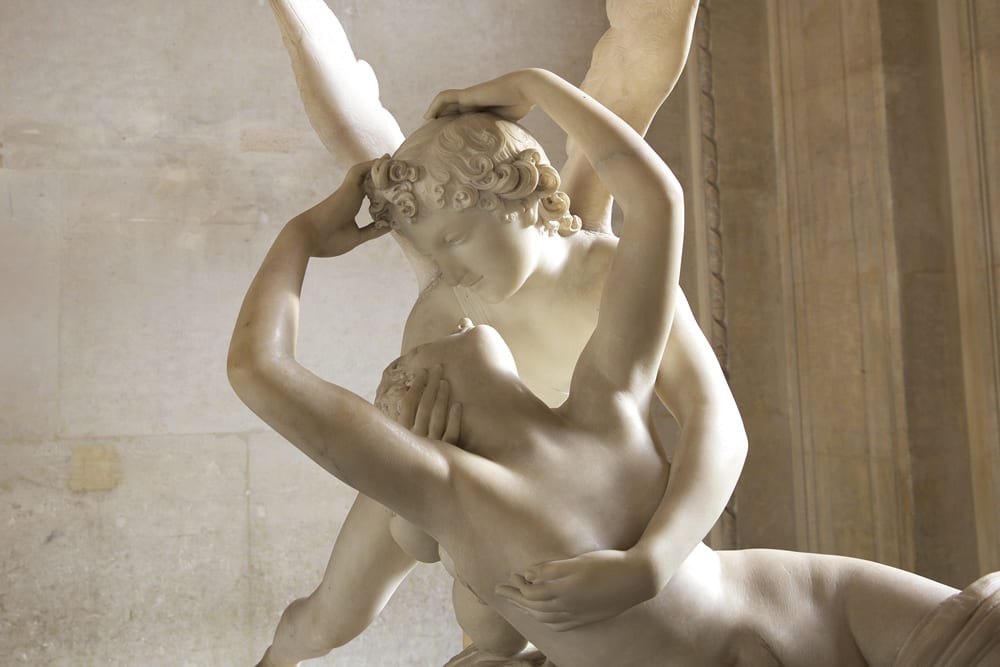
Cupid´s Kiss, by Antonio Canova – one of the last Italian masters of marble carving.
The quaint town of Eboli in Southern Italy – renowned for its olive oils and buffalo mozzarella – introduced a ban on kissing in vehicles in 2011. A passionate embrace could now cost lovers €500, with police being stationed to patrol parks on the outskirts of town.
8. Going Shirtless in Venice
Italy isn’t exactly known for being one of the cooler holiday destinations. With temperatures regularly reaching up to 40° in the summer months, it’s understandable to want to cool off.
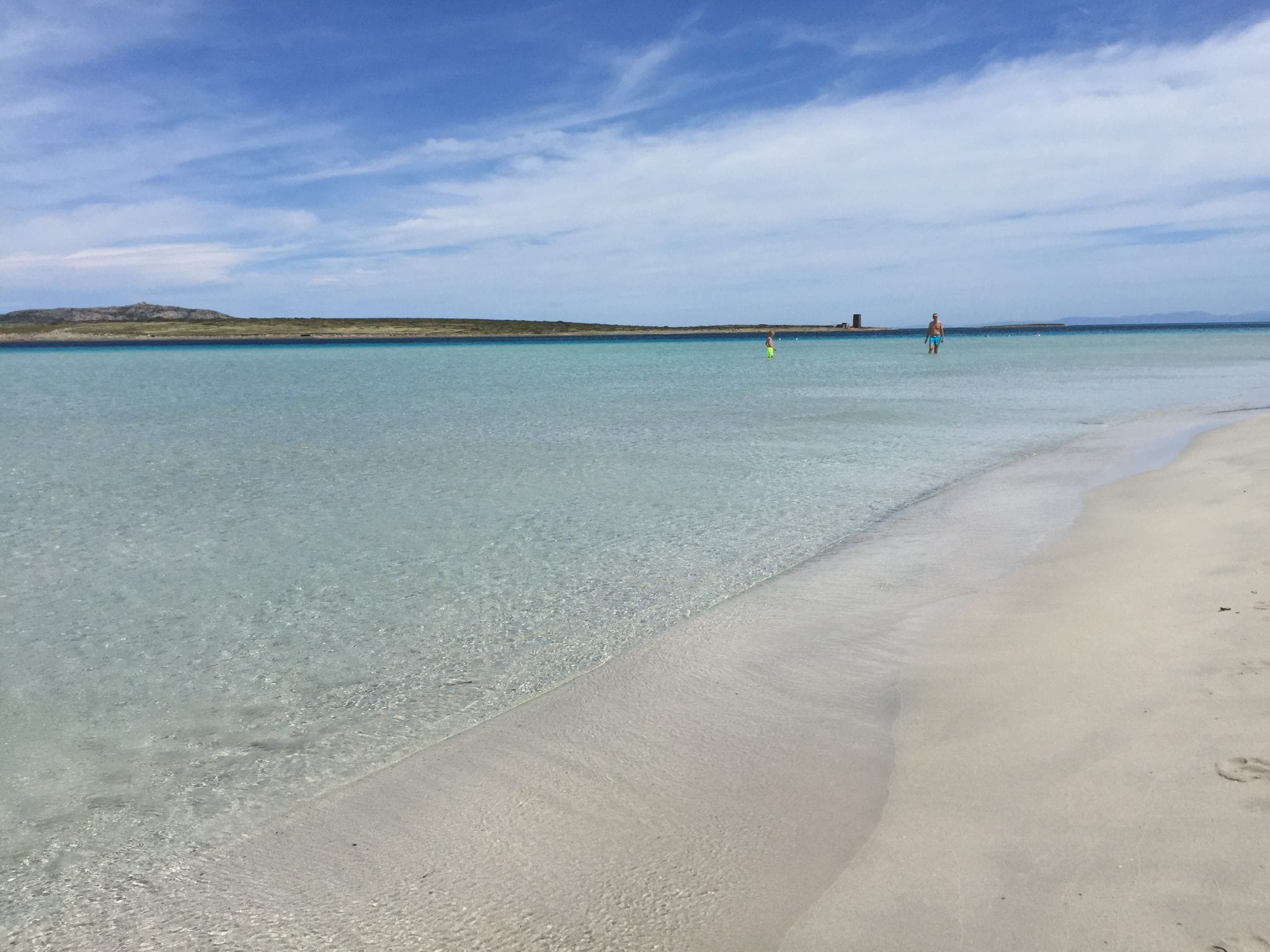
But bear in mind fines are in place for anyone who chooses to go shirtless around Venice or Rome. Similarly, Venice has also banned wearing swimwear around the city center due to complaints of tourists wearing beachwear. Penalties for ignoring the ban can reach a scorching €3,000. Take it from us; better to spend the money on a new wardrobe instead.
9. Using a Love-Lock
If you’ve passed over a bridge in any major city in the last few years, you’ll probably know the practice of couples attaching ‘love-locks’ to famous monuments. A nice idea, in theory, but while the weight of one padlock itself is minimal, the weight of hundreds is considerable. The practice has placed an increasing strain on bridges and fences in cities around the world.
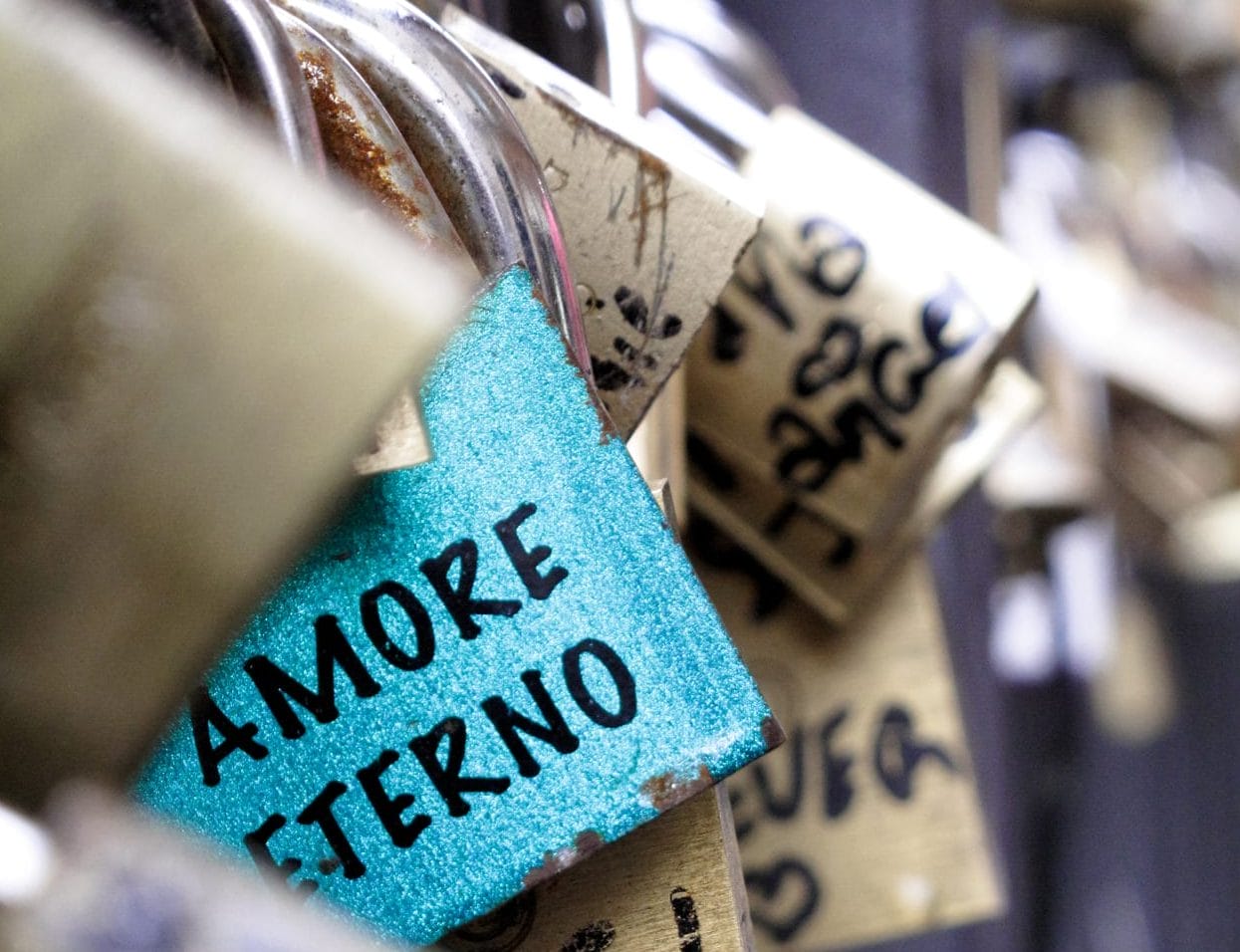
The Love-Lock phenomenon is now banned in various places in Italy and beyond! Photo credit: Erica Prairie
In Italy, over 20,000 padlocks have been removed from the Ponte dell’Accademia bridge which spans the Grand Canal. A campaign called ‘Unlock Your Love’ is leading the charge in advocating for the removal of the locks placed on landmarks, emphasizing that love doesn’t need to be chained. Amen to that.
10. Brewing Coffee… Near Landmarks
No nation in the world takes coffee as seriously as Italians do. So in some ways, it comes as no surprise that when German tourists decided to brew coffee near the Rialto Bridge in Venice they found themselves in hot water.

Stick to letting the local baristas make your coffee, and enjoy the Italian cafe culture
Though it may not be an explicit ban, locals called the police for fear it would damage the landmark and the two backpackers were hit with a €950 fine and immediately expelled from the city.
11. Picnicking in Venice
On a similar note, why you would want to make your own food with Italian cuisine on your doorstep is beyond us. However, picnics are often a common practice for those travelling on a budget, or those travelling with children who are picky eaters.

Nevertheless, as part of the ‘Decency Laws’, a ban has been placed on picnics in Venice in efforts to avoid litter and prevent stains to the city’s monuments. The same is in place in certain spots across Florence and Rome, meaning picnicking near piazzas and historic landmarks is strictly off the table.
Future-proofing
Like it or loathe it, Italy is doing its best to future proof iconic monuments for the next generations to enjoy. Extreme? Perhaps. But with so many dazzling cities to explore and historic sights to see, we need to respect the local attractions in order to leave them as well preserved as possible for future generations. In addition, with travel being so popular, it is also important to respect the locals and have minimal impact on the people who actually live in these places we want to visit.
FAQs – Can you sit on the Spanish Steps? And other prohibited activities.
How can I make sure I don’t accidentally break the law while visiting Italy?
The best way to stay on the right side of Italian law is to assume that historic sites are protected spaces, not casual hang-out spots. Avoid sitting, eating, swimming, climbing, or touching monuments unless it’s clearly permitted. When in doubt, look for signage, follow what locals are doing, and pay attention to police or city wardens, especially in tourist hotspots. A little awareness goes a long way in avoiding hefty on-the-spot fines.
What general etiquette should visitors keep in mind when traveling in Italy?
Respect is key. Dress modestly around churches and historic centers, keep noise to a minimum in residential areas, and remember that many city centers are living neighborhoods, not theme parks. Avoid littering, eating on monuments, or treating landmarks as props. Italians are famously welcoming, but showing courtesy toward local customs, public spaces, and daily life will always earn you a warmer reception.
Where can I find reliable local information about rules and restrictions?
Official city signage, local tourism offices, and museum websites are good starting points, but rules can change quickly and aren’t always obvious. Guided tours with local experts are one of the easiest ways to stay informed, they’ll flag what’s allowed, what’s frowned upon, and what could land you with a fine, all while explaining why the rules exist. It’s local knowledge you won’t find in a generic guidebook.

And remember, with Walks of Italy you can always see the sights in the safe hands of an experienced, local guide, so you can’t go wrong.
Even better, booking a guided tour early in your trip sets you up for success for the days that follow. Your guide won’t just show you the highlights; they’ll share practical advice, local etiquette, and insider tips that help you avoid common mistakes, steer clear of fines, and experience Italy more confidently.
Think of it as getting the local rulebook, plus expert recommendations, right at the start, so the rest of your visit is smoother, richer, and far more rewarding.

Book a Tour

Pristine Sistine - The Chapel at its Best
€89

1794 reviews

Premium Colosseum Tour with Roman Forum Palatine Hill
€56
850 reviews

Pasta-Making Class: Cook, Dine Drink Wine with a Local Chef
€64
121 reviews

Crypts, Bones Catacombs: Underground Tour of Rome
€69
401 reviews

VIP Doge's Palace Secret Passages Tour
€79
18 reviews

Legendary Venice: St. Mark's Basilica, Terrace Doge's Palace
€69
286 reviews
Follow us
Stay up to date with travel tips, local insights and all things Italy on our social channels!


Subscribe to our Newsletter
Get curated Italy travel tips delivered to your inbox!

