


6 Reasons to Visit the Uffizi Gallery and Vasari Corridor in Florence
December 5, 2025
What do you know about the Uffizi Gallery and Vasari Corridor? And why visit these landmarks when you are sightseeing in Florence? Well, for starters, the Uffizi Gallery in Florence is one of the world’s great art museums. It boasts the most astonishing collection of Renaissance art on the planet. Here you can stand in front of and gawk at iconic works by Michelangelo, Da Vinci, Rafaelo, and Botticelli, among many others.
And then there’s the unique Vasari Corridor, built in 1565 for the Medici rulers and only opened to the general public for the first time in December 2024. This 750-metre elevated passage allowed the powerful Medici family to pass privately between their residence at Pitti Palace and the seat of government at Palazzo Vecchio, without having to mingle with the crowds below. Today, visitors can walk the historic route across the Arno and Ponte Vecchio.
Read on if you want to know more about these iconic places and the key reasons to check them out in person…
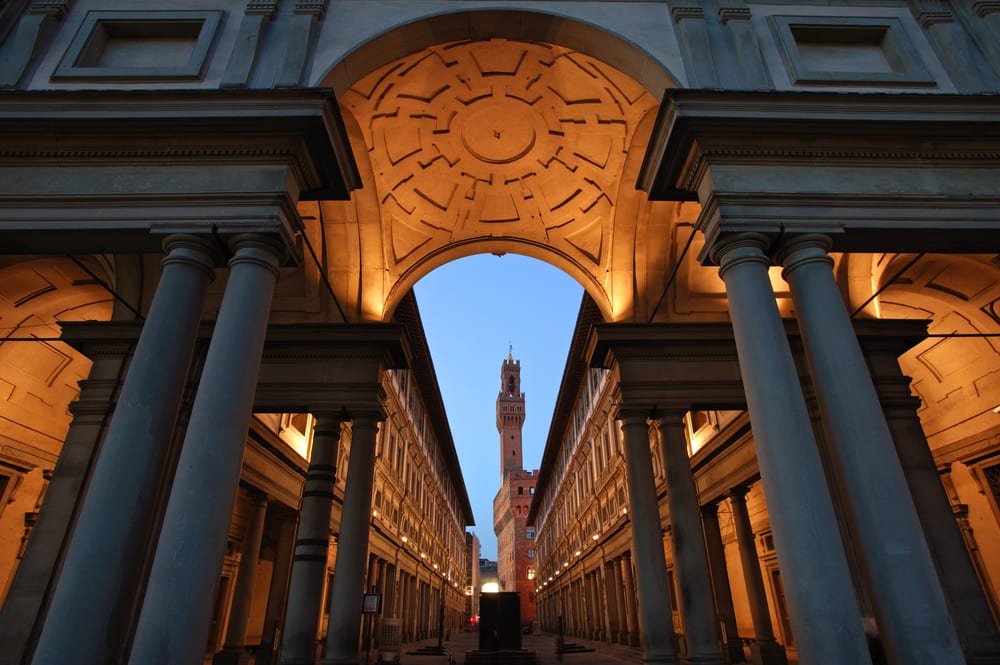
Even the architecture of the Uffizi Gallery is spell-binding!
To prepare you for your visit, here are some things you may not have known about the Uffizi Gallery and Vasari Corridor.
6 Reasons to Visit The Uffizi Gallery and Vasari Corridor
Your Visit to the “Offices”
The Uffuzi – meaning “offices” in Italian – were just that before it became an official art gallery. The uber-rich Medici family began hanging their private collection of art here. But since the 16th century, the collection has been open to visitors (by request, at first) and then officially open to the public in 1769.
When it was clear that the Medici line was going to die out, Anna Maria Luisi, the last matriarch of the Medici family, donated the artwork to the city of Florence. In 1865, the Uffizi officially became a museum.
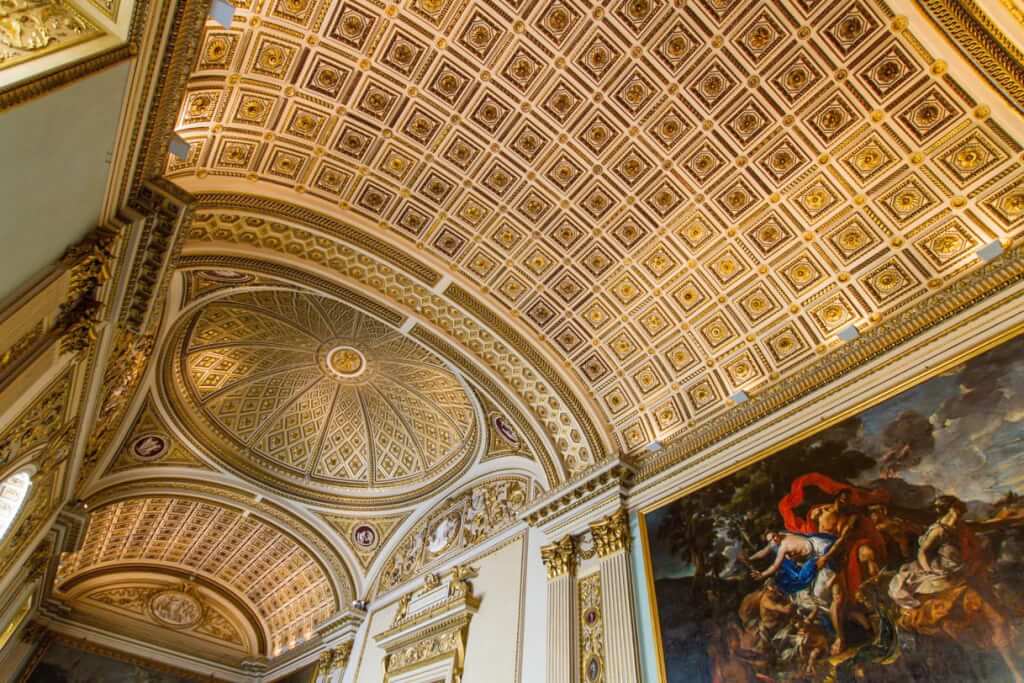
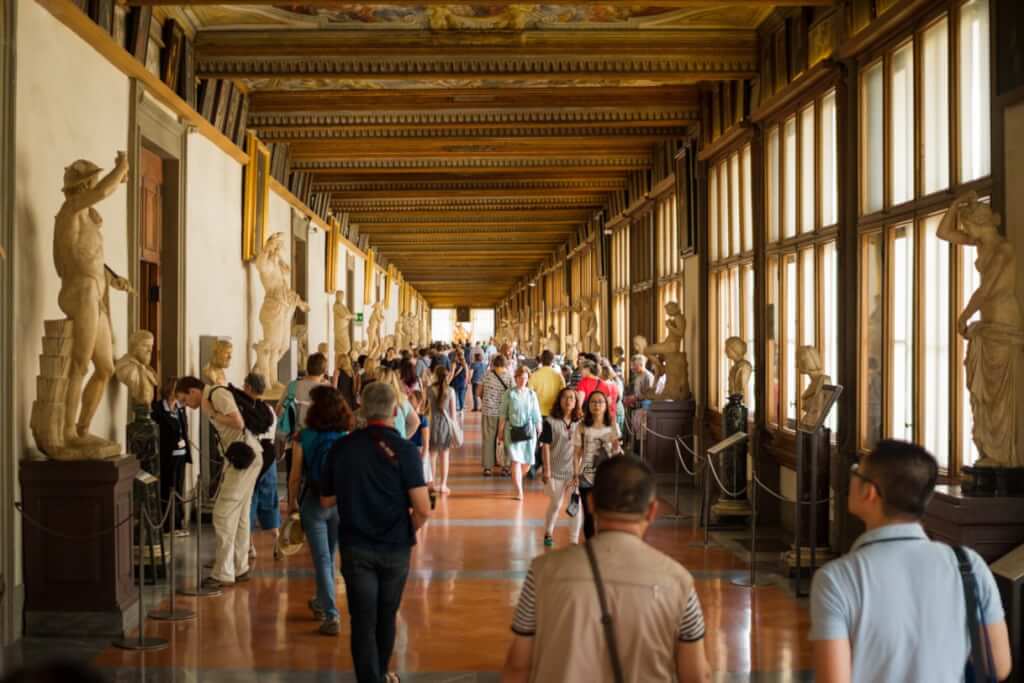
The Uffizi Gallery boasts one of the world’s most extensive collections of Renaissance art.
Eight Is Your Lucky Number
On the piano nobile of the Uffizi, architect Bernardo Buontalenti was commissioned in 1584 to create an octagonal room to display some of the Medici family’s most prized works of art. The room was named the Tribuna degli Uffizi, or the Octagonal Tribune, and it quickly became one of the most celebrated spaces in the gallery.
Its unusual shape was no accident. Eight was considered a particularly significant number in Christian symbolism, associated with regeneration, eternity, and the resurrection. In other words, the room’s eight sides were intended to evoke something beyond the earthly world—making it a fitting setting for the Medici’s greatest treasures.
Insider tip: The room above still exists and you’ll see it and learn more about it if you take our small-group guided tour of the Uffizi Gallery and Vasari Corridor.
The Mona Lisa Once Hung in the Uffizi
A little known fact: the Uffizi was once home to the Mona Lisa. Yep, that’s right: the queen of the art world, known for its home in the Louvre in Paris, was on display in Florence.
In 1911, a Florentine stole it from the Louvre, insisting that the Da Vinci painting should be displayed in Florence. When he gave it to the Uffizi, museum officials contacted the Louvre on the whereabouts of Mona Lisa. And until Paris officials came to retrieve it, she hung on the Uffizi Gallery walls.
Other famed paintings that are in the Uffizi Gallery today include a handful of iconic paintings by Sanddro Botticelli, works by Titian, Raphael, Caravaggio, and Michelanglo’s only free-standing painting.
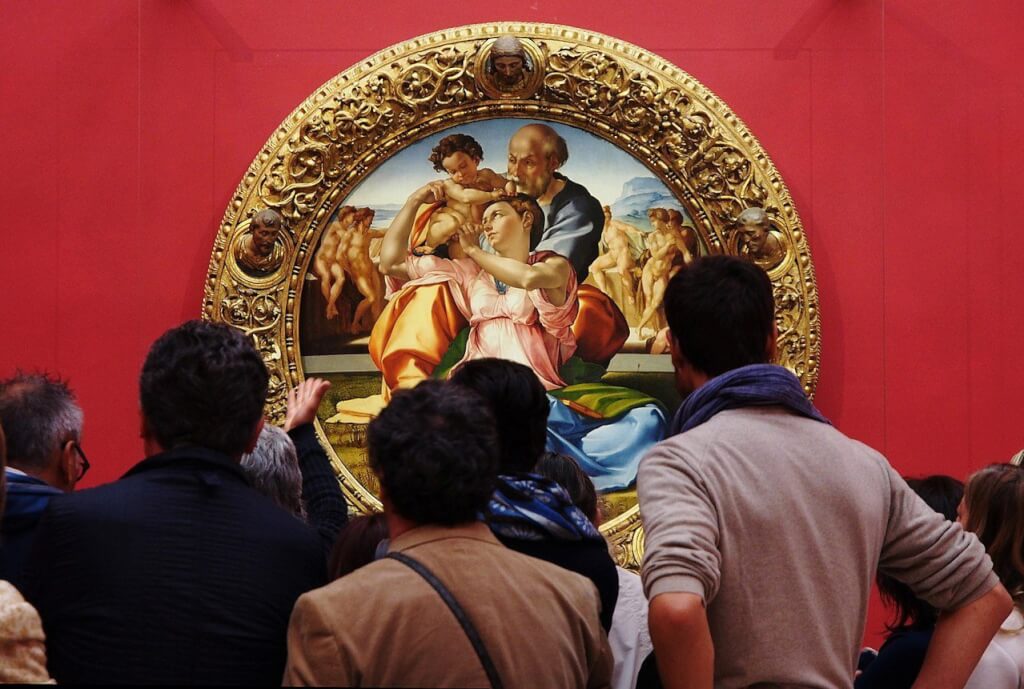
Michelangelo’s Doni Tondo can be seen at the Uffizi Gallery in Florence.
Walk in the Footsteps of Cosimo
The Vasari Corridor zigzags its way from the Palazzo Vecchio, across the Arno River on the Ponte Vecchio, and to the Palazzo Pitti. The approximate length is 3,280 feet, or about one kilometer. Duke Cosimo de Medici hired famed Florentine architect Giorgio Vasari to design the Vasari corridor (hence the name) in 1565.
One of the motivations for the construction of the private corridor was that Cosimo did not want to appear in public, perhaps an early prophecy of 21st-century celebrity culture. And now you can walk in his steps, getting unique views of Florence through the various windows of the corridor. By taking a guided tour of the Uffizi Gallery and the Vasari Corridor you will learn more about this exclusive passageway that has existed for more than 460 years, but remained private territory for so many of those years.
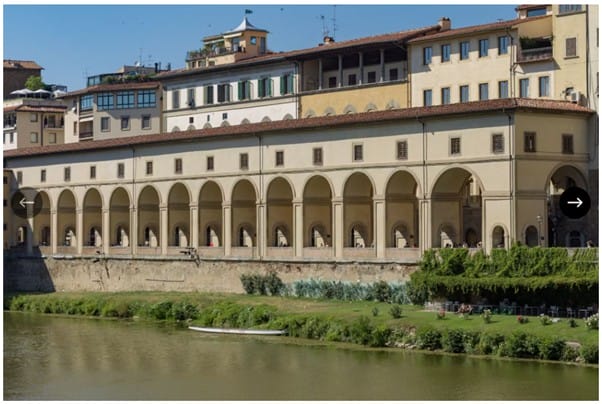
Follow in the footsteps of Cosimo and take a walk down the Vasari Corridor. Photo credit: www.uffizi.it
You’ll finish the Vasari corridor at the Pitti Palace and Boboli Gardens, where you can explore and discover the Fountains of Neptune, mysterious grottos and more.
Insider tip: Make sure you leave time to explore the Boboli Gardens. which is a vast green space full of curiosities.
Ponte Vecchio: From Meat Market to Jewelry
Until the Vasari Corridor was built, the Ponte Vecchio, the iconic bridge over the Arno River, was Florence’s main meat market.
But Cosimo and other members of the Medici family detested the smell of raw meat while crossing the bridge via the corridor, so Cosimo had the meat market moved. Jewelry makers and goldsmiths moved in thereafter, and even today the bridge is still occupied by jewelers and gold shops.
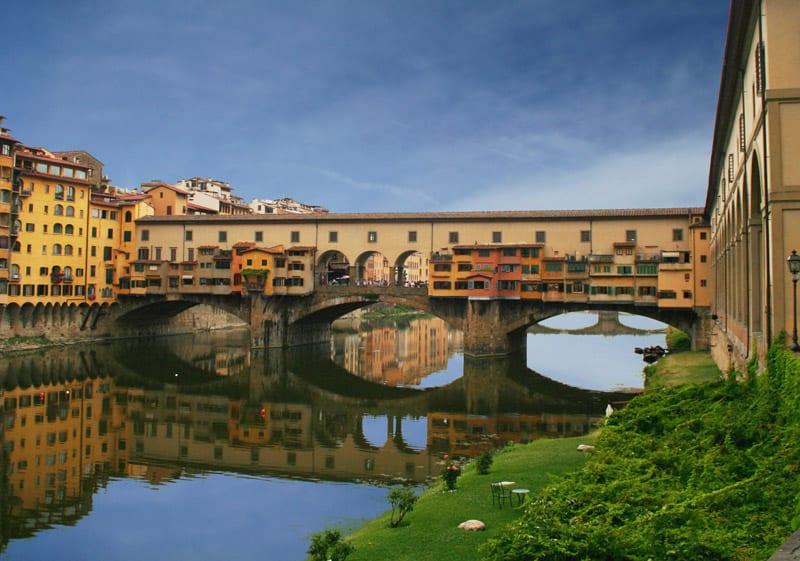
Florence’s Ponte Vecchio spanning over the Arno river.
The Church of Good Fortune
The Vasari Corridor passes by the Church of Santa Felicita, or “Holy Fortune” (“Felicita” could also be translated from Latin as “Luck” or “Happiness”). The Medici family had a window installed from the Vasari Corridor that looks down into the church so that they could “attend” services without having to rub up against ordinary people.
Why You Should Take a Guided Tour
Over five million people visited the Uffizi Gallery in 2024, making it the most visited art museum in Italy (and second most visited museum, in general, behind the Colosseum).
And, the best way to experience both places is to take a tour called Secrets of the Uffizi: Renaissance Art and Vasari Corridor Tour.
Why take a small group guided tour? Because… during peak times, the wait can be up to five hours, but you get skip-the-line access into the Uffizi. Then you get to stroll around the museum with an expert on Renaissance art where you’ll be able to get a deeper appreciation of the masterpieces on display. And finally, you’ll be able to amble down the Vasari Corridor, literally walking in the footsteps of the once-powerful Medici family.
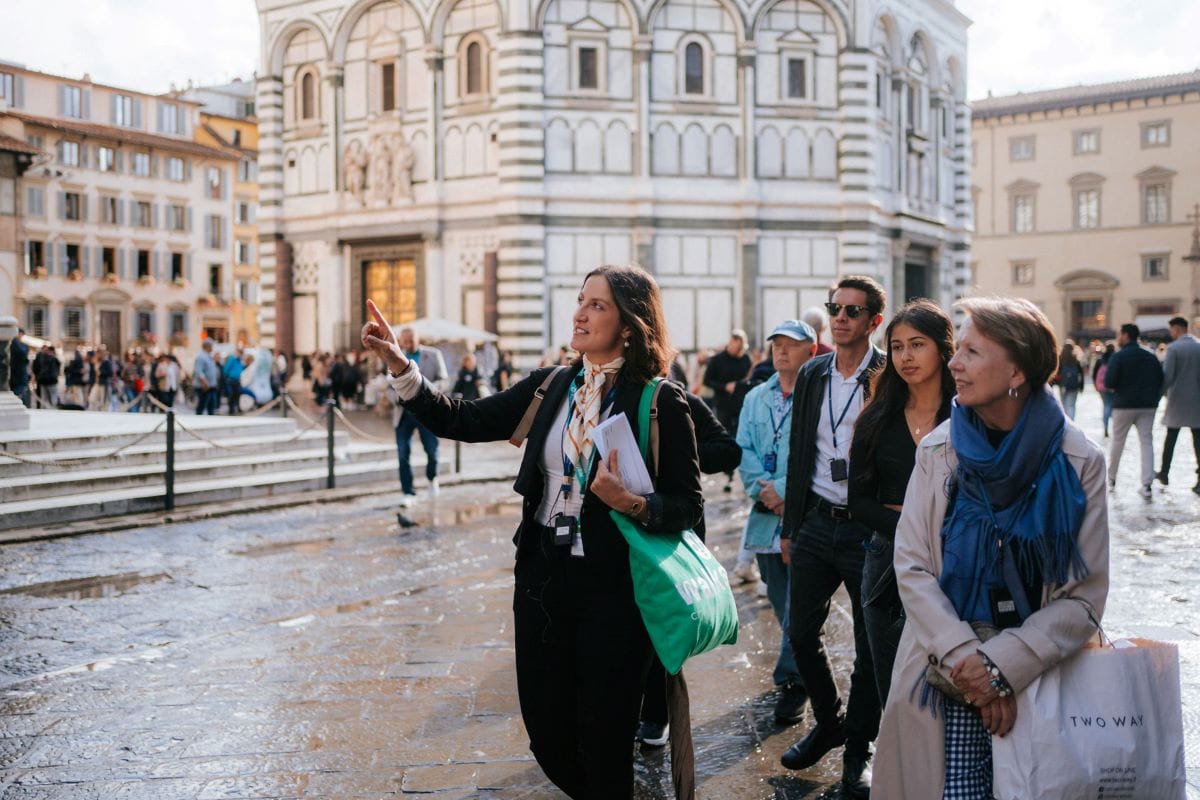
The stories of a local expert guide can really make the difference between a great visit and an excellent visit!
FAQs – Uffizi Gallery and Vasari Corridor
Are the Uffizi Gallery and Vasari Corridor open all year?
Yes, both are generally open year-round, although opening days and hours can vary. The Uffizi Gallery is closed on Mondays, and similarly, the Vasari Corridor is generally open Tuesday through Sunday. Both can also have special closures or changes to their schedules, so check the official timetable before your visit.
How long should I allow to visit the Uffizi Gallery and Vasari Corridor?
Allow at least three hours for the combined experience. You’ll want enough time to explore the Uffizi without rushing before making your way through the Vasari Corridor. Remember that the Corridor itself is around 750 metres long, and the route finishes near the Boboli Gardens, so allow extra time if you want to explore the gardens too!
What should I wear to visit the Uffizi Gallery and Vasari Corridor?
Comfortable shoes are a good idea, as you’ll be on your feet for several hours. There is no special dress code for the Uffizi Gallery, but if you also want to visit the nearby churches such as Santa Felicita, it’s sensible to dress respectfully, with shoulders and knees covered.
Is the Vasari Corridor suitable for visitors with limited mobility?
The restored Corridor was designed with accessibility in mind and includes ramps, platforms and lifts. However, because the visit follows a fixed route and ends at the Boboli Gardens, visitors with specific accessibility requirements should check the current arrangements before booking.
Do I need to book the Uffizi Gallery and Vasari Corridor in advance?
Yes. Advance booking is strongly recommended, particularly if you want to visit the Vasari Corridor. Access to the Corridor is limited and tied to specific time slots, so leaving it until the day of your visit could mean missing out. A combined guided tour can also make the logistics much easier.
What other attractions are worth seeking out in Florence?
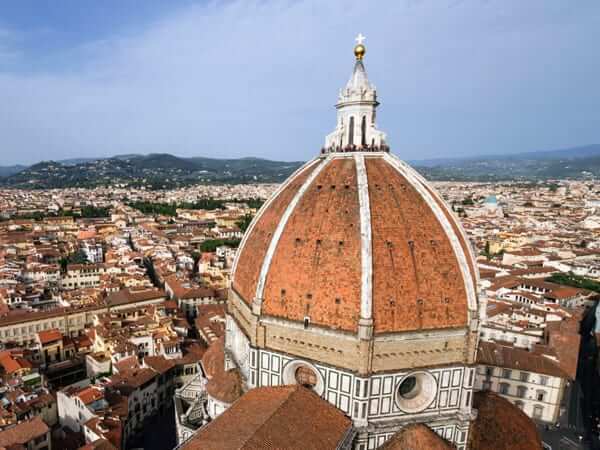
You could spend nearly a week ambling around Florence visiting its most famed sites, monuments, and churches. Some places that should be on your must-visit list include, the Duomo (Florence’s famed cathedral); the Ponte Vecchio, the famed covered bridge over the Arno River; and the Accademia Gallery to see Michelangelo’s most iconic work, “David.”
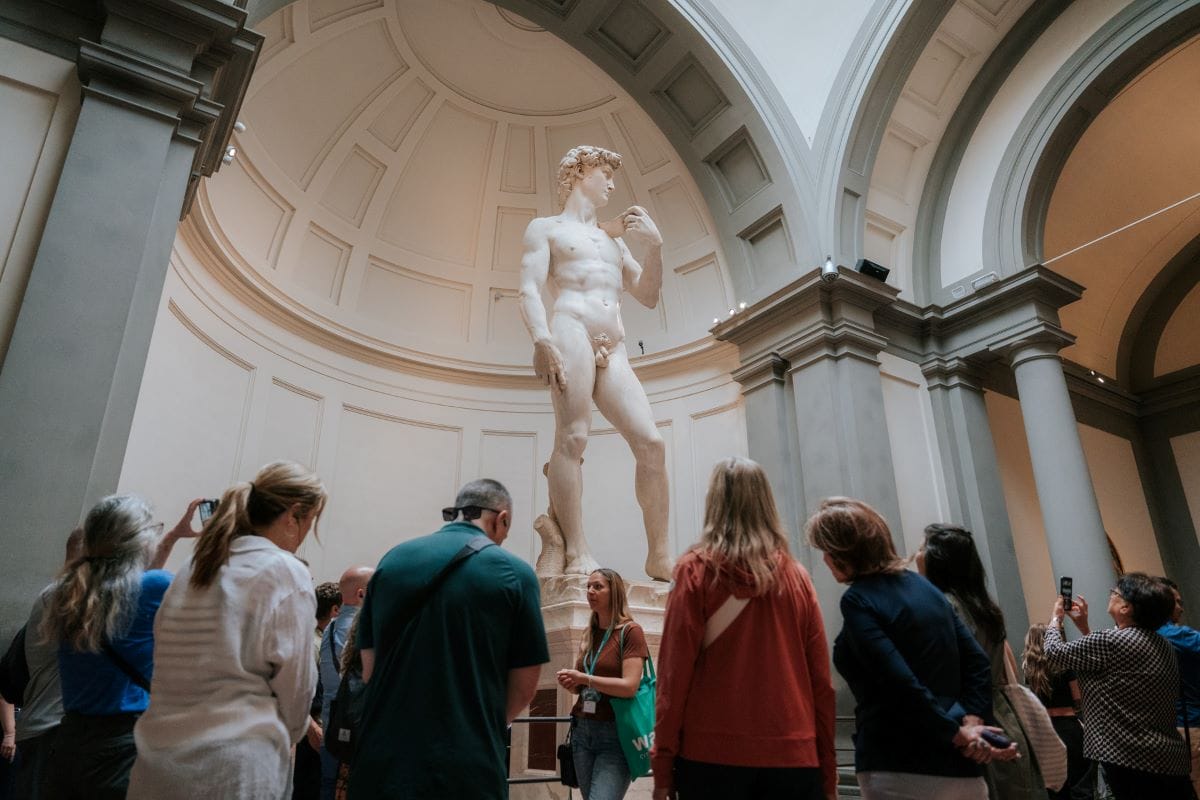
One of the world’s most famous sculptures, David, at the Duomo!
Ready to See Florence from a Different Perspective?
Why simply admire the Ponte Vecchio from street level when you can walk above it along a passage built for the Medici? See the masterpieces of the Uffizi and follow in the footsteps of Florence’s most powerful family on our Secrets of the Uffizi: Renaissance Art and Vasari Corridor Tour.
Join an expert local guide for a small-group exploration of Renaissance masterpieces before heading into the newly reopened Vasari Corridor. Book your Florence experience and discover the Uffizi Gallery and Vasari Corridor from a whole new perspective.

Book a Tour

Pristine Sistine - The Chapel at its Best
€89

1794 reviews

Premium Colosseum Tour with Roman Forum Palatine Hill
€56
850 reviews

Pasta-Making Class: Cook, Dine Drink Wine with a Local Chef
€64
121 reviews

Crypts, Bones Catacombs: Underground Tour of Rome
€69
401 reviews

VIP Doge's Palace Secret Passages Tour
€79
18 reviews

Legendary Venice: St. Mark's Basilica, Terrace Doge's Palace
€69
286 reviews
Follow us
Stay up to date with travel tips, local insights and all things Italy on our social channels!


Subscribe to our Newsletter
Get curated Italy travel tips delivered to your inbox!

