






Pompeii’s House of the Vettii: A Must-See Stop for Art and History Lovers
August 27, 2026
Today, the ruins of Pompeii are one of the wonders of the world and one of the biggest attractions in Italy. One of the greatest sites in this entire town of Pompeii is the House of the Vettii, famous because it preserved the structure along with its wall murals, giving historians a rare glimpse into ancient Roman life.
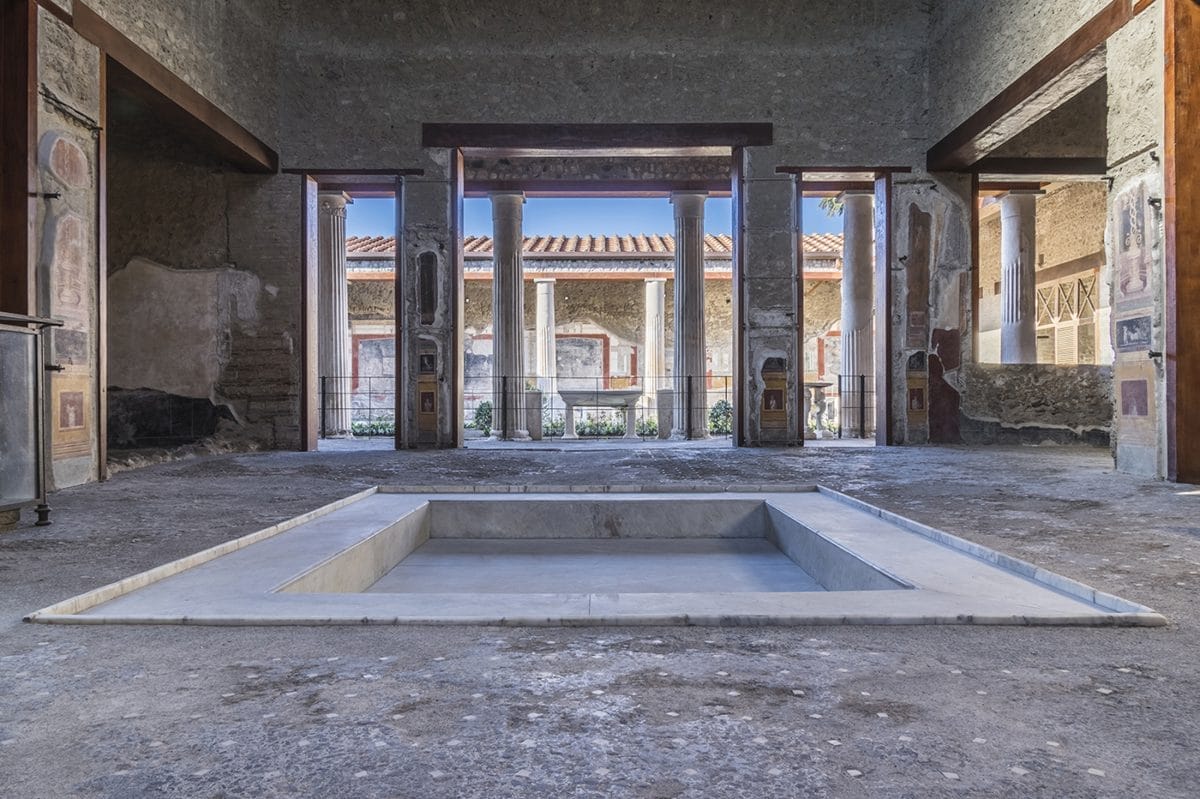
The House of the Vettii is one of the most well preserved in Pompeii. Photo credit: Silvia-Vacca
If you’re visiting Pompeii soon, you can look at it on your own and hope you know what you’re looking at. Or you can take a guided tour with an archaeologist, a true scholar of the site, and get a much deeper insight into Pompeii. On the complete Pompeii tour, you’ll get skip-the-line-access, three hours of insight from a professional archaeologist, and an up-close look at the House of the Vettii, the most remarkable site in Pompeii.
History of Pompeii and the House of the Vettii
The Earthquake and Volcanic eruption that buried Pompeii
August 24, 79 AD seemed like a normal day in the city of Pompeii. A few days earlier, inhabitants had felt a few small earthquakes but were unfazed by them. It was nothing like the huge tremor 15 years earlier, the damage of which had still not been fully repaired.
But then on that fateful late-August day at 1pm, nearby Mount Vesuvius violently spat a column of super-heated gas, tephra, rock, and ash high up into the heavens, 21 miles (or 22 kilometers) up in the air, in fact, a rocket of hot earth that scientists now estimate was 100,000 times the thermal energy of the atomic bombs dropped on Hiroshima and Nagasaki in World War II.

One of the best views of Italy, the bay of Naples and Mount Vesuvius
By nightfall, there were earthquakes, a tsunami in the Bay of Naples, and towns that had been buried by ash. Pliny the Younger, who had witnessed all of this from nearby Misenum, wrote, “…broad flames shone out but several places from Mount Vesuvius, which in the darkness of night contributed to render still brighter and clearer.”
One of those towns buried in ash was Pompeii. And the blast from Vesuvius may have killed around 2,000 people in Pompeii (and 16,000 in total), but for modern historians, it did something else: it preserved a way of life from nearly 2,000 years ago.
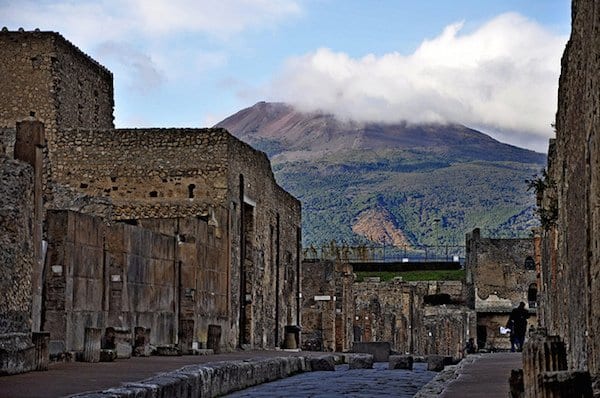
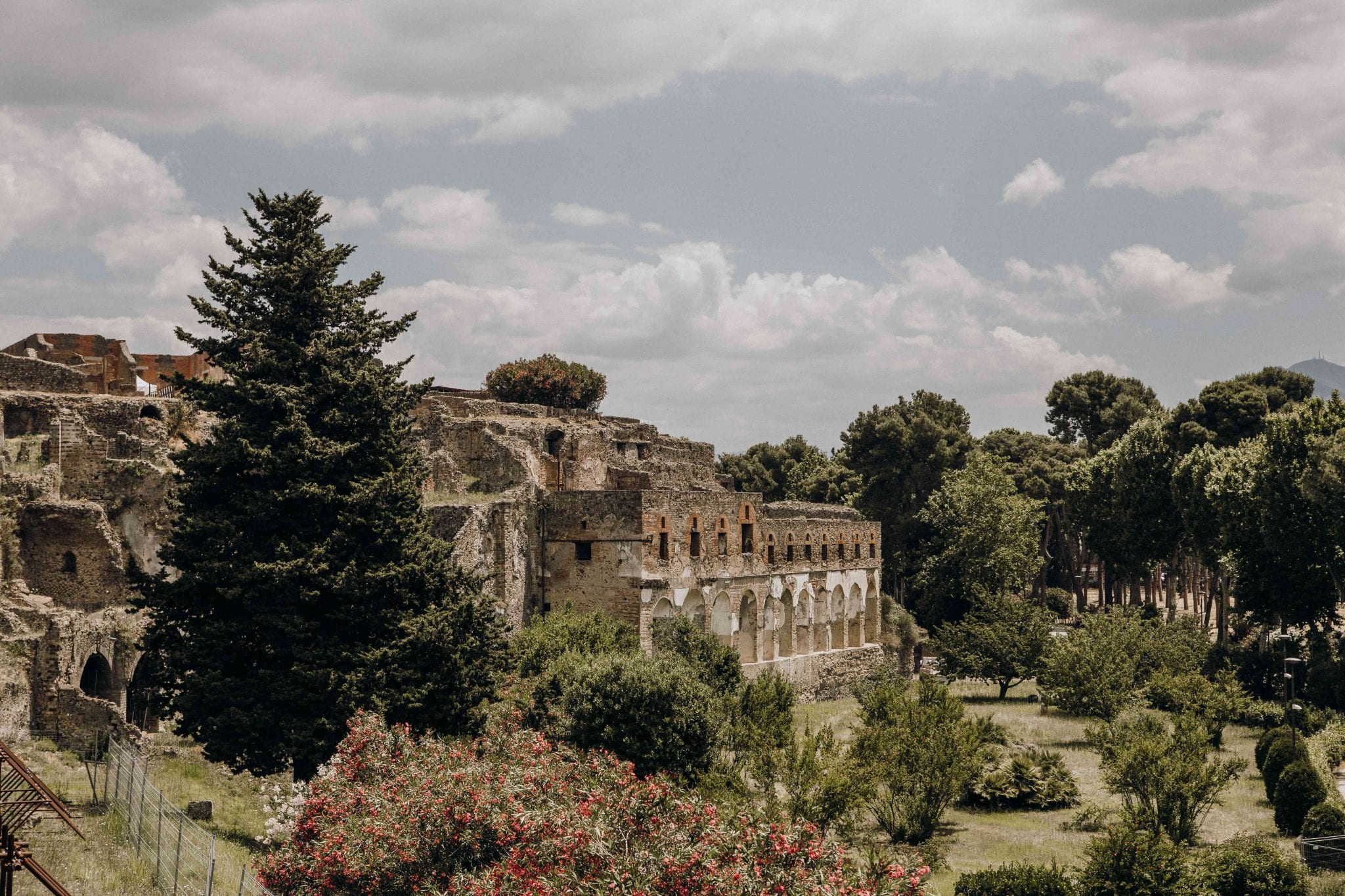
The streets of Pompeii took the brunt of the eruption of lava from Mount Vesuvius.
4 Amazing Facts about the House of the Vetti
The Elite Exodus
After the big earthquake in 62 A.D., 15 years before the Vesuvius eruption, the elites of Pompeii permanently fled the city. Which led to the rise of the nouveau riche in Pompeii.
The Vetti brothers, Aulus Vettius Restitutus and Aulus Vettius Conviva, were excellent examples of this. They went from being slave laborers to wealthy property owners in a short period of time. Historians believe they became rich from being wine merchants and were eventually able to purchase their freedom and become freeborn aristocrats.
The house once had fountains, statues, and lush gardens. But it is the vulgar and graphic sexual artwork on the walls of the House of the Vettii that get the most attention. Historians say the murals are evidence of the Vettii brothers’ low-brow tastes as opposed to those born into the aristocracy.
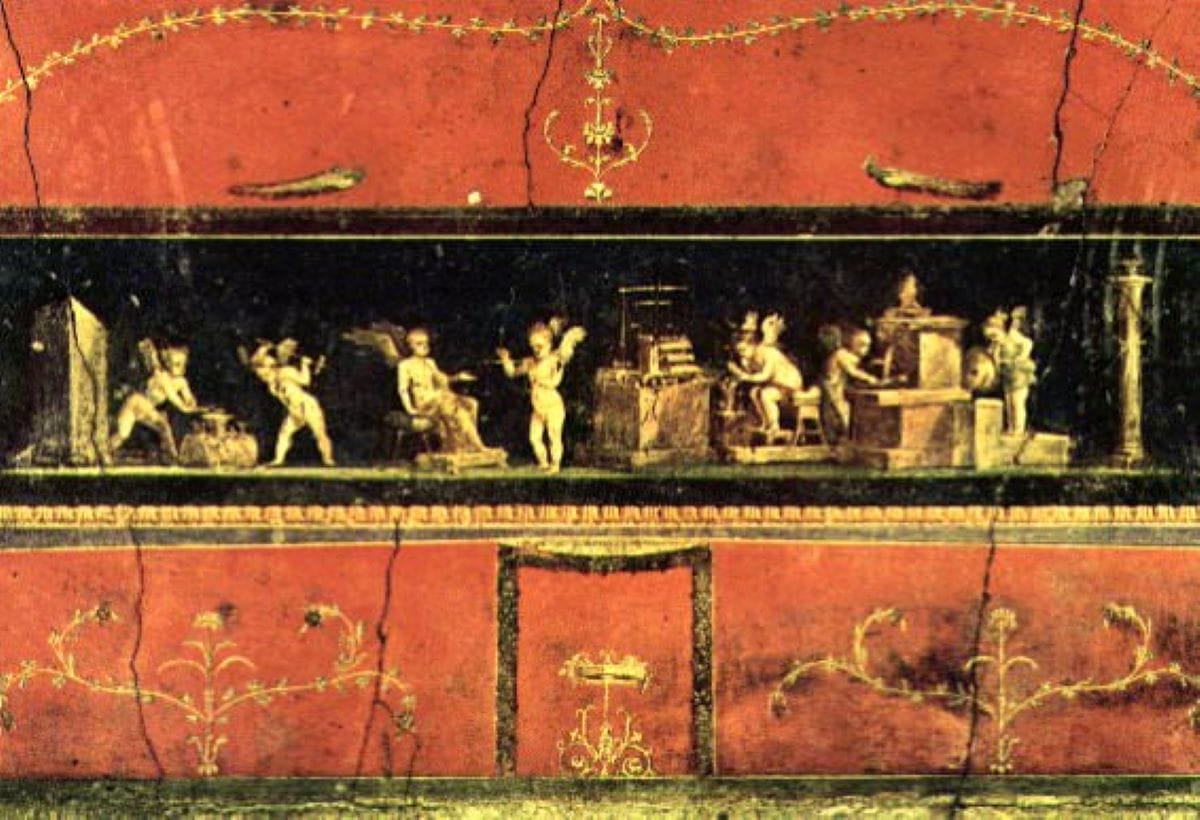
The wall art and murals within the House are what makes its most intriguing to historians and art lovers alike.
Saint Priapus
After a two-decade-long restoration, the House of the Vettii opened up to the public again in 2023, its wall murals bright and clear, just like that August day in the year 79 before the volcanic eruption.
The murals that get the most attention are the phallic images, not just from visitors but also from scholars and historians. They represent the ancient cult of Priapus, the pagan god of fertility (who became Saint Priapus in the Christian era). In addition to promoting fertility, the giant phallic images of Priapus were also said to be house guardians against evil. On a lighter note, sometimes images of Priapus also acted as amusements for invited guests.
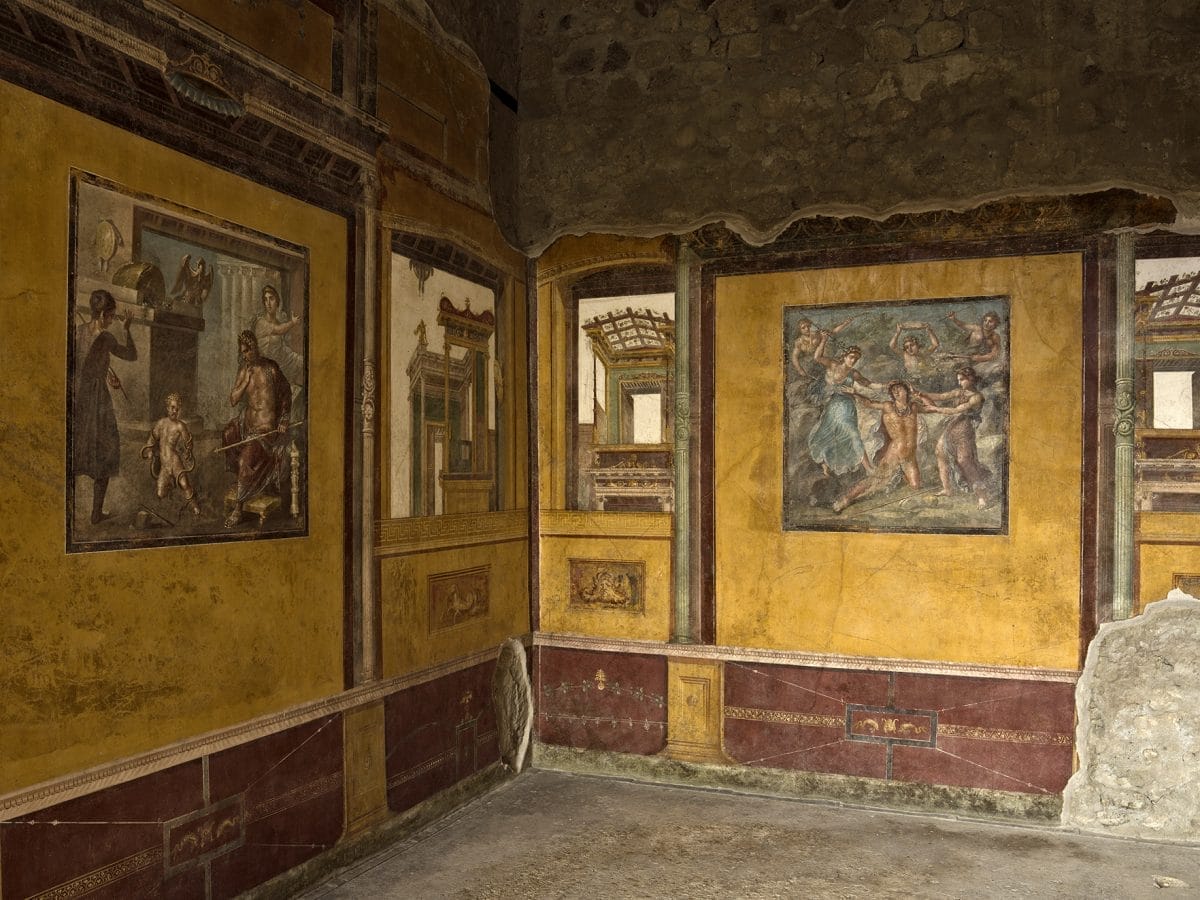
It is hard to believe that these colours date back to 79 AD, and are almost 2000 years old. Photo Credit: luigispina
Pleasure for the Servants
In the servants’ quarters, there are graphic wall murals of people in various poses of sexual intercourse. Archaeologists point out that such graphic imagery was usually reserved for brothels, leading some historians to believe the Vettii brothers were also operating a brothel in their home.
But, it turns out, this is misleading. Today the consensus is that the Vettii brothers – former slaves themselves – had a sense of humor and perhaps wanted their servants to live among images that would make their lives more pleasurable.
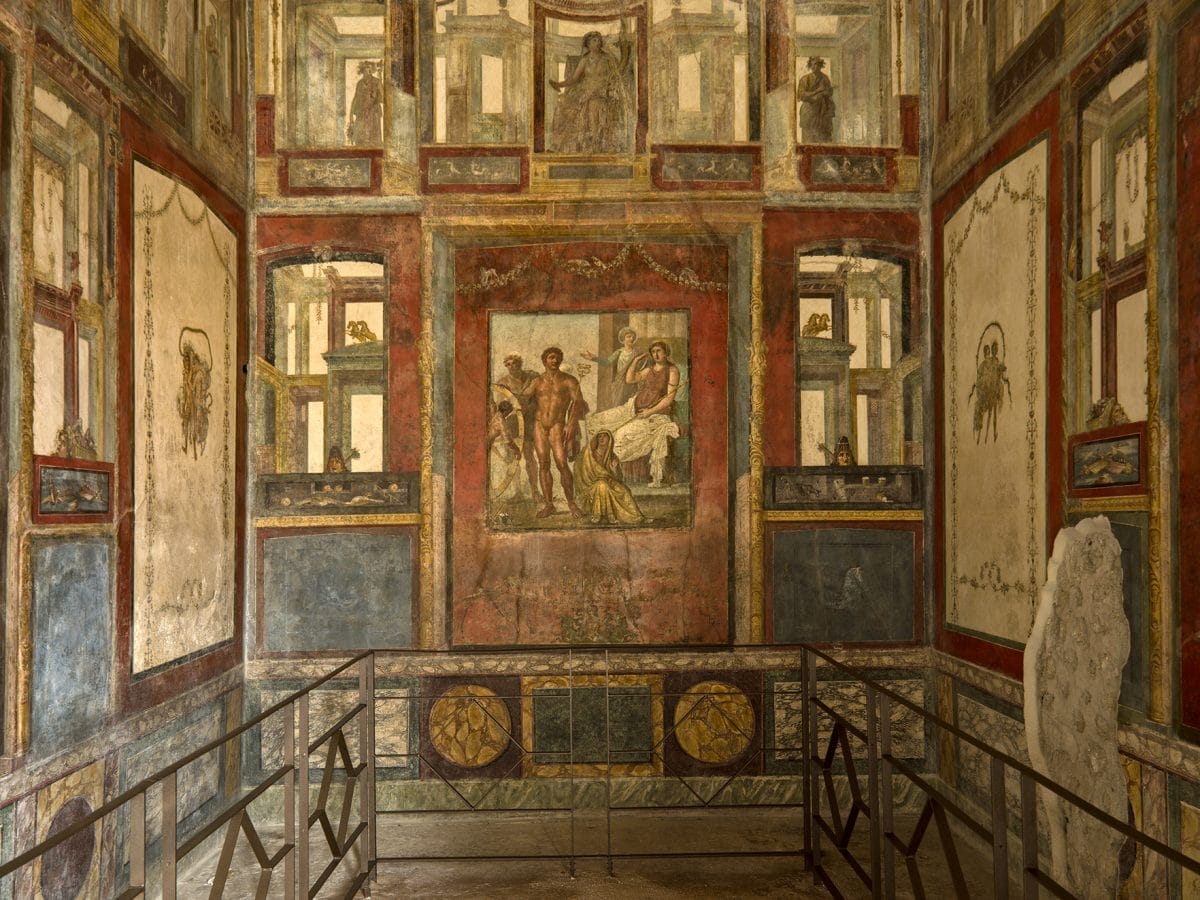
There are intricate designs all over the walls, which are extremely well preserved. Photo credit: Luigispina
A Pompeii Blush
As if the eruption of Vesuvius wasn’t enough of a threat to Pompeii, in general, and the House of the Vettii, in particular, when the ancient city was first discovered in the late-19th century, Victorian archeologists tried to “preserve” the wall murals in the House of the Vetti by covering over them with dirt. In reality, they were likely scandalized by the pornographic nature of the murals and wanted nothing to do with them.
After all, in the National Archeological Museum in Naples, there existed a “secret cabinet,” or “gabinetto segreto” in the local parlance, where they locked away all the pornographic imagery and objects found in Pompeii.
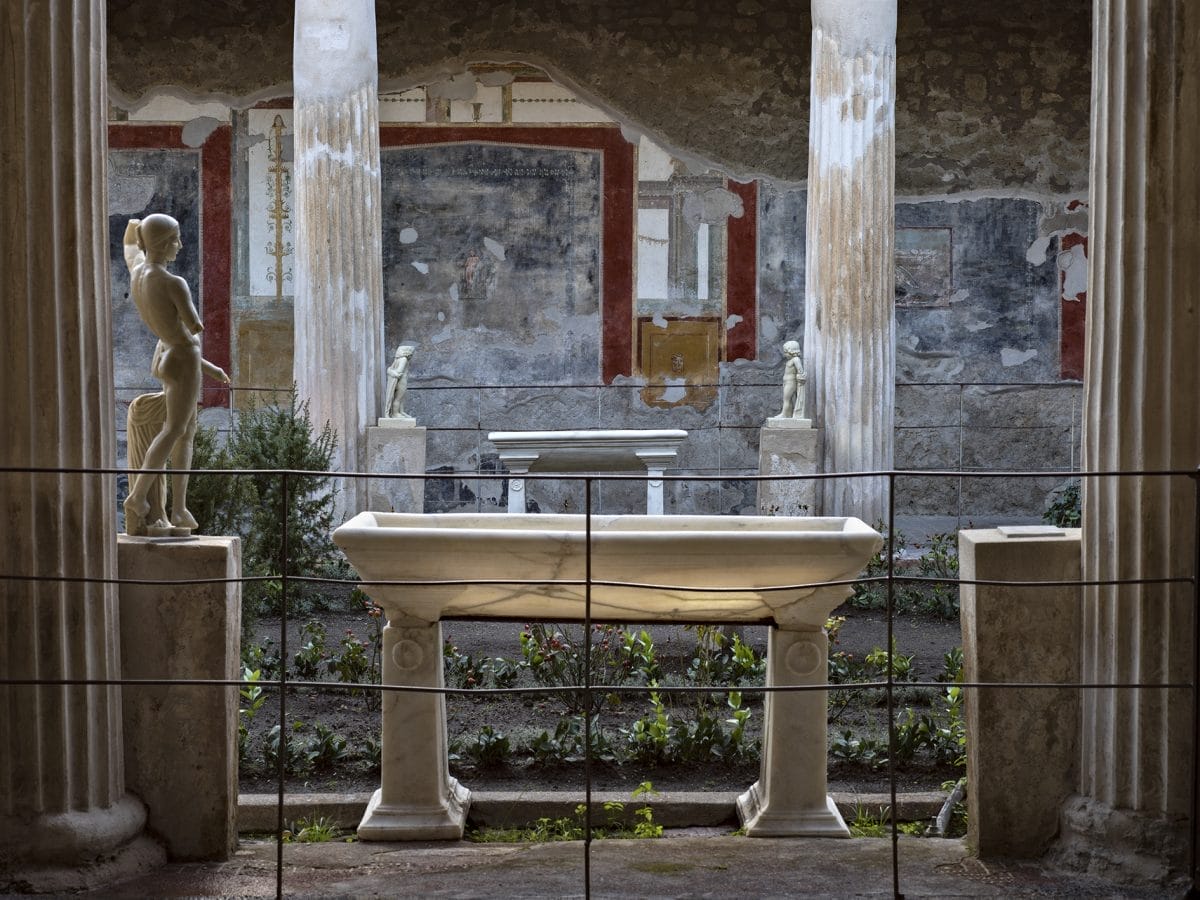
The gardens, statues and frescoes depict many phallic images. Photo credit: luigispina
FAQs – The House of the Vettii
Why should I take a guided tour?
You’ve come all this way to southern Italy, perhaps bypassing the chaos of Naples, and managed more than a few train connections. Why not make the most of it, by spending three hours strolling around Pompeii with an actual archaeologist? This is a rare opportunity that not a lot of people can boast about. A small-group tour led by an expert archaeologist is a souvenir for yourself that you’ll never forget. Plus, you get skip-the-line access, thus avoiding the long queues that occur here every day.
Moreover, if you want a tour of Pompeii, you have to use an official Pompeii tour guide. We’ve hand-selected the very best of the best, so you’re getting the cream of the Pompeii crop in terms of expert local guides.
How long does the tour last and when does it start?
The small-group guided walking tour lasts three hours. It begins at 10:30am, before the southern Italian sun reaches its zenith in strength.
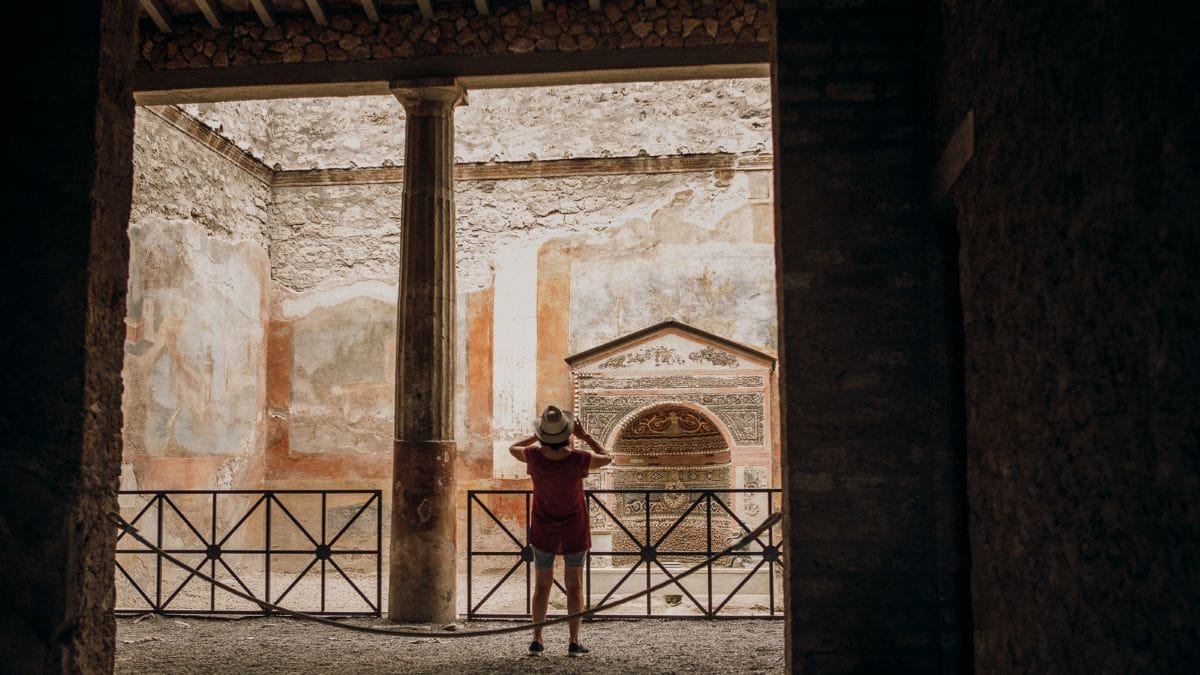
The sheer scale of the city comes alive once you are inside an ancient room in Pompeii.
When is the best time to visit Pompeii?
Like a lot of Italy, shoulder season is the best, when the weather is warm and the tourists are fewer (than in summer). Shoot for May or September. July and August are the worst because southern Italy can get hot in summer and there is not a lot of shade in Pompeii.
What should you bring to Pompeii?
Large bags are not allowed inside the ruins, so bring a small day pack. And don’t forget to add some sunblock, water, and a valid photo ID that you’ll need for entrance to the ruins.
Can we get lunch in Pompeii?
Food and drink are not allowed inside the excavations to help protect the ancient ruins, mosaics, and frescoes. Eating inside attracts birds and pests, leaves waste that harms fragile surfaces, and generally interferes with preservation efforts.
You can picnic outside the site before you enter or after you exit: There are areas near the entrances (especially near Porta Marina and Piazza Esedra). There are also cafés and restaurants just outside the archaeological park where you can eat a proper meal or grab coffee, panini, pizza al taglio, or gelato.
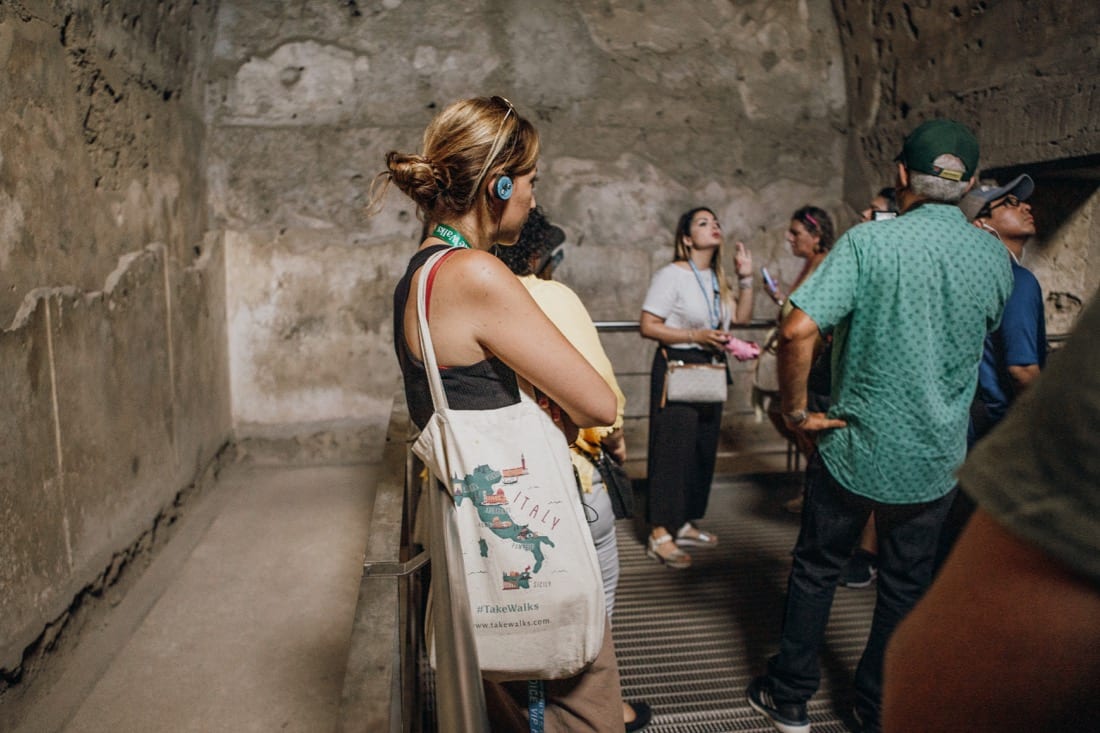
Taking a tour is a great way to discover the rich history of this site, and the historical events surrounding it
You won’t just see the House of the Vettii on a visit to Pompeii.
You’ll discover a lot more, even though only two-thirds of Pompeii has been excavated. That said, the House of the Vettii is a true highlight.
The way to appreciate Pompeii and the House of Vettii best is to take the complete Pompeii tour – a small-group guided tour with a seasoned archaeologist who can put everything into a neat historical context. And, did we mention skip-the-line access? That in and of itself is worthy of signing up

Book a Tour

Pristine Sistine - The Chapel at its Best
€89

1794 reviews

Premium Colosseum Tour with Roman Forum Palatine Hill
€56
850 reviews

Pasta-Making Class: Cook, Dine Drink Wine with a Local Chef
€64
121 reviews

Crypts, Bones Catacombs: Underground Tour of Rome
€69
401 reviews

VIP Doge's Palace Secret Passages Tour
€79
18 reviews

Legendary Venice: St. Mark's Basilica, Terrace Doge's Palace
€69
286 reviews
Follow us
Stay up to date with travel tips, local insights and all things Italy on our social channels!


Subscribe to our Newsletter
Get curated Italy travel tips delivered to your inbox!

