


What Is the Colosseum Made Of? Architecture, Design, and the Stuff That Keeps It Standing
June 5, 2026
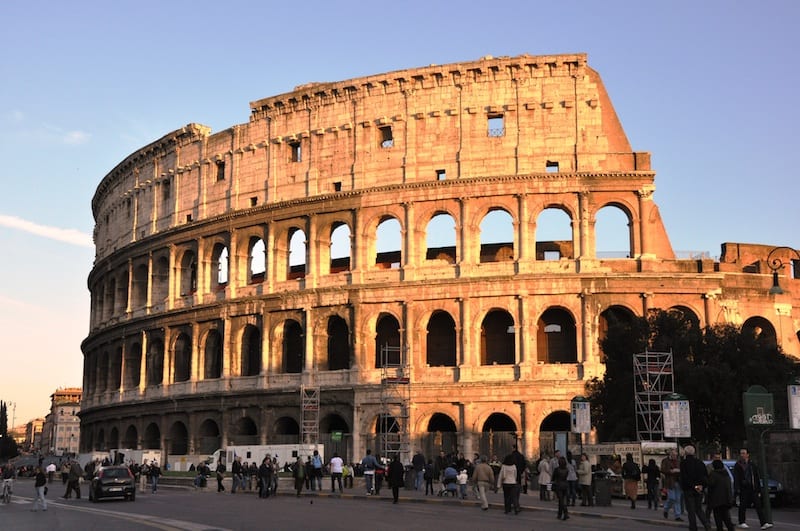
There is something disorienting about standing in front of the Colosseum for the first time. You already know it from postcards, textbooks, and movies where battle-tired gladiators raise fists to a blood-thirsty crowd. None of it prepares you for the scale, or for the feeling that the stone is still carrying something. Two thousand years of spectacle, survival, and human cost, still moving through its walls. So, what is the Colosseum made of?
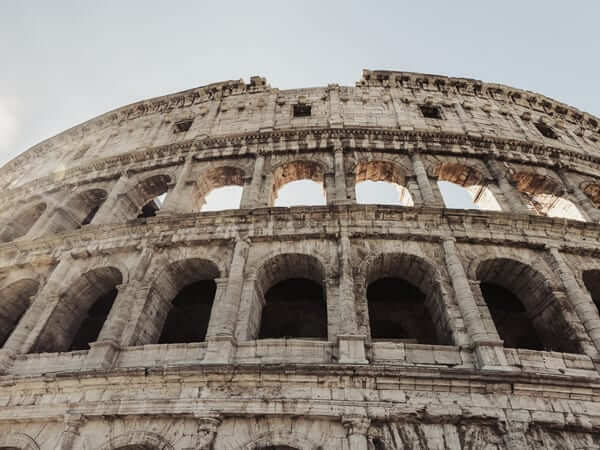
Mainly travertine limestone, volcanic tuff, Roman concrete, iron clamps, and marble that have mostly disappeared over time. It has survived earthquakes, fires, looting, and centuries of being stripped for materials. Much of it is gone. What remains still feels impossibly alive, and there is much about the Colosseum that explains why.
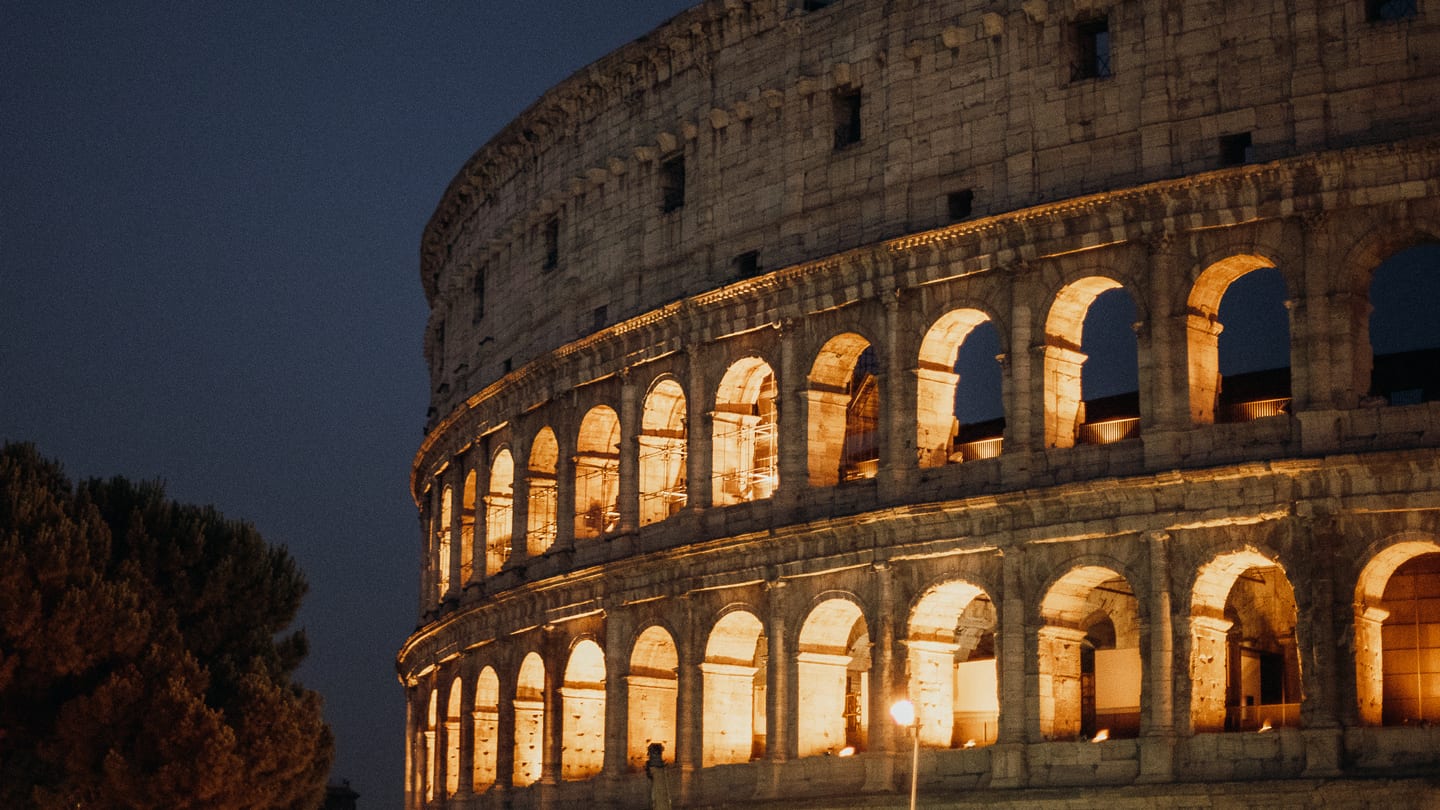
The Colosseum has been standing for millennia, so what is it made of? and how is it still standing?
What Is the Colosseum Made Of? The Materials Behind the Monument
The Colosseum’s materials at a glance:
- Travertine limestone: the outer facade, chosen for endurance
- Volcanic tuff: the interior walls, quarried from the hills around Rome
- Roman concrete: the binding agent, still strengthening beneath your feet
- Iron clamps: 300 tons, now gone, their holes still visible in the stone
- Marble: the seating and decoration, stripped away over centuries
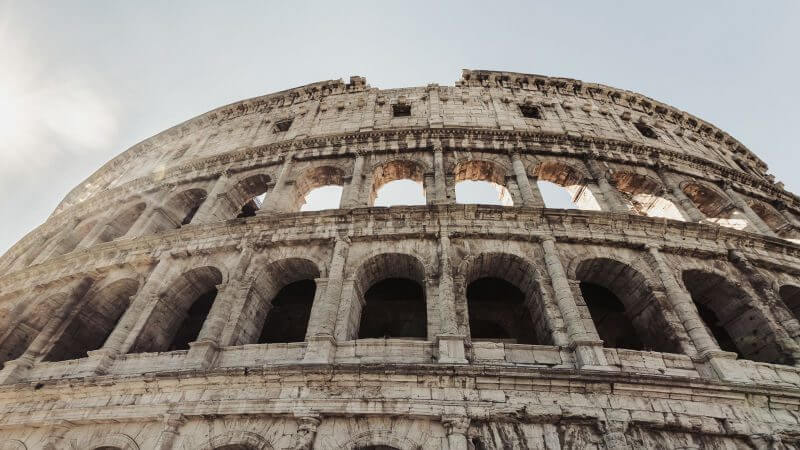
If these walls could talk, they would have so many stories to tell, past and present
Travertine: The Stone Rome Built Its Face With
The Colosseum was built primarily from travertine, a tough limestone quarried in Tibur (modern-day Tivoli), about 20 miles east of Rome. Formed over thousands of years in mineral-rich springs, travertine was strong enough to support a massive four-story arena filled with more than 50,000 spectators, while still flexible enough to handle stress and temperature changes without cracking.
Roman engineers paired this stone with one of their greatest innovations: the arch. Instead of resisting gravity, arches redirected weight outward and downward, allowing the Colosseum to stand on a scale the ancient world had never seen before.
The outer walls were originally held together by roughly 300 tons of iron clamps rather than mortar. During the Middle Ages, those clamps were stripped out and melted down for reuse, leaving behind the hundreds of small holes. Those clamp holes are still visible today, each one a small record of what was taken. Our tours of Rome guides know exactly what each scar means.
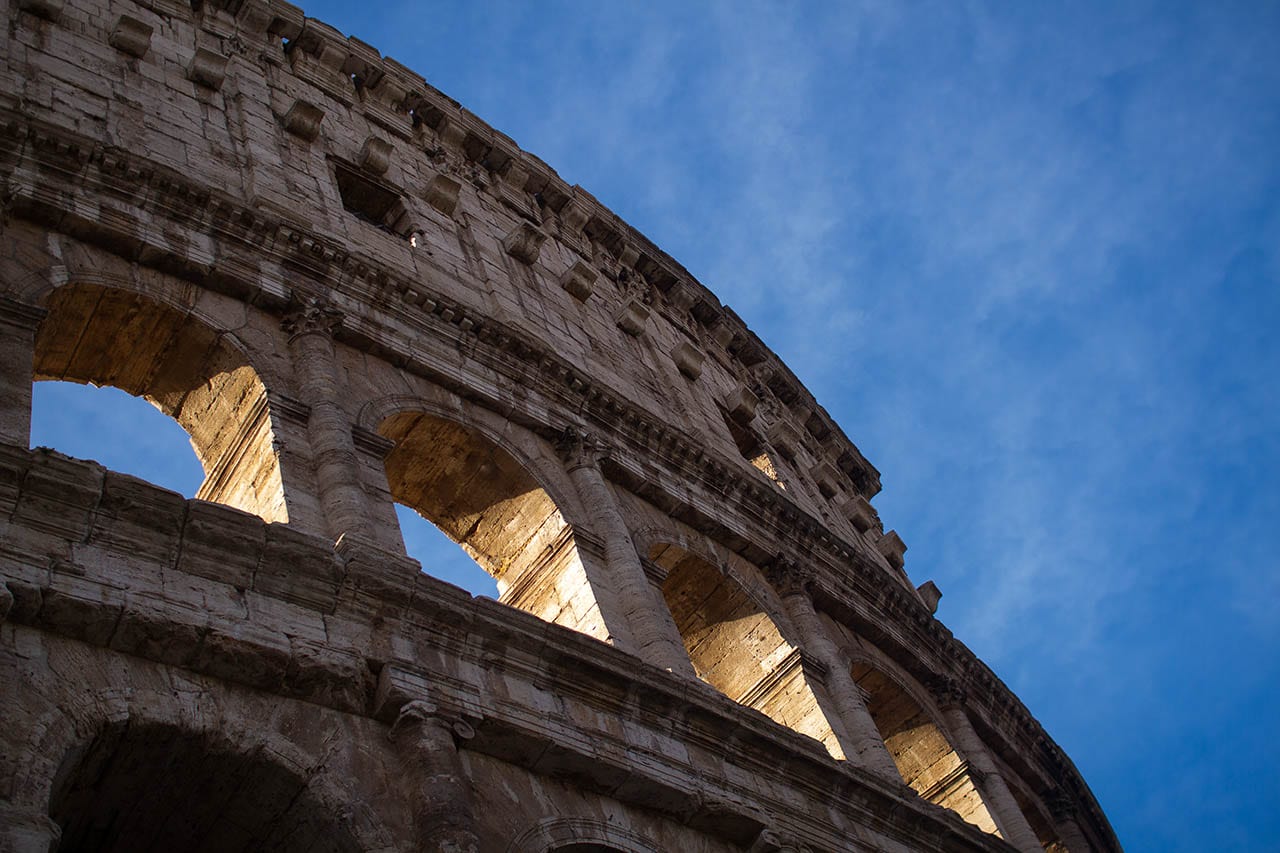
When you visit you can see the amazing construction techniques close up
Volcanic Tuff: Why Romans Used It in the Colosseum
Southeast of Rome, the Alban Hills look peaceful, but they are sleeping giants. The volcanic system that formed them, Colli Albani, is still classified as quiescent rather than extinct, possibly still partially molten more than six kilometers beneath the surface. Last active around 36,000 years ago.
When it was awake, it buried the land around Rome in volcanic ash. That ash compacted over millennia into tuff: lightweight, easy to cut, cheap, abundant, and strong enough for interior walls where aesthetics mattered less than load bearing. The Romans used it to build the bones of their civilization, the Colosseum included, bringing the underworld to light.
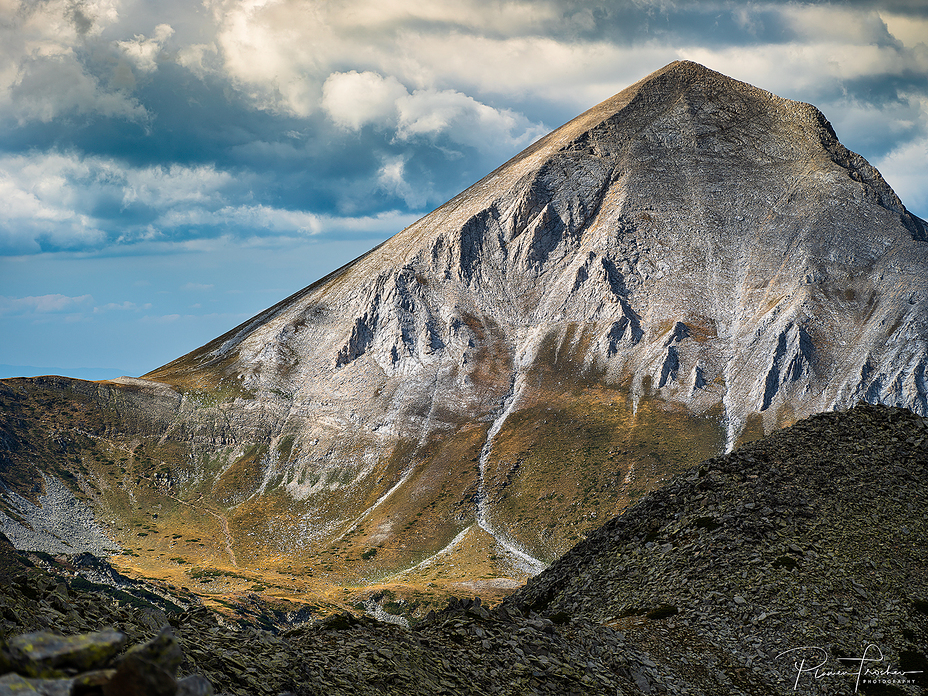
Vihren Peak in the Alban Hills. Photo Credit: Plamen Troshev
Roman Concrete: The Secret Behind the Colosseum’s Survival
The Romans called it opus caementicium. If travertine is the skin of the Colosseum and tuff its bones, then this is its blood, binding the structure from the inside, keeping it alive long after it should have failed.
Made from three things: volcanic ash called pozzolana, lime, and seawater. The ash came from the Campi Flegrei west of Naples, a different sleeping giant from the one that gave Rome its tuff. The Romans drew from the best of what the earth offered, wherever the earth offered it.
What they discovered, without knowing the chemistry, was that this mixture didn’t just harden. It kept reacting. When seawater seeped into cracks, new minerals grew inside the concrete, filling the gaps and strengthening the material from within. The concrete was healing itself. A 2023 study by researchers at MIT and Harvard confirmed that calcium-rich deposits called lime clasts gave Roman concrete a self-healing capability that modern concrete simply does not have. The Romans figured it out two thousand years earlier by watching what worked.
Interesting fact: Modern concrete fights its environment and eventually deteriorates. Roman concrete absorbed its environment and became more of itself. It did not age. It accumulated. And somewhere beneath your feet, it is still doing exactly that.
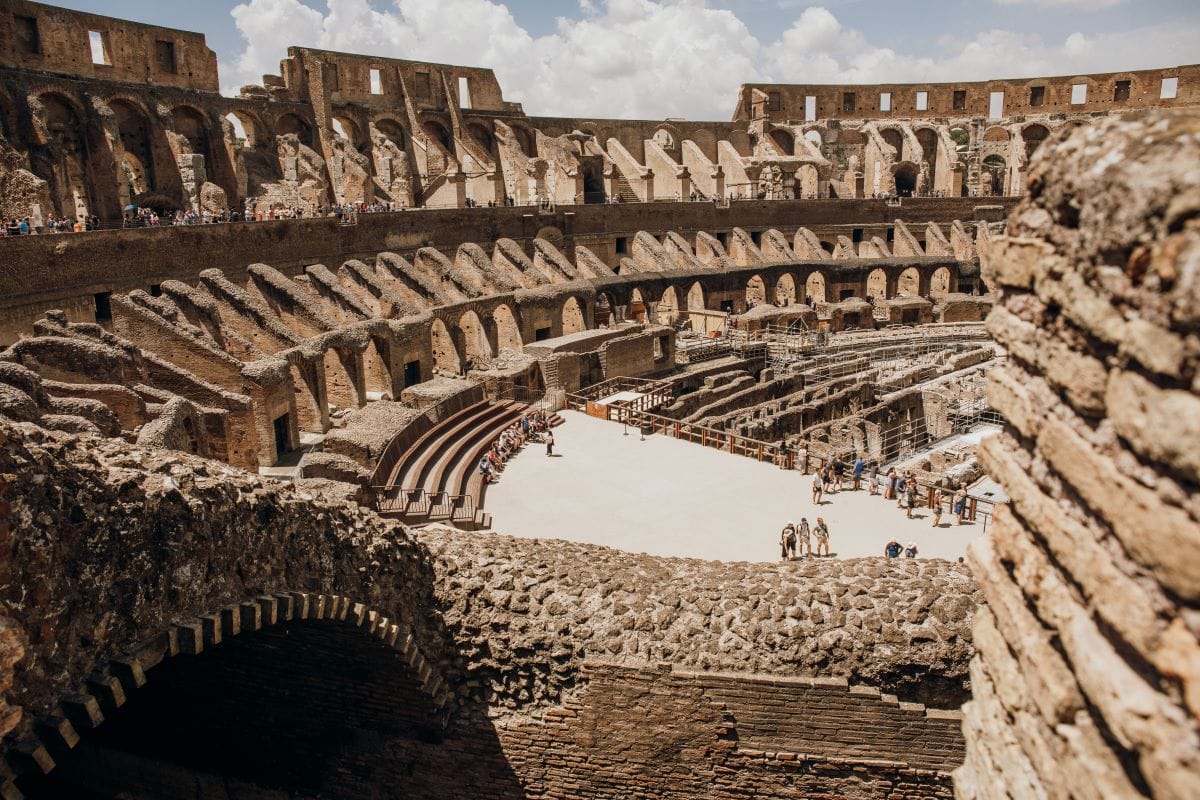
The sheer size and scale of this Roman Stadium is undeniably impressive
The Layout: A Building Within a Building Within a Building
The cavea, the seating bowl, held the entire social architecture of Rome in one elliptical sweep. You knew where you stood in Roman society the moment you found your seat:
- Bottom tier: Emperor, senators, priests, Vestal Virgins, closest to the bloodsport
- Second tier: knights and equestrians
- Third tier: ordinary citizens
- Top tier: women, slaves, and the poor, standing on bare stone, craning to see
The arena floor is largely absent now, which is actually more revealing than a floor would be. The original surface was wooden planks covered in sand, the Latin word for sand being “harena,” which is where we get “arena.” When the floor rotted away over centuries, it exposed what lies beneath. That absence tells you more about the building than the floor ever could.
Insider tip: If you are curious to know more, here are some interesting facts about the Colosseum that many visitors never discover.
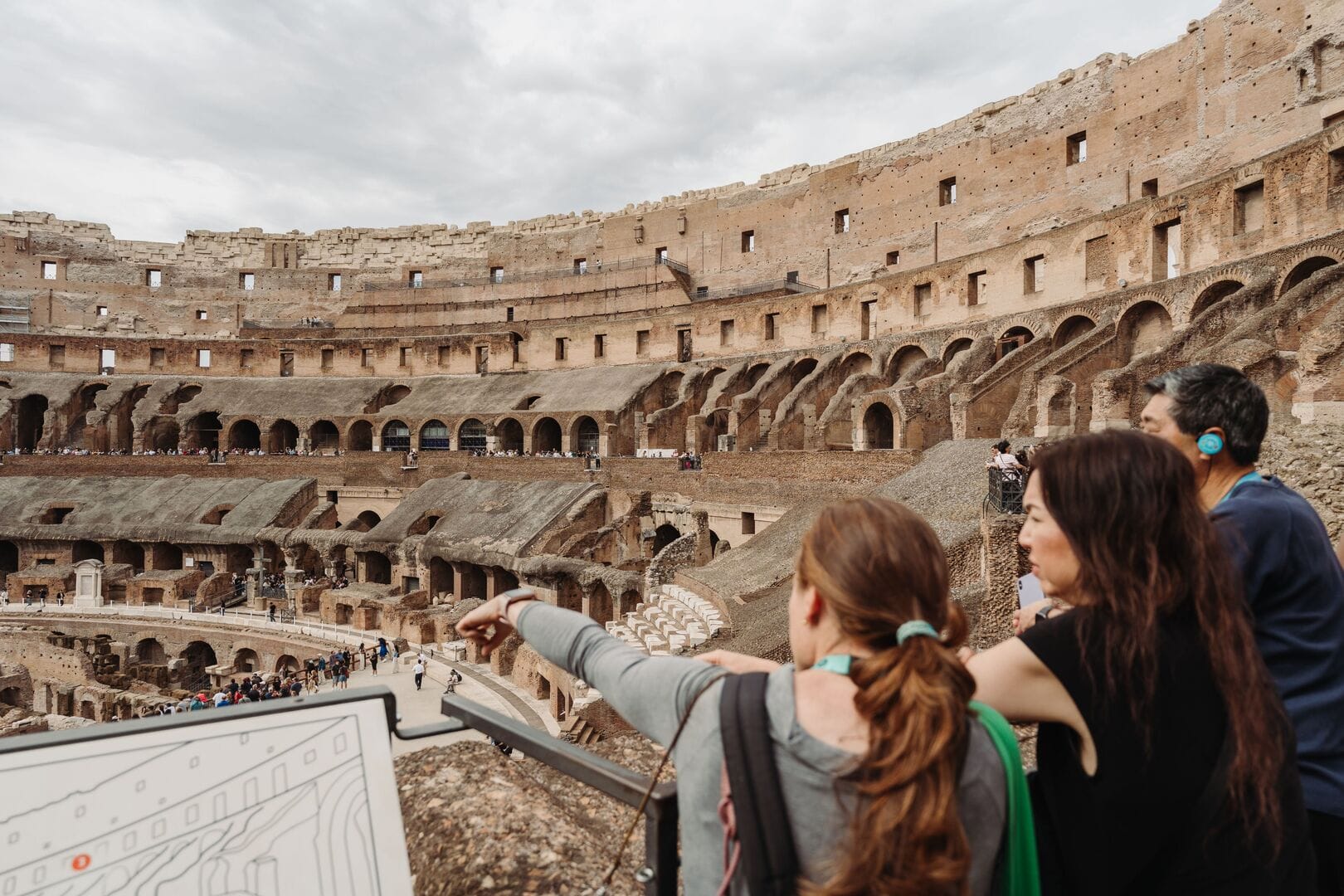
You can see the side are made of of stands in different tiers, or levels, which were classified in a hierarchical manner
The Hypogeum: Underground Engineering Beneath the Colosseum
Before the hypogeum existed, Emperor Titus briefly flooded the arena for staged naval battles known as the naumachia. It happened once, in 80 AD, and then it was gone forever.
The hypogeum was the underground section beneath the arena floor where gladiators, wild animals, and stage equipment were kept before events. Domitian built it as a two-level labyrinth of tunnels, cages, and mechanical lifts that allowed animals and fighters to appear suddenly through trapdoors in the arena above. Nothing like it had ever been built, and no one in the crowd was supposed to know it existed.
Once Domitian built it, the arena could never be flooded again. The Romans chose the machine over the miracle without hesitation.
Insider tip: The energy down there is still alive. Our private tours in Rome let you spend as long as you want underground, with a guide who can bring the machinery to life.
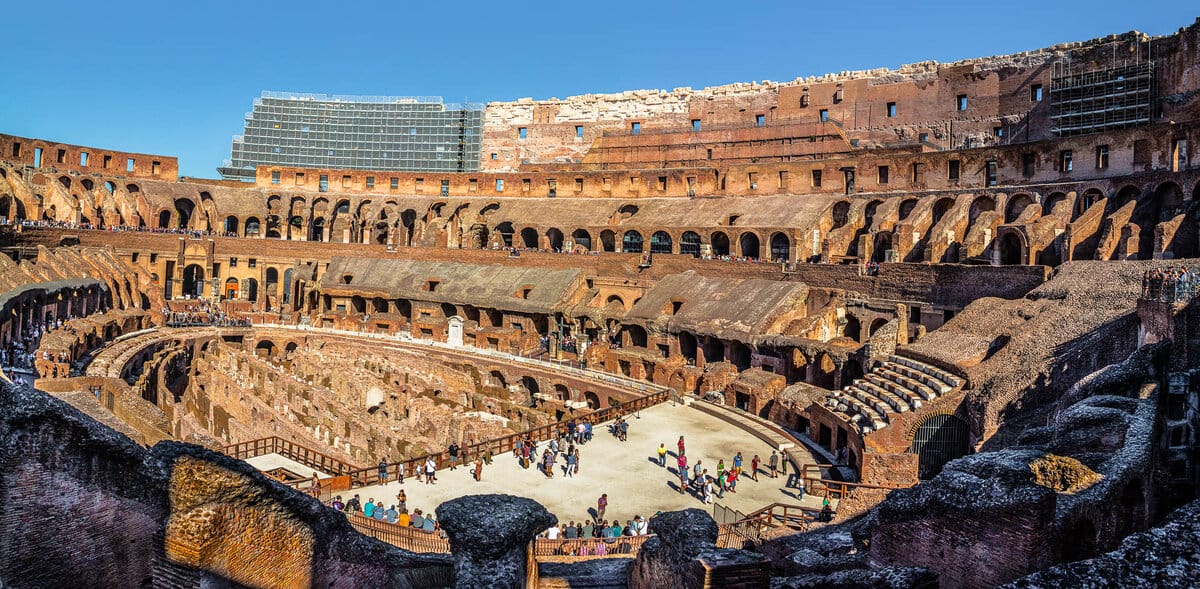
The Colosseum, has a whole other life underground, in what’s known as its hypogeum.
What Style of Architecture Is the Colosseum?
Every visitor who looked at the Colosseum’s facade understood the argument without being told: Rome takes the best of what came before and makes it permanent.
From the Greeks, three classical column orders stacked one per floor in ascending complexity:
- Ground floor: Tuscan columns, plain and serious
- Second floor: Ionic columns, recognizable by their scroll-like capitals
- Third floor: Corinthian columns, capitals carved to resemble acanthus leaves
- Fourth floor: flat pilasters, the building’s final flourish in characteristic Roman restraint
The elliptical form was a Roman invention. Earlier Greek theaters were carved into hillsides. The Colosseum is entirely freestanding, a six-acre oval rising nearly 50 meters from flat ground. Nature as scaffolding. Rome needed no such help.
The 80 arched entrances, most still numbered in Roman numerals, were built for rapid crowd flow. The Romans called these passages vomitoria, from the Latin for rapid discharge, and built them into the architecture without apology.
Every seat faced the same center. Every eye pointed at the same floor. The Colosseum was not just an engineering achievement. It was a technology of collective experience, and it worked exactly as designed.
The Colosseum borrowed from Greece, improved on it, and built it freestanding in the center of the most powerful city on earth. Every stadium built since owes it something.
Meet our Colosseum tour guides and see what that kind of knowledge looks like in practice.
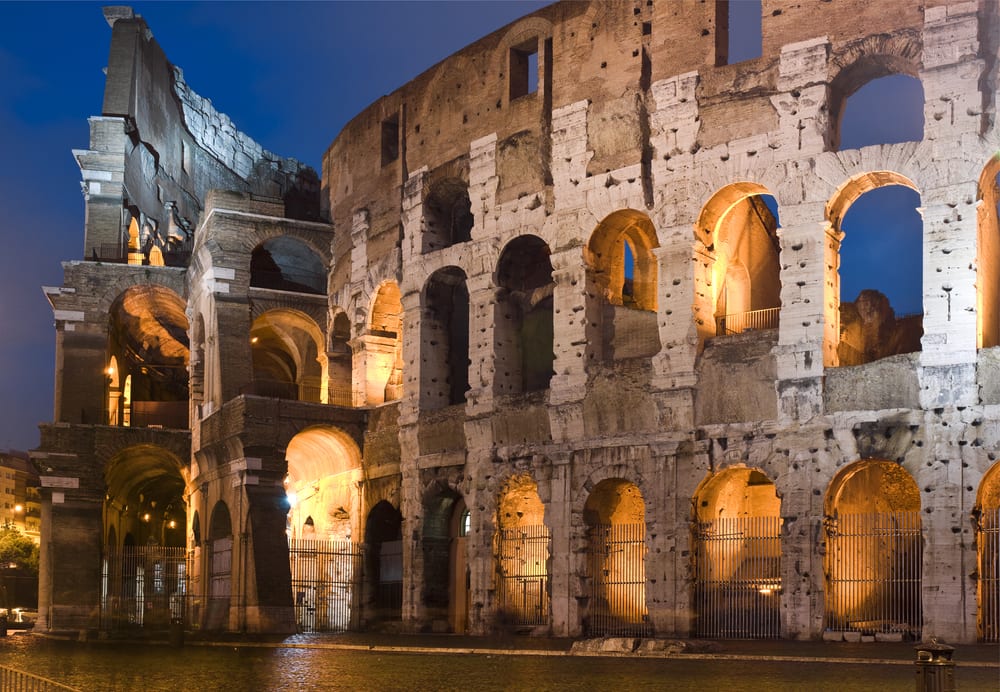
There is no denying that the Colosseum is one of the world´s most amazing architectural success stories
How Long Did It Take to Build the Colosseum?
The Colosseum took roughly 25 years to fully complete. Construction began under Emperor Vespasian around 70–72 AD, continued under his son Titus, and was finished by Domitian. Titus officially opened the arena in 80 AD with 100 days of games, though later additions continued for several more years.
What makes that timeline remarkable is the scale. The largest amphitheater in the Roman world rose from the site of Nero’s former private lake, funded by spoils from war and built by tens of thousands of laborers, many of them Jewish prisoners captured after Rome’s siege of Jerusalem. Stone by stone, Rome turned conquest into one of history’s most enduring monuments.
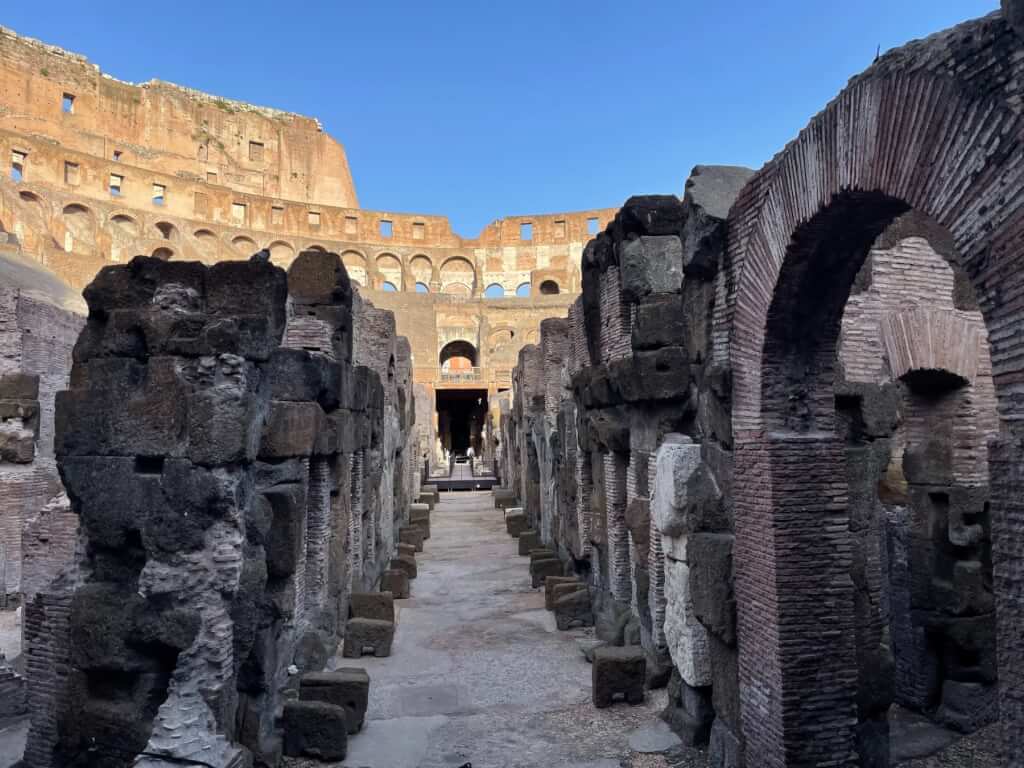
The underground tunnels and structures are equally as fascinating as the main arena building
Planning Your Visit
Everything you just read, someone can show you in person. The Colosseum reveals itself in layers, and most visitors only reach the first one. The outer walls. The arena floor. A few photographs. Twenty minutes inside and back into the Roman sun. A guide changes that. Not because they recite facts, but because they know where the building keeps its secrets.
Meet our Colosseum tour guides and see what that knowledge looks like in practice.
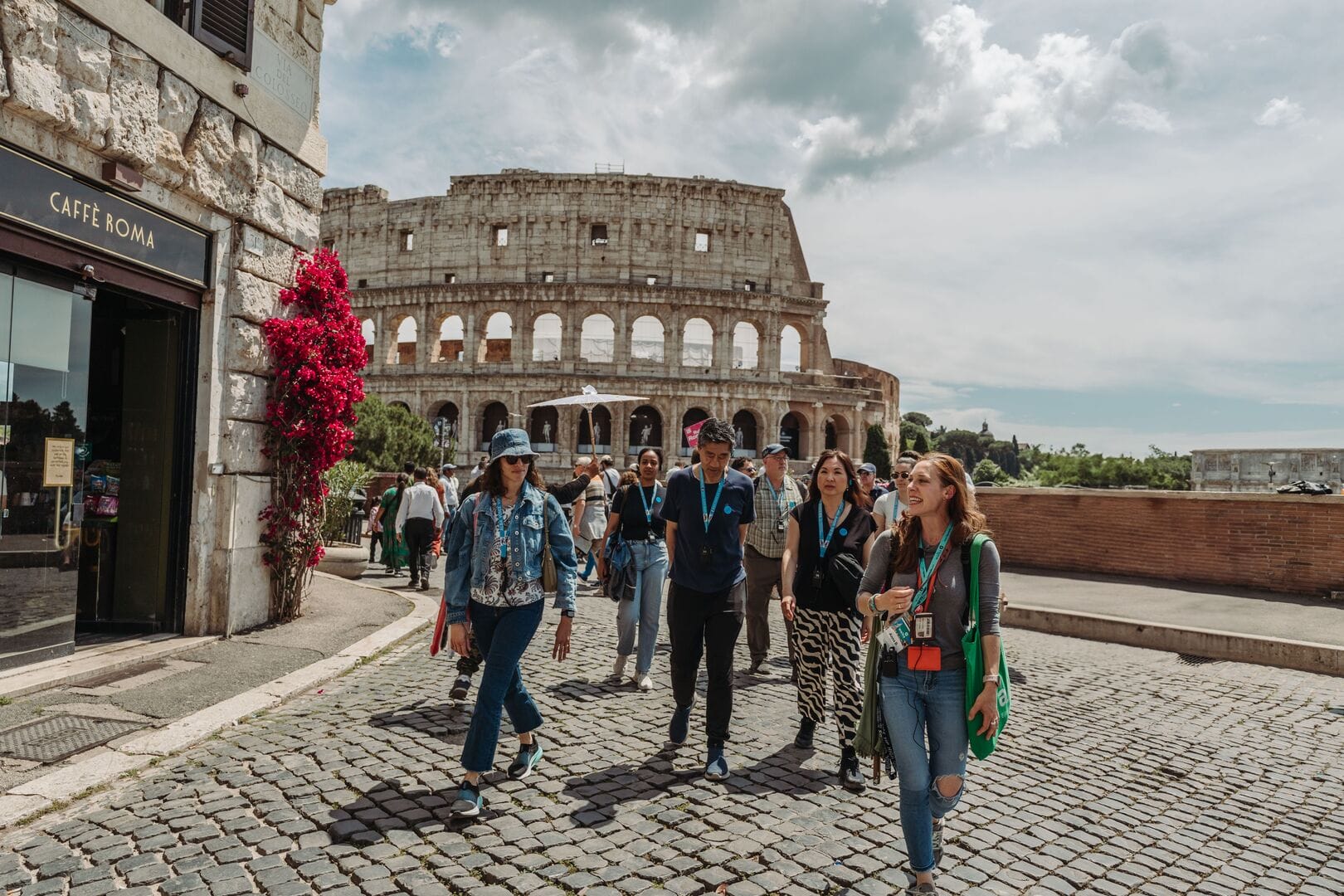
A guided tour is a great way to discover more about this ancient ruin
FAQs – What is the Colosseum made of?
Can I appreciate the Colosseum’s architecture without an expert guide?
You can certainly admire the Colosseum independently, but many of its most fascinating architectural details are easy to overlook. An expert guide can explain how the structure was engineered, point out evidence of different construction phases, and reveal features that helped the amphitheatre accommodate tens of thousands of spectators. These insights often transform the Colosseum from an impressive ruin into a remarkable feat of Roman engineering.
Is a private Colosseum tour worth it for architecture enthusiasts?
A private tour can be particularly valuable if you’re interested in architecture, archaeology, or Roman history. Unlike a standard group tour, a private experience allows you to spend more time examining the aspects that interest you most, whether that’s the amphitheatre’s construction techniques, restoration work, ancient crowd management systems, or the evolution of the site over the centuries.
What architectural details do visitors commonly miss at the Colosseum?
Many visitors focus on the arena itself but miss details such as the different orders of columns, the sophisticated drainage systems, the remains of the original seating arrangements, and evidence of repairs made after earthquakes. A knowledgeable guide can help identify these features and explain what they reveal about Roman design and engineering.
How much time should architecture lovers allow for a visit?
If architecture is your primary interest, allow at least two to three hours for the Colosseum and surrounding archaeological areas. This gives you time not only to admire the monument itself but also to understand how it related to nearby structures in ancient Rome. A guided tour can help you make the most of that time by focusing on the site’s most significant architectural features.
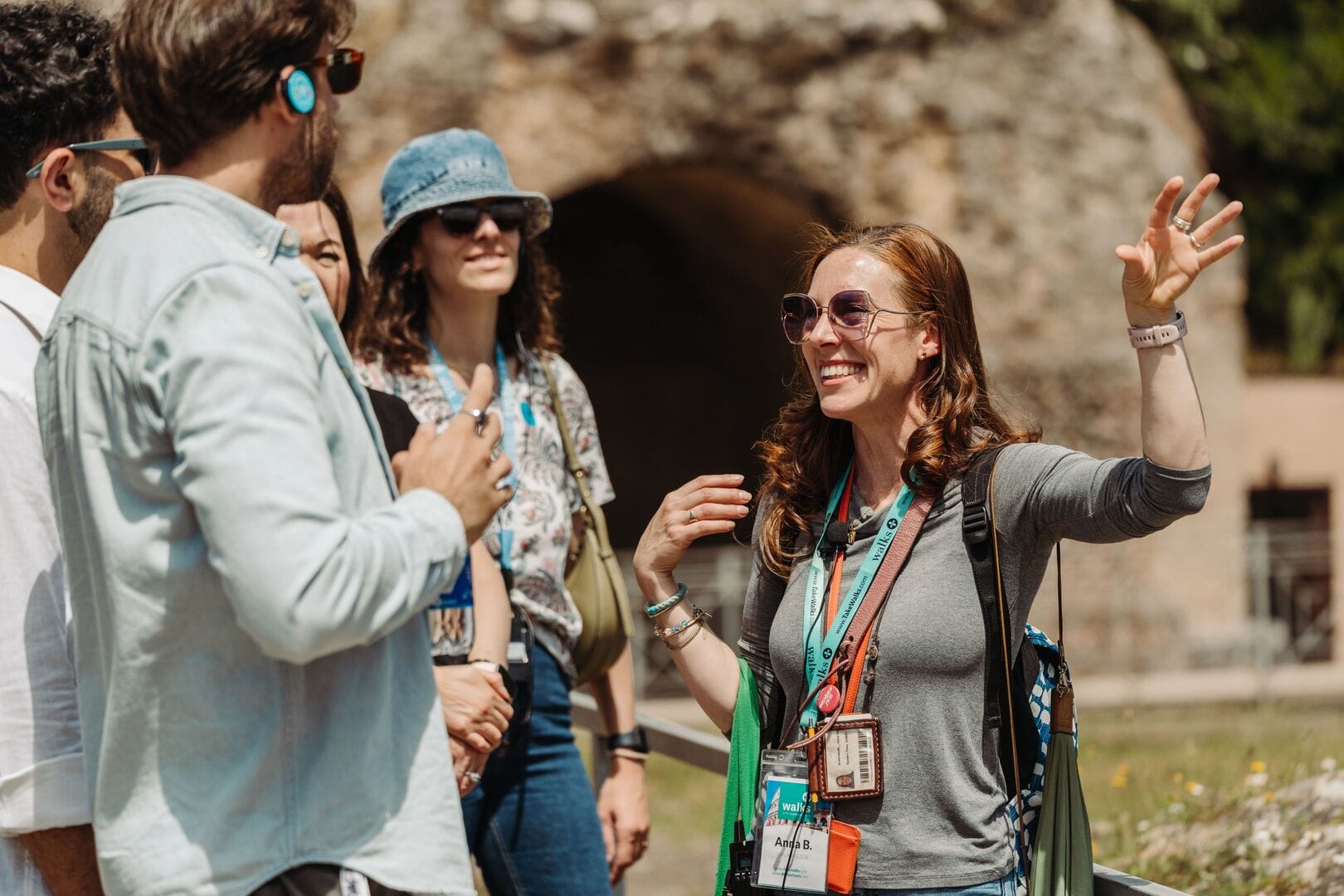
Expert local guides are full of in-depth knowledge about the architecture and history of Ancient Rome
Explore the Colosseum with an Expert Guide
The Colosseum’s greatest stories aren’t always the most obvious ones.
From ingenious engineering solutions to hidden architectural details, having an expert guide can bring the monument to life in ways that guidebooks simply can’t. Whether you’re visiting for the first time or returning with a deeper interest in Roman history, our guided Colosseum tours help you uncover the fascinating details behind one of the world’s most iconic landmarks.
For a more personalised experience, consider one of our private tours, where you can tailor the visit to your specific interests and explore at your own pace.

Book a Tour

Pristine Sistine - The Chapel at its Best
€89

1794 reviews

Premium Colosseum Tour with Roman Forum Palatine Hill
€56
850 reviews

Pasta-Making Class: Cook, Dine Drink Wine with a Local Chef
€64
121 reviews

Crypts, Bones Catacombs: Underground Tour of Rome
€69
401 reviews

VIP Doge's Palace Secret Passages Tour
€79
18 reviews

Legendary Venice: St. Mark's Basilica, Terrace Doge's Palace
€69
286 reviews
Follow us
Stay up to date with travel tips, local insights and all things Italy on our social channels!


Subscribe to our Newsletter
Get curated Italy travel tips delivered to your inbox!

