














Pompeii and Herculaneum Day Trip from Sorrento



 Pompeii / Amalfi
 7 hours

 20
Highlights
- Pair Herculaneum with Pompeii, buried by the same eruption in two very different ways.
- A still-legible menu at Pompeii and carbonized beams at Herculaneum, where the remains of more than 300 people were found.
- Pickup and drop off in Sorrento's Piazza Angelina Lauro, by private minivan, in a small group.
Tour description
This experience is provided by our Preferred Partner, Askos Tours, and has been carefully selected as part of the Walks of Italy Partner Collection.
A Day Trip Sorrento to Pompeii, then on to Herculaneum. Most day trips from Sorrento stop at Pompeii alone. This one continues to Herculaneum, a smaller, less crowded site a short drive away, buried by the same eruption but preserved in an entirely different way. A minivan collects your group directly from Sorrento, admission to both sites is already booked, and an archaeologist guide carries the story from one to the other.
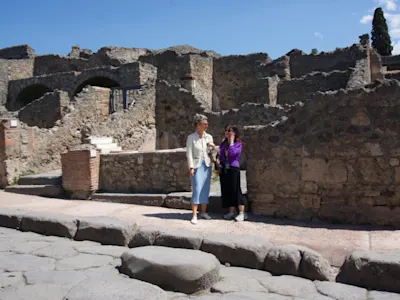
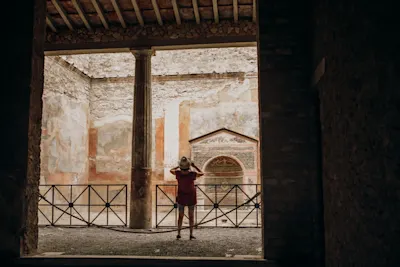
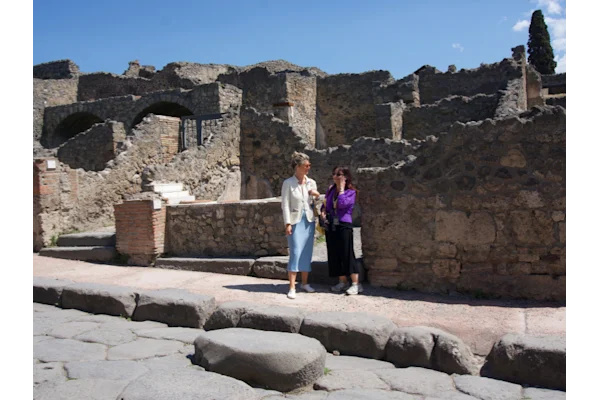
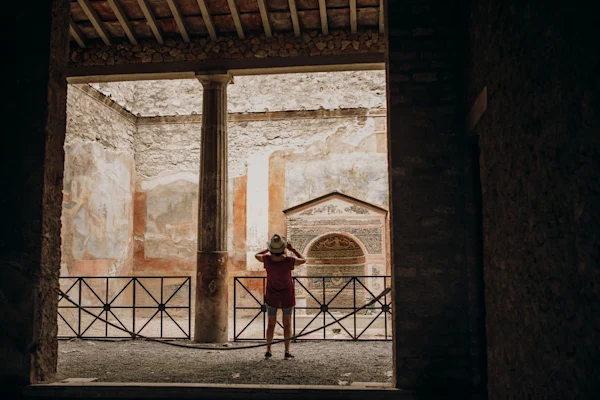
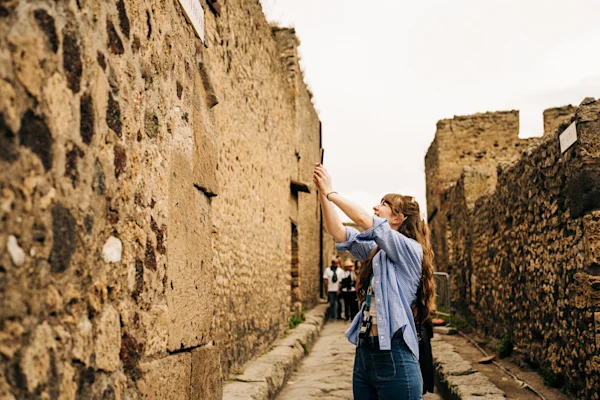
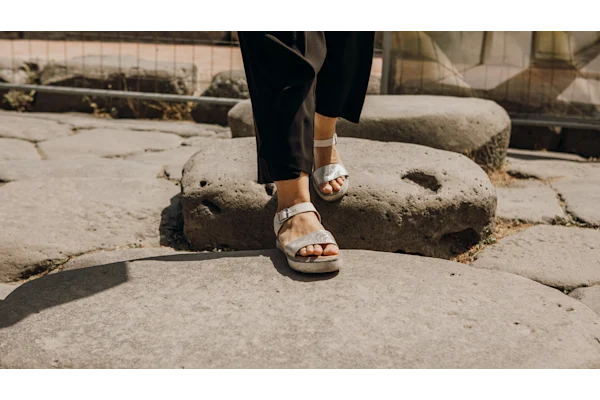
Pompeii: A city caught mid-meal. Pompeii was buried under roughly 20 feet of ash and pumice, which flattened much of the upper stories but left streets, counters, and wall paintings intact below. Your guide walks you down the Via dell'Abbondanza, the city's main commercial street, past the marble-topped counter of the Thermopolium of Asellina, one of Pompeii's fast food stops, where the paint on the front still shows the food once sold there. Inside the Casa del Menandro, a private home named for a wall painting of the Greek playwright, mosaic floors and frescoed rooms show how a wealthy Pompeian family lived the morning the sky went dark.
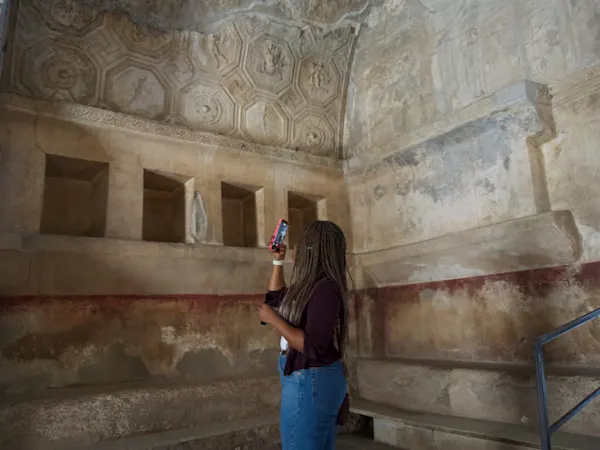
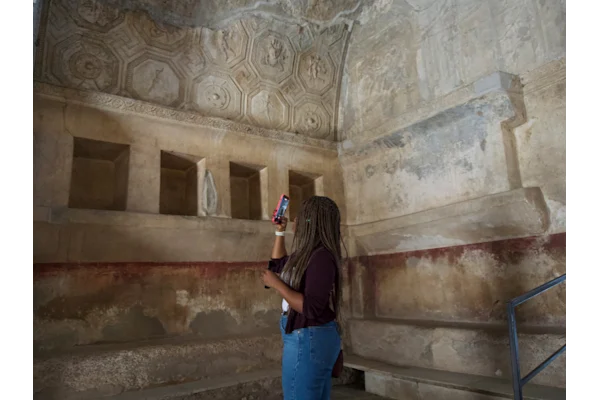
The Stabian Baths: how Romans spent an afternoon. From the Forum, you'll walk to the Stabian Baths, among the oldest public baths in the city, where vaulted ceilings and painted stucco survive in parts of the complex. Your guide walks you through the changing rooms, the plunge pools, and the furnace system that once heated the floor from below.
Herculaneum: sealed, not buried. Herculaneum met a different fate. A fast-moving pyroclastic flow, closer to 400 degrees Celsius, sealed the town under volcanic material that hardened before it could crush what was underneath. That difference is why wood, cloth, and even food have survived here in ways they haven't at Pompeii. At the Shrine of the Augustali, faded frescoes still show scenes from the life of Hercules. In the House of Neptune and Amphitrite, a mosaic of the sea god and his wife covers an entire wall, its colors largely undimmed after nearly 2,000 years. Down at the ancient shoreline, now set back from the modern coast by centuries of eruptions, your guide points out where the remains of more than 300 Herculaneum residents were discovered, having taken shelter in boat chambers as the pyroclastic flow arrived.
A guide who reads both ruins. An archaeologist guide leads both stops, translating what the signage doesn't: which grooves in a doorway meant a shop was once a bakery, why a fresco was painted over another, what an inscription scratched into plaster reveals about who lived there. The same guide, the same throughline, across two very different sites.
IMPORTANT: The full names of all participants must be provided at the time of booking and match the names on their ID/passport. Name changes are not permitted. All guests (including children) must bring a government-issued ID/passport on the day of their tour. Failure to bring an ID may result in security staff denying entrance to the monument.
Please note that this description is an example and your experience may vary depending on the season, day of the week, and group size. Regardless of where your tour goes, you always have an excellent experience.