Showtime's "The Borgias" Italian Getaway Tour

The Borgias themed Tour in Rome for The Borgias Sweepstakes
Based on the notorious family that inspired Showtime's The Borgias, Walks of Italy brings you the first walking tour of Rome that let's you discover sights and stories directly associated with these very real, very powerful, historical figures. Our tour takes you on a journey through the family's troubled past, exploring sights as renowned as the Vatican Palaces, tracking down forgotten churches where the family Popes and cohorts are buried, wandering through a medieval castle and tower, all to give a sense of the seemingly limitless reach of Rodrigo Borgia, known as Pope Alexander VI, and his infamous clan.
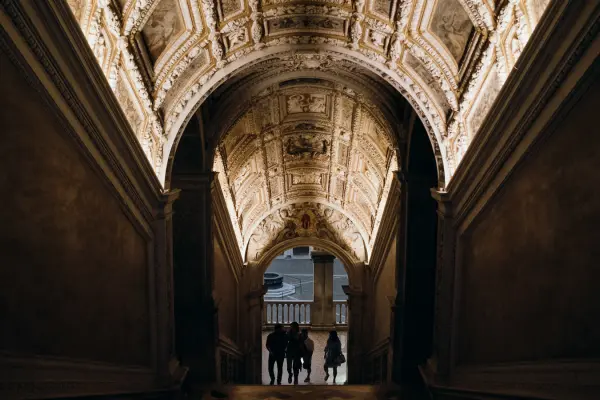
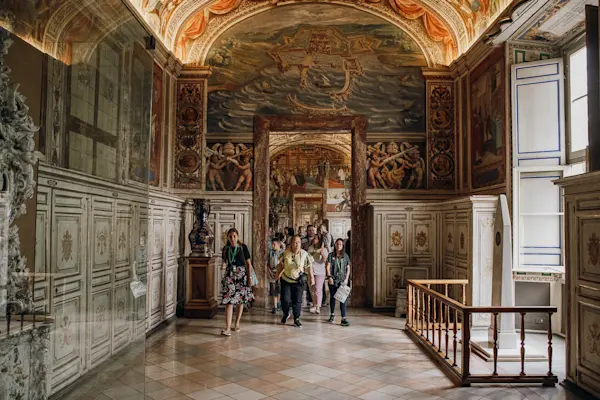
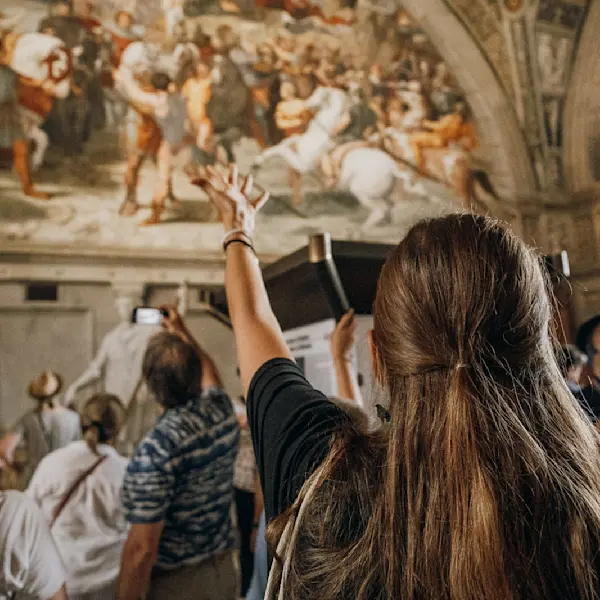
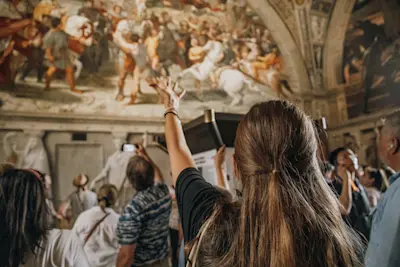
Our Showtime guests will start their Borgia-themed day off with the royal treatment: being whisked from their hotel to the Vatican in a private luxury car. We'll use our special privileges as a Vatican-accredited agency to enter the Vatican museums before the general public—no matter what time of year they come—meaning the often-packed galleries will be tranquil and pleasant. With our expert guide, they'll get to experience all of the highlights of the Vatican museums with a Borgia twist. As they view the palaces' opulence, our guests will learn how Pope Alexander VI's luxurious lifestyle so weakened the moral authority of the papacy that Martin Luther would launch the Reformation.
The real treat, however, is the recently renovated Borgia apartments: the rooms built specifically for Rodrigo when he became pope. Still opulently decorated, they have the same Spanish tile floors and Pinturicchio frescoes as when Rodrigo once lived, loved and entertained here. Our guests will be practically the only ones here. It's a first sign of how different Alexander VI's memory is today from what he once might have dreamed.

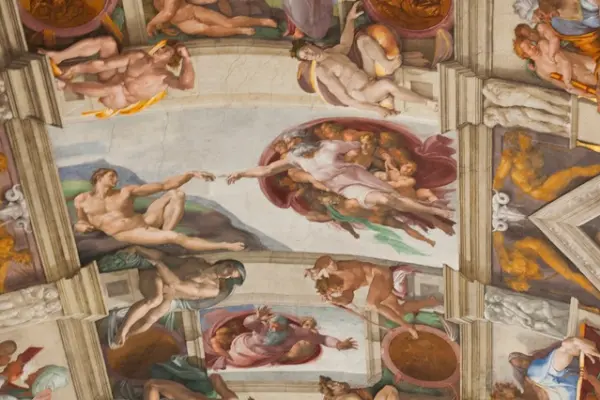
What truly must make Rodrigo spin in his grave, however, is the number of visitors passing by his apartments in their beeline for the Sistine Chapel. Not only the pièce de résistance of the Vatican experience, the Sistine Chapel also symbolizes the power of the Borgia family's main rivals, the della Roveres: One della Rovere pope built the chapel for himself, while the second, Rodrigo's enemy Julius II, ordered Michelangelo to fresco the ceiling! However, it is the place Pope Alexander VI, along with many other popes, was chosen in papal conclave.
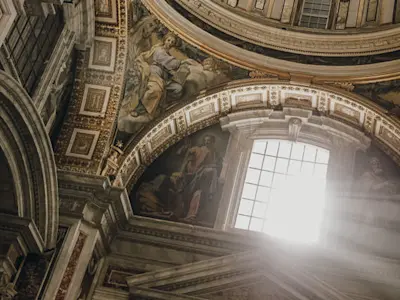
As well as the holy seat of the Catholic Church, St. Peter's Basilica is another sobering reminder of the Borgia legacy. Although the basilica is the place of burial for about 150 popes, Pope Alexander VI's tomb is not here. In fact, the basilica's priests had to be forced even to accept his body for burial. After only a short period of time, his body was moved from St. Peter's to a much less well-known church.
Heading to Castel SantAngelo the driver will follow the route along the passetto (a secret passage-way wall) eternalized in Dan Brown's Angels & Demons. Upon arrival at the castle, our guests will see the place perhaps most closely tied with Rodrigo Borgia's life. After the brutalized corpse of his son, Giovanni, was fished out of the Tiber River just below, Rodrigo shut himself into the castle and vowed to find Giovanni's murderer. But he suddenly gave up. Rumor was that the pope stopped the inquiry because he'd discovered who the murderer was: Giovanni's own brother, Cesare.
In a nod to Rodrigo's unpopularity, our guide will point out the number of blank crests dotting the castle. Many were originally Borgia family crests, scraped clear of identifying details by later detractors of the Borgia pope. And then, over a cappuccino or glass of wine, our guests will enjoy the castle's sweeping views of the Rome skyline.

After a look at the atmospheric Bridge of the Angels—with its angels originally commissioned by Pope Paul III Farnese, whose life is entwined with that of the Borgias in ways not all that holy!—the driver will take our guests to Campo dei Fiori. Looking over this square, redesigned by Pope Calixtus III
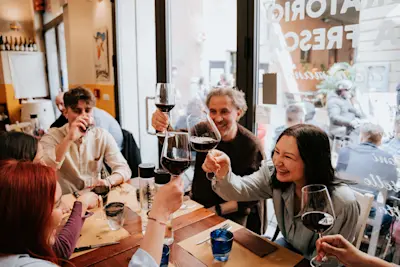
and once a site of public executions, our guests will enjoy lunch at a traditional Roman trattoria. Our guide will regale them with tales of Rodrigo's personal life and many mistresses—particularly his relationship with Vannozza Cattanei. The mother of Cesare, Giovanni, Lucrezia, and Goffredo, Vannozza purchased a large inn on Campo dei Fiori shortly after the pope's death. Our guests will see the original crest, still here today, that was an ingenuous marketing ploy: Vannozza changed her family crest after Rodrigo's death, adding to it the details from that of her husband's crest—and of the Borgia pope! As she went on to own four inns in Rome, few advertising campaigns seem to have worked better.
For more of a taste of Alexander VI's romantic side, our guests will see the beautiful and tranquil Piazza Farnese. The palace that dominates is Palazzo Farnese, built for Alessandro Farnese, brother of the Pope's mistress for a time, Giulia. Alexander VI and Giulia were so close that he'd set her up living in a palace next to St. Peter's for "easy" access—living along with his daughter Lucrezia! Her brother Alessandro got his head start in the Church when, at Giulia's insistence, her lover appointed him cardinal! Today, though, Alessandro is remembered better by the highest title he attained: Pope Paul III.
For a reminder of how it all ended, our guests will stop at the Chiesa di Santa Maria in Monserrato degli Spagnoli, which holds the tombs of both Borgia popes—both of them uncelebrated and unvisited. Our guests will also get a peek at the beautiful Via Giulia, built by and named after Borgia's rival, Pope Julius II.
At the Church of San Marco, meanwhile, our guide will finish the story of Vannozza's life. A nondescript, cracked stone slab tucked away in the church"s portico is nothing less than the abandoned tombstone of Vannozza Cattanei, Alexander VI"s mistress and the mother of Cesare, Giovanni, Lucrezia, and Goffredo. When Vannozza died, she was buried in the Church of Santa Maria del Popolo. But marauders stripped the chapel and destroyed the tomb when Rome was sacked in 1527. Here, therefore, lies the only remnant of Vannozza's original burial place.
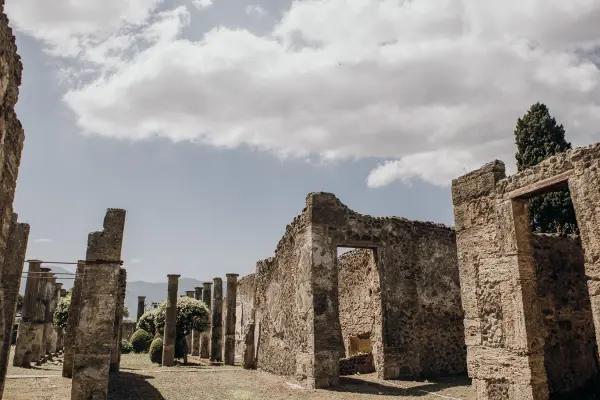
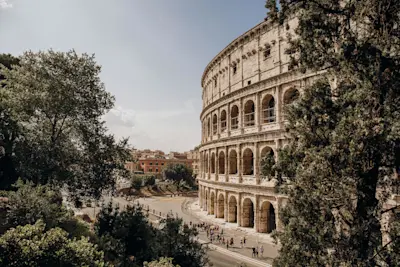
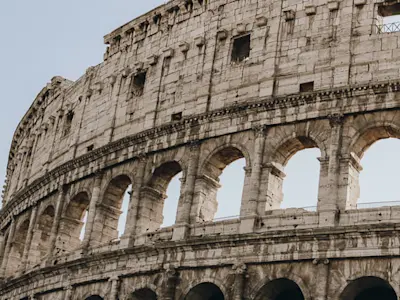
From there, the driver will take our guests on a panoramic drive through Rome's antiquities. The ruins of the once-great empire are yet another reminder of how quickly the mighty can fall, as is Largo Argentina, the (in)famous spot where Julius Caesar was murdered n 44 B.C. They'll view the Colosseum and Roman forum from a picturesque overlook.
San Pietro in Vincoli is one of Rome's finest small churches, built in the 5th century to hold the chains of the first pope—Saint Peter. But here, too, lies the tomb of Pope Julius II, with Michelangelo's famous Moses. Overlooking San Pietro in Vincoli, meanwhile, is none other than the Borgia tower. Once, it would have been the fortification—and symbol of power—of the Borgia family. Today, it goes unnoticed by most pilgrims and tourists heading up the steep, tunneling staircase (known to Romans as the "wicked way" for its association with the Borgias) to San Pietro in Vincoli. Few places are better to discuss the rivalry between Julius II and Alexander VI, who hated each other so much that rumors circulated that Julius II may even have poisoned Alexander. Few places are better, too, to end our day with the Borgias—and with our guests.