




Types of Italian Pasta: Bucatini, Tagliatelle, Orecchiette & More
July 17, 2023
The Colosseum, the Mediterranean, the Renaissance – and all the types of Italian pasta! Italy is known throughout the world for many reasons, but there’s little more famous than its many pastas. An iconic food across the peninsula, no trip to Italy is complete without sampling its many pasta dishes.
We’ve said before: Italian food is regional, and that goes for its pasta too! Local kinds of pasta in Florence differ from those in Rome, Milan, or Palermo. Each locale has a pasta with its own unique recipe, with its own unique shape, length, size and story.
Not only that, but Italians swear that each pasta has its own sauce. To truly eat authentic pasta, you need to match each type with the correct sauce. Those little shells? Great with a cheese sauce. Long, flat tagliatelle? Nothing’s better than a classic ragù. Short, twisted Ligurian trofie? Covered with homemade pesto, naturally!
We have a soft spot for stuffed pasta such as tortellini.
Bucatini, spaghetti, tortellini, rigatoni… There are hundreds of different kinds of Italian pastas, each with its own name and delicious sauce. Don’t know where to start? Here are some of our favorite pastas, and what their names mean in Italian!
Dry Pasta
There are two basic types of pasta that you can find in Italy: Fresh pasta, made with flour and egg, and dry pasta, pastasciutta, made without egg. Typically dry pasta tends to be the more mass-produced, Barilla-style pasta while fresh pasta is what’s served in restaurants. Since it lasts longer and stores better, most fresh pasta can also be found dry, like tagliatelle or spaghetti. That said, both hold a special place in the heart of Italians, and both are worth tasting!
Spaghetti
The sacred grail of pastas, spaghetti is an Italian staple. Children are patiently taught how to twirl just the right amount of spaghetti on their forks from a young age, practicing regularly (hint, don’t start in the middle, take just one or two strands and twirl, no spoon.) Spaghi are “twines”. The -ett makes them small, so these are “little twines.” Spaghetti pair with a variety of sauces, but the best is a classic marinara. The purest of the sauces and the base for nearly all tomato-sauced pastas, this is just fresh plum or San Marzano tomatoes, olive oil, salt and basil. Homemade, of course.
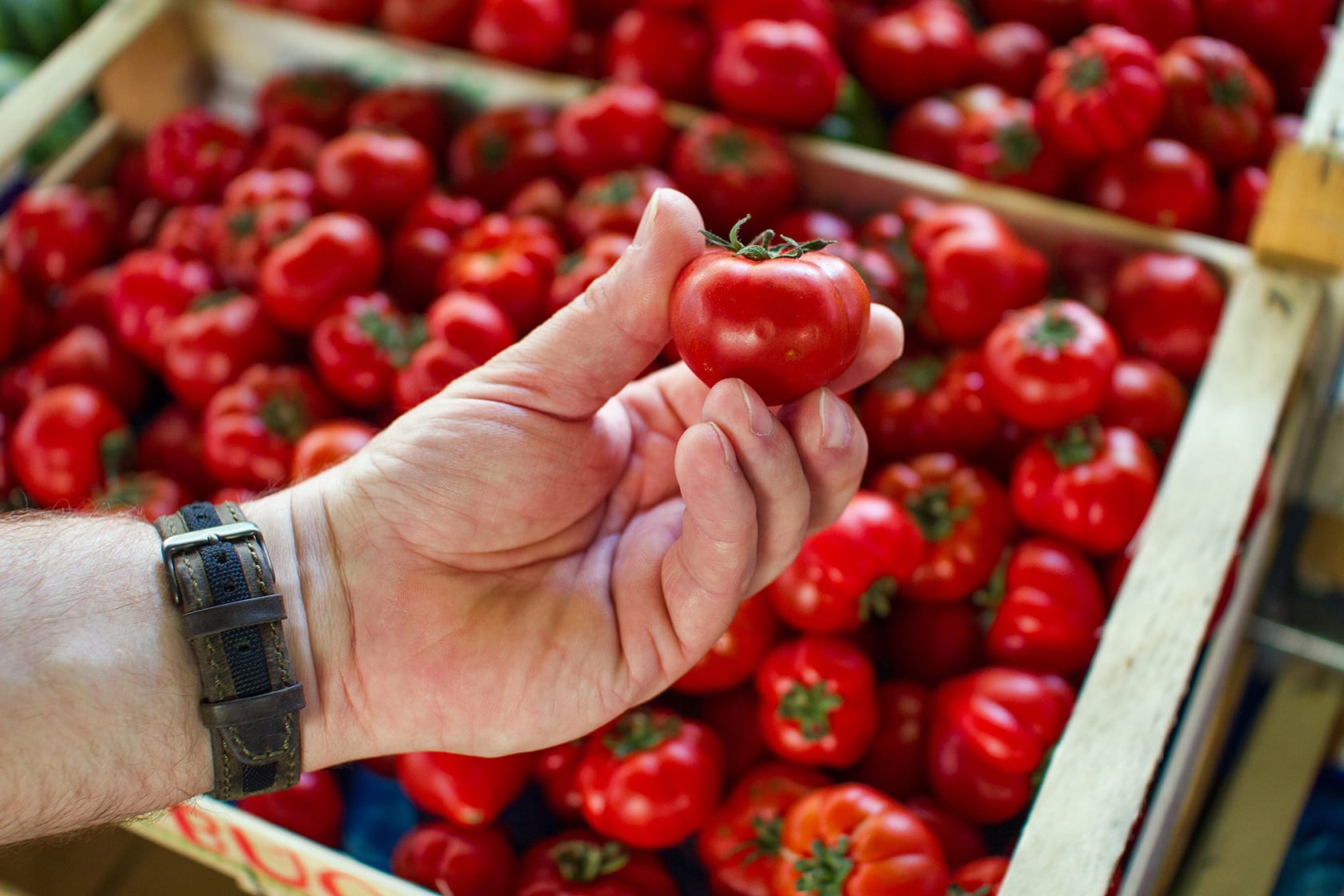
The perfect partner to spaghetti – fresh tomatoes!
Penne
Penne is another pasta that lends itself to hundreds of different sauces. Actually, out of all the pastas, this is probably the most versatile. As for the name, this is an easy one: penne means “pens.” Next time you have a bowl of penne, check it out: The end of each piece of penne is similar to the tip of a fountain pen.
Fusilli
This pasta either comes from the word “fucile,” or “rifle”, for the spiral-shaped inside barrel of a gun or for a fuso, or spindle, which they were rapped around to form spirals. Fusilli are versatile, capturing the flavors of elaborate, dense sauces but also good for simpler dishes, making them the perfect pasta for new culinary experiments. Try a creamy, classic ricotta sauce, experiment with a pistachio pesto, or keep it simple with marinara and sausage.
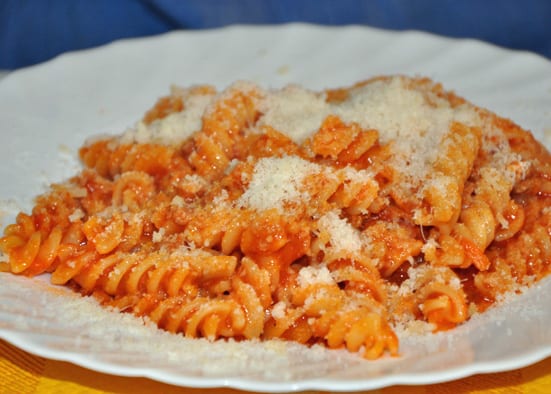
Fusilli, a spiral shape of pasta
Cannelloni
These big tubes of pasta (usually stuffed and popped in the oven) are named after, well, “big tubes.” (Adding -one, or –oni for plural, means “big”). Though they can technically be stuffed with anything, these are often either made with a ragù or stuffed with spinach and cheese.
Farfalle
This pasta might have the prettiest name of them all; it translates to “butterflies”! Often called bow-tie pasta in the United States, the Italians poetically view the pasta as more of a butterfly. Farfalle are best dressed with extra-virgin olive oil. Try adding high-quality tuna, capers, and olives – tossed with olive oil – for a salty dish that’s perfect for a warm day.
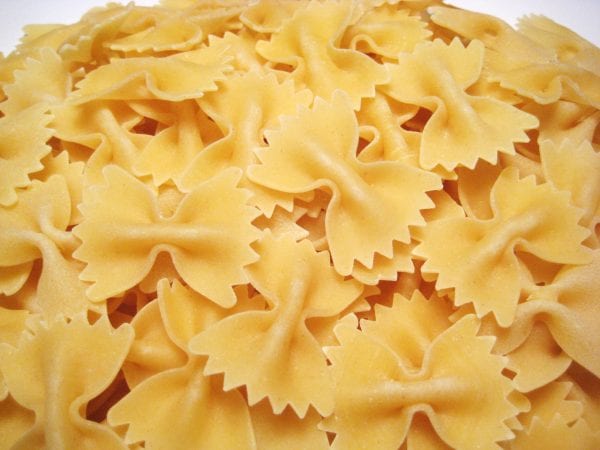
Farfalle, or “butterfly,” pasta
Fresh Pasta
In general, dry pasta is known for its al dente bite, allowing it to hold up against hearty, meat-based sauces particularly well. Fresh pasta, on the other hand, is softer, more delicate. It’s best for simple, fresh sauces, particularly dairy-based. The exception to this rule is, of course, ragù. Ragù alla bolognese is a rich, homemade meat sauce that’s always paired with fresh pasta.
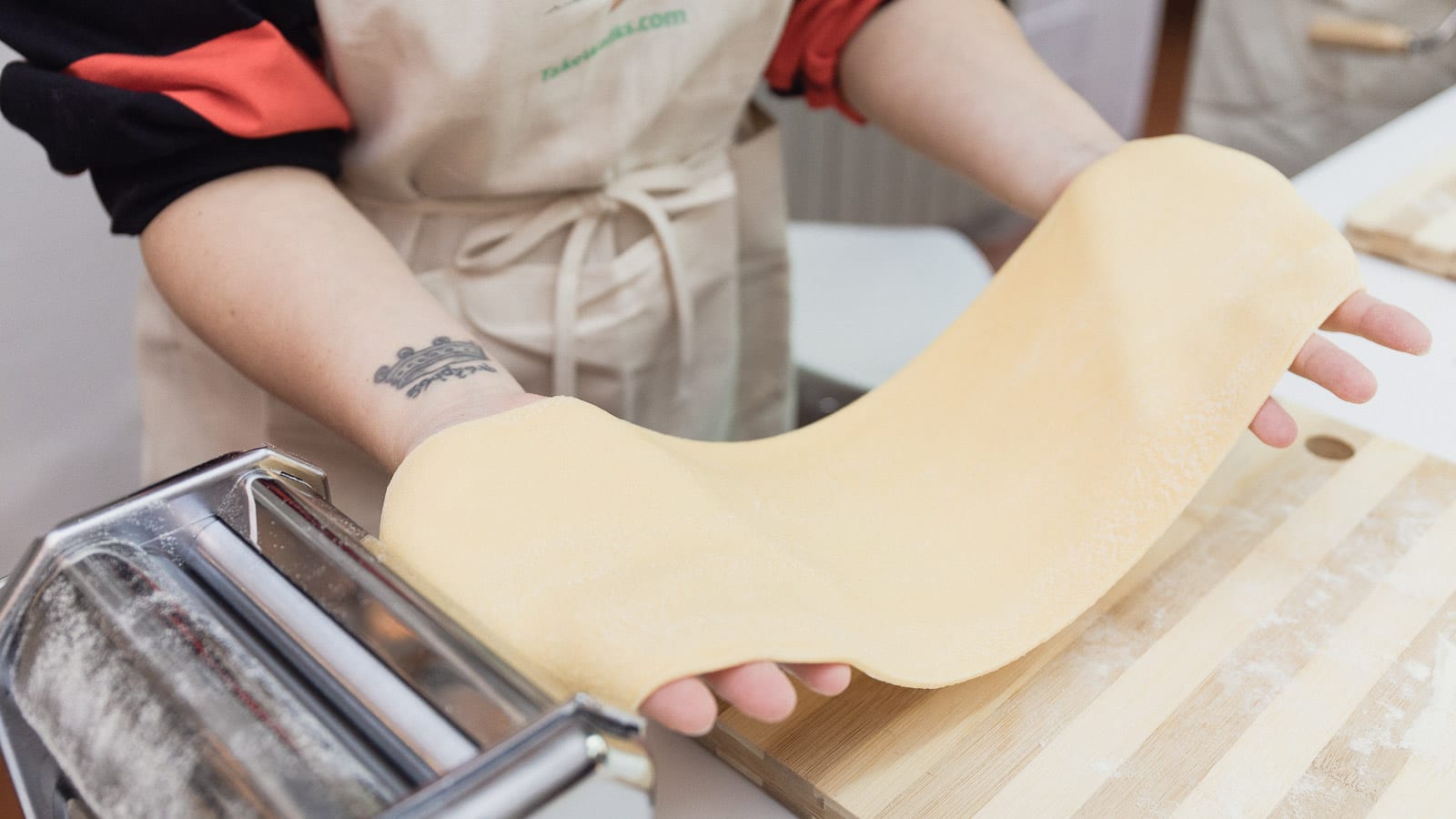
A pasta-making machine comes in handy for homemade pasta!
Bucatini
One of the most popular kinds of pasta in Rome, bucatini look like thick spaghetti—but they have a tiny hole in the middle. (Think of a Twizzler!). What does bucatini mean? “Little holes!”. (Buco means hole, while adding an –ino, or –ini for plural, means “small”).
The most classic bucatini dish is bucatini all’amatriciana. Said to be from Amatrice, in Lazio, the amatriciana sauce is the perfect combination of sweet guanciale, salty pecorino cheese, and spicy red pepper flakes mixed with tomato sauce. Thousands of this dish were sold recently as a fundraiser for the town of Amatrice, all but destroyed in the summer of 2016 by an earthquake.
Tagliatelle and Pappardelle
Both tagliatelle and pappardelle are long, flat ribbons of pasta. Tagliatelle are the skinnier of the two, while pappardelle are wide tongues of pasta from Tuscany. From Emilia-Romagna and le Marche, tagliatelle are great with a traditional bolognese meat sauce but also with cream, prosciutto and peas; tomato sauce and mushrooms; or even oil and shrimp. Basically, they’re always good! Pappardelle, on the other hand, are best paired with a wild boar ragù. A rich, rustic sauce pairs perfectly with the wide, flat noodles.
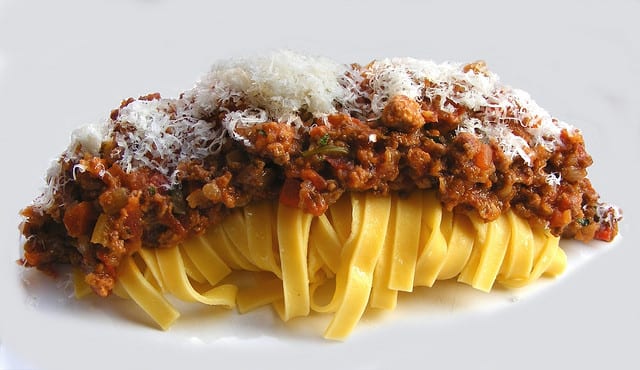
Ragù alla Bolognese – always with tagliatelle, never spaghetti. Photo by Fotoos Van Robin @Flickr
Linguine
This flattened, long pasta is named after “little tongues” (tongues: lingue, and the -in makes them “small”). Wider than spaghetti but not as wide as fettuccine, this pasta is king of sea food pasta dishes. Make linguine with shrimp scampi, or warm butter and prawns. Our favorite? A fresh linguine with vongole, or clams.
Orecchiette
This pasta, unique to the region of Puglia, means “little ears,” named after its shape. Puglia has a long tradition of artisanal pasta, but the most famous are by far the orecchiette. This is one pasta that can be served dozens of different ways, because of it’s concave shape, but they’re most famously served with broccoli or turnip greens and seasoned by anchovies, garlic and olive oil.
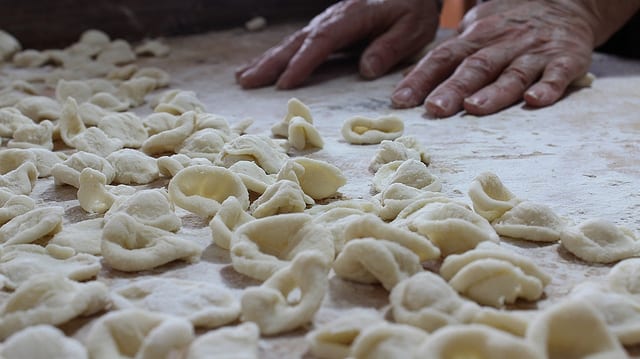
Photo: Giuseppe Masil
Strozzapreti
From central Italy, especially Emilia-Romagna, Umbria, and Tuscany, this pasta might have the strangest name of them all: “priest-strangler.” No one’s exactly sure where the name comes from. Legend has it that it’s because priests loved the pasta so much, they ate it too quickly and choked!
Check out the video below to learn how to make carbonara, a classic Roman pasta, from scratch.
Update notice: This article was upated on July 12, 2023.
We take our pasta seriously! Why not join us in the kitchen and learn to make different types of Italian pasta for yourself? In our Rome Pasta-Making Class you’ll Learn how to make homemade fettuccine, ravioli, and pasta sauces from scratch with an expert Italian chef, then enjoy your meal complete with wine and gelato for dessert.

Book a Tour

Pristine Sistine - The Chapel at its Best
€89

1794 reviews
Premium Colosseum Tour with Roman Forum Palatine Hill
€56
850 reviews

Pasta-Making Class: Cook, Dine Drink Wine with a Local Chef
€64
121 reviews
Crypts, Bones Catacombs: Underground Tour of Rome
€69
401 reviews

VIP Doge's Palace Secret Passages Tour
€79
18 reviews
Legendary Venice: St. Mark's Basilica, Terrace Doge's Palace
€69
286 reviews
Follow us
Stay up to date with travel tips, local insights and all things Italy on our social channels!


Subscribe to our Newsletter
Get curated Italy travel tips delivered to your inbox!

